
- Release Year: 1980
- Platforms: 1500, 700, 800, Arcade, Game Boy, PC-6001, PC-8000, Sharp MZ-80K, Windows
- Publisher: Compac Inc., Denki Onkyō Corporation, Hyperware, Meldac of America Inc., Meldac of Japan
- Developer: Denki Onkyō Corporation, Live Planning, TSG
- Genre: Action
- Perspective: Top-down
- Game Mode: Hotseat
- Gameplay: Digging, Maze, Trapping
- Setting: Futuristic, Sci-fi
- Average Score: 40/100
Description
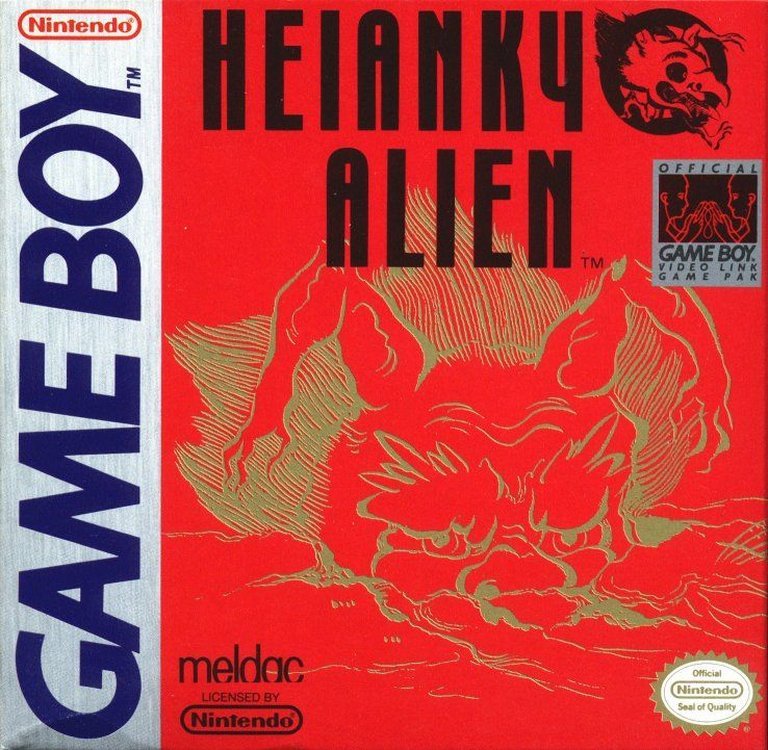
Heiankyo Alien is a classic arcade game released in 1980, set in the ancient city of Kyo, which is suddenly invaded by aliens. Players take on the role of a Kebiishi, a knight tasked with defending the city. The game features a maze where the Kebiishi must navigate while avoiding aliens. The objective is to dig holes to trap the aliens and bury them to proceed to the next level. The Game Boy version includes enhanced graphics and features, such as a super alien with special powers, and supports two-player gameplay via a video link cable.
Gameplay Videos
Where to Buy Heiankyo Alien
PC
Heiankyo Alien Free Download
Heiankyo Alien Patches & Updates
Heiankyo Alien Mods
Heiankyo Alien Guides & Walkthroughs
Heiankyo Alien Reviews & Reception
mobygames.com (40/100): Average score: 40%
Heiankyo Alien Cheats & Codes
NEO Heiankyo Alien (NES)
At title screen enter: DOWN DOWN UP UP RIGHT LEFT RIGHT LEFT A B
| Code | Effect |
|---|---|
| DOWN DOWN UP UP RIGHT LEFT RIGHT LEFT A B | Start with 5 lives (3 displayed initially, reveals after first death) |
Nichibutsu Arcade Classics 2: Heiankyo Alien (SNES)
At title screen press Up + Left + A + X + L + R on controller 2
| Code | Effect |
|---|---|
| Up + Left + A + X + L + R (Controller 2) | Changes title screen appearance |
Heiankyo Alien (Game Boy)
| Code | Effect |
|---|---|
| 183-54C-2AA (Game Genie) | B button gives mega-dig, A button gives mega-fill |
| C34-5BC-A21 (Game Genie) | Freeze aliens (toggle on/off) |
| A75-7FB-3BE (Game Genie) | Infinite lives |
| 0105CEDA (GameShark) | Infinite lives |
| C90-22D-C45 + FFF-AFE-F7E (Game Genie) | Infinite lives (Old Game Codes) |
| 010434DA (GameShark) | Infinite lives (Old Mode) |
| 0105CBDA (GameShark) | Invincibility |
| 214-5BC-A21 (Game Genie) | Slow motion game |
| 01D-0AC-F7E (Game Genie) | Start with 1 life |
| 01A-97E-F7E (Game Genie) | Start with 1 life (Old Game Codes) |
| 0AD-0AC-F7E (Game Genie) | Start with 10 lives |
| 14D-0AC-F7E (Game Genie) | Start with 20 lives |
| 01XXCDDA (GameShark) | Stage Modifier (New Mode, XX = stage value) |
Heiankyo Alien: A Pioneering Maze Chase Classic Revisited
Introduction
In the shadow of arcade giants like Pac-Man and Space Invaders lies Heiankyo Alien (1979), a groundbreaking yet often overlooked title that pioneered the “trap-’em-up” genre. Developed by the University of Tokyo’s Theoretical Science Group (TSG) and published by Denki Onkyō, this game blends feudal Japan with extraterrestrial invasion, tasking players with outsmarting aliens through strategic hole-digging mechanics. Though overshadowed by its successors, Heiankyo Alien remains a cornerstone of maze chase design, offering a compelling mix of tactical depth and historical charm.
Development History & Context
The Student Innovators
Heiankyo Alien was born from the minds of TSG, a student club at the University of Tokyo. Inspired by Space Invaders’ success and the 1979 film Alien, the group initially conceived a cockroach-trapping simulator before pivoting to an alien invasion premise. The game’s unique setting—Heian-kyō (modern-day Kyoto)—was chosen for its grid-like layout, mirroring the maze structure and evoking Japan’s aristocratic past.
Technical Constraints
Originally prototyped on an Apple II, the game’s crude visuals (colored blocks due to low-resolution mode) were scrapped when Denki Onkyō secured the rights. The arcade version ran on a Zilog Z80-based board cloned from Sega’s Head On—ironic, given that unauthorized clones of Heiankyo Alien later flooded Japanese arcades. Time constraints forced cuts, including a Kuchisake-onna-inspired candy power-up that would freeze aliens.
The 1979 Arcade Landscape
Released during Japan’s “Invader Boom,” Heiankyo Alien carved a niche by emphasizing strategy over reflexes. Its success (a top-ten arcade earner in 1979–80) resonated domestically, while its 1980 Western rebranding as Digger stripped its cultural identity, relegating it to obscurity overseas.
Narrative & Thematic Deep Dive
A Tale of Time-Traveling Defense
The game’s premise is delightfully anachronistic: a kebiishi (Heian-era law enforcer) defends Kyoto from aliens using only a shovel. Though light on plot, the setting merges Japan’s oldest capital—a symbol of order—with chaotic extraterrestrial forces. Thematically, it’s a battle between tradition and modernity, human ingenuity and otherworldly threat.
Characters and Dialogue
The kebiishi and aliens communicate through actions, not words. The protagonist’s death animation—a floating angel—adds whimsy, while the aliens’ unpredictable AI contrasts with the structured maze, embodying chaos versus control.
Gameplay Mechanics & Systems
The Trap-‘Em-Up Loop
Players dig pits to lure aliens, then swiftly bury them for points. Each hole requires precise timing: three shovel strikes to dig, three to fill. Aliens escape if another crosses their pit or after a timer expires, forcing players to balance aggression and caution.
Progression and Challenge
Nine levels escalate difficulty with faster, more numerous aliens. A three-minute timer triggers a “zombie horde” of additional foes if exceeded. The Game Boy port (1990) introduced a “New Version” with a chasing “Super Alien,” adding fresh tension.
Multiplayer Innovation
The arcade version offered cooperative and competitive two-player modes—a rarity for 1979. Players could share the screen or alternate turns, fostering communal high-score rivalries.
World-Building, Art & Sound
Visual Design
The arcade original’s minimalist sprites (stick-figure kebiishi, blob-like aliens) contrasted with its detailed grid, evoking Kyoto’s streets. The Game Boy remake’s pixel art elevated the experience, giving the kebiishi expressive animation and the aliens jagged, menacing designs.
Soundscape
The arcade’s blippy sound effects emphasized tension, while the Game Boy version’s soundtrack—composed by Norio Nakagata and Takane Ohkubo—featured samisen-inspired tracks that harmonized with the historical setting.
Reception & Legacy
Commercial and Critical Performance
A smash hit in Japan, Heiankyo Alien ranked among 1979–80’s top-earning arcade games. However, Western critics dismissed it as repetitive—AllGame called the Game Boy port “boring” (1998). Yet retrospective analyses (e.g., Hardcore Gaming 101) laud its ingenuity.
Influence on Gaming
The game pioneered trap mechanics later seen in Space Panic (1980) and Lode Runner (1983). Its maze chase DNA also predates Pac-Man. Despite its niche status, modern ports like Heiankyo Alien 3671 (Steam, 2017) and the exA-Arcadia remake (2021) underscore its enduring appeal.
Conclusion
Heiankyo Alien is a paradoxical classic: revolutionary yet overlooked, simple yet strategically rich. Its student-driven origins and fusion of history and sci-fi make it a fascinating relic of gaming’s golden age. While not as polished as its successors, its DNA persists in titles emphasizing environmental manipulation over combat. For historians and retro enthusiasts alike, Heiankyo Alien is a vital piece of the puzzle—a testament to creativity thriving within technical constraints.
Final Verdict: A pioneering gem that deserves recognition beyond its cult following. ★★★★☆ (4/5)