
- Release Year: 2014
- Platforms: Nintendo 3DS, Windows
- Publisher: Bergsala Lightweight Co., Ltd., Majesco Entertainment Company, Scarab Entertainment
- Developer: Majesco Entertainment Company, Scarab Entertainment
- Genre: Driving, Racing
- Perspective: 1st-person
- Game Mode: Single-player
- Gameplay: Arcade, Mini-games, Track racing
- Setting: Licensed
- Average Score: 64/100
Description
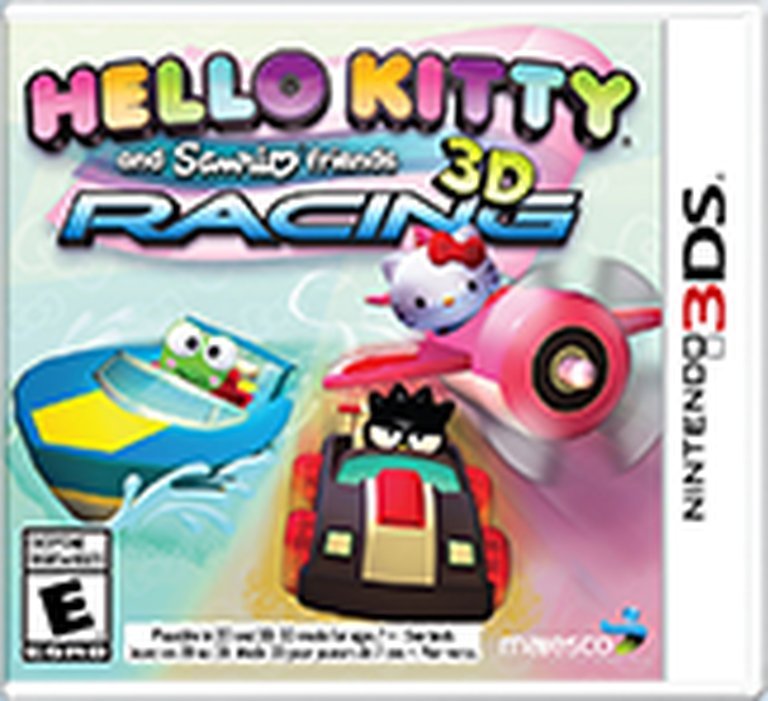
Hello Kitty and Sanrio Friends Racing is a family-friendly arcade racing game featuring beloved Sanrio characters like Hello Kitty, My Melody, and Keroppi. Players race across 16 vibrant tours, including Hello Kitty’s Happy Town and Chococat’s Tropical Island, using customizable cars, boats, and planes. With power-ups, unlockable mini-games, and split-screen multiplayer for up to four players, the game offers colorful, accessible racing action for fans of all ages.
Gameplay Videos
Where to Buy Hello Kitty and Sanrio Friends Racing
Hello Kitty and Sanrio Friends Racing Patches & Updates
Hello Kitty and Sanrio Friends Racing Guides & Walkthroughs
Hello Kitty and Sanrio Friends Racing Reviews & Reception
store.steampowered.com (83/100): Very Positive (83% of 86 user reviews for this game are positive).
steamcommunity.com : Hello Kitty and Sanrio Friends Racing A Delightful Ride for Fans of All Ages
mobygames.com (46/100): Average score: 46% (based on 5 ratings)
Hello Kitty and Sanrio Friends Racing: A Whimsical but Flawed Karting Odyssey
Introduction
For over five decades, Sanrio’s pastel-colored universe has charmed fans worldwide, and Hello Kitty and Sanrio Friends Racing (2014) represents one of the brand’s most ambitious—if uneven—forays into the racing genre. Developed by Scarab Entertainment, this kart racer aimed to capitalize on the enduring appeal of Hello Kitty and her eclectic entourage, from My Melody to Badtz-Maru. Yet beneath its sugary facade lies a game caught between nostalgic charm and technical limitations. This review argues that while Sanrio Friends Racing succeeds as a cheerful diversion for younger audiences, its lackluster mechanics and missed opportunities prevent it from joining the pantheon of great kart racers.
Development History & Context
Studio Vision and Constraints
Scarab Entertainment, known for niche family titles like Garfield Kart, sought to translate Sanrio’s aesthetic into a racing framework. Released on the Nintendo 3DS in 2014 and ported to PC in 2015, the game emerged during a competitive era for kart racers, with Mario Kart 7 (2011) and Sonic & All-Stars Racing Transformed (2012) dominating the market. Scarab’s vision was clear: prioritize accessibility over complexity, targeting Sanrio’s core demographic of children and casual gamers.
However, the studio faced evident constraints. The 3DS version struggled with simplistic visuals and a shaky framerate, while the PC port, though functional, lacked the polish of its contemporaries. The absence of online multiplayer—a staple by 2014—highlighted budgetary limitations, relegating the experience to local split-screen play.
Narrative & Thematic Deep Dive
A Lightweight Celebration of Friendship
Sanrio Friends Racing dispenses with narrative pretense, opting instead for a thematic homage to Sanrio’s ethos of “happy harmony.” The game’s 16 tracks, such as “Hello Kitty’s Happy Town” and “Little Twin Stars Galaxy,” serve as vibrant playgrounds for the franchise’s mascots, reinforcing themes of camaraderie and lighthearted competition.
Characters like Keroppi and Chococat lack unique personalities beyond their cosmetic designs, a missed opportunity to weave their quirks into gameplay. Dialogue is minimal, confined to victory animations and menu quips, leaving the world feeling static compared to narrative-driven racers like Crash Team Racing.
Gameplay Mechanics & Systems
A Functional but Shallow Core
The game’s racing mechanics are stripped to the basics:
– Vehicle Variety: Players choose between cars, boats, and planes, though handling differences are negligible.
– Power-Ups: Items like speed boosts and obstacles are forgettable, lacking the strategic depth of Mario Kart’s arsenal.
– Adventure Mode: A collection of 20 mini-games (e.g., “Apple Courses”) feels tacked-on, offering little incentive beyond unlocking cosmetic extras.
Issues and Innovations
The most glaring flaw is the absence of a difficulty curve or drift mechanics, reducing races to monotonous straight-line sprints. Conversely, the inclusion of split-screen multiplayer (up to four players) is a bright spot, catering to family-friendly sessions.
World-Building, Art & Sound
Aesthetic Fidelity with Technical Compromises
Visually, the game nails Sanrio’s signature style: tracks burst with candy-colored landscapes, and character models are lovingly rendered. However, the 3DS version’s low-resolution textures and pop-in detract from the charm, while the PC port’s graphics remain serviceable but dated.
The soundtrack, a loop of saccharine synth melodies, complements the whimsy but grows repetitive. Sound effects, from engine hums to item pickups, are adequate but lack the polish of AAA contemporaries.
Reception & Legacy
Mixed Reactions and Niche Appeal
Upon release, Sanrio Friends Racing garnered scant critical attention. Steam users awarded it a “Very Positive” rating (83% of 86 reviews), praising its accessibility and fan service. Critics, however, were less forgiving—Longplay commentator MadMatty lamented its “passing resemblance to Garfield Kart” and lack of depth.
The game’s legacy is modest but notable. It remains a cult favorite among Sanrio enthusiasts, offering a rare multiplayer experience for younger fans. Yet its influence on the genre is negligible, overshadowed by more robust kart racers.
Conclusion
Hello Kitty and Sanrio Friends Racing is a paradoxical title: a loving tribute to Sanrio’s legacy hamstrung by technical and mechanical shortcomings. While its vibrant art and accessible gameplay make it a viable choice for families and die-hard fans, its lack of innovation and polish relegate it to the margins of kart racing history. For those seeking a whimsical distraction, it delivers fleeting joy—but for the genre at large, it’s a footnote rather than a milestone.
Final Verdict: A charming but flawed diversion, best appreciated by Sanrio completists and nostalgic guardians introducing kids to the racing genre.