
- Release Year: 2018
- Platforms: Windows
- Publisher: Steady Mushroom Ltd.
- Developer: Steady Mushroom Ltd.
- Genre: Action, Puzzle
- Perspective: Side view
- Game Mode: Single-player
- Gameplay: Falling block puzzle, Point and select
- Setting: Contemporary
- Average Score: 23/100
Description
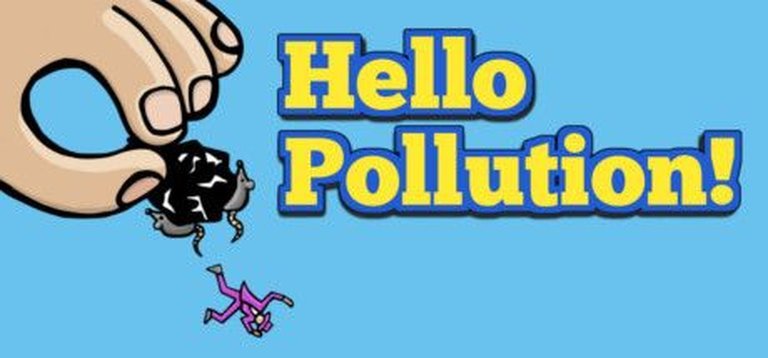
Hello Pollution! is a puzzle-action game where players manage a dubious waste disposal business, burying junk and waste while navigating environmental consequences. Set in a contemporary side-view perspective, the game blends physics-based puzzles with a narrative-driven story, challenging players to avoid ecological disasters as they uncover the strange events unfolding around their operations.
Where to Buy Hello Pollution!
PC
Hello Pollution! Guides & Walkthroughs
Hello Pollution! Reviews & Reception
steambase.io (23/100): A rating of Mostly Negative.
steamcommunity.com : Glitchy, super short. maybe 45 min for run
Hello Pollution!: A Satirical Puzzle Game That Buries More Than Just Waste
Introduction: A Darkly Comic Dive into Environmental Negligence
Hello Pollution! (2018) is a game that dares to ask: What if Tetris met corporate greed and environmental destruction? Developed by the one-person studio Steady Mushroom Ltd., this 2D physics-based puzzle game casts players as the operator of a morally bankrupt waste disposal company. On the surface, it’s a quirky, cartoonish romp through garbage management, but beneath its vibrant, retro aesthetic lies a biting satire of capitalism, ecological neglect, and the “out of sight, out of mind” mentality. With its blend of Fallout-esque dark humor and Portal-like puzzle mechanics, Hello Pollution! carves out a niche as a game that’s as thought-provoking as it is mechanically engaging.
Yet, despite its ambitious themes and innovative gameplay, Hello Pollution! remains an obscure title, buried under the weight of its own mixed reception. This review aims to excavate the game’s strengths and flaws, examining its development, narrative depth, gameplay systems, and legacy in the indie puzzle genre.
Development History & Context: A One-Person Crusade Against Sanity
The Studio Behind the Stench
Steady Mushroom Ltd., the brainchild of Swedish developer Micke Nilsson, is a micro-studio with a penchant for offbeat, experimental games. Nilsson, the sole credited developer on Hello Pollution!, had previously worked on smaller projects, but this title marked his most ambitious solo endeavor. The game’s development was a labor of love (or perhaps madness), with Nilsson handling everything from coding to art design to narrative writing.
Inspiration & Themes: Real-World Waste, Virtual Consequences
Nilsson has cited real-world environmental disasters and corporate malfeasance as key inspirations. The game’s premise—a waste disposal company cutting corners to maximize profit—mirrors real-life scandals, such as illegal dumping and toxic waste cover-ups. The satirical tone is reminiscent of Papers, Please in its bureaucratic absurdity, though Hello Pollution! leans harder into slapstick humor and surrealism.
Technological Constraints & Design Philosophy
Released in 2018, Hello Pollution! was built using a custom engine, a rarity in an era dominated by Unity and Unreal. This choice allowed Nilsson greater creative control but also limited the game’s polish in certain areas. The physics-based puzzles, while innovative, occasionally suffer from janky collisions and unpredictable interactions—a double-edged sword that adds both charm and frustration.
The game’s fixed/flip-screen perspective and side-view presentation evoke classic arcade puzzlers like Dig Dug or Lode Runner, but with a modern twist. The art style is a deliberate throwback to 16-bit era aesthetics, blending EarthBound-esque whimsy with a dystopian edge.
The Indie Puzzle Landscape in 2018
Hello Pollution! launched into a crowded market. 2018 was a banner year for indie puzzlers, with titles like Return of the Obra Dinn, The Witness (still riding high from its 2016 release), and Baba Is You redefining the genre. Against such stiff competition, Hello Pollution! struggled to stand out, despite its unique premise. Its $4.99 price point and Steam release positioned it as a budget-friendly experiment, but without significant marketing or critical buzz, it quickly faded into obscurity.
Narrative & Thematic Deep Dive: A Story of Garbage, Greed, and Gnomes
Plot Overview: From Rags to Riches (and Disaster)
Players assume the role of an unnamed entrepreneur who starts a waste disposal company with dubious ethics. The game’s narrative unfolds through text-based interludes between levels, revealing that something is very wrong with the world around you. As you bury waste, strange phenomena occur—mutant creatures, sentient trash, and ominous government agents begin to take notice.
The story is minimalist but effective, relying on environmental storytelling and dark humor to convey its themes. The writing is sharp, with a Monty Python-esque absurdity that contrasts with the game’s underlying environmentalist message. One standout moment involves a gnome-based conspiracy, a surreal twist that underscores the game’s tone.
Characters & Dialogue: A Cast of Misfits and Menaces
- The Protagonist (You): A silent, morally flexible business owner. Your motivations are purely financial, but the game subtly questions whether you’re the villain or just another cog in a broken system.
- The Inspector: A bureaucrat who occasionally checks in, growing increasingly alarmed at your company’s practices.
- The Mutant Wildlife: From radioactive squirrels to sentient sludge, these creatures are both obstacles and darkly comic relief.
- The Gnomes: A mysterious faction that may or may not be hallucinations. Their inclusion adds a layer of surrealism that keeps players guessing.
The dialogue is witty and concise, though some players have criticized the unskippable text segments, which can become tedious on repeated playthroughs.
Themes: Capitalism, Ecology, and Absurdity
Hello Pollution! is, at its core, a satire of late-stage capitalism. The game’s tagline—“Out of sight, out of mind… or is it?”—encapsulates its central critique: society’s willingness to ignore environmental harm for the sake of convenience and profit. The puzzles themselves reinforce this theme, as players must bury waste inefficiently or risk catastrophic consequences, mirroring real-world corporate negligence.
Other key themes include:
– Bureaucratic Incompetence: The inspector’s futile attempts to regulate your business highlight systemic failures.
– Environmental Collapse: The game’s later levels depict ecosystems in ruin, with mutant creatures and toxic landscapes.
– Existential Dread: The gnome subplot and surreal twists suggest that the protagonist’s actions may have cosmic consequences.
Narrative Strengths & Weaknesses
| Strengths | Weaknesses |
|---|---|
| Sharp, satirical writing | Underdeveloped character arcs |
| Effective use of surrealism | Some plot threads feel unresolved |
| Themes resonate with real-world issues | Pacing issues due to unskippable text |
| Dark humor balances heavy themes | Narrative takes a backseat to gameplay |
Gameplay Mechanics & Systems: Burying Problems (Literally and Figuratively)
Core Gameplay Loop: Physics, Puzzles, and Panic
Hello Pollution! is a falling block puzzle game with a twist: instead of clearing lines, you’re burying waste in a series of underground chambers. The goal is to dispose of garbage without causing environmental disasters (e.g., toxic leaks, explosions, or mutant outbreaks).
Key mechanics include:
– Physics-Based Waste Disposal: Trash items (barrels, chemicals, radioactive waste) fall from the top of the screen, and players must guide them into burial pits using conveyor belts, cranes, and explosives.
– Dynamic Insanity: As levels progress, the game introduces unpredictable elements, such as earthquakes, mutant creatures, and malfunctioning equipment.
– Resource Management: Players must balance profit (earned by disposing waste quickly) against risk (causing disasters loses money and progress).
Combat & Obstacles: When Trash Fights Back
While not a traditional combat game, Hello Pollution! features hazard avoidance and environmental challenges:
– Mutant Creatures: Some waste spawns aggressive mutants that must be crushed, avoided, or redirected.
– Toxic Leaks: Improperly buried chemicals can contaminate groundwater, triggering game-over scenarios.
– Government Inspections: Fail too many times, and the inspector shuts you down, forcing a restart.
Character Progression & Upgrades
The game features a light progression system, allowing players to unlock:
– New Equipment: Faster conveyors, stronger cranes, and questionable “solutions” like incinerators.
– Perks: Abilities like toxic immunity or faster waste processing, purchased with in-game currency.
However, progression is minimal—the focus remains on puzzle-solving and chaos management rather than deep RPG mechanics.
UI & Controls: Functional but Flawed
The point-and-select interface is intuitive but suffers from clunky execution:
– Mouse/Keyboard Controls: Precise clicking is required, but physics glitches can make placement frustrating.
– Gamepad Support: Partial controller support exists, but the lack of analog precision hampers gameplay.
– Unskippable Text: A major UX flaw—players cannot skip dialogue, making replays tedious.
Innovative Systems
- Dynamic Disasters: The game’s unpredictable physics mean no two playthroughs are identical. A barrel might explode prematurely, or a mutant might derail your carefully laid plans.
- Moral Ambiguity: The game rewards reckless behavior (e.g., burying toxic waste quickly earns more money) but punishes it narratively, creating a fascinating tension.
Flawed Systems
- Physics Inconsistencies: Waste items sometimes clip through walls or get stuck in geometry, leading to unfair failures.
- Repetitive Level Design: Later stages recycle mechanics without enough innovation, leading to fatigue.
- Lack of Checkpoints: Some levels are punishingly long, with no mid-level saves.
World-Building, Art & Sound: A Toxic Wonderland
Setting & Atmosphere: A Dystopian Cartoon
Hello Pollution! takes place in a contemporary but surreal world, where waste disposal is both a business and a national crisis. The game’s environments range from industrial dumps to suburban backyards, each with its own hazards.
The fixed/flip-screen perspective creates a claustrophobic, arcade-like feel, reinforcing the idea that the protagonist is trapped in a cycle of exploitation.
Visual Design: Retro Meets Dystopia
- Art Style: A hand-drawn, cartoonish aesthetic reminiscent of Sam & Max or Day of the Tentacle, with bold colors and exaggerated animations.
- Character Design: The protagonist is a faceless businessman, while mutants and inspectors are grotesque caricatures.
- Environmental Details: Backgrounds feature subtle environmental decay, such as dying trees and polluted rivers, reinforcing the game’s themes.
Sound Design & Music: A Symphony of Chaos
- Soundtrack: A chiptune-inspired score with jaunty, upbeat melodies that contrast darkly with the game’s themes. The main theme is catchy but repetitive.
- Sound Effects: Crunching trash, exploding barrels, and mutant shrieks add to the chaotic atmosphere.
- Voice Acting: Minimal—most dialogue is text-based, with only a few grunts and exclamations from characters.
How Art & Sound Enhance the Experience
The juxtaposition of cheerful visuals and grim themes creates a unique tone—simultaneously funny and unsettling. The sound design amplifies tension, with alarm sounds and mutant growls keeping players on edge.
Reception & Legacy: A Game That Slipped Through the Cracks
Critical Reception: Mixed but Memorable
Hello Pollution! received little mainstream attention, with no Metacritic reviews and sparse user feedback. On Steam, it holds a “Mostly Negative” rating (23/100 Steambase score), with common criticisms including:
– Buggy physics and unfair difficulty spikes.
– Repetitive gameplay and lack of depth.
– Frustrating UX choices (e.g., unskippable text).
However, a small but vocal fanbase praises the game for:
– Its bold satirical tone.
– Innovative puzzle mechanics.
– Charming, surreal humor.
Commercial Performance: A Niche Flop
With only 1 player tracked on MobyGames and minimal sales data, Hello Pollution! was a commercial non-starter. Its $4.99 price and lack of marketing ensured it remained obscure.
Legacy & Influence: A Cult Curiosity
While Hello Pollution! didn’t spawn imitators, its themes and mechanics resonate with later indie titles:
– Games like Not For Broadcast and Beholder share its satirical take on bureaucracy and morality.
– Physics puzzlers like Human: Fall Flat owe a debt to its chaotic, unpredictable design.
Its cult status persists among fans of dark humor and experimental puzzlers, though it’s unlikely to be remembered as a classic.
Conclusion: A Flawed Gem Worth Excavating
Hello Pollution! is a messy, ambitious, and darkly hilarious game that buries its brilliance under janky mechanics and missed opportunities. It’s a satirical masterpiece in concept but a frustrating puzzle game in execution.
Final Verdict: 6.5/10 – “A Noble Failure”
- For Fans Of: Papers, Please, EarthBound, Portal-style puzzles with a dark twist.
- Avoid If You Hate: Unpredictable physics, repetitive gameplay, or unskippable text.
- Legacy: A cult curiosity that deserves recognition for its bold themes and humor, even if its gameplay doesn’t fully deliver.
Should You Play It?
– Yes, if you enjoy satirical indie games and can tolerate jank for the sake of creativity.
– No, if you demand polished mechanics and deep progression systems.
Hello Pollution! is not a lost classic, but it’s a fascinating artifact—a game that dares to laugh at environmental destruction while making you complicit in it. In an era of serious, polished indies, its rough edges and dark humor make it worth a look—for those willing to dig through the trash.
Final Thought:
“Hello Pollution! doesn’t just let you bury waste—it makes you question why you’re doing it in the first place. And that’s a kind of genius, even if the game itself is a bit of a dumpster fire.”