
- Release Year: 2020
- Platforms: Linux, Macintosh, Nintendo Switch, PlayStation 4, PlayStation 5, Stadia, Windows, Xbox One
- Publisher: tinyBuild LLC
- Developer: Cradle Games Inc.
- Genre: Action RPG, Hack and Slash, Role-playing (RPG)
- Perspective: Behind view
- Game Mode: Online Co-op, Single-player
- Gameplay: Action RPG, Hack and Slash
- Setting: Cyberpunk, dark sci-fi, Fantasy
- Average Score: 62/100
Description
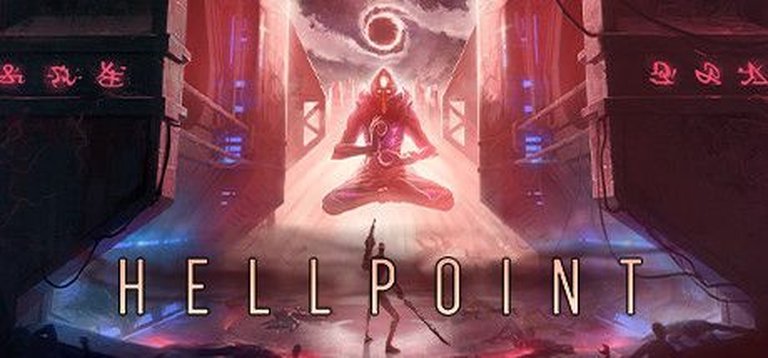
Hellpoint is a dark sci-fi action RPG set in a dystopian, cyberpunk-inspired universe where players explore a derelict space station overrun by cosmic horrors. Combining Souls-like combat with a deep, interconnected world, the game challenges players to unravel its mysteries while battling grotesque creatures and uncovering the station’s grim secrets. With a focus on atmospheric storytelling and punishing yet rewarding gameplay, Hellpoint blends fantasy and sci-fi elements into a haunting, immersive experience.
Gameplay Videos
Where to Buy Hellpoint
Hellpoint Free Download
Hellpoint Cracks & Fixes
Hellpoint Mods
Hellpoint Guides & Walkthroughs
Hellpoint Reviews & Reception
metacritic.com (64/100): In its own way Hellpoint seems like a signature Soulslike, because despite all the mechanics it borrowed from its inspirational series, Cradle Games managed to make an original game.
ign.com (60/100): A fun but unpolished demonic sci-fi twist on the Souls-like formula.
sirusgaming.com : Video games with souls-like gameplay are not for everybody, it takes a lot of practice, patience, and dying to get be entertained or if you get lucky, to unravel the story of the game.
Hellpoint Cheats & Codes
PC
Enter codes at the terminal after following the initial tutorial steps.
| Code | Effect |
|---|---|
| 100408 | Unlocks Pre-release Items |
| 642017 | Unlocks Kickstarter Items |
| 663911 | Unlocks Halloween Alien Helmet (only works during a Halloween Event) |
Hellpoint: A Flawed but Fascinating Foray into Cosmic Horror
Introduction
In the crowded landscape of Souls-like games, Hellpoint emerges as a bold, if imperfect, attempt to carve out its own niche. Developed by Cradle Games and published by tinyBuild, this 2020 action RPG transports players to the derelict Irid Novo space station, a sprawling, interconnected nightmare orbiting a supermassive black hole. While it borrows heavily from the Dark Souls formula, Hellpoint distinguishes itself with a unique sci-fi setting, dynamic environmental mechanics, and a narrative steeped in cosmic horror. However, its ambitions are often undermined by technical shortcomings, uneven design, and a lack of polish. This review delves deep into Hellpoint‘s strengths and weaknesses, exploring its development, narrative, gameplay, and legacy in the Souls-like genre.
Development History & Context
The Birth of a Cosmic Nightmare
Hellpoint was born from a Kickstarter campaign launched in 2017 by Cradle Games, a small Canadian studio based in Quebec. The campaign sought CA$50,000 but ultimately raised CA$64,500 over two years, a modest sum that underscores the game’s indie roots. The project was officially declared funded in 2019, and development proceeded under the guidance of key figures like Design Director Mathieu Boudreau and Technical Director Marc-André Jutras. The game’s vision was clear from the outset: to blend the punishing combat and interconnected world design of Dark Souls with a sci-fi horror aesthetic reminiscent of Dead Space and Event Horizon.
The gaming landscape in 2020 was already saturated with Souls-like titles, from Nioh to The Surge, each attempting to iterate on FromSoftware’s formula. Hellpoint entered this competitive space with a unique selling point: its setting. The Irid Novo space station, orbiting a black hole, offered a fresh twist on the genre’s typical medieval fantasy trappings. The black hole wasn’t just a backdrop—it was a dynamic force that influenced enemy spawns, boss encounters, and even the station’s layout, creating a sense of unpredictability.
Technological Constraints and Ambitions
Developed using the Unity engine, Hellpoint faced the challenges inherent to indie development, including limited resources and technical constraints. The game’s scope was ambitious, featuring a massive, interconnected world with dynamic events tied to the black hole’s position. However, these ambitions often clashed with the realities of budget and manpower. The result was a game that, while visually striking in places, suffered from performance issues, clunky mechanics, and a lack of polish.
Despite these challenges, Cradle Games managed to deliver a game that, at its best, captures the eerie isolation of a derelict space station. The studio’s commitment to its vision is evident in the game’s intricate lore, atmospheric sound design, and the sheer variety of its enemy and boss designs. Hellpoint may not have had the budget of a AAA title, but it had heart—and a willingness to take risks.
Narrative & Thematic Deep Dive
A Story Told in Fragments
Hellpoint embraces the cryptic, environmental storytelling that defines the Souls-like genre. There are no lengthy cutscenes or exposition dumps; instead, the narrative unfolds through scattered notes, computer terminals, and the occasional NPC interaction. The game’s setting, the Irid Novo space station, is a character in its own right—a decaying monument to human ambition, now overrun by interdimensional horrors.
The story begins with the player awakening as a “Spawn,” a nameless entity created by the Author, a massive AI project designed to gather data from parallel universes. The station has been ravaged by the Merge, a quantum cataclysm that fused minds and bodies with their counterparts from alternate realities. The result is a nightmarish blend of dimensions, where the laws of physics and sanity no longer apply. The player’s mission is to uncover the truth behind the Merge and the station’s downfall, all while battling the grotesque creatures that now inhabit its corridors.
Themes of Identity and Existential Horror
At its core, Hellpoint is a meditation on identity, memory, and the fragility of human existence. The Spawn, as the player character, is a blank slate—a being whose purpose and past are shrouded in mystery. As you explore the station, you encounter echoes of the past, distorted memories, and alternate versions of yourself from parallel universes. This blurring of reality creates a sense of existential dread, forcing the player to question their own identity and the nature of the world around them.
The game’s lore delves into the hubris of humanity’s pursuit of godhood. The Ministry of the Union, the station’s governing body, sought to create an artificial god, the Sentient, by harnessing the power of the Cosmic Gods—malevolent entities from other dimensions. Their experiments led to the Merge, a disaster that fused realities and unleashed unspeakable horrors. The themes of scientific overreach and the consequences of playing god are central to Hellpoint‘s narrative, echoing classic sci-fi horror tropes.
The Cosmic Gods and Their Cults
The Cosmic Gods—Undisturbed Defas Nemundis, Ozyormy Goija (the Master of Puppets), and Uthos the Ashen Born—are the game’s primary antagonists, each representing a different facet of human nature. Nemundis embodies the abstract subconscious, Goija the material desires, and Uthos the primal instincts. Their cults, particularly the Thespians (followers of Goija), are among the game’s most disturbing elements. The Thespians are hedonistic maniacs who have twisted their bodies into grotesque forms, sculpting entire castles from the flesh of their victims. Their presence adds a layer of body horror to the game’s already oppressive atmosphere.
The narrative’s ambiguity is both a strength and a weakness. On one hand, it encourages players to piece together the story for themselves, rewarding curiosity and exploration. On the other, it can feel frustratingly vague, leaving key questions unanswered. The lack of a clear, driving narrative may disappoint players seeking a more traditional story, but it aligns with the Souls-like tradition of letting the world speak for itself.
Gameplay Mechanics & Systems
Combat: A Dance of Death
Hellpoint‘s combat is its most polished and satisfying aspect, though it is not without its flaws. The game employs a familiar Souls-like system of light and heavy attacks, dodges, and blocks, but it introduces a few twists of its own. The healing gauge, for instance, is refilled by dealing damage to enemies, encouraging aggressive play. Up to two healing injections can be stored, adding a layer of resource management to combat.
The weapon proficiency system is one of Hellpoint‘s standout features. Weapons gain experience as you use them, unlocking special abilities and passive bonuses. This system encourages experimentation, as each weapon feels distinct and evolves alongside the player. From melee weapons like swords and axes to ranged options like railguns, the arsenal is diverse, though some weapons feel underwhelming until their abilities are unlocked.
However, the combat is not without its issues. The jump mechanic, in particular, feels floaty and imprecise, making platforming sections a chore. Enemy hitboxes can be inconsistent, and the lock-on system is unreliable, often leading to frustrating deaths. The game’s difficulty curve is also uneven, with some early bosses proving far more challenging than later encounters.
Exploration and Dynamic Events
Exploration is a core pillar of Hellpoint, and the game excels in creating a sense of discovery. The Irid Novo station is a labyrinth of interconnected corridors, hidden passages, and secret doors. The black hole’s influence adds a dynamic element to exploration, as enemy spawns and environmental hazards shift based on the station’s position relative to the black hole. This mechanic, while innovative, is poorly explained, leaving many players unaware of its significance.
The game’s lack of a map is a double-edged sword. On one hand, it forces players to rely on environmental cues and memory, enhancing the sense of immersion. On the other, it can lead to aimless wandering, especially in the station’s more convoluted sections. The fast travel system, tied to Breaches (the game’s equivalent of bonfires), is similarly flawed. Breaches must be activated with rare synchronization items, limiting their utility and making backtracking a tedious affair.
Character Progression and Customization
Hellpoint offers a robust character progression system, allowing players to tailor their Spawn to their preferred playstyle. Stats like Strength, Agility, and Energy can be upgraded using Axions (the game’s currency), while weapons and armor can be crafted and modified using blueprints found throughout the station. The crafting system is deep but poorly explained, leaving many players to stumble through it via trial and error.
The game’s lack of clear guidance extends to its UI, which is often cluttered and unintuitive. Menus are cumbersome to navigate, and key information is buried in obscure submenus. This lack of polish is a recurring issue in Hellpoint, detracting from an otherwise engaging experience.
World-Building, Art & Sound
A Station Steeped in Horror
Irid Novo is a masterclass in atmospheric world-building. The station’s design blends futuristic technology with grotesque organic elements, creating a sense of decay and corruption. Flickering lights, crumbling infrastructure, and the ever-present hum of the black hole contribute to an oppressive, claustrophobic atmosphere. The game’s visuals are a mix of striking and underwhelming, with some areas boasting impressive detail while others feel rushed or repetitive.
The enemy and boss designs are a highlight, drawing inspiration from Lovecraftian horror and body horror. Creatures like the Thespians, with their bio-organic armor and twisted forms, are particularly unsettling. The Cosmic Gods, with their otherworldly appearances, are equally impressive, though their fights can be marred by technical issues.
Sound Design: A Symphony of Dread
Hellpoint‘s sound design is one of its strongest assets. The station’s ambient noises—creaking metal, distant roars, and the eerie silence of abandoned corridors—create a palpable sense of tension. The soundtrack, composed by Mikolaj Holowko, blends sci-fi synths with haunting orchestral pieces, adapting dynamically to the player’s situation. The result is a soundscape that enhances the game’s horror elements, making every encounter feel fraught with danger.
Reception & Legacy
A Mixed Reception
Hellpoint received “mixed or average” reviews upon release, with critics praising its atmosphere and combat but criticizing its technical issues and lack of polish. On Metacritic, the game holds scores of 64 (PC), 59 (PS4), and 52 (Switch), reflecting its divisive nature. Many reviewers noted that Hellpoint felt like a game with great potential but one that was held back by its flaws.
Critics like IGN’s David Jagneaux highlighted the game’s “creepy atmosphere and satisfying combat progression” but lamented its “gratuitous bugs and performance issues.” Others, like Nintendo Life, praised the game’s concept but criticized its technical shortcomings on Switch, including crashes, frame rate issues, and long load times.
A Cult Following
Despite its flaws, Hellpoint has developed a cult following among fans of Souls-like games and sci-fi horror. Its unique setting, dynamic mechanics, and challenging combat have resonated with players willing to overlook its rough edges. The game’s post-launch support, including patches and the Blue Sun DLC, has helped to address some of its issues, though it remains a niche title in a crowded genre.
Hellpoint‘s legacy is that of a flawed but fascinating experiment—a game that dared to blend Dark Souls with Dead Space and cosmic horror. While it may not have achieved greatness, it has carved out a place for itself in the annals of Souls-like history, offering a glimpse of what the genre could become when paired with bold, innovative ideas.
Conclusion
Hellpoint is a game of contradictions. It is ambitious yet flawed, atmospheric yet janky, innovative yet derivative. Its strengths—its eerie setting, dynamic mechanics, and satisfying combat—are often overshadowed by its weaknesses—its technical issues, lack of polish, and uneven design. Yet, for all its flaws, Hellpoint is a game that lingers in the mind, a testament to the power of atmosphere and the allure of the unknown.
For fans of Souls-like games and sci-fi horror, Hellpoint is a journey worth taking, albeit one that requires patience and perseverance. It may not be a masterpiece, but it is a fascinating experiment—a game that dares to ask what happens when you fuse Dark Souls with cosmic horror and set it aboard a derelict space station. In a genre defined by iteration, Hellpoint stands out as a bold, if imperfect, step forward.
Final Verdict: 7/10 – A flawed but fascinating foray into cosmic horror, Hellpoint is a game that rewards patience and curiosity, despite its many rough edges.