
- Release Year: 2008
- Platforms: iPhone, Macintosh, Nintendo DS, Wii, Windows
- Publisher: Ludia, Inc., Ubisoft Entertainment SA
- Developer: Ludia, Inc.
- Genre: Action, Strategy, Tactics
- Perspective: 1st-person
- Gameplay: Business simulation, Game show, Managerial, quiz, trivia
- Setting: Kitchen, Restaurant
- Average Score: 57/100
Description
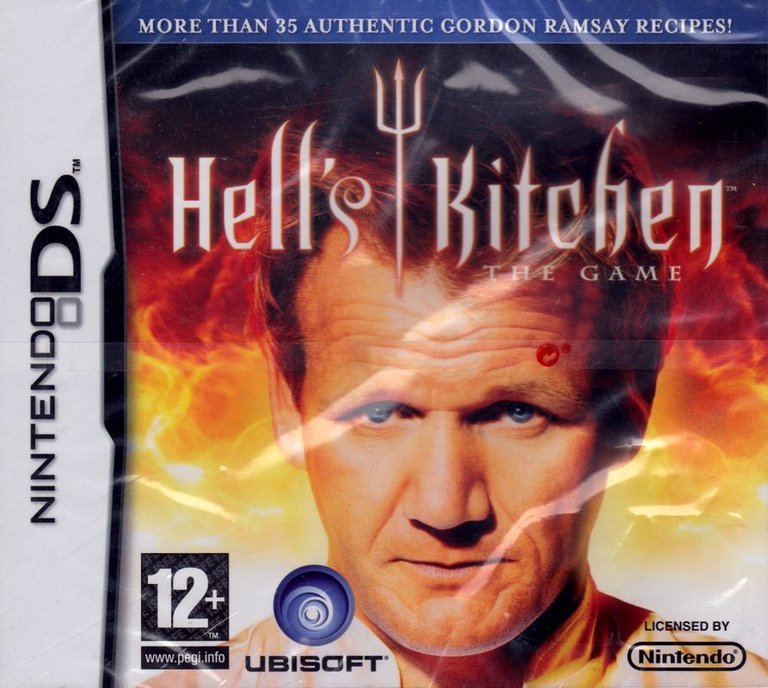
Hell’s Kitchen: The Game is a cooking simulation based on the popular FOX television show hosted by Gordon Ramsay. Players take on the role of an aspiring chef competing in intense kitchen challenges, managing time-sensitive tasks like taking orders, cooking dishes, serving meals, and cleaning up under Ramsay’s demanding supervision. The game features time-management gameplay across kitchen and dining room sections, requiring precise coordination to prepare multiple dishes simultaneously while avoiding Ramsay’s infamous criticism. Players progress from dishwasher to Senior Chef by earning up to five stars per challenge, with 35 real recipes from the TV show unlockable for real-life cooking experiences.
Gameplay Videos
Hell’s Kitchen: The Game Free Download
Hell’s Kitchen: The Game Patches & Updates
Hell’s Kitchen: The Game Guides & Walkthroughs
Hell’s Kitchen: The Game Reviews & Reception
metacritic.com (57/100): Ramsay might get paid to be a total jerk, but his psychotic bravado lends a great deal of excitement to the culinary gaming genre.
metacritic.com (57/100): Ramsay might get paid to be a total jerk, but his psychotic bravado lends a great deal of excitement to the culinary gaming genre.
Hell’s Kitchen: The Game Cheats & Codes
PC
Click on ‘Unlock Recipes’ and enter the following codes in the ‘Recipe Book’ menu.
| Code | Effect |
|---|---|
| gwsnpl | flourless chocolate cake with tangerine sauce |
| jpmxkm | simple grilled vegetables |
| tqmhnf | chocolate soufflé with mint ice cream |
| xsrzmg | crab salad with marinated avacado, tomatoes and olives |
| vjryyw | watercress soup with poached egg and potato salad |
| pzlyqi | polenta shortcake with roasted peaches and amaretto whipped cream |
| hxxxdm | chocolate bread pudding with raspberry coulis |
| jszrdg | meatloaf |
| fsyscl | mint lamb burgers |
| baczgf | caesar salad |
| jtudby | smoked ham, broad bean and scallion risotto |
| jhdffx | grilled wild striped sea bass, crushed new potatoes and cherry tomato sauce |
| pedgqi | bruschetta of sardines and tomatoes with sauce choron |
| hgmwwx | baked new york cheesecake |
| cniezb | brioche bread and butter pudding with bourbon |
| nilluq | passion fruit crème brûlée with bitter chocolate sorbet |
| ncjtvk | fresh tuna tartine |
| nogvvo | roasted chicken with herb gnocchi and mushrooms |
| cxnwoj | prime rib with sautéed confit potatoes and creamed cannolini |
| xxylsw | nectarine and almond tart with iced jersey cream |
| kvdicl | marinated tomatoes with goat’s cheese and aged balsamic vinegar |
| aapfvh | thai beef salad |
| mpqobo | blood orange upside down cake with walnuts and cream |
| zljdxn | char-grilled pork chops with caramelized apples and eggplant caviar |
| mwpdss | sea scallops with sweet potato purée, candied walnut vinaigrette |
| kmzpzw | halibut with herb crust, spinach purée and potato galette |
| tiphid | spaghetti lobster |
| mkecme | salmon with a warm salad of cucumber, olives and tomato butter sauce |
| uclrvt | buttermilk and vanilla parfait with strawberry salad |
| yrknhx | sea bass with vegetable blanquette and lemon thyme velouté |
| heuqpm | pan-fried soft shell crabs with capers |
| woruvl | pan-fried swordfish with pickled cucumber and horseradish crème fraîche |
| fkirww | seared marinated tuna with pickled daikon root |
| zobcly | warm vegetable salad with carrot and ginger vinaigrette |
| hcxaei | roasted tomato soup |
| gajsis | grapefruit and blood orange terrine with marmalade ice cream |
| rouogi | pumpkin risotto with roasted mushrooms |
| jscqkh | breast of duck with braised red cobbage and caramelized endive |
| sfovob | chocolat chip cookies |
| ewrwlc | pumpkin pie with maple syrup and pecan ice cream |
| xhopcg | zucchini cannelloni with ricotta and pine nuts |
| nzhjag | buttermilk pannacotta with mango blackberry compote |
| qizpdk | hot chocolate fondant with malt ice cream |
| cdnfhg | fillet of beef wellington with roasted carrots and mashed potatoes |
Hell’s Kitchen: The Game: Review
In the pantheon of licensed video games, few titles have managed to capture the essence of their source material as effectively as “Hell’s Kitchen: The Game.” Released in 2008, this time management cooking simulation, developed by Ludia and published by Ubisoft, offers players a chance to step into the high-pressure world of Gordon Ramsay’s culinary empire. Based on the popular FOX television show, “Hell’s Kitchen: The Game” is a testament to the potential of licensed properties when executed with vision and skill. This review will delve into the game’s development history, narrative depth, gameplay mechanics, world-building, reception, and legacy, providing a comprehensive analysis of its place in video game history.
Development History & Context
Studio and Creators’ Vision
Ludia, a Canadian video game development studio, was responsible for bringing “Hell’s Kitchen: The Game” to life. The studio had previously developed licensed games based on popular television shows, such as “The Price Is Right” and “Where’s Waldo? The Fantastic Journey.” Ludia’s experience in creating engaging and accessible games based on well-known properties was a significant factor in the game’s development.
The creators’ vision for “Hell’s Kitchen: The Game” was to replicate the intense, high-stakes atmosphere of the television show within a video game format. By focusing on time management and culinary challenges, Ludia aimed to create a game that would appeal to both fans of the show and casual gamers looking for a fun and engaging experience.
Technological Constraints and Gaming Landscape
Released in 2008, “Hell’s Kitchen: The Game” was developed during a time when the gaming landscape was rapidly evolving. The Nintendo DS, Wii, Windows, Mac OS, and iOS platforms were all popular choices for casual and family-friendly games. Ludia leveraged the technological capabilities of these platforms to create a visually appealing and mechanically sound game.
The Nintendo DS, in particular, was a significant platform for the game due to its touchscreen interface, which allowed for intuitive and responsive gameplay. The Wii, with its motion controls, also provided a unique and immersive experience for players. The PC and Mac versions of the game took advantage of the platforms’ processing power to deliver smooth and visually impressive graphics.
Narrative & Thematic Deep Dive
Plot and Characters
“Hell’s Kitchen: The Game” follows the player’s journey from a dishwasher to a senior chef in a prestigious five-star restaurant. The game is structured around a series of time management challenges that test the player’s culinary skills and ability to manage a busy kitchen. The narrative is driven by the player’s progression through various ranks, each accompanied by increasingly difficult challenges and higher stakes.
Gordon Ramsay, the host of the television show, serves as the game’s primary antagonist and mentor. His presence is felt throughout the game, as he provides guidance, criticism, and occasional verbal abuse. Ramsay’s character is central to the game’s narrative, as his high standards and demanding personality drive the player to improve and succeed.
Dialogue and Themes
The dialogue in “Hell’s Kitchen: The Game” is a mix of humorous and intense exchanges between the player and Gordon Ramsay. Ramsay’s signature profanity-laced rants are present, albeit censored, adding to the game’s authenticity and immersion. The themes of perseverance, pressure, and the pursuit of excellence are prevalent throughout the game, reflecting the high-stakes world of professional cooking.
The game’s narrative also explores the concept of teamwork and collaboration, as players must manage multiple tasks and coordinate their actions to succeed. This theme is particularly evident in the multiplayer modes, where players must work together or compete against each other to achieve their goals.
Gameplay Mechanics & Systems
Core Gameplay Loops
“Hell’s Kitchen: The Game” features two primary gameplay modes: Career and Arcade. In Career mode, players progress through a series of levels, each representing a day in the kitchen. The goal is to complete various tasks, such as taking orders, cooking, serving meals, and cleaning up, while maintaining high standards of quality and efficiency.
The game’s time management mechanics are central to its gameplay. Players must prioritize tasks, manage multiple orders simultaneously, and ensure that dishes are prepared and served on time. The game’s difficulty increases with each level, requiring players to develop strategies and improve their skills to succeed.
Combat and Character Progression
While “Hell’s Kitchen: The Game” does not feature traditional combat, the game’s challenges and obstacles serve as a form of adversity that players must overcome. The game’s progression system is based on the player’s ability to complete tasks and maintain high standards of quality. As players progress through the ranks, they unlock new recipes, ingredients, and kitchen equipment, allowing them to take on more challenging tasks.
The game’s user interface (UI) is designed to be intuitive and responsive, with clear visual indicators and controls. The touchscreen interface on the Nintendo DS version of the game is particularly noteworthy, as it allows for precise and accurate input, making the gameplay experience more immersive and enjoyable.
Innovative and Flawed Systems
One of the game’s innovative features is its use of real-time strategy elements within a time management framework. Players must manage multiple tasks simultaneously, prioritize their actions, and make strategic decisions to succeed. This approach adds depth and complexity to the gameplay, making it more engaging and challenging.
However, the game’s controls and mechanics have been criticized for being clumsy and unresponsive at times. The touchscreen interface on the Nintendo DS version, while innovative, can be finicky and imprecise, leading to frustration and difficulty. Additionally, the game’s repetitive nature and lack of variety in tasks and challenges can make it feel monotonous and uninspired.
World-Building, Art & Sound
Setting and Atmosphere
“Hell’s Kitchen: The Game” is set in a bustling restaurant kitchen, complete with all the chaos and excitement that comes with it. The game’s visual direction is designed to capture the high-pressure atmosphere of a professional kitchen, with detailed and realistic graphics that immerse players in the experience.
The game’s art style is a blend of realistic and stylized elements, with a focus on clarity and functionality. The kitchen and dining room environments are meticulously designed, with attention to detail in the layout, equipment, and decor. The game’s use of color and lighting is particularly effective, creating a sense of urgency and intensity that reflects the game’s themes.
Sound Design
The sound design in “Hell’s Kitchen: The Game” is a crucial component of its immersive experience. The game features a dynamic soundtrack that adapts to the player’s actions and the game’s events, creating a sense of tension and excitement. The use of sound effects, such as the clanging of pots and pans, the sizzling of food on the grill, and the chatter of customers, adds to the game’s authenticity and immersion.
Gordon Ramsay’s voice acting is a standout feature of the game’s sound design. His presence is felt throughout the game, as he provides guidance, criticism, and occasional verbal abuse. Ramsay’s signature profanity-laced rants are present, albeit censored, adding to the game’s authenticity and immersion.
Reception & Legacy
Critical and Commercial Reception
“Hell’s Kitchen: The Game” received mixed reviews upon its release, with critics praising its enjoyment and immersion but criticizing its controls and short length. The game’s Metacritic scores reflect this mixed reception, with the Wii and PC versions receiving “mixed” reviews and the DS version receiving “generally unfavorable” reviews.
Despite its mixed reception, “Hell’s Kitchen: The Game” was a commercial success, selling well across all platforms. The game’s popularity can be attributed to its licensed property, engaging gameplay, and immersive experience. The game’s success led to the development of a sequel, “Hell’s Kitchen VS,” which was released in 2009 for the Nintendo DSi and Nintendo 3DS.
Influence on Subsequent Games and the Industry
“Hell’s Kitchen: The Game” has had a lasting influence on the gaming industry, particularly in the realm of licensed properties and time management simulations. The game’s success demonstrated the potential of licensed properties to create engaging and immersive gaming experiences. Additionally, the game’s innovative use of real-time strategy elements within a time management framework has influenced subsequent games in the genre.
The game’s legacy can also be seen in the numerous cooking and time management simulations that have followed, such as “Cooking Mama: World Kitchen” and “Yokai Kitchen.” These games have built upon the foundations laid by “Hell’s Kitchen: The Game,” expanding and refining the genre to create new and exciting experiences for players.
Conclusion
“Hell’s Kitchen: The Game” is a testament to the potential of licensed properties when executed with vision and skill. The game’s engaging gameplay, immersive experience, and innovative mechanics have made it a standout title in the realm of time management simulations. Despite its mixed reception and criticisms, the game’s legacy and influence on the industry are undeniable.
In conclusion, “Hell’s Kitchen: The Game” is a must-play for fans of the television show and casual gamers looking for a fun and challenging experience. The game’s high-pressure atmosphere, engaging gameplay, and immersive world-building make it a standout title in the genre. Its place in video game history is secure, and its influence on subsequent games and the industry as a whole is a testament to its enduring appeal.