
- Release Year: 2018
- Platforms: Windows
- Publisher: Cosmic Crystal Games
- Developer: Cosmic Crystal Games
- Genre: Action, Shooter
- Perspective: Top-down
- Game Mode: Single-player
- Gameplay: Shooter, Space flight
- Setting: Futuristic, Sci-fi
- Average Score: 85/100
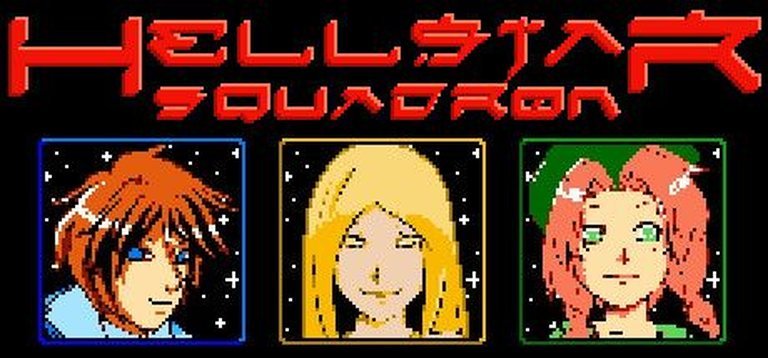
Description
HellStar Squadron is a retro-inspired, top-down 2D scrolling shoot ’em up set in a sci-fi universe where players join an elite squadron to combat a demonic rebellion threatening the galactic government, Paradise. Released in 2018 by Cosmic Crystal Games, the game features three playable ships, eight cosmic stages, intense bullet-hell gameplay, and a chiptune soundtrack, all wrapped in a nostalgic arcade experience with CRT shader and TATE mode options.
Gameplay Videos
Where to Buy HellStar Squadron
PC
HellStar Squadron Patches & Updates
HellStar Squadron Guides & Walkthroughs
HellStar Squadron Reviews & Reception
steambase.io (85/100): HellStar Squadron has earned a Player Score of 85 / 100.
store.steampowered.com (86/100): Positive (86% of 23 user reviews for this game are positive).
clickbliss.net : HellStar Squadron is a straightforward game. It’s almost obvious in its construction, though it ended up being a nice break from the deep intensity that saturates the genre.
HellStar Squadron: A Retro Revival with Demonic Flair and Missed Potential
Introduction: A Bullet Hell with Identity Issues
HellStar Squadron (2018) is a curious artifact—a game that wears its influences on its sleeve while struggling to carve out its own identity. Developed by the one-person studio Cosmic Crystal Games, this top-down, 2D scrolling shoot ’em up (or “shmup”) promises a “fresh, retro-inspired arcade experience” where players pilot one of three ships to battle a demonic rebellion threatening the galactic utopia of Paradise. On paper, it ticks all the boxes of a classic bullet hell: chiptune soundtracks, CRT shaders, TATE mode support, and bombastic boss battles. Yet, beneath its pixelated veneer lies a game that feels caught between homage and half-hearted ambition.
This review dissects HellStar Squadron in exhaustive detail—its development context, narrative quirks, gameplay mechanics, aesthetic choices, and legacy—to determine whether it’s a hidden gem or a forgotten footnote in the crowded shmup genre.
Development History & Context: A Solo Dev’s Love Letter to Arcades
The Studio Behind the Stars
HellStar Squadron is the brainchild of CosmicCrystal (real name undisclosed), a solo developer operating under Cosmic Crystal Games. The studio’s portfolio is modest but eclectic, with contributions to games like Spellbound Survivors and Arcade Paradise. What stands out is the indie ethos—a small team (or in this case, one person) crafting a passion project with limited resources.
The game was built using GameMaker Studio, a tool favored by indie devs for its accessibility. This choice explains both the game’s retro aesthetic and some of its technical limitations. Released on May 7, 2018, HellStar Squadron entered a market already saturated with shmups, from Jamestown’s steampunk flair to Danmaku Unlimited’s precision bullet patterns. Its $1.99 price tag positioned it as a budget-friendly impulse buy, but also signaled its niche appeal.
The Gaming Landscape in 2018
2018 was a golden year for indie shmups, with titles like:
– Ikaruga (re-released on modern platforms)
– Steredenn: Binary Stars (rogue-lite shmup hybrid)
– R-Type Dimensions EX (remastered classic)
HellStar Squadron didn’t aim to compete with these heavyweights. Instead, it leaned into nostalgia, offering a simplified, arcade-style experience with modern conveniences (save states, multiple difficulties). The inclusion of CRT filters and TATE mode (vertical screen orientation, a staple of arcade cabinets) was a clear nod to ’80s and ’90s shooters like R-Type and Gradius.
However, the game’s demonic vs. celestial conflict felt out of step with the era’s trends. While games like Doom Eternal (2020) would later popularize hellish aesthetics in shooters, HellStar Squadron’s B-movie demon rebellion lacked the thematic depth or visual spectacle to make it memorable.
Narrative & Thematic Deep Dive: A Story That Fizzles Like a Dying Star
Plot Summary: Paradise Under Siege
The game’s premise is simple yet intriguing:
– Setting: The year is 207X AD. The galactic government “Paradise” (a name dripping with irony) rules over humanity’s interstellar colonies.
– Conflict: A demonic rebellion (led by a rogues’ gallery of villainous commanders) threatens to overthrow Paradise.
– Protagonists: The HellStar Squadron—three pilots with vaguely defined personalities—are humanity’s last hope.
On paper, this setup screams for a dark, morally ambiguous narrative. The name “Paradise” alone suggests dystopian undertones—is this government truly benevolent, or is it a fascist regime hiding behind a utopian facade? The demonic rebels could have been sympathetic freedom fighters, but the game squanders this potential.
Characters: Cardboard Cutouts in Space
The three playable ships (and their pilots) are:
1. Ruby (Red Ship) – The “balanced” option.
2. Sapphire (Blue Ship) – Supposedly faster, but differences are negligible.
3. Emerald (Green Ship) – Fires side shots, offering better screen coverage.
Problem: Their dialogue is nearly identical, and their personalities are nonexistent. The villains fare slightly better—each boss has a pre-fight monologue revealing their motives, but these moments are underdeveloped. One boss mentions “Hell-Energy” (a delightfully cheesy concept), but the game never explains what it is.
Themes: A Missed Opportunity for Depth
The game’s central conflict—Paradise vs. Demons—could have explored:
– Authoritarianism vs. Rebellion (Is Paradise really “good”?)
– Religious Allegory (Demons as oppressed underclasses?)
– Cosmic Horror (Are the demons eldritch abominations?)
Instead, it plays it safe:
– Good vs. Evil is black-and-white.
– The demons are just bad guys with no redeeming qualities.
– The ending is abrupt, with no post-credits twist or hidden lore.
Verdict: The narrative is serviceable but forgettable—a wasted chance to elevate the game beyond generic space shooting.
Gameplay Mechanics & Systems: A Mixed Bag of Retro Charm and Frustration
Core Gameplay Loop: Dodge, Shoot, Repeat
HellStar Squadron follows the classic shmup formula:
1. Scrolling stages (8 in total) with wave-based enemy spawns.
2. Boss fights at the end of each stage.
3. Power-ups (shields, bombs, weapon upgrades) dropped by enemies.
What Works:
✅ Boss battles are satisfying—each has unique attack patterns and visual flair.
✅ Bombs deal massive damage to bosses, encouraging strategic use.
✅ Multiple difficulties (Normal, Hard, Veteran) cater to different skill levels.
What Doesn’t Work:
❌ Ship differences are minimal—only Emerald’s side shots feel distinct.
❌ Power-up spawns are random and unpredictable—sometimes appearing mid-cutscene.
❌ Screen scroll speed is painfully slow, making stages feel longer than they are.
❌ Bombs have a delay, making them useless for last-second saves.
Combat & Progression: A Lack of Depth
- Primary Weapon: A wide-spread shot (effective but generic).
- Secondary Weapon: A laser beam (powerful but drains energy).
- Bombs: Screen-clearing nukes (best used on bosses).
Issue: There’s no meaningful progression. Unlike Ikaruga’s polarity system or Gradius’s weapon customization, HellStar Squadron lacks depth. You don’t unlock new abilities—just temporary power-ups.
UI & Controls: Functional but Uninspired
- Controls: Keyboard or gamepad (no remapping).
- HUD: Minimalist—health, bombs, score.
- CRT & TATE modes: A nice touch for retro purists.
Problem: The lack of leaderboards (a staple of shmups) is a glaring omission.
World-Building, Art & Sound: Aesthetic Nostalgia with Flaws
Visuals: Pixel Art with Contrast Issues
- Art Style: Low-res pixel art with a limited color palette.
- Strengths:
- Boss designs are creative (especially later stages).
- Stage 8’s “Hell” setting stands out with its fiery red aesthetic.
- Weaknesses:
- Bullet visibility issues—red bullets on red backgrounds make dodging unnecessarily hard.
- Repetitive enemy designs—most foes are palette swaps.
Sound Design: Chiptune Beats with Mixed Execution
- Music: A chiptune soundtrack that fits the retro theme but lacks memorability.
- Sound Effects:
- Gunfire and explosions are punctual but poorly mixed—audio clipping occurs during intense moments.
- Boss Rush mode has no music, making it feel hollow.
Verdict: The aesthetic is cohesive but lacks polish. It looks and sounds like a retro game, but not always in a good way.
Reception & Legacy: A Cult Following or a Forgotten Relic?
Critical & Commercial Reception
- Steam Reviews: 86% Positive (23 reviews).
- Player Score (Steambase): 85/100.
- Indie Hell Zone Review: “6/10 at best”—criticized for tedious gameplay and weak narrative.
Why the Divide?
– Casual players appreciate its accessibility and low price.
– Shmup veterans find it too simplistic and lacks replayability.
Legacy: Did It Influence the Genre?
- No major impact—it didn’t spawn clones or spiritual successors.
- A footnote in indie shmup history, remembered mostly by retro enthusiasts.
Conclusion: A Flawed but Charming Retro Throwback
HellStar Squadron is not a bad game, but it’s not a great one either. It succeeds as a budget-friendly, nostalgic shmup but fails to innovate or leave a lasting impression.
Final Verdict: 6.5/10 – “A Decent Distraction”
✅ Buy if: You want a cheap, casual shmup with retro aesthetics.
❌ Skip if: You crave depth, replayability, or narrative substance.
Where It Shines:
– Boss fights are fun and well-designed.
– CRT/TATE modes add authentic arcade charm.
– $1.99 price makes it a low-risk purchase.
Where It Fails:
– Story is underdeveloped.
– Gameplay lacks depth.
– Visual/sound design has flaws.
Final Thought:
HellStar Squadron is like a B-movie shmup—entertaining in the moment, but forgotten soon after. It’s worth a playthrough for fans of the genre, but don’t expect it to join the ranks of classics like Ikaruga or Gradius.
The galaxy needed a hero… but it got a decent indie game instead. 🚀🔥