
- Release Year: 2004
- Platforms: Windows
- Publisher: ak tronic Software & Services GmbH, Noviy Disk, Ubisoft Entertainment SA
- Developer: Blue Byte Studio GmbH
- Genre: Strategy, Tactics
- Perspective: Diagonal-down
- Game Mode: LAN, Online PVP, Single-player
- Gameplay: Base building, Fog of war, Real-time strategy, Unit recruitment
- Setting: Fantasy, Medieval
- Average Score: 66/100
Description
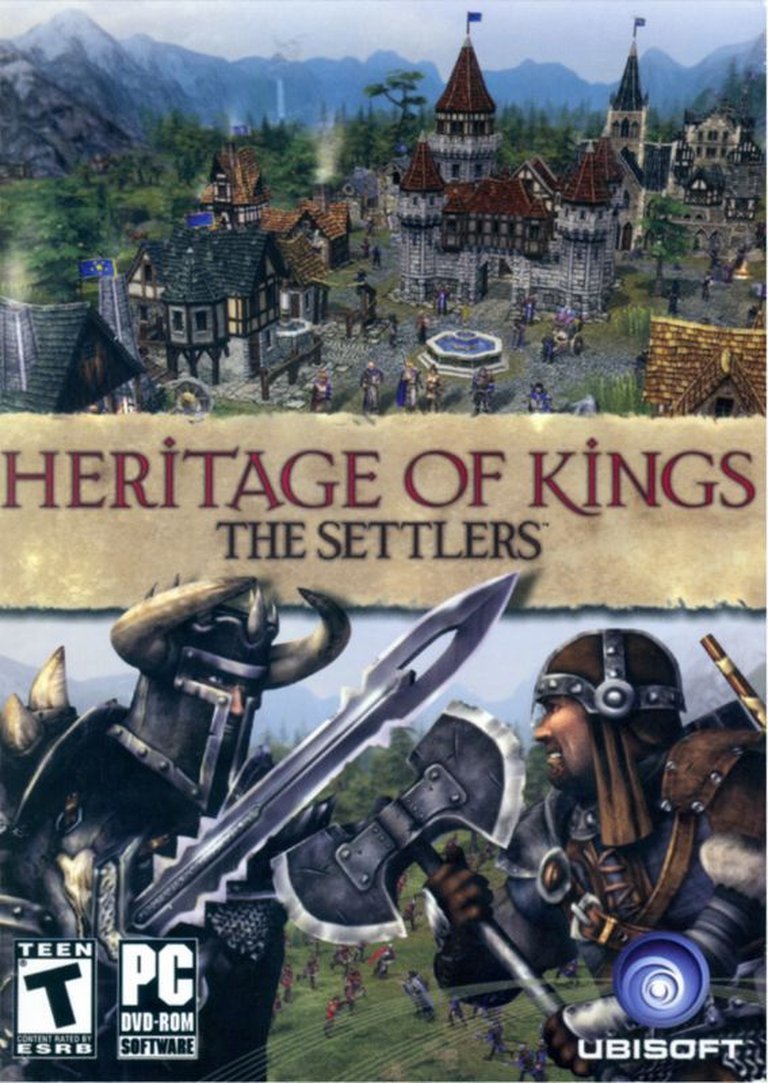
Heritage of Kings: The Settlers is set in a world inspired by Arthurian Britain, where players guide young Dario and his fellowship of companions to restore the fallen empire once ruled by Dario’s father. As the fifth installment in the Settlers franchise, this game shifts focus from economic micromanagement to traditional real-time strategy gameplay, requiring base construction and recruitment of military units like spearmen, swordsmen, and horsemen to ensure victory.
Gameplay Videos
Where to Buy Heritage of Kings: The Settlers
PC
Heritage of Kings: The Settlers Cracks & Fixes
Heritage of Kings: The Settlers Patches & Updates
Heritage of Kings: The Settlers Mods
Heritage of Kings: The Settlers Guides & Walkthroughs
Heritage of Kings: The Settlers Reviews & Reception
metacritic.com (58/100): Mixed or Average
gamespot.com (64/100): A glacial pace serves to undermine this otherwise colorful and charming real-time strategy game.
steambase.io (84/100): The Settlers: Heritage of Kings – History Edition has earned a Player Score of 84 / 100.
liquisearch.com (58/100): The game received mixed to negative reviews on release.
Heritage of Kings: The Settlers Cheats & Codes
PC
Enter codes on the campaign map selection screen and press Enter.
| Code | Effect |
|---|---|
| ericisdead | The Great River |
| drakeisahero | Battle of Theley |
| yukiisnice | Trading Caravans |
| aricanshoot | Race against Time |
| heliasiswise | Money or Life |
| kalaisevil | Flee or Fight |
| dariohasabird | Unknown Land |
| kerberosisgone | Flooded Land |
| hamburgerhill | Old King’s Castle |
| hotzenplotz | Ridgewood |
Heritage of Kings: The Settlers: Review
In the pantheon of real-time strategy games, few titles have undergone as dramatic a transformation as Heritage of Kings: The Settlers. Released in 2004, this fifth installment in the beloved Settlers series marked a bold departure from the franchise’s roots, blending the series’ signature economic management with the fast-paced action of traditional RTS games. This review will delve into the game’s development history, narrative, gameplay mechanics, world-building, reception, and legacy, providing a comprehensive analysis of this ambitious but controversial title.
Introduction
Heritage of Kings: The Settlers is a game of contrasts. On one hand, it retains the core economic management principles that defined the Settlers series, offering players a deep and engaging experience in resource gathering, production chains, and settlement development. On the other hand, it introduces real-time strategy elements, including combat mechanics, hero units, and a more dynamic campaign structure. This hybrid approach was both praised and criticized, with some fans lauding the game’s innovation and others lamenting the loss of the series’ unique identity. This review will explore these tensions, examining how Heritage of Kings both honors and subverts the Settlers legacy.
Development History & Context
The Studio and Creators’ Vision
Developed by Blue Byte Software and published by Ubisoft, Heritage of Kings was a product of a studio with a rich history in the strategy genre. Blue Byte had previously developed the first four Settlers games, each of which had established the series as a staple in the city-building and economic simulation genres. However, by the early 2000s, the studio faced a challenge: how to evolve the series while retaining its core appeal.
The development team, led by creative director Thomas Friedmann and producer Benedikt Grindel, sought to modernize the series by incorporating elements from other successful RTS titles. This decision was influenced by feedback from professional critics, focus groups, and forums, which highlighted the need for a more accessible and dynamic gameplay experience. The team also aimed to appeal to a broader international audience, particularly in North America, where the series had traditionally struggled to gain traction.
Technological Constraints and the Gaming Landscape
The early 2000s marked a period of rapid technological advancement in the gaming industry. The shift from 2D to 3D graphics was well underway, and developers were experimenting with new gameplay mechanics to take advantage of these advancements. Heritage of Kings was one of the first Settlers games to feature 3D graphics, a decision that necessitated significant changes to the series’ visual style and gameplay mechanics.
The use of the RenderWare engine allowed for more detailed and interactive environments, but it also required the team to rethink the series’ signature “Wuselfaktor” (the charming, bustling activity of the settlers). The transition to 3D graphics necessitated a more streamlined approach to character animations and interactions, which in turn influenced the game’s design philosophy.
The Evolution of the Settlers Series
The Settlers series had always been known for its complex economic systems and intricate production chains. However, by the time of Heritage of Kings‘ development, the team recognized that these systems had become increasingly convoluted. The decision to simplify the economic mechanics was driven by a desire to make the game more accessible to a wider audience while retaining the series’ core identity.
This shift was not without controversy. Many longtime fans of the series were initially skeptical of the changes, fearing that the game would lose its unique charm. However, the development team was confident that the new direction would breathe new life into the franchise, attracting both new and returning players.
Narrative & Thematic Deep Dive
Plot and Characters
Heritage of Kings is set in a medieval fantasy world, where players take on the role of Dario, a young man who discovers he is the rightful heir to the throne of a once-prosperous empire. The game’s narrative follows Dario as he seeks to reclaim his inheritance and unite the divided princedoms under his rule.
The story is told through a series of missions, each of which presents a unique challenge or objective. Along the way, Dario is joined by a diverse cast of characters, including his childhood friend Erec, the thief Ari, the miner Pilgrim, and the weapon designer Salim. Each character brings their own skills and abilities to the table, adding depth to the gameplay and narrative.
The game’s narrative is notable for its emphasis on character development and moral choices. Players are often faced with difficult decisions that have consequences for the story and the world. This focus on narrative depth and player agency sets Heritage of Kings apart from many other RTS titles, which often prioritize gameplay mechanics over storytelling.
Themes and Motifs
The game’s central theme is the struggle for power and the responsibilities that come with it. Dario’s journey is not just about reclaiming his throne but also about learning what it means to be a leader. The game explores themes of loyalty, betrayal, and the cost of war, providing a rich and engaging narrative backdrop for the gameplay.
The game’s setting, inspired by Arthurian legends, adds a layer of myth and mystery to the story. The world of Heritage of Kings is filled with ancient artifacts, magical creatures, and hidden secrets, all of which contribute to the game’s immersive atmosphere.
Gameplay Mechanics & Systems
Core Gameplay Loops
Heritage of Kings combines elements of city-building and real-time strategy, creating a unique gameplay experience. Players must manage resources, construct buildings, and train units, all while engaging in combat and strategic decision-making.
The game’s economic system is streamlined compared to previous Settlers titles, with a focus on gathering resources, managing production chains, and optimizing worker efficiency. Players must balance the needs of their settlers with the demands of warfare, creating a dynamic and engaging gameplay loop.
Combat and Character Progression
Combat in Heritage of Kings is more dynamic and action-oriented than in previous Settlers games. Players can control a variety of units, including swordsmen, spearmen, archers, and cavalry, each with their own strengths and weaknesses. The game also introduces hero units, which possess unique abilities and can turn the tide of battle.
Character progression is tied to the game’s technology trees, which allow players to research new units, buildings, and upgrades. This system provides a sense of progression and customization, rewarding players for their strategic decisions.
UI and Innovative Systems
The game’s user interface is designed to be intuitive and accessible, with a focus on providing clear and concise information. The UI includes a minimap, resource displays, and unit selection tools, all of which help players manage the game’s complex systems.
One of the game’s most innovative systems is its weather mechanics. Players can build a weather plant, which allows them to control the weather conditions on the battlefield. This system adds a strategic layer to the gameplay, as players can use weather to their advantage in combat or resource gathering.
World-Building, Art & Sound
Setting and Atmosphere
Heritage of Kings is set in a medieval fantasy world, inspired by the legends of King Arthur and the knights of the round table. The game’s world is filled with lush forests, towering castles, and bustling villages, all rendered in detailed 3D graphics.
The game’s atmosphere is enhanced by its use of lighting and shadows, which create a sense of depth and realism. The world feels alive, with settlers going about their daily tasks, merchants trading goods, and soldiers patrolling the streets.
Visual Direction
The game’s visual style is a departure from the series’ earlier 2D graphics, featuring detailed 3D models and environments. The use of the RenderWare engine allows for smooth animations and dynamic lighting, creating a visually stunning experience.
The game’s art direction is notable for its attention to detail. Buildings, units, and environments are all meticulously crafted, with a focus on historical accuracy and aesthetic appeal. The game’s use of particle effects and shaders adds to its visual richness, creating a world that is both immersive and engaging.
Sound Design
The game’s soundtrack is composed by Michael Pummel, who creates a sweeping and epic score that complements the game’s medieval setting. The music ranges from orchestral pieces to more subdued, atmospheric tracks, all of which contribute to the game’s immersive atmosphere.
The game’s sound effects are equally impressive, with a focus on realism and detail. The sound of footsteps, the clash of swords, and the roar of cannons all contribute to the game’s dynamic and engaging audio experience.
Reception & Legacy
Critical and Commercial Reception
Heritage of Kings received mixed reviews upon its release, with critics praising its visuals, sound design, and innovative gameplay mechanics, while criticizing its pacing, AI, and mission design. The game’s Metacritic score of 58 reflects this divide, with some reviewers lauding its ambition and others questioning its departure from the series’ roots.
Despite the mixed reception, the game was a commercial success, selling over 200,000 units in Germany within the first two months of its release. By 2006, worldwide sales had reached 500,000 units, with 350,000 of those sales coming from the German market. The game’s success demonstrated that there was still a strong demand for the Settlers series, even as it evolved and changed.
Influence on Subsequent Games and the Industry
Heritage of Kings had a significant impact on the Settlers series and the broader gaming industry. The game’s hybrid approach to city-building and real-time strategy influenced subsequent titles in the series, including The Settlers: Rise of an Empire and The Settlers 7: Paths to a Kingdom.
The game’s emphasis on narrative and character development also set a precedent for future strategy games, demonstrating that storytelling could be a powerful tool for engaging players. This approach has been adopted by other titles in the genre, including Civilization VI and Anno 1800.
Conclusion
Heritage of Kings: The Settlers is a game of contrasts, blending the series’ signature economic management with the fast-paced action of traditional RTS games. While it received mixed reviews upon its release, the game’s innovative approach to gameplay and storytelling has had a lasting impact on the series and the broader gaming industry.
In the end, Heritage of Kings stands as a testament to the Settlers series’ ability to evolve and adapt, even as it remains true to its core principles. Whether viewed as a bold experiment or a misstep, the game’s legacy is undeniable, and its influence can still be seen in the strategy games of today.