
- Release Year: 2004
- Platforms: Windows
- Publisher: ak tronic Software & Services GmbH, Novitas Publishing GmbH, Ubisoft Entertainment SA
- Genre: Compilation
- Perspective: Top-down
- Game Mode: Hotseat, LAN, Online Co-op, Single-player
- Gameplay: Turn-based strategy
- Setting: Fantasy
- Average Score: 83/100
Description
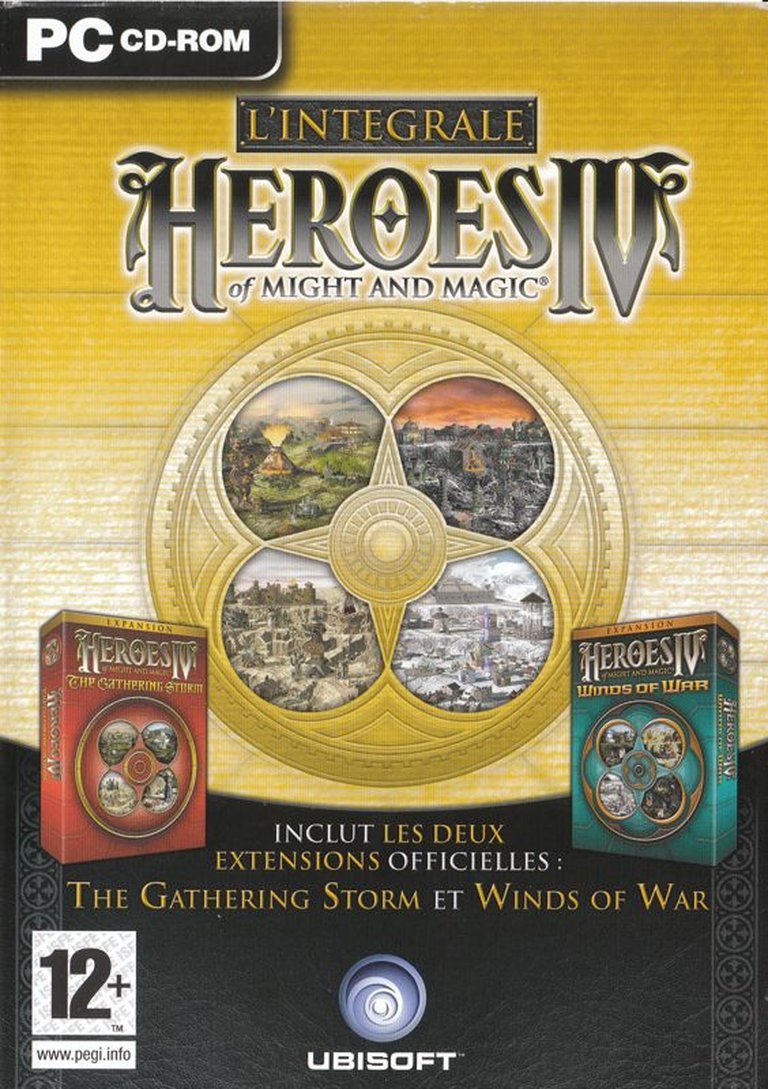
Heroes of Might and Magic IV: Complete is a turn-based strategy compilation set in a vibrant fantasy universe, featuring the base game and two expansions: The Gathering Storm and Winds of War. Players lead legendary heroes and armies across diverse kingdoms, engaging in tactical battles, managing resources, and exploring rich lore in a quest for dominance. The game expands on its predecessors with deeper hero customization, dynamic combat, and a blend of role-playing and empire-building mechanics across multiple campaigns and multiplayer modes.
Gameplay Videos
Where to Buy Heroes of Might and Magic IV: Complete
PC
Heroes of Might and Magic IV: Complete Free Download
Heroes of Might and Magic IV: Complete Patches & Updates
Heroes of Might and Magic IV: Complete Mods
Heroes of Might and Magic IV: Complete Reviews & Reception
metacritic.com (84/100): The title takes everything that has ever been great about the series and elevates it to the next level.
mobygames.com (81/100): Average score: 81% (based on 1 ratings)
happygamer.com : Heroes of Might and Magic IV is the fourth game of the series, which was developed on a tight budget, and the poor ratings by critics showed this.
monstercritic.com (84/100): Heroes of Might and Magic IV is a turn-based strategy game developed by Gus Smedstad through New World Computing and published by the 3DO Company for Microsoft Windows-based personal computers in 2002.
Heroes of Might and Magic IV: Complete Cheats & Codes
PC
Press ‘Tab’ during gameplay and enter the code.
| Code | Effect |
|---|---|
| nwcambrosia | Free materials |
| nwcgosolo | Auto game play |
| nwcares | Win combat |
| nwcachilles | Lose combat |
| nwcathena | Gain skill |
| nwcthoth | Increase level |
| nwcisis | Learn spells |
| nwcragnarok | Lose scenario |
| nwcvalhalla | Win scenario |
| nwchermes | Unlimited movement |
| nwcsphinx | Reveal puzzle map |
| nwcsacrificetothegods | Maximum luck |
| nwcpan | Maximum morale |
| nwccityoftroy | Build all structures |
| nwcimagod | Access cheat menu |
| nwcprometheus | Shroud FOV |
| nwchephaestus | Elven chainmail |
| nwcettubrute | Dagger Of Despair |
| nwcexcalibur | Ring Of Greater Negation |
| nwcnibelungenlied | Sword Of The Gods |
| nwctristram | Crusaders |
| nwclancelot | Champions |
| nwcstmichael | Angels |
| nwcsevenlittleguys | Dwarves |
| nwcmerlin | Magi |
| nwccronus | Titans |
| nwcblahblah | Vampires |
| nwchades | Devils |
| nwcunderthebridge | Trolls |
| nwckingminos | Minotaur |
| nwcxanthus | Nightmares |
| nwcfafnir | Black Dragons |
| nwcdoyousmellbrownies | Sprites |
| nwcfenrir | Wolves |
| nwcfixmyshoes | Elves |
| nwcthelast | Unicorn |
| nwcra | Phoenix |
| nwcvalkyries | Ogre Magi |
| nwcgrendel | Behemoth |
| nwcposeidon | Sea Monster |
| nwcaphrodite | Tatooed White Trash (hero transformation) |
| nwcoldman | Old Man Jack (hero transformation) |
Macintosh
Press ‘Tab’ during gameplay and enter the code.
| Code | Effect |
|---|---|
| nwcambrosia | Free materials |
| nwcgosolo | Auto gameplay |
| nwcares | Win combat |
| nwcachilles | Lose combat |
| nwcathena | Gain skill |
| nwcthoth | Increase level |
| nwcisis | Learn Spells |
| nwcragnarok | Lose Scenario |
| nwcvalhalla | Win scenario |
| nwchermes | Unlimited movement |
| nwcsphinx | Reveal puzzle map |
| nwcsacrificetothegods | Maximum luck |
| nwcpan | Maximum morale |
| nwccityoftroy | Build all structures |
| nwcimagod | Access cheat menu |
| nwcprometheus | Shroud FOV |
Heroes of Might and Magic IV: Winds of War (PC)
Press ‘Tab’ during gameplay and enter the code, then press Enter.
| Code | Effect |
|---|---|
| nwcstmichael | Adds 20 angels |
| nwcgrendel | Adds 20 behemoths |
| nwcfafnir | Adds 20 black dragons |
| nwclancelot | Adds 20 champions |
| nwctristram | Adds 20 crusaders |
| nwchades | Adds 20 devils |
| nwcsevenlittleguys | Adds 20 dwarves |
| nwcfixmyshoes | Adds 20 elves |
| nwcmerlin | Adds 20 magi |
| nwckingminos | Adds 20 minotaurs |
| nwcxanthus | Adds 20 nightmares |
| nwcvalkyries | Adds 20 ogre magi |
| nwcra | Adds 20 phoenixs |
| nwcposeidon | Adds 20 sea monsters |
| nwcdoyousmellbrownies | Adds 20 sprites |
| nwccronus | Adds 20 titans |
| nwcunderthebridge | Adds 20 trolls |
| nwcthelast | Adds 20 unicorns |
| nwcblahblah | Adds 20 vampires |
| nwcfenrir | Adds 20 wolves |
| nwchermes | Adds movement points |
| nwcambrosia | Adds resources |
Heroes of Might and Magic IV: Complete: A Fractured Legacy Revisited
Introduction
Heroes of Might and Magic IV: Complete stands as a defiant anomaly in the pantheon of turn-based strategy classics—a game hailed for its bold innovations yet haunted by the shadow of its legendary predecessor. Released in 2004, this anthology bundled the divisive base game and its two expansions (The Gathering Storm and Winds of War), marking both the end of developer New World Computing and the twilight of 3DO’s stewardship over the franchise. My thesis is clear: Heroes IV is a flawed but fascinating experiment—a bridge between eras that dared to reinvent its formula at great cost, leaving an indelible mark on players willing to embrace its audacity.
Development History & Context
A Studio Under Siege
New World Computing, under the financial strain of parent company 3DO’s decline, developed Heroes IV with a skeleton crew. Originally slated for late 2001, the game’s launch was delayed to March 2002 due to understaffing—only two programmers were initially assigned, later expanding to six just months before completion. Director David Mullich and designer Gus Smedstad envisioned a “reinvention, not refinement” of the Heroes formula, but technological constraints of the era forced compromises. The shift to isometric 3D demands—a response to the booming popularity of Age of Empires II and Warcraft III—strained the studio’s resources, resulting in rudimentary animations and a polarizing art style.
The Gaming Landscape of 2002
Heroes IV launched into a strategy genre dominated by real-time giants like Warcraft III: Reign of Chaos. Its turn-based structure felt archaic to some, yet the game’s focus on RPG-like hero progression anticipated later hybrids like Songs of Conquest. Financially, 3DO’s bankruptcy in 2003—mere months after Winds of War’s release—soured the game’s legacy. Ubisoft’s subsequent acquisition of the franchise for $1.3 million ensured survival but severed ties to Heroes IV’s narrative continuity.
Narrative & Thematic Deep Dive
Axeoth: A World Born from Ashes
Heroes IV’s plot follows the Reckoning—a cataclysm triggered by the clash of Armageddon’s Blade and the Sword of Frost, which annihilates Enroth and strands refugees in the alien world of Axeoth. The six campaigns eschew a linear arc, instead offering standalone chronicles of survivors forging new kingdoms:
– The True Blade (Haven): Knight Lysander battles a fraudulent heir to the Gryphonheart dynasty, probing themes of legitimacy and leadership.
– Half-Dead (Necropolis): The tragic lich Gauldoth grapples with his hybrid nature while defending Axeoth from cosmic annihilation.
– The Price of Peace (Academy): Emilia Nighthaven confronts Gavin Magnus’ technocratic utopia, questioning free will versus forced harmony.
Philosophical Undertones
Each campaign wrestles with identity and renewal. The Gathering Storm’s Hexis embodies reckless ambition, while Winds of War’s Channon invasion mirrors realpolitik. Dialogue—though often utilitarian—elevates heroes like Waerjak (a barbarian rejecting Kilgor’s warmongering) into mythic figures. The expansions deepen this introspection: Glory of Days Past nostalgizes lost traditions, while A Pirate’s Daughter frames Tawni Balfour’s anarchic rise as a rebuke to hereditary power.
Gameplay Mechanics & Systems
The Hero Takes the Field
Heroes IV’s most radical shift was placing heroes directly in combat—no longer ethereal commanders but vulnerable units. This innovation split fans:
– Pros: Heroes could now tank damage, cast spells mid-melee, and evolve into over 40 classes (e.g., Necromancer = Death Magic + Leadership).
– Cons: Poorly balanced skills (e.g., Grandmaster Stealth rendered heroes invisible) led to cheese tactics. Hero deaths also crippled armies, necessitating costly resurrections.
Town Alignment & Strategic Trade-Offs
Each of the six factions—Haven (Life), Necropolis (Death), Academy (Order), Asylum (Chaos), Preserve (Nature), and Stronghold (Might)—forced players to choose between two creatures per tier (e.g., Genies vs. Nagas for Academy’s level 3 slot). This introduced agonizing decisions but sacrificed the creature upgrades fans adored from Heroes III. Resource management was streamlined: mines no longer required weekly visits, while caravans automated troop transfers—a QoL improvement that dulled the logistical challenge.
Combat & Skills Overhaul
Square-grid battles replaced hexes, allowing for more dynamic positioning but muddying tactical clarity. The revamped skill tree offered nine primary skills (five magic, four might) with 36 secondaries, enabling deep customization (e.g., a Diplomacy-spec hero could recruit neutral armies passively). However, overpowered magic schools (Chaos’ Implosion) rendered physical builds obsolete late-game.
World-Building, Art & Sound
Aesthetic Contradictions
Heroes IV’s 3D isometric visuals polarized players. Towns like the Necropolis’ lava-choked spires and the Preserve’s moss-draped glades oozed atmosphere, but unit sprites—particularly the infamous “potato” Peasant—were derided as clumsy. The UI, while functional, felt cluttered compared to Heroes III’s elegance.
A Sonic Masterpiece
Paul Romero’s score remains iconic. Tracks like Elven Theme (with its haunting flute) and Haven Town (triumphant brass) elevated the narrative, while The Gathering Storm’s ominous leitmotifs deepened the expansions’ stakes. The sound design—creature growls, spell incantations—was crisp but uneven (e.g., Siege Engines’ wooden thunks lacked impact).
Reception & Legacy
Critics vs. Players
The base game scored 84/100 on Metacritic, praised for depth but lambasted for bugs and AI issues (“allies” would hoard resources or suicide armies). Expansions fared worse: The Gathering Storm (64/100) was deemed repetitive, while Winds of War (58/100) failed to innovate. Yet players rated it 4.0/5 on MobyGames, citing unmatched narrative ambition.
Modding Renaissance & Cult Status
Post-release, mods like Equilibris fixed balance issues, while Heroes IV Ultimate added HD support and new creatures. Today, communities like Celestial Heavens host tournaments, proving its enduring appeal. Its legacy echoes in indie darlings (Hero’s Hour) and Ubisoft’s Heroes VII (which borrowed its multi-hero armies).
Conclusion
Heroes of Might and Magic IV: Complete is neither the series’ apex nor its nadir—it’s a defiant outlier. Its missteps (rushed AI, divisive art) are undeniable, but its bold reinvention of hero roles, morally grey storytelling, and modular faction-building cement its cult classic status. For historians, it’s a snapshot of a studio straining against its limits; for players, it remains a flawed masterpiece whispering of roads untraveled. In the pantheon of turn-based strategy, Heroes IV is the bridge that dared to collapse—and in its rubble, we find diamonds.