
- Release Year: 2007
- Platforms: Windows
- Publisher: Beijing Unistar Software Co., Ltd., TangTang Soft, UserJoy Technology Co., Ltd.
- Developer: UserJoy Technology Co., Ltd.
- Genre: Strategy, Tactics
- Perspective: Diagonal-down
- Gameplay: Compound soldier classes, Comradeship skills, Fictional scenarios, Item enhancement system, Level 3 soldier classes, Wargame
- Setting: Ancient, China, Imperial
- Average Score: 79/100
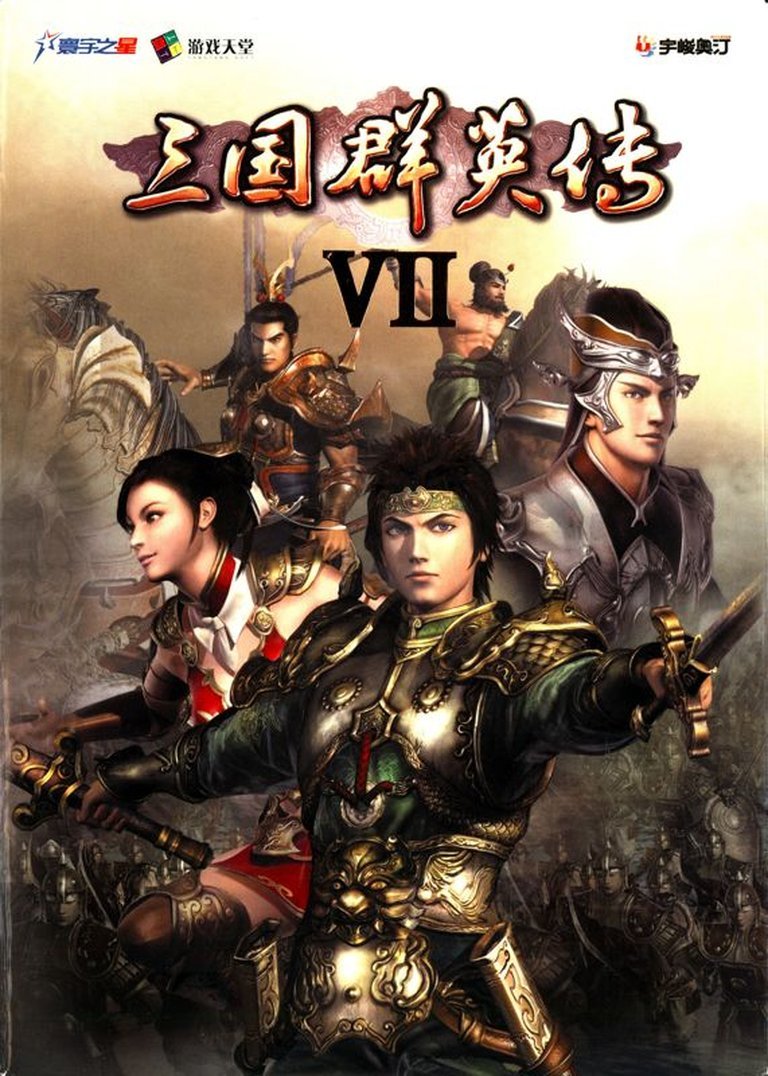
Description
Heroes of the Three Kingdoms 7 is a real-time strategy wargame set in ancient China during the Three Kingdoms era. It introduces new features such as comradeship skills activated by specific officer combinations, enhanced soldier classes, an item enhancement system, and fictional scenarios, building upon the mechanics of its predecessor.
Heroes of the Three Kingdoms 7 Mods
Heroes of the Three Kingdoms 7 Guides & Walkthroughs
Heroes of the Three Kingdoms 7 Cheats & Codes
Romance of the Three Kingdoms VII (PlayStation 2)
Enter these codes via GameShark while playing the game.
| Code | Effect |
|---|---|
| 0E3C7DF2 | Creates an officer with specified skills. |
| 1853E59E | Creates an officer with specified skills. |
| EE4F4CC6 | Creates an officer with specified skills. |
| BCF87352 | Creates an officer with specified skills. |
| DE6486EE | Creates an officer with specified skills. |
| DE6484AA | Creates an officer with specified skills. |
| DE647B76 | Creates an officer with specified skills. |
| DE647A32 | Creates an officer with specified skills. |
| DE6478FE | Creates an officer with specified skills. |
| DE647FBA | Creates an officer with specified skills. |
| DE647E06 | Creates an officer with specified skills. |
| DE647DC2 | Creates an officer with specified skills. |
| DE64738E | Creates an officer with specified skills. |
| DE64724A | Creates an officer with specified skills. |
Heroes of the Three Kingdoms 7: A Strategic Epic Forged in Chaos
1. Introduction
In the pantheon of historical strategy games, few settings command the reverence of China’s Three Kingdoms era—a tumultuous period of warlords, heroes, and dynastic ambition. Heroes of the Three Kingdoms 7 (2007), developed by UserJoy Technology, stands as a landmark entry in this niche. Unlike its contemporaries, it merges grand strategy with visceral tactical combat, offering players a seat at the war councils of Cao Cao, Liu Bei, and Sun Quan. This review argues that while its technical limitations and language barriers hinder accessibility, HTK7 remains a masterclass in translating historical lore into compelling, emergent storytelling. Its innovations—particularly in comradery systems and army customization—redefined the series and left an indelible mark on wargaming.
2. Development History & Context
HTK7 emerged from UserJoy Technology, a Taiwanese studio whose Three Kingdoms series (debuted in 1998) became a cornerstone of Chinese PC gaming. Released on December 19, 2007, it arrived amid a golden age for strategy games, where Romance of the Three Kingdoms and Total War dominated. Yet HTK7 carved its own niche by prioritizing accessible, real-time tactics over complex simulations.
Technologically, it operated within modest constraints: a 2D scrolling engine (per MobyGames specs) and DirectX 9 compatibility, limiting visual fidelity. Yet this focus allowed UserJoy to refine core mechanics. The studio’s vision was clear: honor Luo Guanzhong’s epic novel while injecting fresh strategic depth. As noted in the Steam description, HTK7 sought to “touch the player’s strategizing nerves,” a philosophy embodied by its new systems.
The gaming landscape of 2007 saw Western titles like Company of Heroes and Age of Empires III monopolizing attention. HTK7’s niche release, primarily in East Asia, meant it flew under the radar of Western critics—until its belated Steam launch in 2020, which ignited a surge of nostalgia-driven interest.
3. Narrative & Thematic Deep Dive
HTK7’s narrative unfolds through dual lenses: historical authenticity and creative license. The core campaign chronicles the collapse of the Han Dynasty (184–280 CE), letting players align with Wei, Shu, or Wu factions. Beyond textbook accuracy, the game excels in character-driven storytelling. Officers like the loyal Guan Yu or the cunning Sima Yi are not mere stats but personalities with dialogues reflecting their traits.
A standout innovation is the Comradeship Skill system, where officer pairings (e.g., Liu Bei and Zhuge Liang) unlock dramatic abilities. These interactions transform abstract tactics into emotional narratives—e.g., Guan Yu’s oath of brotherhood triggering morale-boosting “Oath of Peach Garden” combos. As the Steam store highlights, these skills represent “two肋插刀的朋友义气” (brotherly devotion), turning battles into character-driven sagas.
Fictional scenarios further enrich the lore, introducing mythological factions like “幽冥魔兵” (Underworld Demon Army) to challenge history’s victors. These additions explore themes of destiny versus free will, asking: What if supernatural forces intervened? The result is a tapestry where historical inevitability clashes with player agency.
4. Gameplay Mechanics & Systems
HTK7’s brilliance lies in its layered progression system. At its core is army customization, revolutionized by three key additions:
- Compound Soldier Classes: Hybrid units like “Archer-Cavalry” adapt to dynamic battlefields, forcing players to rethink formations (e.g., countering infantry with spear-wielding horsemen).
- Level 3 Soldier Classes: Elite troops (e.g., “Golden Shield Guards”) require strategic investment, rewarding meticulous planning.
- Item Enhancement System: Players craft weapons using “锻造书” (forging manuals), imbuing gear with elemental effects or stat boosts. This transforms loot from a grind to a creative outlet.
Combat blends real-time tactics with RPG elements. Officers command armies from a diagonal-down perspective, deploying skills that influence morale and positioning. The “千人战” (thousand-man battles) are a spectacle: arrows blot the sky, cavalry charges shake the ground, and generals unleash flashy combos. Yet the UI, though functional (per MobyGames’ “menu structures” classification), feels cluttered, with nested menus slowing rapid decisions.
Character progression ties into narrative depth. Officers gain experience through combat, but relationships—measured by “friendship” stats—unlock synergies. A player might risk a general to save a comrade, forging bonds that alter future battles. This emergent storytelling remains HTK7’s enduring legacy.
5. World-Building, Art & Sound
HTK7’s world is a meticulously researched rendition of ancient China. From the Wei plains to the Shu mountains, the 2D scrolling engine renders diverse landscapes: bamboo forests, siege-crowded cities, and Yellow River crossings. While simplistic by modern standards, the art direction prioritizes clarity—unit silhouettes are distinct, and terrain effects (e.g., forests providing cover) are visually intuitive.
Sound design amplifies immersion. Battle cries, clanging steel, and thunderous hoofbeats create a chaotic symphony. Officers shout iconic phrases in Mandarin, adding authenticity without translation. The absence of an English dub, however, alienates global audiences—a point Steam users repeatedly lament.
Atmosphere is HTK7’s quiet triumph. Rain-soaked sieges, sunset duels, and victory feasts evoke the era’s poetry. As one Steam review notes, the game “makes you feel like a warlord,” not a player.
6. Reception & Legacy
Upon release, HTK7 was a regional phenomenon but a Western footnote. Critical reviews were scarce, but player feedback—especially in Asia—hailed its strategic depth. Its belated Steam launch (2020) revealed a fervent global fanbase, earning 79% positive reviews (2,342/2,781) as of 2025. Nostalgia drives most praise: “This game was my childhood,” one user wrote, begging for localization.
Critically, HTK7 is seen as a series zenith. Its systems—comradery skills, enhanced troops—became series staples. Yet technical flaws persist: optimization issues plague large battles (per Niklas Notes’ analysis), and AI pathing feels dated. Still, modders keep it alive, with fan translations and balance tweaks extending its lifespan.
Influence-wise, HTK7 bridged niche Chinese strategy and Western wargaming. Titles like Total War: Three Kingdoms later adopted its officer-combo mechanics, though none matched its narrative nuance. As Steambase.io notes, it remains a “classic” for those who invest in its complexities.
7. Conclusion
Heroes of the Three Kingdoms 7 is a flawed masterpiece—a product of its time yet timeless in ambition. It sacrifices modern polish for depth, demanding patience but rewarding it with unforgettable moments: a last-ditch cavalry charge saving a general, or a forged sword turning the tide of battle. Its legacy lies in proving that historical strategy need not be sterile; it can be human, emotional, and epic.
For Western players, the language barrier remains a hurdle. Yet for those willing to embrace its quirks, HTK7 offers a portal to one of history’s greatest sagas. It is not merely a game but a digital Romance of the Three Kingdoms—and in that, it stands immortal.
Verdict: A must-play for strategy enthusiasts and history buffs, HTK7 is a testament to how passion for a subject can transcend technical limitations. Its place in gaming history is secure: it is the strategist’s epic, forever etched in pixels and pixels.