
- Release Year: 1997
- Platforms: Macintosh, Windows Apps, Windows
- Publisher: Activision, Inc., Bethesda Softworks LLC, Empire Interactive Europe Ltd., id Software, Inc., MacPlay
- Developer: Raven Software Corporation
- Genre: Action, RPG
- Perspective: 1st-person
- Game Mode: LAN, Online PVP, Single-player
- Gameplay: Class-based combat, Hub-based exploration, Puzzle-solving, RPG elements, Shooter
- Setting: Classical antiquity, Egypt (Ancient), Fantasy, Medieval, Pre-Columbian Americas
- Average Score: 76/100
- VR Support: Yes
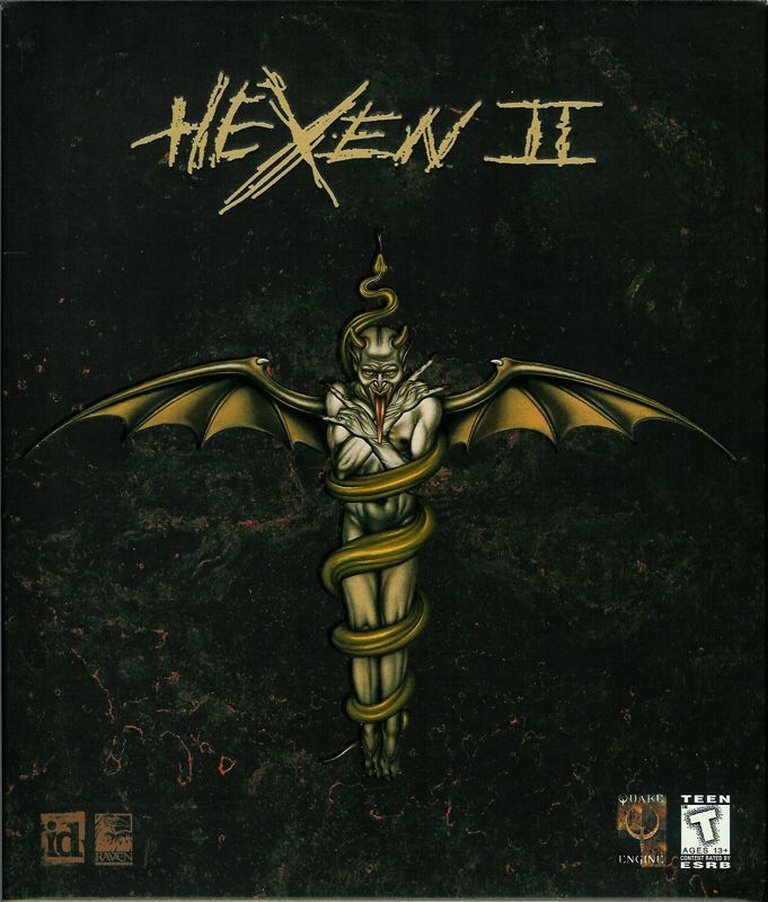
Description
Hexen II is a medieval fantasy-themed first-person shooter and the third installment in the Heretic and Hexen series. Set in the world of Thyrion, the game follows a lone hero’s quest to defeat the demonic Serpent Riders, particularly the powerful Eidolon, by first overcoming his generals, the Four Horsemen of the Apocalypse. Players choose from four distinct character classes—Paladin, Crusader, Assassin, and Necromancer—each with unique abilities and weapons, as they traverse four diverse settings: medieval Europe, Mesoamerica, ancient Egypt, and Greco-Roman landscapes. The game blends action with RPG elements, featuring puzzles, interconnected stages, and character progression through experience and mana-based magic weapons.
Gameplay Videos
Where to Buy Hexen II
Hexen II Free Download
PC
Hexen II Cracks & Fixes
Hexen II Patches & Updates
Hexen II Mods
Hexen II Guides & Walkthroughs
Hexen II Reviews & Reception
metacritic.com (76/100): It totally revolutionizes HeXen! Bringing advanced puzzles and new enemies, as well as a whole new plot, but can still be called a sequel! The gameplay is slow at times, but it is all good in the end!
gamespot.com : Hexen II delivers a mighty blow, but ultimately fails to knock the king off his throne.
thecorvidreview.com : Hexen II is a really beautiful, dark, gothic game set in a semi-decaying, explorative world.
mobygames.com (76/100): Hexen II is the third game in the Heretic and Hexen series. Like its predecessors, it is a medieval fantasy-themed first-person shooter.
Hexen II Cheats & Codes
PC
Press ~ to bring up the console, then enter these codes:
| Code | Effect |
|---|---|
| god | God mode |
| noclip | No clip mode |
| notarget | Enemies ignore you |
| impulse 9 | Full weapons+mana |
| impulse 23 | Torch |
| map [level name] | Level select |
| changelevel [level number] | Level select |
| give h [0-999] | 0 – 999 health points |
| give 2 | Weapon 2 |
| give 3 | Weapon 3 |
| give 4 | Weapon 4 |
| impulse 14 | Transform into sheep |
| impulse 25 | Tome of Power |
| impulse 32 | Invisibility, boots, force cube, and plus |
| impulse 33 | Switch to other friendly player view in cooperative mode |
| impulse 35 | No monsters |
| impulse 36 | Freeze monsters |
| impulse 37 | Unfreeze monsters |
| impulse 39 | Toggle flying |
| impulse 40 | Increase your level by one |
| impulse 41 | Increase experience points |
| impulse 42 | View coordinates, plus (set developer cvar to 1) |
| impulse 43 | All weapons, mana, and items |
| impulse 44 | Throw item |
| impulse 99 | Restart |
| impulse 100 | Use Torch |
| impulse 101 | Use Quartz Flask |
| impulse 102 | Use Mystic Urn |
| impulse 103 | Use Krater |
| impulse 104 | Use Chaos Device |
| impulse 105 | Use Tome of Tower |
| impulse 106 | Use Summon Stone |
| impulse 107 | Use Invisibility |
| impulse 108 | Use Glyph |
| impulse 109 | Use Boots |
| impulse 110 | Use Repulsion |
| impulse 111 | Use No Peep |
| impulse 112 | Use Ring Of Flight |
| impulse 113 | Use Force Cube |
| impulse 114 | Use Icon Defn |
| impulse 149 | Display serverflags (set developer cvar to 1) |
| impulse 171 | Change to Paladin |
| impulse 172 | Change to Crusader |
| impulse 173 | Change to Necromancer |
| impulse 174 | Change to Assassin |
| impulse 254 | Display ‘King Of The Hill’ |
| impulse 255 | Fraglist |
| chase_active 1 | Chase camera |
| restart | Restart level |
| crosshair 1 | Enable targeting crosshair |
| +mlook | Mouse controls camera |
| playerclass[1-4] | Player class change |
| skill[0-3] | Adjust skill level |
| name [new name] | Name change |
| sv_gravity [-10000-10000] | Alter gravity |
| sv_friction [-10-10] | Alter surface friction |
| _cl_playerclass 5 | Play as Demoness class in the original Hexen II scenario |
Hexen II: A Dark Fantasy Masterpiece of Interconnected Worlds and Class-Based Combat
Introduction
In the annals of first-person shooters, few titles have dared to blend the visceral thrill of combat with the cerebral challenge of role-playing and adventure as boldly as Hexen II. Released in 1997 by Raven Software and published by id Software, Hexen II is the third and final chapter in the Heretic and Hexen series, a dark fantasy epic that pits players against the last of the Serpent Riders, Eidolon, and his apocalyptic generals. While it may not have achieved the same level of mainstream recognition as Doom or Quake, Hexen II stands as a testament to Raven Software’s ambition and creativity, offering a rich, interconnected world, a deep class-based system, and a unique fusion of genres that was ahead of its time.
This review will delve into the game’s development history, its intricate narrative and themes, the mechanics that define its gameplay, the art and sound that bring its world to life, its reception and legacy, and ultimately, its place in the pantheon of classic first-person shooters.
Development History & Context
The Birth of a Sequel
Hexen II was born from the ashes of an even more ambitious project. Originally conceived as Hecatomb, the game was intended to be the grand finale of the Serpent Riders trilogy, a sprawling epic that would have radically redefined the structure and gameplay of its predecessors. However, the departure of John Romero from id Software in 1996 and the pressures from publisher Activision led to the project being split into two separate games: Hexen II and Heretic II. This division meant that Hexen II became a more traditional sequel, retaining the core elements of Hexen while expanding upon them in significant ways.
The Quake Engine and Technical Innovations
Hexen II was built on a modified version of the Quake engine, which provided the foundation for its fully 3D environments. Raven Software leveraged this technology to create a game that was visually stunning for its time, with detailed textures, dynamic lighting, and intricate level design. The engine was enhanced to support features like destructible environments, mounted weapons, and a more robust inventory system, all of which contributed to the game’s immersive atmosphere.
One of the most notable technical innovations in Hexen II was its use of the Glide API, which allowed for hardware-accelerated rendering on 3dfx Voodoo cards. This was a significant advancement, as it enabled smoother gameplay and more detailed visuals, particularly in the game’s darker, more atmospheric levels. The game also supported OpenGL, though the initial Windows release included a custom OpenGL driver specifically for 3dfx hardware, which acted as a wrapper for the Glide API.
The Gaming Landscape of 1997
Hexen II was released in September 1997, a time when the first-person shooter genre was dominated by titles like Quake, Duke Nukem 3D, and Unreal. The gaming landscape was rapidly evolving, with developers pushing the boundaries of what was possible in terms of graphics, gameplay, and storytelling. Hexen II arrived at a pivotal moment, offering a unique blend of fantasy, adventure, and role-playing elements that set it apart from the more straightforward shooters of the era.
The game’s release was met with anticipation, particularly among fans of the Heretic and Hexen series. However, it also faced stiff competition from other high-profile titles, including Quake II, which was released later that same year. Despite this, Hexen II carved out its own niche, thanks to its distinctive setting, deep gameplay mechanics, and innovative use of the Quake engine.
Narrative & Thematic Deep Dive
The World of Thyrion and the Serpent Riders
Hexen II is set in the world of Thyrion, a realm that has been conquered by the Serpent Riders, a trio of demonic brothers who seek to enslave all of existence. The first two games in the series, Heretic and Hexen, chronicled the defeat of the first two Serpent Riders, D’Sparil and Korax. Hexen II focuses on the final and most powerful of the brothers, Eidolon, who has unleashed his legions upon Thyrion, led by his four generals: the Four Horsemen of the Apocalypse—Death, Pestilence, Famine, and War.
The game’s narrative is framed as a desperate struggle to free Thyrion from Eidolon’s tyranny. Players take on the role of one of four heroes—each with their own motivations and backstories—who must travel across four distinct continents, each themed around a different historical and mythological setting: medieval Europe (Blackmarsh), ancient Egypt (Thysis), Mesoamerica (Mazaera), and Greco-Roman antiquity (Septimus). The journey culminates in a final confrontation with Eidolon himself, deep within his cathedral stronghold.
The Four Heroes and Their Motivations
One of the most compelling aspects of Hexen II is its class-based system, which allows players to choose from four distinct character classes, each with their own unique weapons, abilities, and backstories. These classes are:
- The Paladin: A melee-focused warrior who wields powerful weapons like the Vorpal Sword and the Purifier. The Paladin is driven by a desire to avenge his fallen comrades and restore honor to his order.
- The Crusader: A defensive fighter who specializes in healing and protective spells. The Crusader seeks to rid the world of Eidolon’s corruption and bring hope to the oppressed.
- The Assassin: A stealthy rogue who excels in agility and precision. The Assassin is motivated by greed and the thrill of the hunt, seeking to plunder Eidolon’s treasures.
- The Necromancer: A dark sorcerer who commands the powers of death and decay. The Necromancer views Eidolon as a rival and seeks to usurp his power.
Each class offers a different playstyle, encouraging replayability and allowing players to experience the game’s narrative from multiple perspectives. The backstories of the heroes are woven into the game’s lore, providing depth and context to their motivations.
Themes of Tyranny, Resistance, and Redemption
At its core, Hexen II is a story about resistance against tyranny. The world of Thyrion is a bleak and oppressive place, where the forces of evil have triumphed, and the remnants of civilization struggle to survive. The game’s narrative explores themes of hope, sacrifice, and redemption, as the heroes battle against overwhelming odds to free their world from Eidolon’s grip.
The game also delves into the darker aspects of human nature, particularly through the character of the Necromancer, who is driven by ambition and a desire for power. This moral ambiguity adds depth to the story, challenging players to consider the motivations of their chosen hero and the consequences of their actions.
The Four Horsemen and Their Domains
The Four Horsemen of the Apocalypse serve as the primary antagonists of Hexen II, each embodying a different aspect of Eidolon’s tyranny. Their domains are reflected in the game’s four hubs, each of which is themed around a different historical and cultural setting:
- Blackmarsh (Medieval Europe): Controlled by Famine, this hub is a desolate and decaying land, where the remnants of medieval civilization struggle to survive.
- Mazaera (Mesoamerica): Ruled by Death, this hub is a jungle-filled realm of ancient temples and bloodthirsty deities.
- Thysis (Ancient Egypt): Governed by Pestilence, this hub is a land of sand and ruins, where the dead rise to serve their dark master.
- Septimus (Greco-Roman): Dominated by War, this hub is a battlefield of crumbling coliseums and war-torn cities.
Each hub is richly detailed, with its own unique architecture, enemies, and puzzles, creating a sense of immersion and variety that keeps the gameplay fresh and engaging.
Gameplay Mechanics & Systems
Class-Based Gameplay and Progression
Hexen II introduces a class-based system that allows players to choose from four distinct character classes, each with their own unique weapons, abilities, and playstyles. This system is one of the game’s most innovative features, as it encourages replayability and allows players to tailor their experience to their preferred style of play.
Each class has access to four unique weapons, which are unlocked as the player progresses through the game. These weapons are powered by mana, which is divided into blue and green mana bars. Blue mana is used for secondary weapons, which are typically melee or close-range abilities, while green mana powers tertiary weapons, which are ranged attacks. This mana system adds a layer of strategy to the combat, as players must manage their resources carefully to ensure they have the right weapons available when needed.
In addition to their weapons, each class has a set of unique abilities that are unlocked as the player gains experience. These abilities range from healing spells and defensive buffs to offensive enhancements and utility skills. For example, the Crusader can eventually learn to heal themselves and their allies, while the Assassin gains access to a critical strike ability that deals extra damage when attacking from behind.
The Hub System and Interconnected Levels
Hexen II employs a hub-based level design, where each of the game’s four continents is divided into a series of interconnected levels. Players must explore these levels, solving puzzles, collecting keys, and defeating enemies to progress. The hub system is one of the game’s most distinctive features, as it allows for non-linear gameplay and encourages exploration.
The hubs are designed to be interconnected, with actions in one level often affecting others. For example, activating a switch in one level might open a door in another, or collecting a key in one area might be required to access a new section of a different level. This interconnectedness creates a sense of continuity and immersion, as players feel like they are exploring a living, breathing world rather than a series of disconnected levels.
However, the hub system is not without its flaws. The game’s puzzles can be cryptic and frustrating, particularly for players who are not accustomed to keeping detailed notes. The lack of an in-game map or objective tracker can make it difficult to keep track of where to go next, leading to aimless wandering and frustration. This is a common criticism of the game, and one that is addressed in the expansion pack, Portal of Praevus, which introduces a rudimentary objectives screen.
Combat and Enemy Design
Combat in Hexen II is fast-paced and visceral, with a focus on melee and magical attacks. The game’s enemies are varied and challenging, ranging from lowly spiders and imps to powerful bosses like the Four Horsemen and Eidolon himself. Each enemy type has its own unique behaviors and weaknesses, requiring players to adapt their strategies accordingly.
One of the most notable aspects of the combat is the game’s mana system, which adds a layer of resource management to the gameplay. Players must carefully manage their blue and green mana bars, ensuring they have enough mana to power their weapons and abilities when needed. This system encourages strategic play, as players must decide when to use their most powerful attacks and when to conserve their resources.
The game’s boss battles are particularly memorable, with each of the Four Horsemen offering a unique and challenging fight. For example, Famine drains the player’s health and mana, while Death lays traps and casts spells that can instantly kill the player. These battles are a highlight of the game, offering a satisfying test of the player’s skills and strategies.
Puzzles and Exploration
Hexen II features a wide variety of puzzles, ranging from simple switch-flipping challenges to complex multi-step puzzles that require careful observation and logical thinking. These puzzles are often integrated into the game’s level design, with players needing to explore their surroundings and interact with the environment to progress.
One of the most common types of puzzles in Hexen II involves collecting keys or artifacts that are scattered across multiple levels. For example, players might need to find a series of gems or symbols to unlock a door, or collect a set of bones to assemble a skeleton key. These puzzles encourage exploration and reward players for their curiosity, as they often lead to hidden secrets and valuable loot.
However, the game’s puzzles can also be frustrating, particularly when the clues are cryptic or the solutions are not immediately obvious. The lack of an in-game hint system or objective tracker can make it difficult for players to know what they need to do next, leading to aimless wandering and frustration. This is a common criticism of the game, and one that is addressed in the expansion pack, Portal of Praevus, which introduces a rudimentary objectives screen.
Multiplayer and Cooperative Play
Hexen II features robust multiplayer support, allowing players to engage in deathmatch and cooperative modes over LAN or online connections. The game’s multiplayer modes are a highlight, offering a unique and engaging experience that is distinct from the single-player campaign.
In deathmatch mode, players can choose from the four character classes, each with their own unique weapons and abilities. The maps are designed to accommodate the different playstyles of the classes, with a mix of open areas and tight corridors that encourage a variety of strategies. The game also features a team deathmatch mode, which divides players into opposing teams and emphasizes coordination and teamwork.
Cooperative mode allows players to team up and tackle the game’s single-player campaign together. This mode is particularly enjoyable, as it allows players to combine their unique abilities and strategies to overcome the game’s challenges. The cooperative mode also scales the difficulty based on the number of players, ensuring that the experience remains challenging and engaging.
World-Building, Art & Sound
The Visual Design of Thyrion
Hexen II is a visually stunning game, with a rich and detailed art style that brings the world of Thyrion to life. The game’s environments are diverse and immersive, ranging from the decaying castles of Blackmarsh to the ancient temples of Mazaera and the sandy ruins of Thysis. Each hub is themed around a different historical and cultural setting, creating a sense of variety and depth that keeps the gameplay fresh and engaging.
The game’s visual design is enhanced by its use of the Quake engine, which allows for detailed textures, dynamic lighting, and intricate level design. The environments are richly detailed, with a mix of architectural styles and decorative elements that reflect the cultural themes of each hub. For example, the medieval European levels feature gothic architecture and stone carvings, while the Mesoamerican levels are filled with jungle foliage and ancient temples.
The game also features a wide variety of enemy designs, ranging from lowly spiders and imps to powerful bosses like the Four Horsemen and Eidolon himself. Each enemy type has its own unique appearance and animations, adding to the game’s visual diversity and immersion.
The Sound Design and Music
Hexen II features a rich and atmospheric sound design, with a mix of ambient sounds, enemy growls, and weapon effects that create a sense of immersion and tension. The game’s sound effects are particularly noteworthy, with each weapon and spell having its own unique audio cues that help to distinguish them in the heat of battle.
The game’s music is composed by Kevin Schilder, who also worked on the soundtracks for Heretic and Hexen. The music is a mix of orchestral and synthetic elements, with a dark and brooding tone that reflects the game’s fantasy setting. The soundtrack is dynamic and responsive, changing to reflect the player’s actions and the environment they are in. For example, the music might become more intense during combat, or more subdued during exploration.
One of the most memorable aspects of the soundtrack is its use of leitmotifs, which are recurring musical themes that are associated with specific characters or locations. For example, the Four Horsemen each have their own unique musical themes, which play during their boss battles and help to create a sense of anticipation and dread.
The Atmosphere and Immersion
Hexen II excels in creating a sense of atmosphere and immersion, thanks to its rich visual design, atmospheric sound design, and intricate level design. The game’s world feels alive and dynamic, with a mix of environmental details and interactive elements that encourage exploration and discovery.
The game’s hub system is particularly effective in creating a sense of immersion, as it allows players to explore a series of interconnected levels that feel like a living, breathing world. The interconnectedness of the levels creates a sense of continuity and progression, as players feel like they are making meaningful progress through the game’s narrative.
The game’s puzzles and exploration elements also contribute to its sense of immersion, as they encourage players to engage with the environment and interact with the world around them. Whether it’s solving a complex puzzle to unlock a new area, or discovering a hidden secret that rewards the player with valuable loot, Hexen II rewards curiosity and exploration, creating a sense of discovery and accomplishment.
Reception & Legacy
Critical Reception
Hexen II was released to generally positive reviews, with critics praising its innovative class-based system, rich visual design, and immersive atmosphere. The game was particularly noted for its use of the Quake engine, which allowed for detailed textures, dynamic lighting, and intricate level design. Critics also praised the game’s hub system, which encouraged exploration and non-linear gameplay.
However, the game was not without its criticisms. Many reviewers noted that the game’s puzzles could be frustrating and cryptic, particularly for players who were not accustomed to keeping detailed notes. The lack of an in-game map or objective tracker was also a common criticism, as it could make it difficult for players to know what they needed to do next.
Despite these criticisms, Hexen II was widely regarded as a successful and innovative title, offering a unique blend of fantasy, adventure, and role-playing elements that set it apart from other first-person shooters of the era.
Commercial Performance
Hexen II was a commercial success, selling over 30,000 units in its first year of release. While this was not as high as some of the other major titles of the era, such as Quake II or Unreal, it was still a respectable performance for a niche title like Hexen II. The game’s success was due in part to its strong critical reception, as well as its innovative gameplay mechanics and rich visual design.
Legacy and Influence
Hexen II has had a lasting impact on the first-person shooter genre, particularly in the realm of class-based gameplay and hub-based level design. The game’s class system, which allowed players to choose from four distinct character classes, each with their own unique weapons and abilities, was a major innovation at the time and has since become a staple of many modern shooters.
The game’s hub system, which featured interconnected levels that encouraged exploration and non-linear gameplay, was also a major influence on later titles. Games like Deus Ex and System Shock 2 would later adopt similar level design philosophies, creating immersive and interconnected worlds that rewarded exploration and discovery.
Hexen II also had a significant impact on the fantasy shooter subgenre, inspiring titles like Heretic II and Hexen: Beyond Heretic. The game’s dark and atmospheric setting, rich visual design, and deep gameplay mechanics have made it a cult classic among fans of the genre.
The Expansion Pack: Portal of Praevus
In 1998, Hexen II received an expansion pack titled Portal of Praevus, which added new levels, enemies, and a fifth character class, the Demoness. The expansion pack was well-received by critics, who praised its new content and improvements to the base game’s mechanics.
One of the most significant additions in Portal of Praevus was the introduction of an objectives screen, which helped to address one of the base game’s most common criticisms. The expansion pack also featured new puzzles, enemies, and weapons, as well as a new hub set in a Sino-Tibetan-inspired location.
Portal of Praevus was a worthy addition to the Hexen II experience, offering new challenges and content for fans of the base game. However, it was not as widely recognized as the base game, and it has since become a rare and sought-after collectible among fans of the series.
The Source Code Release and Community Mods
In 2000, Raven Software released the source code for Hexen II under the GNU General Public License, allowing the community to create mods and ports for the game. This release has led to a vibrant modding community, with numerous fan-made modifications and enhancements that have extended the game’s lifespan and introduced new features and content.
One of the most notable community projects is the Hammer of Thyrion source port, which has been actively maintained and updated since its initial release in 2000. This port includes numerous enhancements, such as widescreen support, improved controller compatibility, and higher frame rates, making the game more accessible and enjoyable for modern players.
The release of the source code has also led to the creation of numerous fan-made mods and total conversions, which have introduced new levels, enemies, and gameplay mechanics to the game. These mods have helped to keep Hexen II alive and relevant, ensuring that it remains a beloved classic among fans of the first-person shooter genre.
Conclusion
Hexen II is a landmark title in the first-person shooter genre, offering a unique blend of fantasy, adventure, and role-playing elements that set it apart from its contemporaries. The game’s class-based system, hub-based level design, and rich visual and auditory design create an immersive and engaging experience that rewards exploration, strategy, and skill.
While the game is not without its flaws—particularly its cryptic puzzles and lack of an in-game map or objective tracker—these issues are outweighed by its many strengths. The game’s innovative mechanics, deep gameplay, and atmospheric setting make it a standout title in the genre, and its influence can be seen in numerous later games.
Hexen II is a testament to Raven Software’s ambition and creativity, and it remains a beloved classic among fans of the first-person shooter genre. Whether you’re a veteran of the series or a newcomer looking to experience a unique and challenging game, Hexen II is well worth your time.
Final Verdict: 9/10 – A dark fantasy masterpiece that blends class-based combat, interconnected worlds, and immersive atmosphere into an unforgettable experience.