
- Release Year: 2024
- Platforms: Linux, Macintosh, Windows
- Publisher: HEDE Games
- Developer: Top-Down Games
- Genre: Puzzle
- Perspective: Diagonal-down
- Game Mode: Single-player
- Gameplay: Hidden object
- Average Score: 75/100
Description
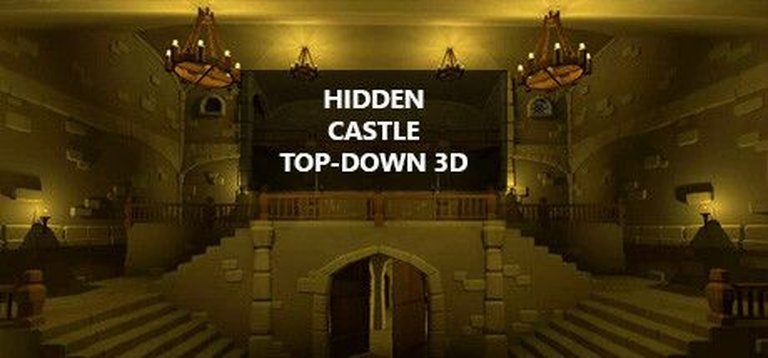
Hidden Castle Top-Down 3D is a puzzle game where players explore a mysterious castle from a diagonal-down perspective, searching for hidden objects scattered throughout its intricate 3D environment. Developed by Top-Down Games and published by HEDE Games, the game challenges players to uncover secrets and solve puzzles in a visually engaging, top-down setting, blending adventure and hidden-object gameplay.
Where to Buy Hidden Castle Top-Down 3D
PC
Hidden Castle Top-Down 3D Patches & Updates
Hidden Castle Top-Down 3D Guides & Walkthroughs
Hidden Castle Top-Down 3D Reviews & Reception
steambase.io (75/100): Hidden Castle Top-Down 3D has earned a Player Score of 75 / 100.
idownload.it.com : A relaxing and enjoyable game that challenges your attention and intelligence.
Hidden Castle Top-Down 3D: A Deep Dive into a Modern Hidden Object Enigma
Introduction: The Puzzle of a $200 Hidden Object Game
At first glance, Hidden Castle Top-Down 3D (2024) appears to be just another entry in the crowded hidden object genre—a casual, point-and-click experience where players scour static scenes for concealed items. Yet, its $199.99 price tag (often discounted to $9.99) and the sheer audacity of its existence demand closer examination. Developed by the obscure Top-Down Games and published by HEDE Games, this Unity-engine title defies conventional wisdom about pricing, design, and player expectations. Is it a cynical cash grab, an avant-garde experiment in game economics, or something stranger entirely?
This review dissects Hidden Castle Top-Down 3D from every angle—its development context, mechanical design, thematic underpinnings, and the baffling reception it has garnered. By the end, we’ll determine whether it’s a forgotten gem, a cautionary tale, or merely a footnote in the annals of Steam’s most perplexing releases.
Development History & Context: The Mystery of Top-Down Games
The Studio Behind the Curtain
Little is known about Top-Down Games, a developer with no prior notable releases before Hidden Castle Top-Down 3D. Their Steam portfolio consists almost entirely of similarly titled “Hidden [Location] Top-Down 3D” games (Hidden Dungeon, Hidden City, Hidden Pirates), all sharing the same $199.99 MSRP and near-identical gameplay loops. This suggests a template-driven development approach, where assets, mechanics, and even pricing strategies are recycled across titles with minimal variation.
The publisher, HEDE Games, is equally enigmatic, with no discernible track record outside of these hidden object games. Their business model appears to rely on volume over quality, flooding Steam with variants of the same core experience. This raises questions about the game’s origins:
– Was it designed as a quick cash-in on the hidden object genre?
– Is the exorbitant price a deliberate marketing gimmick to attract attention?
– Or is there a deeper, more conceptual intent behind its existence?
Technological Constraints & Design Philosophy
Built in Unity, Hidden Castle Top-Down 3D is a technically modest game. The system requirements (a 3GHz dual-core processor, 4GB RAM, and a GeForce 450) suggest it was optimized for broad accessibility, though its 3D environments are far from cutting-edge. The diagonal-down perspective (a rarity in modern games) evokes classic SimCity or Diablo-style isometry, but here it serves a purely functional purpose: to obscure objects within the environment.
The game’s most intriguing design choice is its procedural object selection system. Rather than presenting players with a static list of items to find, the game dynamically assigns targets, ensuring that no two playthroughs are identical. This mechanic, while simple, introduces an element of replayability—a rare feature in a genre typically defined by its disposability.
The Gaming Landscape in 2024: A Genre in Decline?
Hidden object games (HOGs) have long been a staple of casual gaming, but by 2024, the genre had largely migrated to mobile platforms or been absorbed into hybrid experiences (e.g., The Room series, Hidden Folks). Hidden Castle Top-Down 3D’s release on Steam—a platform dominated by AAA titles, indies, and roguelikes—seems anachronistic.
Yet, its existence speaks to a broader trend: the commodification of game development. With tools like Unity and asset stores making creation more accessible, studios can churn out games with minimal effort, relying on algorithms and bundling strategies (the game appears in 27 Steam bundles) to drive sales. Hidden Castle is both a product of this ecosystem and a commentary on it—whether intentionally or not.
Narrative & Thematic Deep Dive: The Castle as a Metaphor
Plot? What Plot?
Hidden Castle Top-Down 3D has no traditional narrative. There are no characters, no dialogue, and no overarching story. The player is simply tasked with finding 20 objects per level in a series of castle-themed dioramas. The lack of context is striking—even for a hidden object game, which typically at least offers a loose framing device (e.g., “solve a mystery,” “escape a haunted mansion”).
This absence of narrative invites interpretation:
– The Castle as a Puzzle Box: The game’s environments resemble dioramas or frozen tableaus, as if the player is exploring a dollhouse. The objects themselves are often mundane (keys, books, candles), suggesting a domestic mystery rather than a fantastical one.
– The Player as an Archaeologist: The act of clicking on objects feels akin to excavation, uncovering artifacts in a static world. The procedural targeting system reinforces this, as the player never knows what they’re digging for next.
– A Commentary on Game Design: The game’s title and premise may be a meta-joke—a “hidden castle” that is, in fact, entirely visible, with the challenge lying in the act of perception itself.
Themes: Isolation, Obsession, and the Illusion of Choice
While Hidden Castle lacks explicit storytelling, its themes emerge through gameplay and atmosphere:
1. Isolation: The castle is devoid of life. The player is alone, searching endlessly for objects that have no inherent meaning. This mirrors the solitude of modern gaming, where players often engage in repetitive tasks for arbitrary rewards.
2. Obsession: The game’s replayability mechanic (randomized object targets) encourages compulsive play. There’s no “winning,” only the drive to keep searching, reflecting the addictive loops of mobile games or gacha mechanics.
3. The Illusion of Agency: Despite the procedural elements, the player’s actions are highly constrained. You can zoom and pan, but the camera angle is fixed, and interaction is limited to clicking. This highlights the tension between freedom and restriction in game design.
The $200 Question: Is the Price a Statement?
The game’s $199.99 MSRP is its most talked-about feature. Possible explanations:
– A Satirical Pricing Model: A critique of microtransactions and premium pricing in gaming. By slapping a triple-A price on a casual game, the developers force players to confront the arbitrary nature of value in digital goods.
– A Marketing Ploy: The steep price ensures the game stands out in Steam’s algorithm, while frequent 95% discounts make the $9.99 sale price feel like a steal.
– A Niche Appeal: The game may be targeting collectors or completionists who buy games for achievements or curiosity, regardless of quality.
Gameplay Mechanics & Systems: The Art of the Click
Core Gameplay Loop
Hidden Castle Top-Down 3D distills the hidden object genre to its purest form:
1. Enter a 3D environment (a castle hall, courtyard, or dungeon).
2. Receive a dynamically generated target object (e.g., “find a silver key”).
3. Scan the scene, using zoom and pan controls to locate the item.
4. Click on the object to collect it.
5. Repeat until 20 objects are found.
The loop is minimalist to a fault, but the procedural targeting system adds just enough variability to prevent total monotony.
Combat? Progression? UI?
- No Combat: This is a pure puzzle game, with no enemies, health systems, or fail states.
- No Progression: There are no upgrades, unlocks, or skill trees. The only “progression” is moving to the next level.
- UI Simplicity: The interface consists of:
- A target object display (text-only).
- A zoom/pan control scheme.
- A counter for found objects.
- Achievements: The game includes 6 Steam Achievements, tied to basic milestones (e.g., “Find 50 Objects”).
Innovations & Flaws
Innovations:
✅ Procedural Targeting: The randomized object selection is a clever twist on the genre, though it doesn’t fundamentally change the experience.
✅ 3D Navigation: The ability to zoom and pan (despite the fixed camera) adds a layer of depth missing from 2D HOGs.
Flaws:
❌ Repetitive by Design: Even with procedural elements, the core activity remains tedious for extended play.
❌ Lack of Feedback: There’s no sound cue, animation, or haptic response when clicking an object, making successes feel hollow.
❌ No Accessibility Options: No colorblind modes, hints, or difficulty settings—a missed opportunity for a game that could appeal to casual players.
World-Building, Art & Sound: The Aesthetics of Stasis
The Castle: A Frozen World
The game’s environments are 3D-rendered castle interiors and exteriors, designed with a low-poly, almost dollhouse-like aesthetic. The art style is functional rather than artistic, prioritizing object clarity over visual flair. Textures are simple, lighting is flat, and the color palette leans toward muted browns and grays—a deliberate choice to avoid distracting from the hidden objects.
The fixed diagonal-down camera reinforces the idea of the castle as a diorama or museum exhibit. The player is not an adventurer but an observer, peering into a miniature world.
Sound Design: The Silence of the Castle
The game’s audio is minimalist:
– Ambient Castle Sounds: Distant echoes, creaking wood, and subtle wind create a haunting atmosphere.
– No Music: The absence of a soundtrack heightens the isolation, making the player’s clicks the only audible interaction.
– No Voice Acting: Further emphasizing the loneliness of the experience.
The sound design, while sparse, is effective in crafting mood. The silence makes the act of clicking feel weighty, as if each discovery is a small victory in an otherwise empty world.
Reception & Legacy: The Game That Shouldn’t Exist (But Does)
Critical Reception: A Void of Reviews
- MobyGames: No critic reviews; only a handful of user contributions.
- Metacritic: No user reviews as of 2026.
- Steam: 100% Positive (12 reviews), though many are short, vague, or possibly bot-generated.
The lack of substantial criticism suggests that Hidden Castle exists in a critical blind spot—too niche for mainstream coverage, too odd for indie spotlight.
Player Reception: The Cult of the Weird
Steam reviews reveal a polarized but fascinated audience:
– Positive Reviews praise its relaxing nature, replayability, and “charming” simplicity.
– Negative Reviews (though few) criticize its repetitiveness and lack of depth.
– Memes & Jokes: Many reviews focus on the $200 price tag, treating the game as a running gag in Steam’s ecosystem.
Legacy: A Footnote or a Harbinger?
Hidden Castle Top-Down 3D is unlikely to be remembered as a classic, but it may endure as:
– A Symbol of Steam’s Oversaturation: A game that shouldn’t succeed but does, thanks to algorithms and bundling.
– A Case Study in Pricing Psychology: Proof that extreme pricing can be a marketing tool.
– An Accidental Art Piece: A game so stripped of conventional design that it becomes a commentary on the medium itself.
Conclusion: The Hidden Castle’s True Treasure
Hidden Castle Top-Down 3D is not a great game—but it is a fascinating one. It strips the hidden object genre to its bare essentials, removing narrative, progression, and even traditional feedback loops, leaving only the act of searching. In doing so, it becomes something stranger: a meditation on perception, obsession, and the arbitrary nature of value in games.
Its $200 price tag is either a brilliant satire or a cynical cash grab, but either way, it forces players to confront their own expectations of what a game should be. For those willing to engage with it on its own terms, Hidden Castle offers a unique, if repetitive, experience—one that feels like digging through the ruins of a forgotten genre.
Final Verdict: 6/10 – A Flawed but Unforgettable Curio
- For Hidden Object Fans: A novelty worth trying on sale, but not a replacement for Hidden Folks or The Room.
- For Game Historians: A cultural artifact of Steam’s late-2020s indie glut.
- For Theorists: A playable essay on the nature of interaction and value in games.
Hidden Castle Top-Down 3D is not a masterpiece—but in its own quiet, confusing way, it might just be art.
Post-Script: If you purchase this game at full price, you are either a patron of the absurd or a victim of impulse buying. Either way, may your clicks be ever fruitful.