
- Release Year: 2017
- Platforms: Windows
- Publisher: 2K Games, Inc.
- Genre: Compilation
- Average Score: 76/100
Description
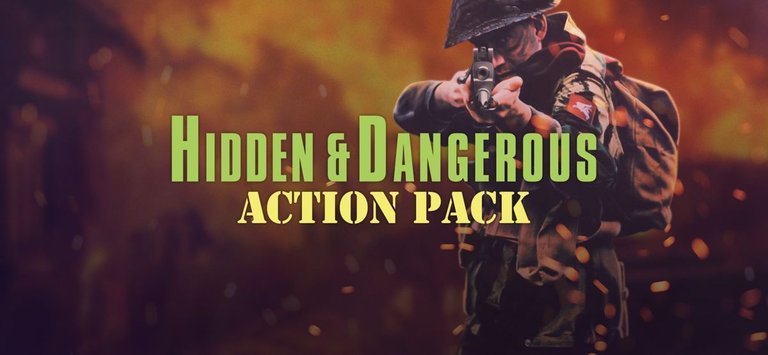
Hidden & Dangerous: Action Pack is a compilation bundle that includes the original tactical shooter Hidden & Dangerous, its expansion Devil’s Bridge, and the Deluxe Edition. Set during World War II, the game tasks players with leading a four-man British Special Air Service (SAS) squad through covert operations across Europe, featuring mission-based gameplay with soldier selection, realistic weaponry, and tactical command options.
Gameplay Videos
Where to Buy Hidden & Dangerous: Action Pack
Hidden & Dangerous: Action Pack Guides & Walkthroughs
Hidden & Dangerous: Action Pack Cheats & Codes
PC Full Version
Type ‘iamcheater’ (or ‘iwillcheat’ on patched version 1.1) while on any opening screen or menu to activate the cheat mode. Then, enter any of the following codes during gameplay or at any menu screen. If entered correctly, you should hear a clicking sound to verify that the code is active. Note: The code may need to be entered twice in succession.
| Code | Effect |
|---|---|
| quickload | Load saved game |
| nohits | God mode |
| cantdie | God mode |
| goodhealth | Full health |
| openalldoor | Open all doors |
| allitems | All items available |
| allloot | All weapons with full ammo |
| killthemall | Kills all enemies |
| showtheend | Show FMV from the game’s ending |
| gamedone | Successfully complete current mission |
| gamefail | Fail current mission |
| resurrect | Bring team members back to life |
| funnyhead | Big head mode |
| enemyf | View enemy from front |
| enemyb | Enemy view from behind |
| debugdrawvolumes | Basic shade mode |
| debugdrawwire | Wireframe view |
| playercoords | Shows your current position |
| laracroft | Alternate uniforms (Lara Croft) |
| bluestars | Restore censored version to full |
| fullhands | All items in inventory |
| skipmission | Mission skip |
| missionover | End mission successfully |
PC Demo Version
After the initial animation, at the campaign selection screen, type ‘unlockcheatmode’ to activate the cheat mode. Then, enter any of the following codes during gameplay or at any menu screen. If entered correctly, you should hear a clicking sound to verify that the code is active.
| Code | Effect |
|---|---|
| zombie | Come back as a zombie after death |
| bighead | Big head mode |
| killthemall | Kills all enemies |
| showtheend | Show FMV from the game’s ending |
| missiondone | Successfully complete current mission |
| missionfail | Fail current mission |
| openalldoor | Open all doors |
| allammo | Gives you all weapons and ammo |
| enemylookf | View enemy from front |
| enemylookb | Enemy view from behind |
| playercoords | Shows your current position |
| laracroft | Alternate uniforms (Lara Croft) |
| goodhealth | More resistance to gunfire |
| noplayerhits | Invincible except for high falls |
PC Deluxe
Enter ‘iwantcheat’ in any menu of the game to enable cheat mode. A clicking sound confirms. Then enter cheats during gameplay. A clicking sound confirms activation.
| Code | Effect |
|---|---|
| funnyhead | Gives all enemies and players a big head |
| skipmission | Completes the current mission successfully |
| abandon | Ends the current mission |
| ironman | Increases the players health by 20 times |
| fullhands | Gives all players all weapons and items |
| immortality | Player cannot die from gun fire |
| suicide | Kills the currently selected player |
| doormagic | Opens all doors in mission |
| newlife | Resurrects 1 dead team mate |
Dreamcast (Keyboard Required)
Choose ‘Start Game’ from main menu, enter name ‘IWILLCHEAT’ using Dreamcast Keyboard in Port B, press Enter. Then during gameplay, enter the following codes. A click sound confirms correct entry.
| Code | Effect |
|---|---|
| OPENALLDOOR | All doors in Mission Open |
| ALLLOOT | All Items |
Hidden & Dangerous: Action Pack: Review
Introduction
Imagine parachuting into the fog-choked forests of occupied Norway, your four-man SAS squad the only line between Allied victory and certain death. A single misstep, a poorly aimed burst of submachine gun fire, and your elite commandos are reduced to bloody rags on the snow. This is the visceral, unforgiving reality of Hidden & Dangerous: Action Pack. This 2017 compilation bundles the groundbreaking 1999 tactical shooter Hidden & Dangerous with its Devil’s Bridge (aka Fight for Freedom) expansion and the Hidden & Dangerous Deluxe Edition update, delivering the complete core experience. Developed by the then-obscure Czech studio Illusion Softworks (later 2K Czech), it thrust players into authentic World War II Special Air Service (SAS) operations, blending real-time tactics with visceral combat in a way few games had attempted. Amid a late-90s surge of WWII titles fueled by millennial curiosity, this pack emerged as a raw, unflinching tribute to elite warfare. My thesis: While hampered by era-specific bugs, clunky controls, and dated visuals, Action Pack remains a seminal work—a pioneering squad-based tactical shooter that nailed the lethal tension of SAS raids, influencing a lineage from Rainbow Six clones to modern stealth-tactics hybrids, and earning cult reverence for its unforgiving authenticity.
Development History & Context
Illusion Softworks, a Brno-based Czech developer founded in the mid-1990s (later rebranded 2K Czech, famed for Mafia), burst onto the global scene with Hidden & Dangerous in July 1999 for Windows. Published by TalonSoft and Take-Two Interactive, the game was led by designer Michal Bačík (who also served as the lead programmer) and Radek Bouzek. Their vision was ambitious: to simulate the “raw essence of war” through small-unit tactical gameplay inspired by real SAS exploits during World War II. Bačík’s technical prowess powered the custom engine, supporting both first-person and third-person perspectives, dynamic lighting, and a crucial tactical map for synchronized maneuvers – impressive feats on late-90s hardware like Pentium II processors and Voodoo graphics cards.
The era’s technological constraints were brutal. Unified physics engines were non-existent, AI pathfinding was rudimentary, and memory limitations caused frequent crashes, pathfinding glitches, and the infamous “clone soldier” issue where squad members shared identical faces and voices. Multiplayer relied on LAN connections or dial-up modems, with the bundled Roger Wilco voice chat in the Action Pack predating widespread broadband adoption. Released amidst a WWII gaming renaissance – contemporary titans included Medal of Honor (1999) and the tactical shadow of Rainbow Six – Hidden & Dangerous carved a unique niche, contrasting with the puzzle-like stealth of Commandos: Behind Enemy Lines (1998) and the arcade action of Medal of Honor.
The Devil’s Bridge expansion (released December 1999 in Europe, January 2000 in North America) added new campaigns (Poland, Ardennes, postwar Greece), new weapons, vehicles, and expanded the roster of recruitable commandos from 20 to 40. These were bundled together into the Action Pack (also known as the Gold Edition) in 2000. Ports followed to Dreamcast (2000) and PlayStation (2001, developed by Tarantula Studios), though the PC version remained definitive. By the release of the free Hidden & Dangerous Deluxe patch (v1.51) in 2002, significant enhancements were introduced, including improved shadows, bump mapping, bug fixes, and a level editor, cementing the game’s mod-friendly legacy amidst rising competition from its highly polished sequel, Hidden & Dangerous 2 (2003).
Narrative & Thematic Deep Dive
Action Pack‘s narrative consciously eschews cinematic bombast in favor of terse, mission-briefing authenticity, immersing players as an unnamed SAS squad commander. The core game spans 6 campaigns (Italy, Yugoslavia, Germany, Norway, North Sea, Czechoslovakia), while the expansion adds 3 more (Poland, Ardennes, Greece). There are no overarching plotlines or voiced protagonists; instead, the narrative is built through historical vignettes: POW rescues, sabotage of critical infrastructure, resistance aid, and reconnaissance missions. These are loosely based on real SAS operations, though the game takes historical liberties with timelines and locations for dramatic effect – a common practice in WWII gaming to heighten tension.
Mission briefings provide the primary narrative vehicle, delivered via text screens outlining objectives, intelligence on enemy strengths and dispositions, and recommended plans of advance. This format evokes the feeling of studying declassified dossiers, emphasizing the simulation aspect over storytelling. Characters are deliberately faceless and anonymous, yet their individuality emerges through gameplay. Players recruit from a roster of 20+ soldiers (40 with the expansion), each with implied nationalities (British, Czech, etc.), unique portraits, and distinct loadout preferences. The profound impact of permadeath – where wounds can cripple limbs and death is permanent – fosters a surprising attachment to these digital soldiers, transforming them from expendable units into cherished assets with distinct “personalities” forged through shared missions.
Dialogue is sparse and functional, consisting primarily of battlefield voice commands (“Enemy sighted!”, “I’m hit!”, “Cover me!”) and brief radio chatter delivered in stiff, accented English. This minimalism amplifies the sense of isolation and the high-stakes tension of operating deep behind enemy lines. The underlying themes probe the fragility of elite forces in overwhelming war. The SAS ethos – “Only the strongest, swiftest, and most daring were allowed to join” – is constantly tested against the brutal reality of WWII combat. The game emphasizes that elite status offers no immunity; a single burst of fire from a well-hidden MG42 can decimate even the most carefully planned assault. This realism extends to moral ambiguity, particularly in the postwar Greece expansion, hinting at the complex political landscape following the conflict. Ultimately, Action Pack presents war not as heroic glory, but as a deadly game of chess where cunning and precise timing are paramount, mirroring Captain David Stirling’s original SAS philosophy of “small, highly-trained teams operating behind enemy lines.”
Gameplay Mechanics & Systems
At its core, Action Pack revolves around a demanding real-time tactical shooter loop: squad selection, deep loadout customization, mission briefing, execution, and extraction. Success hinges on exact coordination, as noted in contemporaneous reviews like PC Games (Germany): “exact coordination decides success or failure.” Players directly control a four-man squad, switching between soldiers via a simple toggle. Command options include direct individual control, the use of pre-set voice commands, or the innovative tactical overhead map. This map allows players to plot waypoints and assign complex maneuvers (like flanking attacks, suppressive fire, or retreat orders) which the squad executes upon exiting the map, enabling real-time tactical planning without pausing.
The core combat loop is defined by its lethality. The WWII arsenal – authentic weapons including Sten SMGs, Bren LMGs, Lee-Enfield rifles, Panzerfausts, and grenades – features realistic ballistics, recoil, and wounding mechanics. Brief contact can maim or kill, forcing constant use of medkits and aggressive flanking maneuvers. The ability to switch fluidly between first-person perspective for precise aiming (especially with sniper rifles) and third-person for situational awareness was a significant innovation for its time. Movement options like prone, crouch, and lean, combined with environmental stealth elements, encouraged cautious infiltration.
The expansion, Devil’s Bridge, introduced significant gameplay additions: drivable vehicles (jeeps, tanks), new international commandos, surveillance gear like binoculars, and more varied mission objectives like tunnel exploration. However, the base game’s systems were not without significant flaws, especially in the unpatched versions:
* Unreliable AI: Squadmates often suffered from pathfinding issues (getting stuck on objects, doorways), performing blind charges into enemy fire, or failing to execute complex orders reliably. Enemy AI could be inconsistent, sometimes oblivious, sometimes unnervingly prescient.
* Clunky UI & Controls: Radial menus for equipment selection felt cumbersome, and keyboard-centric controls (especially prior to widespread mouse-look adoption) could feel dated even for the era. The lack of an autosave feature was a major frustration, leading to tedious reloads after unexpected deaths or bugs.
* Technical Glitches: The game was infamous for instability: crashes, collision detection problems (soldiers walking through walls, bullets not registering), and multiplayer desyncs (especially problematic with the modem/LAN focus).
* Limited Progression: There was no traditional character advancement. Soldiers gained no experience or skills between missions; progression was solely about roster management and mission completion. Permadeath was a core mechanic, but its harshness could feel punitive rather than strategic without deeper systems.
Later missions, particularly in the expansion, demanded exceptional mastery, blending the tension of Rainbow Six with the squad-based problem-solving of Commandos. Despite its flaws, the core loop of planning, executing, and adapting to chaos offered a unique and deeply rewarding challenge for patient players.
World-Building, Art & Sound
Hidden & Dangerous: Action Pack excels at evoking a palpable atmosphere of WWII Europe. The settings are drawn directly from SAS lore and historical hotspots: the fog-shrouded fjords of Norway, the partisan-haunted forests of Yugoslavia, the bombed-out streets of German cities, the partisan hideouts in Czechoslovakia, and the frozen Ardennes. The scale is deliberately intimate – your tiny squad against vast, hostile environments – amplifying the sense of vulnerability and isolation. Patrols of Wehrmacht soldiers, snipers hidden in treelines, and the ever-present threat of detection create a constant state of paranoia that permeates every mission.
The visual presentation, while dated by modern standards, possessed a gritty charm within its technological limitations. Early versions used DirectX-era polygonal models with basic textures. The Deluxe Edition patch significantly improved visuals with dynamic shadows, bump mapping, and environmental effects like fog and rain. Despite this, models remained low-poly, texture pop-in was common, and clipping issues persisted. Art direction prioritized historical accuracy and mood over flashy aesthetics. Muted, earth-tone palettes dominated, period-accurate props littered the environments, and the destruction of war was rendered convincingly – crumbling buildings, shattered glass, and burning vehicles. While lacking the polish of contemporaries like Half-Life, the visuals effectively supported the grim, authentic tone.
Sound design was arguably the game’s most atmospheric element. Jim Rose’s tense, orchestral score provided dramatic punctuation during assaults and quiet contemplation during lulls. Weapon effects were remarkably authentic – the sharp crack of a rifle, the heavy thud of a grenade explosion, the rhythmic chatter of an MG42. Environmental sounds were equally crucial: the crunch of snow underfoot, the distant rumble of artillery, the howl of wind, the creak of a ship’s deck. Squad voice commands, delivered in various accents, were sparse but effective, conveying urgency or injury. German enemy shouts added authenticity. Together, these audio elements created an immersive soundscape that heightened tension and provided crucial tactical cues, turning limitations into strengths as described in contemporaneous reviews like Edge magazine’s praise for its “acute atmosphere.”
Reception & Legacy
The launch reception of Hidden & Dangerous was notably polarized. Aggregating scores paint a picture of “average” reviews (Metacritic: 74/100 for PC), masking a wide spectrum of opinions. PC Gamer UK awarded it a stellar 93%, declaring it a “sweeping success” that was “challenging, deep, acutely atmospheric and an intense adventure,” praising the depth and feeling of PC gaming triumph. Conversely, PC Gamer US gave it a lowly 55%, criticizing the bugs and lack of polish. GameSpot rated the PC version 7.1/10, noting its ambition but also its flaws. The Devil’s Bridge expansion generally received less favorable reviews (e.g., IGN 6.4/10, CNET Gamecenter 5/10) than the original, often seen as adding content without fixing core issues.
Commercially, the game was a significant success in certain markets, particularly Europe. By May 2000, it had sold 350,000 units globally, surpassing 1 million copies by 2007. It was especially popular in the UK, where word-of-mouth fueled its success. However, it struggled commercially in the United States, hampered by intense competition from the highly polished Rainbow Six, a lack of robust multiplayer options initially, and relatively limited marketing exposure compared to its US counterparts, as noted by PC Gamer US.
Over time, the game’s reputation evolved. Patches, culminating in the free Deluxe Edition, addressed many technical flaws and improved the experience significantly. Nostalgia, coupled with the rise of mod communities creating fixes and new content, cemented a cult status. Modern re-releases on platforms like GOG.com ($0.83-$5.99) and Steam ($5.99, often discounted) have garnered a “Mostly Positive” rating (77% on Steambase.io based on 181 reviews). Players acknowledge the clunky controls, dated AI, and graphics but praise the challenging gameplay, authentic atmosphere, and unique tactical depth. The legacy of Hidden & Dangerous: Action Pack is substantial. It stands as a pioneering force in the tactical shooter genre, demonstrating the potential and appeal of squad-based WWII combat before titles like Ghost Recon or Brothers in Arms refined the formula. It put the then-fledgling Czech development scene (Illusion Softworks/2K Czech) firmly on the map, paving the way for successes like Mafia and Vietcong. Its influence can be seen in the emphasis on realism, permadeath, and squad command that permeates later tactical games and mods.
Conclusion
Hidden & Dangerous: Action Pack endures as a flawed masterpiece, a product of its time that encapsulates both the ambition and the limitations of late-90s game development. It is buggy, unforgiving, and visually archaic by modern standards. Yet, it masterfully distills the peril and tactical brilliance of SAS operations into a compelling gameplay experience. Its innovations – the fluid perspective switching, the realistic lethality of combat, the integrated tactical map, and the profound impact of permadeath – were groundbreaking in 1999 and continue to resonate. The atmospheric immersion, built through authentic sound design and gritty world-building, creates a WWII experience that feels raw and unvarnished, prioritizing tension over spectacle.
For the video game historian, Action Pack is an essential artifact. It documents the rise of a major Czech developer, the state of tactical shooters during the WWII boom, and the technical challenges of the era. For the modern player willing to embrace its quirks (especially with the Deluxe patch and community fixes), it offers a unique and rewarding tactical challenge that few contemporary games replicate. Its legacy as a foundational title in the squad-based tactical shooter genre is undeniable, influencing countless successors through its core design principles. While it may not be the most accessible entry point into WWII gaming today, its historical significance and the depth of its authentic SAS simulation ensure its place as a cornerstone of the genre. Verdict: An essential retro tactical shooter that demands patience but rewards perseverance – a flawed yet vital piece of video game history, deserving of its cult status and deserving of preservation.