
- Release Year: 2008
- Platforms: Windows
- Publisher: Take-Two Interactive Software, Inc.
- Genre: Compilation
- Average Score: 73/100
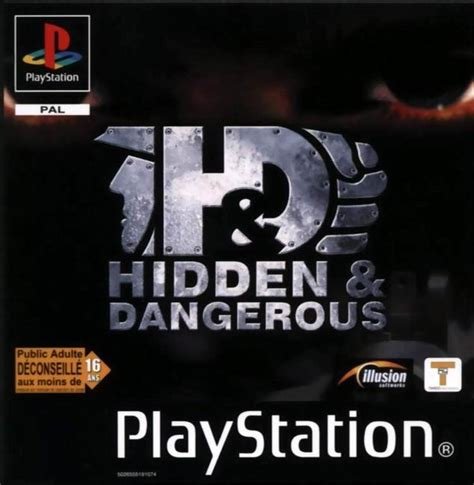
Description
Hidden & Dangerous: Antologie is a 2008 compilation that bundles the tactical shooters Hidden & Dangerous (1999) and Hidden & Dangerous 2 (2003), set in World War II. Players command a four-man British Special Air Service team through historically-inspired missions like sabotage, search and destroy, and POW rescue, emphasizing realistic squad management, strategic planning, and immersive combat scenarios.
Hidden & Dangerous: Antologie Reviews & Reception
gamepressure.com (84/100): a very good game
metacritic.com (74/100): A good game with a lot of flaws.
ign.com (62/100): It’s got more bugs than an entomologist, but damn if it’s not fun and addicitve.
gamegenie.com : this game is replete with glitches.
Hidden & Dangerous: Antologie: A Time Capsule of Tactical Revolutionary Chaos
Introduction: The Cult Classic Compilation
In the sprawling cemetery of gaming history, few series shine with the peculiar, unpolished brilliance of Hidden & Dangerous. Born from a Czech studio with a radical vision of squad-based realism, the original 1999 title and its 2003 sequel didn’t just ride the wave of the tactical shooter boom—they tried to drown it in a sea of granular simulation. Now, bundled in the obscure 2006/2008 compilation Hidden & Dangerous: Antologie, these pioneering, infuriating, and profoundly immersive games stand as a testament to an era where ambition frequently eclipsed polish. This review argues that Antologie is not merely a collection, but a crucial historical document. It preserves two flawed masterpieces that redefined what a World War II shooter could be, sacrificing accessibility for an unmatched, systemic, and often brutal, simulation of commando warfare. Their legacy is one of profound influence hamstrung by technical strife, a duality perfectly encapsulated in this dusty, hard-to-find package.
Development History & Context: Prague Meets the Pentagon
The story begins not in the halls of a Western publisher, but in the post-communist software labs of Prague. Illusion Softworks, a collective of Czech developers led by Michal Bačík and Radek Bouzek, was fueled by a passion for historical military minutiae and a desire to create a “thinking man’s” shooter amidst the run-and-gun frenzy of the late ’90s. Released in 1999, the original Hidden & Dangerous arrived at the zenith of the tactical shooter genre, hot on the heels of Tom Clancy’s Rainbow Six and alongside Delta Force 2. Its vision was distinct: whereas Rainbow Six focused on close-quarters breaching and Delta Force on large-scale outdoor engagements, H&D sought to simulate the entire operational lifecycle of a small SAS unit—from loadout planning and stealthy infiltration to chaotic firefights and exfiltration.
Technologically, the game was a marvel of its constrained era. Running on a custom engine, it featured a fully rotatable 3D tactical map for pre-mission planning and real-time command, a feature revolutionary for the time. However, this ambition was shackled by the hardware of 1999. Pathfinding for a four-man squad in a sprawling, hand-crafted 3D environment was a herculean task, leading to the infamous “Artificial Stupidity” where soldiers would get stuck on geometry, ignore orders, or waste ammunition. The development was marked by a tension between this deep systemic design and the project’s technical limitations, a fault line that would persist through the series.
The sequel, Hidden & Dangerous 2 (2003), represented a massive engine overhaul by the now-renamed 2K Czech. It addressed many visual and control shortcomings, introducing a more fluid animation system and improved AI routines. Yet, it retained the core, punishing philosophy. The series’ commercial journey was bifurcated: it found its strongest, most passionate audience in Europe—particularly the UK, where SAS mythology resonated—while in the US, it was often buried under the marketing might of Rainbow Six and suffered from a reputation for being “too hard” and “too buggy.”
Hidden & Dangerous: Antologie itself is a product of this legacy. Released in a crowded 2006/2008 market saturated with modern shooters, this compilation (likely published by Take-Two to capitalize on nostalgia or as a budget release) bundles the definitive Deluxe edition of the first game (a 2002 freeware update patched by Lonely Cat Games) with the gold-plated Hidden & Dangerous 2 and its Sabre Squadron expansion. It is a museum piece assembled after the series had faded from the mainstream, offering the most complete version of these historical experiments to a new generation.
Narrative & Thematic Deep Dive: The Silence Between Gunshots
Narrative in the Hidden & Dangerous series is an exercise in implication and environmental storytelling, a stark contrast to the cinematic bombast of its contemporaries. There is no overarching plot arc carried by a charismatic protagonist. Instead, narrative is fragmented into mission briefings, historical context, and the emergent stories of your squad’s survival (or demise).
Thematic Core: The Calculus of Survival. The primary theme is the dehumanizing, clinical calculus of special operations. Each mission begins with a dispassionate briefing—a map, objectives, enemy strength estimates, and recommended “plans of advance.” This establishes a tone of detached military bureaucracy, which is violently shattered by the visceral chaos of execution. The game forces you to confront the gulf between the clean schematic of the plan and the messy, bloody reality. The permadeath system (Permadeath) is the ultimate narrative engine. The loss of a sniper you’d carefully molded over ten missions isn’t a checkpoint reload; it’s a permanent hole in your roster, a silent name on a memorial screen. It creates a profound, personal attachment to these procedurally generated or manually selected soldiers, their backstories (from the manual) becoming poignant shorthand for their value.
Setting as Antagonist. The European theatre is not a backdrop but an active, often malevolent, character. From the fog-choked Norwegian fjords and the sinking hulk of the Tirpitz to the claustrophobic sewers beneath an Italian oil refinery, each campaign’s geography dictates a unique tactical vocabulary. The game’s Artistic License – Geography (e.g., an Alpine Peenemünde) and Artistic License – History (SAS operating outside their known theatres) serve a greater purpose: they make the world feel like a lived-in, operational space for special forces, not a museum diorama. The expansion’s controversial segue into the Greek Civil War (Dirty Commies) tragically underscores how these elite soldiers were often pawns in the emerging Cold War chessboard, a grim postscript to their Nazi-fighting heroics.
Dialogue & Intel: The Fog of War. Mission briefings are dripping with the uncertainty of intelligence. The infamous “Lying Bastard” trope—where briefings can be misleading or outright wrong—is not a bug but a deliberate, thematic feature. It simulates the unreliable nature of wartime intelligence. A mission to rescue POWs might find the prisoners already moved, a simple footnote that forces you to adapt. This creates a persistent, low-grade paranoia. The most narratively powerful moments are the silences: the tense crawl through a minefield, the held breath as a patrol passes meters away, the grim aftermath of a firefight where you loot the very weapons that killed your friends (On-Site Procurement). The story is written not in cutscenes, but in the bloody footprints left across Europe.
Gameplay Mechanics & Systems: The Precision Instrument of Frustration
To play Hidden & Dangerous is to engage with a complex, interlocking system of rules where every decision carries catastrophic weight. The core loop is a triad of Preparation, Execution, and Consequences.
1. The Arsenal & Soldier as a System. Pre-mission, you select four men from a pool of 40, each with four core attributes: Shooting, Reaction, Stealth, and Strength/Endurance. These stats are not abstract numbers; they are predictive models. A soldier with low Shooting will see his reticle bloom wildly; a low Reaction soldier will freeze under fire. You equip them from a vast, period-accurate arsenal (Lee-Enfields, MP40s, Bazookas, mines). Weight is a critical factor—Strength determines what a soldier can carry, and over-encumbrance slows movement and increases fatigue. This creates a compelling logistical puzzle: does your auto-rifle specialist carry extra grenades, or a demolition charge for the objective? The Selective Historical Armoury is part of this simulation; German forces are initially overstocked with scoped rifles, creating a palpable sense of being hunted by expert marksmen.
2. The Command Interface: Map as Brain. The game’s most revolutionary feature is the tactical map, accessible at any time. Here, you can plot complex, timed maneuvers for your squad—assigning waypoints, telling a soldier to prone and guard an area, or order a coordinated assault. In theory, this allows for silent, synchronized takedowns. In practice, it is the source of immense frustration (Squad Controls). The AI’s pathfinding is notoriously Artificial Stupidity. A soldier ordered to crawl through a sewer might instead run topside into a kill zone. The command system is a brilliant idea perpetually at war with the engine’s inability to reliably execute it. This tension—between player intention and agent execution—is the fundamental gameplay experience.
3. The Killbox: Lethality and Positioning. Once deployed, the game is a study in lethality. There is no regenerating health. A single, well-placed shot can kill. Made of Explodium grenades have apocalyptic blast radii, making them both a savior and a primary cause of friendly fire. Cover is not a suggestion; it is a requirement. The infamous Super Drowning Skills—where commandos die in ankle-deep water—are not a joke but a brutal, systemic rule: in this simulation, certain terrain is impassable. The Stealth-Based Mission (infiltrating a town in civilian clothes to steal a boat) is legendary for its narrow margin of error. Breaking stealth dooms the mission as enemies “somehow immediately know what your mission objective is” (The Computer Is a Cheating Bastard), spawning a mad dash to a boat you may not have properly secured.
4. The Kaizo Trap and Trial-and-Error. The game is notoriously Nintendo Hard and often Unintentionally Unwinnable due to Foregone Conclusion missions (like trying to sink the Tirpitz, which historically survived) or hidden, mission-critical items you failed to pack. The Trial-and-Error Gameplay is severe. You will die to suddenly spawning hordes of enemies out of a building (Kaizo Trap). You will fail because a soldier carrying the唯一 dynamite fell through the world thanks to a bug. The learning curve is not a slope but a vertical cliff face. Success feels earned, not gifted; it is the product of memorization, patience, and cold, tactical adaptation.
5. H&D2: Refinement, Not Revolution. The sequel softens some edges. The new engine allows for more fluid movement and interaction. Soldiers can now climb certain obstacles (Insurmountable Waist-Height Fence partially addressed). The command system is slightly more reliable. However, the core identity remains: a game where a pistol-wielding enemy can “headshot your men across the room” due to BS accuracy (The Computer Is a Cheating Bastard), and where the final mission’s climax involves defending a bunker against wave after wave of Soviet troops in a grueling war of attrition. It is more polished, but no less demanding.
World-Building, Art & Sound: The Auditory and Visual trenches
Where the gameplay systems are often a mess, the atmospheric construction is unimpeachable. This is where the series achieves its legendary status.
Visual Direction: Grime and Grit. The graphics, by modern standards, are blocky and dated. But within their technical envelope, they achieve a remarkable period authenticity. There are no gleaming, sterile environments. Every texture suggests decay: peeling wallpaper in French farmhouses, rust on U-boat pens, mud-churned Yugoslavian fields. The use of dynamic shadows (in the Deluxe edition) and limited draw distance create a constant, anxious tension—you can see only so far, and the world disappears into a fog of war. The sinking cruiser mission in the first game is a masterclass in environmental horror. The creaking metal, the lists of the ship, the dark compartments illuminated only by lightning flashes—it’s a uniquely terrifying, claustrophobic space that no other WWII game has replicated.
Sound Design: The Symphony of Fear. Sound is arguably the series’ greatest strength and most potent tool. The realistic audio-environment is breathtaking. Footsteps change from gravel to wood to metal. Bullets crack with supersonic reports in the distance and thwack into dirt nearby. The classical music and period radio background animations (a crackling Glenn Miller record in a captured pub) are not just set-dressing; they are psychological warfare. They lull you into a false sense of familiarity before a distant shout in German shatters the illusion. The lack of 3D sound (on older versions) is a detriment, but the directional audio that is present is used with surgical precision to locate threats. The sound of a grenade clattering across stone is one of the most universally terrifying audio cues in gaming.
Together, art and sound create a persistent style that is persuasive. You don’t feel like you’re playing a “level”; you feel like you’re cold, wet, and hunted in aoccupied forest. This is the atmosphere that reviews consistently praised as “acutely atmospheric” and “tense.” It is the saving grace that makes the frustrating mechanics worth tolerating.
Reception & Legacy: The Flawed Pioneer
At Launch (1999-2004): Reception was a study in extremes. In Europe, it was hailed as a landmark. PC Gamer UK‘s 93% review called it “PC gaming triumphs,” praising its depth and atmosphere (Edge‘s 9/10). In the US, reviews were more mixed or average (Metacritic 74/100). PC Gamer US scored it 55%, citing difficulty and bugs. The divide was stark: American critics, spoiled by the slicker, more accessible Rainbow Six, saw a rough prototype. European critics, perhaps more tolerant of simulation depth and Czech ingenuity, saw a revolutionary step forward.
Commercial performance mirrored this split. It sold over 1 million copies globally by 2007, but “most of the game’s success derived from European markets.” The US sales were “poor,” attributed to “intense competition from Rainbow Six” and “relatively little marketing exposure.” The sequel, H&D2, fared better critically but existed in the shadow of the upcoming Ghost Recon and Operation Flashpoint, which refined the tactical formula with greater fidelity and stability.
The Cultivation of a Legacy: Over time, the original’s reputation has undergone a remarkable rehabilitation. It is now routinely cited in academic papers on game history and simulation as a pioneering tactical shooter. Its systemic approach to squad command, persistent soldier personalities, and operational planning directly influenced later, more successful titles. The permadeath and logistical planning can be seen as direct antecedents to the meticulous squad management of XCOM and the punishing realism of the Arma series. Its commitment to a “warts-and-all” simulation—where the AI is as flawed as the human player—is now viewed not as a bug, but as a brave, if frustrating, design choice.
The Antologie compilation itself is an artifact of this legacy. Released in 2006/2008, it was too late to reshape the genre it helped create. It served as a budget release for existing fans and a confusing, hard-to-find entry point for newcomers. Its obscurity is a symptom of the series’ niche status—a brilliant but difficult footnote that major publishers (Take-Two/2K) never fully knew how to market.
Conclusion: A Monument to Difficult Genius
Hidden & Dangerous: Antologie is not a package that exists on its own merits. It is a vessel. Its value lies entirely in the two flawed, furious, and brilliant games it contains. The Deluxe edition of the 1999 original is a raw, unvarnished look at a genre being born, complete with its birthing pains—the pathfinding errors, the broken objectives, the infuriating AI. Hidden & Dangerous 2 is the matured, more confident sibling, still stubbornly difficult but displaying a studio mastering its own craft.
Together, they represent a crucial “what if” in FPS history: what if the genre’s evolution had leaned harder into systemic simulation and less into cinematic scripted sequences? Their influence is felt in the repertoire of modern tactical design, even if their direct lineage is rarely acknowledged. To play Antologie today is to engage in historical archaeology. You must wield archaic controls, battle an uncooperative simulation, and endure a level of punitive difficulty largely absent from modern gaming. The reward, however, is singular: moments of sheer, unadulterated tactical triumph. The silent, perfect sniper shot. The flawless stealth infiltration. The desperate, last-stand defense against impossible odds.
These moments are earned, and they are unforgettable. For that reason, Hidden & Dangerous: Antologie is not a relic to be ignored, but a challenging, essential pilgrimage for any serious student of game design. It is a monument to a time when developers aimed for a terrifying, beautiful, and deeply complex vision of war, and sometimes, against all technical odds, they hit it. Final Verdict: A historically significant but deeply flawed compilation preserving two groundbreaking, punishing, and immortal tactical experiences. Approach with immense patience, and be prepared to die in a sewer for your trouble.