
- Release Year: 2018
- Platforms: Windows
- Publisher: Taotie Industries
- Developer: Taotie Industries
- Genre: Role-playing (RPG)
- Perspective: Top-down
- Game Mode: Single-player
- Gameplay: Puzzle elements
Description
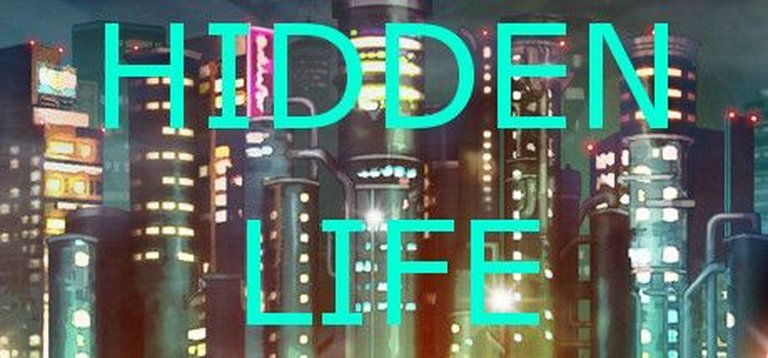
Hidden Life is a narrative-driven RPG that explores the struggles of mental health within a college setting. Players navigate the lives of characters grappling with depression and unseen demons, where subtle choices can lead to vastly different outcomes. Featuring a top-down perspective and puzzle elements, the game offers four unique endings, emphasizing the impact of empathy and hindsight on personal crises. With two playable characters, it delves into sensitive themes like suicide, challenging players to reflect on the unnoticed signs of suffering.
Where to Buy Hidden Life
PC
Hidden Life: Review
Introduction
In an era where video games increasingly explore mental health with varying degrees of sensitivity, Taotie Industries’ 2018 indie RPG Hidden Life stands as a quietly ambitious experiment—a game unafraid to confront the isolating weight of depression and the haunting question of hindsight. Despite its obscurity (evidenced by its absence of critic reviews and sparse player engagement), Hidden Life carves a niche as a raw, autobiographical reflection on trauma, framed through the lens of college life. This review argues that while the game stumbles technically under the constraints of RPG Maker, its unflinching thematic focus and narrative intimacy cement it as a poignant, if flawed, artifact of personal storytelling in gaming.
Development History & Context
A Solitary Vision in a Crowded Landscape
Developed and published by the enigmatic Taotie Industries, Hidden Life emerged in March 2018 amid a surge of introspective indie titles like Night in the Woods and Celeste, which similarly grappled with mental health. Built using RPG Maker MV, the game inherits the engine’s signature 2D top-down perspective and tile-based environments, tools often associated with hobbyist creators due to their accessibility and low cost. This choice reflects the project’s likely indie budget and scope, yet it also imposed creative limitations: the absence of advanced scripting or custom assets would later draw criticism for generic visual design.
The developer’s Steam description explicitly roots the game in personal experience, citing “my experiences on both sides of the isle” regarding depression. This vulnerability frames Hidden Life not as a commercial product but as a cathartic exercise—a trait common among RPG Maker projects that prioritize narrative urgency over polish. In an industry where mental health narratives risk commodification, Taotie’s insistence that “almost no one is ever to blame” for others’ choices positions the game as a corrective to reductive portrayals of guilt and responsibility.
Narrative & Thematic Deep Dive
Echoes in the Dark: Choice, Regret, and the Illusion of Control
Hidden Life unfolds across two playable college students grappling with unseen emotional turmoil. The narrative eschews traditional RPG stakes—no world-ending threats or magical quests—opting instead for grounded vignettes of academic pressure, social alienation, and internalized despair. Players toggle between protagonists, each offering distinct perspectives on shared environments (e.g., dormitories, classrooms), with interactions subtly influencing one of four endings.
Central to the story is the game’s refrain: “We can always look back and see we should’ve noticed or could’ve done better.” This mantra manifests mechanically through branching dialogue and environmental clues (e.g., a forgotten diary entry, a withdrawn classmate’s muted cry for help). One protagonist might dismiss a friend’s offhand remark about “feeling empty,” while the other revisits that moment in a later timeline, armed with tragic hindsight. The narrative’s non-linear structure mirrors the recursive nature of regret, challenging players to interrogate their assumptions about agency and observation.
Yet the writing occasionally falters. Supporting characters lean on archetypes (the aloof professor, the party-obsessed roommate), diluting the authenticity of its central relationships. However, these flaws feel symptomatic of the game’s compressed scope rather than a lack of empathy. The developer’s content warning—emphasizing that the game “deals with controversial topics like depression and suicide”—serves not just as a disclaimer but as a thesis: Hidden Life refuses to sanitize its subject matter, even if its execution is uneven.
Gameplay Mechanics & Systems
Minimalism as a Double-Edged Sword
As an RPG Maker title, Hidden Life adheres to the engine’s traditional framework: grid-based movement, text-driven interactions, and lightweight puzzle-solving (e.g., deciphering a locker combination to access a hidden letter). The UI is utilitarian, with a minimal HUD and click-to-navigate dialogue boxes, while direct keyboard/mouse controls ensure accessibility.
The game’s chief innovation lies in its dual-protagonist system, which occasionally intersects timelines—a choice made by one character might alter the other’s environment or dialogue options retroactively. For instance, discovering a medication bottle in one storyline could unlock a previously inaccessible conversation branch in the other. This creates a delicate metanarrative about interconnectedness, though the mechanic is underexplored, with most choices funneling toward predetermined emotional beats rather than systemic consequences.
Technical shortcomings undermine immersion. The Steam Community Hub reports a progress-halting bug where protagonist Alec “stares at the wall, unable to move,” reflecting unstable scripting. Additionally, the lack of Steam Cloud support (a frequently requested feature) limits replayability for a game designed around multiple endings. While the $0.99 price point mitigates some frustration, these issues spotlight RPG Maker’s pitfalls when ambition outpaces technical rigor.
World-Building, Art & Sound
A Drained Palette for a Heavy Psyche
Hidden Life’s college setting is rendered in RPG Maker’s default art style: emotive but simplistic character sprites, repetitive campus layouts, and muted colors that evoke a perpetual twilight. Though lacking originality—dorms and lecture halls bleed into generic RPG templates—this aesthetic austerity complements the narrative’s emotional bleakness. The absence of vibrant life in backgrounds (e.g., vacant courtyards, NPCs with looped idle animations) subtly mirrors the protagonists’ dissociation.
Sound design is similarly minimalist. Ambient tracks lean on piano melodies and stark synth textures, evoking a sense of isolation, while dialogue lacks voice acting, placing emphasis on textual nuance. One standout sequence uses diegetic audio: a party scene’s muffled laughter and bass throbs distort as a protagonist dissociates, reflecting sensory overload. Yet like the visuals, the soundscape feels constrained by asset limitations, weakening its emotional crescendos.
Reception & Legacy
A Whisper in the Indie Wilderness
Upon release, Hidden Life vanished into obscurity. It garnered no professional reviews, and player engagement remains scant—the Steam community’s lone discussions concern bugs, while aggregated platforms like RAWG and OpenCritic list zero ratings. This invisibility stems partly from marketing: Taotie Industries released no trailers or press kits, relying solely on Steam’s algorithm. Even its tags (“Indie,” “RPGMaker”) bury it beneath hundreds of similar titles.
Yet the game’s thematic DNA persists in later works. Its focus on mundane tragedies anticipates the melancholic suburban narratives of Gone Home and Life is Strange, while its use of hindsight as a mechanic foreshadows the temporal experimentation of Outer Wilds. For a niche audience, Hidden Life remains a cult curiosity—a raw precursor to games that treat mental health with nuance rather than spectacle. Its legacy lies not in influence but in proof that even modest tools can channel profound personal stories.
Conclusion
Hidden Life is a paradox: a game emotionally audacious in its exploration of depression yet technically constrained by its creator’s resources. Its RPG Maker foundations breed familiarity—players will recognize asset flips and rote puzzles—but beneath the jank lies uncommon sincerity. The narrative’s insistence that “we can’t ever really know” the pain of others resonates beyond its runtime, challenging players to sit with discomfort rather than seek pat solutions.
While far from a masterpiece, Hidden Life earns its place in gaming history as a testament to the medium’s capacity for intimate confession. It is a flawed mirror, reflecting the quiet crises that unfold in ordinary places—and for those willing to overlook its rough edges, a haunting reminder that some hidden lives are worth witnessing. ★ ★ ★ ☆ ☆