
- Release Year: 2012
- Platforms: Macintosh, Windows
- Publisher: astragon Software GmbH, Big Fish Games, Inc, Gunnar Games, Inc.
- Developer: Gunnar Games, Inc.
- Genre: Adventure
- Perspective: 1st-person
- Game Mode: Single-player
- Gameplay: Hidden object, Puzzle elements
- Average Score: 63/100
Description
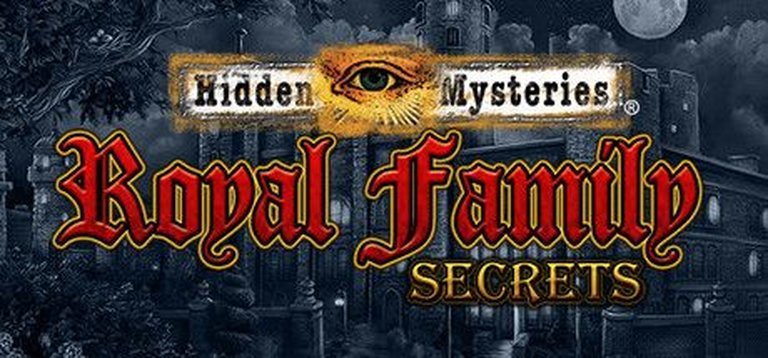
Hidden Mysteries: Royal Family Secrets is a first-person adventure game blending hidden object and puzzle mechanics. Set in the haunted Tower of London, you play as the Queen’s handmaiden, falsely accused of stealing a royal brooch and cursed to eternally wander the Bloody Tower. To break the curse and seek redemption, you must explore spectral locations, decipher clues, and uncover royal secrets through challenging puzzles and hidden object searches.
Gameplay Videos
Where to Buy Hidden Mysteries: Royal Family Secrets
PC
Hidden Mysteries: Royal Family Secrets Free Download
Hidden Mysteries: Royal Family Secrets Guides & Walkthroughs
Hidden Mysteries: Royal Family Secrets Reviews & Reception
gamezebo.com (70/100): this is still a fairly enjoyable hidden object adventure, which should be experienced by those who know better than to expect perfection.
Hidden Mysteries: Royal Family Secrets: A Monument to Meandering Majesty
Introduction: A Ghost in the Machine of Casual Gaming
In the sprawling ecosystem of early 2010s casual gaming, few niches were as defined—and as derided—as the hidden object puzzle adventure (HOPA). It was a genre built on repetition, atmospheric tableau, and gentle, almost soporific, cognitive engagement. Within this landscape, the Hidden Mysteries series by Gunnar Games stood as a prolific, if unremarkable, workhorse. Hidden Mysteries: Royal Family Secrets, released in 2012, is not a game that redefined its genre or captured mainstream headlines. Instead, it represents a perfect case study in the craft of competent, formulaic design within a constrained business model. This review will argue that Royal Family Secrets is less a failed artistic endeavor and more a meticulously engineered product of its time: a game that successfully leverages the allure of British royal mystery and the comfort of familiar mechanics to deliver a perfectly adequate, if ultimately forgettable, experience. Its legacy is not one of innovation, but of exemplifying the strengths—and inherent limitations—of the budget casual adventure at a moment when the market was saturated with such titles.
Development History & Context: The Gunnar Games Assembly Line
To understand Royal Family Secrets, one must first understand its creator. Gunnar Games, Inc., under Studio Director Brian Kirkvold, was a small North American developer whose business model was intrinsically tied to the “boxed” casual game market dominated by publishers like Big Fish Games and GameMill Entertainment. The credited team of 17 (including key repeat collaborators like programmer Jamie Nye and designer Scott Nixon) was tasked with a specific production rhythm. As the sequel to Gates of Graceland (2012) and predecessor to JFK Conspiracy (2013), Royal Family Secrets was clearly part of a rapid-production pipeline, where thematic settings (royalty, famous locations, historical conspiracies) were swapped into a proven technical and design template.
The technological constraints were those of the mid-to-late 2000s casual engine: pre-rendered 2.5D “slideshow” backgrounds, a point-and-click interface powered by a proprietary toolchain, and a focus on 2D art assets. The MobyGames specs—requiring only a 1.2 GHz CPU, 256MB RAM, and DirectX 9.0—speak to a design philosophy of maximum accessibility. This was software designed to run on the family computer in the den, not a gaming rig. The gaming landscape of 2012 saw the HOPA genre in a period of saturation. Competitors like Big Fish’s own Mystery Case Files or Artifex Mundi’s expanding catalog offered similar blends of hidden object scenes and simple puzzles. Gunnar Games’ differentiation was its “licensed” historical hook—using real locations (Tower of London, Westminster Abbey, Globe Theatre) and weaving in figures like the Princes in the Tower, Mary, Queen of Scots, and the ghost of Richard III. This provided a veneer of educational curiosity atop the core gameplay loop.
Narrative & Thematic Deep Dive: Whispers in the Stone
The narrative setup, as delivered in the ad blurb and reinforced in walkthroughs, is pure melodious hook: “You were the Queen’s most trusted handmaiden. Yet all it took was a whisper for you to be falsely accused of stealing Her Majesty’s Royal Brooch and sentenced to death in the Tower of London.” This immediate establishment of a wrongful conviction and supernatural consequence—”doomed to wander… for eternity”—is a classic HOPA trope. The player’s goal becomes twofold: clear their name and lay the souls unleashed by the stolen brooch to rest.
Deeper analysis reveals a narrative structure that is both sprawling and superficial. The plot, as pieced from walkthrough dialogues and item collections, posits a conspiracy involving a “Catholic noble, Alphonse Pieter” and a secret relationship with Queen Elizabeth I (or possibly a fictionalized version, given the anachronistic blending of Tudor and later Stuart-era figures like Charles II). The player is tasked with collecting evidence—a diary, letters, a play script—across disparate London landmarks. Thematically, the game flirts with ideas of historical injustice, the corruption of power, and the weight of royal secrets. The “lost souls” you free—from executed nobles to trapped spirits—are direct consequences of past court intrigues and murders, most notably the enduring mystery of the Princes in the Tower.
However, the narrative execution is where the game’s limitations shine through. The story is not told through cutscenes or rich dialogue, but through item descriptions, journal entries, and brief ghostly utterances upon interaction. Character development is nonexistent; the protagonist is a silent cipher. The historical figures are reduced to puzzle objectives and item sources (e.g., “talk to the ghost, receive a bell clapper”). The intriguing premise of a servant caught in royal espionage is never explored with any nuance. The theme of “secrets” is literalized into the gameplay’s core item-hunt: you are literally finding hidden objects that represent secrets. It’s a thematically consistent but narratively shallow approach, where history is a decorative skin for the puzzle-solving, not a subject of serious inquiry. The Spanish localization title, Los Secretos de la Familia Real, underscores that the “Royal Family” mystery is the primary, almost sole, selling point.
Gameplay Mechanics & Systems: The Engines of Repetition
The gameplay of Royal Family Secrets is the epitome of the HOPA template, executed with functional proficiency but few innovations.
-
Core Loop: The game is a sequence of static screens connected by nodes. Players click to move, interact with hotspots to collect items, and trigger hidden object scenes (HOS) and puzzles. The walkthrough reveals a chapter-based structure: starting in the Tower of London (Dungeon, Courtyards, White Tower, Bloody Tower), expanding to Graveyard/Church, then Whitehall Palace/Globe Theatre. Each area is a self-contained puzzle box, requiring items found within it or in previous areas to progress.
-
Hidden Object Scenes: These are the bread and butter. A list of items is presented against a cluttered, illustrated backdrop. The walkthrough notes that items “in orange require additional steps,” a common genre mechanic where you must first use one found item on a scene element to reveal another (e.g., use a paintbrush on a white rose to make a red rose appear). This adds a layer of environmental puzzle-solving to the basic search. The scenes are well-drawn and thematically appropriate—a torture chamber, a stable, a church vestry—but their design prioritizes density of objects over visual clarity, leading to eye strain.
-
Inventory & Item Combination: The inventory system is the game’s central nervous system and its greatest source of friction. The walkthrough is a testament to the game’s sprawling, non-linear item dependencies. Players constantly collect and combine items (e.g., Devil’s Claw + Drain = unclogged drain; Stone Bowl + Flowing Water = Bowl of Water; Bowl of Water + Bench Hinges = reveal hidden compartment). The critique from Gamezebo is astute: “you’ll spend far too much time backtracking through the same scenes time and time again.” With dozens of “key” items in the inventory at once (the walkthrough lists scores: BAMBOO POLES, STONE BOWL, DEVIL’S CLAW, DULL AXE, etc.), determining which item is relevant for the next hotspot becomes a chore. The auto-hiding inventory panel is a minor usability flaw.
-
Puzzles & Mini-Games: These are simple, often logic-based or pattern-recognition tasks. Examples from the walkthrough include:
- Symbol Matching: Placing crest pieces in order of detail (complexity increasing).
- Pattern Rotation: The “rose” puzzle in the Rose Tower, requiring bumper flips.
- Tile Matching/Sliding: The Westminster Abbey floor tile puzzle and the skull-color matching puzzle in the False Tower.
- Jigsaw: Restoring torn poster pieces.
These are generally easy, serving as palate cleansers between HOS. The skull puzzle is noted as having “randomly generated” start positions, adding slight variability but no meaningful difficulty.
-
Interface & Systems: The point-and-click interface is standard. The map is crucial but lacks fast travel, contributing to the backtracking problem. Hints are unlimited but operate on a recharge timer, a common freemium-inspired mechanic even in paid games. The “journal” provides some story context but is not a robust quest log. The game’s structure is mostly linear in terms of required progression (Chapter 1 -> 2 -> 3 -> 4), but each chapter’s internal logic is a web of item dependencies that can cause temporary stalls.
World-Building, Art & Sound: Atmosphere Over Detail
Given its technical constraints, Royal Family Secrets achieves a surprising level of atmospheric cohesion. The art direction, credited to Shawn Gooding, Elizabeth Kapatos, Ramon Mujica, and Gavin McNeal, employs a “illustrated realism” style typical of the genre. Environments are detailed, moody paintings with a consistent color palette—greys, browns, and muted greens for the Tower; warmer tones for interiors. The use of lighting and shadow (e.g., torchlit dungeons, foggy courtyards) effectively creates a gothic, eerie mood suited to the ghost story premise. The “slideshow” presentation, while static, is polished.
The world-building is primarily environmental storytelling. The Tower of London is not a historically accurate reconstruction but a thematic amalgam of its infamous features: the Bloody Tower, the White Tower, a execution area, a torture chamber, a chapel. The expansion to the Globe Theatre and Whitehall Palace broadens the scope, making London feel like a connected locale. However, this is a tourist’s London, stripped of life and populated only by ghosts and objects. The sense of place is evoked through iconic architecture (the round Tower, the Globe’s thrust stage) and objects (cannonballs, royal crests, religious icons), not through living NPCs or dynamic elements.
Sound design by Joe Abbati is sparse but effective. A low, ambient drone or period-adjacent “mysterious” melody underscores the exploration. Sound effects for item pickup, mechanism operation, and ghostly moans are clear and serve their functional purpose. There is no voice acting, a cost-saving measure that is both a limitation and a relief; the silent protagonist avoids cringe-worthy amateur performances. The audio’s role is purely atmospheric, and it succeeds without drawing attention to itself.
Reception & Legacy: The Quiet Middle Ground
Critical reception for Royal Family Secrets is patchily documented, a common issue for niche casual titles. Metacritic lists no critic reviews for the PC version, and MobyGames has no aggregated critic score. This reflects a reality where such games existed outside the traditional games press ecosystem. One of the few professional reviews comes from Gamezebo‘s Brandy Shaul, who awarded it a middling 70/100. Her critique is balanced: she praises the game’s scope and satisfying “click” of progression but heavily criticizes the excessive backtracking, overwhelming inventory, and lack of a fast-travel map. This review serves as an accurate summation of the fan consensus.
User reception, as captured on Steam (14 reviews, “Mixed” at 57% positive), mirrors this. Positive comments likely highlight the engaging puzzles, interesting historical setting, and value for money ($5.99). Negative reviews almost certainly cite the frustrating navigation, dated graphics, and repetitive hidden object scenes. The Steambase score consolidates this mixed bag.
Its legacy is as a quintessential mid-tier title in the Hidden Mysteries franchise and the broader HOPA genre of its era. It did not influence the industry; it was influenced by the prevailing trends of Big Fish Games’ catalog. Its significance is archival: it represents a peak (or trough, depending on perspective) of the “package” casual adventure, where a developer would produce a new title every few months by re-tooling an existing engine with a new historical skin. It is a game more studied by cultural historians of casual gaming for its business model and design pattern than by players for its artistic merit. Its inclusion in the “Legends, Terrors, and Mysteries Mega Pack” on Steam speaks to its role as inventory filler—a game to be consumed quickly by subscribers to a casual game service.
Conclusion: A Solid Stone in the Foundation
Hidden Mysteries: Royal Family Secrets is, in the final analysis, a perfectly functional artifact of its time and place. It delivers exactly what its box promises: a hidden object adventure set against a backdrop of royal intrigue and supernatural ghost stories. It is not a bad game by any objective measure; its puzzles are solvable, its art is competent, and its core loop, for the patient, provides a low-stimulus distraction. However, it is also not a good game in any meaningful sense beyond basic competency. Its flaws—the crippling backtracking, the bloated inventory, the simplistic storytelling—are not aberrations but inherent features of its design philosophy, which prioritized quantity of content and breadth of setting over quality of interaction and narrative depth.
Its place in video game history is therefore niche but clear. It is a representative specimen of the “budget HOPA” sub-genre that flourished in the 2000s and early 2010s, a model that sustained companies like Big Fish and Gunnar Games before the mobile free-to-play market shifted the entire casual paradigm. For the historian, it is a valuable case study in constrained development, thematic reuse, and the economics of casual game production. For the modern player, it is a time capsule—a reminder of an era when “story-rich” could mean a paragraph of text in a journal and “exploration” meant traversing dozens of static, beautiful, but utterly lifeless screens in search of a hidden thimble. It is a game that whispers its secrets not with suspense, but with the weary sigh of a thousand similar ghosts in the machine.