
- Release Year: 2013
- Platforms: Macintosh, Windows
- Publisher: Tri Synergy, Inc.
- Genre: Compilation, Licensed
- Game Mode: Single-player
- Average Score: 100/100
Description
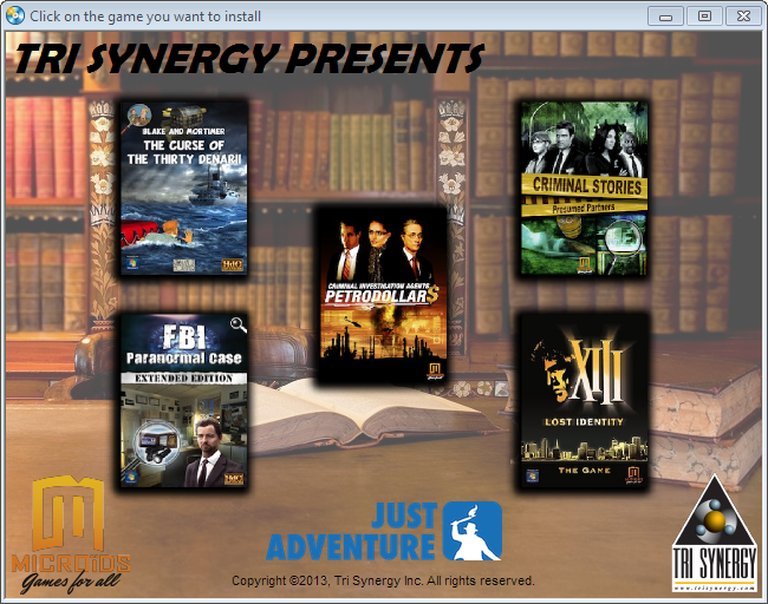
Hidden Object Classic Mysteries II is a budget-friendly compilation of five adventure games, each offering a unique mystery to solve. The collection includes titles like Blake and Mortimer: The Curse of the Thirty Denarii, Criminal Investigation Agents: Petrodollars, XIII: Lost Identity, FBI: Paranormal Case, and Criminal Stories: Presumed Partners. Players can expect a mix of hidden object challenges and investigative gameplay, all set within intriguing narratives that span historical, criminal, and paranormal themes.
Hidden Object Classic Mysteries II Reviews & Reception
ebay.com (100/100): Thx..it’s great
Hidden Object Classic Mysteries II: A Compilation of Forgotten Gems
Introduction
In the vast and often overlooked landscape of casual gaming, Hidden Object Classic Mysteries II stands as a curious artifact—a budget-priced compilation that bundles five distinct hidden object adventure games into a single package. Released in 2013 by Tri Synergy, Inc., this collection is a snapshot of a genre that, at the time, was both thriving and struggling for mainstream recognition. While it lacks the polish or innovation of more celebrated titles, Hidden Object Classic Mysteries II offers a fascinating glimpse into the evolution of hidden object games (HOGs) during the early 2010s. This review will dissect the compilation’s development context, narrative themes, gameplay mechanics, and its place within the broader history of the genre.
Development History & Context
The Studio and Creators’ Vision
Hidden Object Classic Mysteries II is not the work of a single developer but rather a curated selection of five previously released games, each with its own development history. The compilation was published by Tri Synergy, Inc., a company known for distributing budget-friendly game collections, often targeting casual audiences. The included titles—Blake and Mortimer: The Curse of the Thirty Denarii, Criminal Investigation Agents: Petrodollars, XIII: Lost Identity, FBI: Paranormal Case, and Criminal Stories: Presumed Partners—were developed by various studios, primarily European, and originally released between the late 2000s and early 2010s.
The vision behind this compilation was straightforward: to offer a cost-effective bundle of hidden object adventures for players who enjoyed the genre’s blend of puzzle-solving and narrative-driven gameplay. Unlike more ambitious projects, Hidden Object Classic Mysteries II did not aim to redefine the genre but rather to capitalize on its existing popularity by providing a convenient, all-in-one package.
Technological Constraints and the Gaming Landscape
The early 2010s were a transitional period for hidden object games. The genre had already established itself as a staple of casual gaming, thanks in large part to the success of Mystery Case Files: Huntsville (2005) and its sequels. However, the market was becoming increasingly saturated, with developers churning out similar titles to meet demand. The rise of digital distribution platforms like Big Fish Games and the growing popularity of mobile gaming were also reshaping how these games were consumed.
Hidden Object Classic Mysteries II was released on DVD-ROM, a format that was already becoming obsolete as digital downloads and mobile gaming took over. The compilation’s reliance on physical media reflects the industry’s shift during this period, as publishers struggled to adapt to changing consumer preferences. The games themselves were designed for Windows and Macintosh, with simple keyboard and mouse controls, making them accessible to a broad audience.
The Hidden Object Genre in 2013
By 2013, hidden object games had evolved beyond their humble origins as digital adaptations of Where’s Waldo? and I Spy books. The genre had splintered into several subcategories:
– Traditional HOGs: Focused purely on finding objects within cluttered scenes.
– HOPA (Hidden Object Puzzle Adventure): Incorporated narrative elements, mini-games, and light adventure mechanics.
– Hybrid Games: Combined hidden object gameplay with other genres, such as match-3 puzzles or time management.
Hidden Object Classic Mysteries II falls squarely into the HOPA category, as each of its five games features a narrative framework that contextualizes the object-hunting mechanics. This was a deliberate choice, as story-driven HOGs were particularly popular among the genre’s core audience—primarily women aged 35 and older, according to industry data from the time.
Narrative & Thematic Deep Dive
Plot and Characters
The five games in Hidden Object Classic Mysteries II share a common thematic thread: mystery and investigation. However, their narratives vary widely in tone and setting:
-
Blake and Mortimer: The Curse of the Thirty Denarii
- Based on the beloved Belgian comic series Blake and Mortimer, this game follows the eponymous detectives as they uncover a conspiracy involving ancient Roman coins. The story is steeped in historical intrigue, blending real-world artifacts with fictional mysteries.
- Themes: Historical conspiracy, archaeological adventure.
-
Criminal Investigation Agents: Petrodollars
- A modern crime thriller where players assume the role of an agent investigating a financial scandal tied to the oil industry. The narrative is fast-paced and procedural, with a focus on uncovering documents and clues.
- Themes: Corporate espionage, financial crime.
-
XIII: Lost Identity
- Inspired by the graphic novel XIII, this game follows an amnesiac protagonist attempting to piece together their past while evading shadowy pursuers. The story is noir-inspired, with a strong emphasis on identity and betrayal.
- Themes: Amnesia, conspiracy, survival.
-
FBI: Paranormal Case
- A supernatural twist on the investigative formula, this game tasks players with solving cases that defy logical explanation. The narrative blends X-Files-style mystery with classic detective work.
- Themes: Paranormal investigation, government cover-ups.
-
Criminal Stories: Presumed Partners
- A crime drama centered on a pair of detectives solving a series of interconnected cases. The story is character-driven, with a focus on the dynamic between the two protagonists.
- Themes: Partnership, moral ambiguity, justice.
Dialogue and Themes
The writing in these games is functional rather than exceptional. Dialogue tends to be expository, serving primarily to advance the plot or provide hints for puzzles. However, the themes explored—identity, conspiracy, justice, and the supernatural—are compelling and reflect the genre’s broader appeal.
One notable aspect of Hidden Object Classic Mysteries II is its diversity of settings. From the historical intrigue of Blake and Mortimer to the paranormal mysteries of FBI: Paranormal Case, the compilation offers a range of narratives that cater to different tastes. This variety is one of its strongest selling points, as it ensures that players are unlikely to grow bored with repetitive themes.
Thematic Analysis
The overarching theme of Hidden Object Classic Mysteries II is discovery. Whether uncovering a historical artifact, solving a financial crime, or piecing together a lost identity, each game revolves around the act of finding and interpreting clues. This aligns perfectly with the core mechanics of hidden object games, where the player’s primary task is to observe, analyze, and deduce.
The compilation also reflects the genre’s tendency to blend reality with fiction. Games like Blake and Mortimer and FBI: Paranormal Case draw inspiration from real-world conspiracy theories and historical events, grounding their fantastical elements in a semblance of plausibility. This approach not only enhances immersion but also appeals to players who enjoy puzzle-solving with a narrative payoff.
Gameplay Mechanics & Systems
Core Gameplay Loops
The gameplay in Hidden Object Classic Mysteries II adheres closely to the HOPA formula:
1. Object Hunting: Players are given a list of items to find within a cluttered scene. These objects can be static (e.g., a key on a desk) or interactive (e.g., a drawer that must be opened to reveal an item).
2. Puzzle-Solving: Between hidden object scenes, players encounter mini-games such as jigsaw puzzles, lock-picking challenges, or logic-based conundrums.
3. Narrative Progression: Completing scenes and puzzles advances the story, unlocking new locations and clues.
Each game in the compilation follows this structure, though the execution varies. For example:
– Blake and Mortimer emphasizes historical accuracy, with objects and puzzles tied to its 1950s setting.
– FBI: Paranormal Case introduces supernatural elements, such as finding ghostly apparitions or deciphering cryptic symbols.
User Interface and Controls
The UI across all five games is intuitive but dated. Players use the mouse to click on objects, with a cursor that changes to indicate interactive elements. The inventory system is straightforward, allowing players to store and use found items to solve puzzles.
One notable flaw is the lack of consistency between games. While Blake and Mortimer features a clean, comic-book-inspired UI, Criminal Stories: Presumed Partners opts for a grittier, more realistic aesthetic. This inconsistency can be jarring, as players must adapt to different visual and mechanical styles when switching between titles.
Innovative and Flawed Systems
Hidden Object Classic Mysteries II does not introduce any groundbreaking mechanics, but it does showcase some interesting variations on the HOPA formula:
– Interactive Scenes: Some games allow players to manipulate the environment, such as moving objects to reveal hidden items. This adds a layer of depth to the object-hunting process.
– Morphing Objects: A few titles include objects that change appearance when the player’s cursor hovers over them, rewarding careful observation.
– Time-Pressured Challenges: Certain puzzles impose time limits, increasing the difficulty for players seeking a challenge.
However, the compilation is not without its flaws:
– Repetitive Gameplay: The core mechanics remain largely unchanged across all five games, which can lead to fatigue for players marathoning the compilation.
– Lack of Innovation: None of the included titles push the boundaries of the genre. Instead, they rely on tried-and-true formulas, which may feel stale to veteran HOG players.
– Technical Limitations: The games suffer from occasional bugs, such as misaligned hitboxes or unclear puzzle objectives, which can disrupt the flow of gameplay.
World-Building, Art & Sound
Setting and Atmosphere
The worlds of Hidden Object Classic Mysteries II are diverse and atmospheric, though their execution varies in quality:
– Blake and Mortimer excels in historical world-building, with detailed environments that evoke 1950s Europe.
– FBI: Paranormal Case creates a moody, eerie atmosphere, with dimly lit locations and unsettling sound design.
– XIII: Lost Identity leans into noir aesthetics, featuring shadowy alleyways and morally ambiguous characters.
Each game attempts to immerse the player in its respective setting, though some are more successful than others. Criminal Investigation Agents: Petrodollars, for instance, struggles with generic office and urban environments, which lack the distinctiveness of its counterparts.
Visual Direction
The art style across the compilation is a mixed bag:
– Blake and Mortimer stands out with its comic-book-inspired visuals, staying true to the source material’s clean lines and vibrant colors.
– XIII: Lost Identity adopts a grittier, more realistic approach, with muted tones that complement its noir themes.
– FBI: Paranormal Case uses dark, moody lighting to enhance its supernatural elements.
While the visuals are generally competent, they are not particularly innovative. The games rely on pre-rendered backgrounds, a common technique in HOGs of the era, which can sometimes feel static and lifeless.
Sound Design
The sound design in Hidden Object Classic Mysteries II is functional but unremarkable:
– Ambient tracks set the tone for each game, with FBI: Paranormal Case featuring eerie, suspenseful music and Blake and Mortimer opting for a more orchestral, adventurous score.
– Voice acting is present in some titles but is inconsistent in quality. XIII: Lost Identity benefits from strong voice performances, while others rely on text-based dialogue, which can feel less engaging.
– Sound effects are minimal, with most interactions accompanied by generic clicks and chimes.
Overall, the audio design does not elevate the experience but nor does it detract from it. It serves its purpose without leaving a lasting impression.
Reception & Legacy
Critical and Commercial Reception
Hidden Object Classic Mysteries II received little critical attention upon its release, reflecting the broader trend of HOGs being overlooked by mainstream gaming media. The compilation was marketed as a budget-friendly option, appealing primarily to casual players rather than hardcore gamers.
On eBay, the game holds a perfect 5-star rating from the single review available, with the user praising its graphics, gameplay, and value. However, this limited feedback makes it difficult to gauge the compilation’s true reception. It is likely that Hidden Object Classic Mysteries II found its audience among dedicated HOG fans who appreciated the convenience of having five games in one package.
Evolution of Reputation
Over time, Hidden Object Classic Mysteries II has faded into obscurity, overshadowed by more ambitious or innovative titles in the genre. Its lack of originality and dated presentation have relegated it to the status of a niche curiosity rather than a landmark release.
However, the compilation’s diversity of themes and settings ensures that it remains a valuable artifact for those interested in the history of hidden object games. It serves as a time capsule of the genre’s early 2010s era, showcasing the types of narratives and mechanics that were popular at the time.
Influence on Subsequent Games
Hidden Object Classic Mysteries II did not directly influence the evolution of the HOG genre, but its existence reflects broader trends that shaped later titles:
– Narrative-Driven HOGs: The compilation’s emphasis on storytelling foreshadowed the rise of more cinematic hidden object games, such as those developed by Artifex Mundi.
– Compilation Bundles: The success of budget-friendly collections like this one paved the way for similar anthology releases, which remain popular in the casual gaming market.
– Genre Hybridization: The inclusion of mini-games and puzzles highlighted the growing trend of blending HOGs with other genres, a practice that continues today.
Conclusion
Hidden Object Classic Mysteries II is a flawed but fascinating compilation that offers a snapshot of the hidden object genre during a transitional period. While it lacks the polish or innovation of more celebrated titles, its diverse narratives, functional gameplay, and budget-friendly appeal make it a worthy addition to the libraries of HOG enthusiasts.
Final Verdict: 6.5/10 – A Nostalgic Curio
Hidden Object Classic Mysteries II is not a must-play title, but it is a valuable artifact for those interested in the history of casual gaming. Its variety of themes and settings ensure that there is something for every HOG fan, even if the execution is occasionally uneven. For collectors and historians of the genre, this compilation is a hidden gem—one that deserves to be remembered, if not revered.
Additional Notes
- Where to Buy: The compilation is available on eBay for $6.24 (used) to $8.88 (new).
- Related Titles: Fans of this compilation may also enjoy Hidden Object Classic Mysteries III (2015) or Amazing Hidden Object Games: Paranormal Mysteries (2012).
- Legacy: While Hidden Object Classic Mysteries II is not a landmark release, it serves as a reminder of the genre’s enduring appeal and its ability to adapt and evolve over time.