
- Release Year: 2015
- Platforms: iPad, iPhone, Linux, Macintosh, Nintendo Switch, PlayStation 4, PlayStation 5, Windows
- Publisher: AJTilley.com, Gamuzumi
- Developer: AJTilley.com
- Genre: Adventure
- Perspective: 1st-person
- Game Mode: Single-player
- Gameplay: Visual novel
- Setting: High school
- Average Score: 74/100
Description
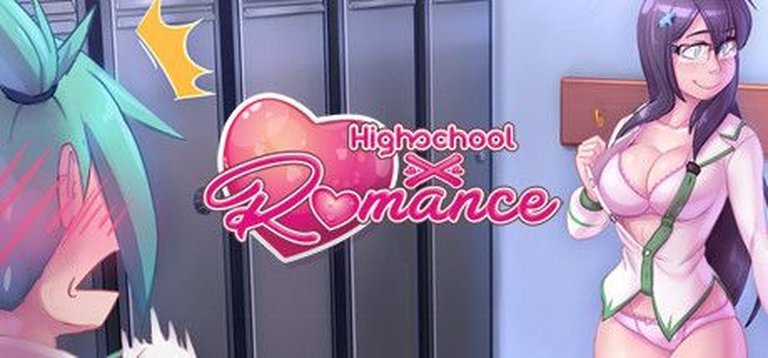
Highschool Romance is a visual novel adventure where players follow the story of Shoji, a male student who finds himself attending an all-girls school. To avoid expulsion, he must cross-dress and blend in while navigating romantic relationships and comedic misunderstandings. Set in a Japanese high school environment, the game features branching narratives with player choices impacting story outcomes, lighthearted humor, and multiple character interactions. Developed using Ren’Py, it offers relatively short gameplay sessions with some replay value through different romantic paths and situational variations.
Where to Buy Highschool Romance
Highschool Romance Patches & Updates
Highschool Romance Guides & Walkthroughs
Highschool Romance Reviews & Reception
steambase.io (79/100): A triumphant return to form for the series.
Highschool Romance: A Complex Study in Identity and Indie Ambition
Introduction
In the crowded landscape of visual novels, Highschool Romance (2015) stands as a peculiar time capsule of indie ambition, erotic tension, and genre conventions pushed to absurdist limits. Developed by the micro-studio AJTilley (later Dharker Studio), this Ren’Py-engineered narrative asks a provocative question: What if societal norms—and basic school admittance paperwork—forced you to live as someone you’re not? While its premise of a cross-dressing male protagonist navigating an all-girls school initially reads as titillating farce, the game’s legacy lies in its unintentional deconstruction of identity, consent, and the commodification of queer narratives. Critics at launch were polarized, praising its audacity while lamenting its technical limitations—a tension that mirrors the game’s own fractured identity between satire and sincere romance.
Development History & Context
Born from the solo efforts of A.J. Tilley—a one-man engine credited as producer, designer, programmer, and story architect—Highschool Romance emerged during visual novel’s western indie resurgence. The mid-2010s saw platforms like Steam welcoming niche narratives, yet AJTilley.com operated without the resources of contemporaries like Doki Doki Literature Club or Hatoful Boyfriend. Built on Ren’Py, the game’s technical constraints are palpable: static backgrounds, minimal animation, and a UI stripped to bare functionality.
The team’s composition reveals much. Lead writer Kayzda and artist Enrique Bolatre brought anime-inspired aesthetics, but the workload distribution—with Tilley handling four core roles—resulted in a fractured creative vision. Beta tester credits (including whimsical pseudonyms like “Wakle Skade”) suggest a grassroots development fueled by online communities rather than professional oversight. Released across seven platforms—from Windows to PlayStation 5—this shotgun porting strategy prioritized accessibility over polish, epitomizing the era’s “indie sprawl.” In hindsight, Highschool Romance embodies the duality of 2010s indie dev: boundless ambition colliding with resource scarcity.
Narrative & Thematic Deep Dive
Plot Mechanics as Social Experiment
Shoji’s predicament—forced to cross-dress after a clerical error lands him in St. Magdalene’s All-Girls Academy—serves as narrative duct tape. Principal Lea’s solution (“Pretend. To. Be. A. Girl.”) eschews realism for farce, yet the game’s true intrigue lies in how characters weaponize this deception.
Character Dynamics: Subversion or Stereotype?
- Selina (The “Betty”): A sporty redhead whose initial hostility masks Questionable Consent tendencies. Her route includes a non-consensual shower confrontation where she delights in Shoji’s cross-dressing, reframing femininity as voyeuristic performance.
- Hoshi (The “Veronica”): A raven-haired intellectuals hiding Shameless Fanservice—lingerie reveals, drunken karaoke—under a bookish exterior. Her path teases vulnerability but reduces growth to titillation.
- Lea (The Forbidden Fruit): The principal/PE teacher embodies Covert Pervert tropes. Her route culminates in marriage, romanticizing power imbalances with eerie sincerity.
Critically, all heroines discover Shoji’s secret early—(Everybody Knew Already)—yet manipulate him regardless. This twists the “masquerade” trope into a commentary on performative identity: Shoji’s drag isn’t for survival but their gratification.
Thematic Collisions
The game’s quasifeminist veneer—exploring gender fluidity via Wholesome Crossdresser Shoji—clashes with regressive eroticism. Scenes like Lea’s mandatory Big Damn Kiss or Hoshi’s Lingerie Mechanic reduce character agency to player-directed fetish. Meanwhile, Can’t Have Sex, Ever—until endings—creates frustrating narrative chastity belts, where emotional intimacy exists solely as prelude to transactional payoff.
Gameplay Mechanics & Systems
The Illusion of Choice
Highschool Romance employs But Thou Must! design: decisions like “Wear sexy lingerie?” auto-resolve, rendering player agency moot. Relationship Values track affection, yet critical branches (e.g., Selina’s shower scene) lock paths arbitrarily. GAMERamble lauded its “short playtime” (3 hours), but this brevity stems from cut-and-paste events: karaoke, festivals, study sessions repeat across routes with cosmetic dialogue tweaks.
Technical Quirks and Flaws
- UI/UX: The minimalist interface lacks backlog speed controls, forcing laborious text replay.
- Bugs: PS3Blog.net noted save corruption on PlayStation ports, a Ren’Py scaling failure.
- Branching Void: Multiple Endings promise replayability, yet Sinical Network dubbed variations “marginally different fluff.”
World-Building, Art & Sound
Aesthetic Ambivalence
Bolatre’s anime-inflected art oscillates between charming and cheap. Character sprites—Blonde, Brunette, Redhead archetypes—possess clean lines, but Cut-and-Paste Environments (four recycled locales) drain immersion. CGs like Lea’s Kimono Fanservice prioritize male gaze over narrative cohesion, with anatomical absurdities (Lea’s “massive bosom”) undermining dramatic beats.
Sonic Monotony
The score—two looping tracks—exacerbates repetition. A saccharine piano theme accompanies every emotional beat, trivializing Hoshi’s drunken breakdown or Lea’s predatory advances. Voice acting’s absence sharpens this emptiness; dialogue hangs inert, demanding player projection to animate relationships.
Reception & Legacy
Critical Whiplash
Launch reviews crystallized the disconnect:
– GAMERamble (77%): “Engaging for broader audiences… short but fun.”
– Operation Rainfall (60%): “Technical merits exist… but I personally loathe it.”
– PS3Blog.net (55%): “Goofy setup… negligible content.”
Player reviews skew harsher (1.8/5), citing “regressive storytelling” and “asset flip vibes.” Steam’s 79% (“Mostly Positive”) masks polarizing tags: LGBTQ+ advocates praised queer-coding, while others decried Male Gaze exploitation.
Industry Footprint
Highschool Romance birthed a spiritual sequel—Magi Trials (2016)—but mainstream influence remains negligible. Its true legacy is as a cautionary artifact: a reminder of indie visual novels’ tightrope walk between empathy and titillation. While contemporaries (Hatoful Boyfriend, Dream Daddy) balanced absurdity with heart, Highschool Romance remains trapped between identities—a cross-dressed narrative unsure whom it dresses for.
Conclusion
Highschool Romance is neither triumph nor trainwreck—it’s a fascinating failure of synthesis. Its glimmers of thematic bravery—interrogating gender performance, power dynamics—drown in half-baked mechanics and regressive titillation. Yet as a historical object, it typifies mid-2010s indie experimentation: under-resourced, over-ambitious, fiercely idiosyncratic. For visual novel completists, it offers anthropological intrigue—a time capsule of queer tropes filtered through heteronormative lens. For all others, it stands as a paradox: a game about wearing masks that never finds its own face.
Final Verdict: A 5.5/10 curiosity—flawed, fascinating, and forever stranded at adolescence.