
- Release Year: 2001
- Platforms: Windows
- Publisher: dtp entertainment AG, Egmont Interactive GmbH
- Developer: FunDragoon Games & Entertainment GmbH
- Genre: Adventure
- Perspective: 3rd-person
- Game Mode: Single-player
- Gameplay: Item combination, Maze navigation, Puzzle elements
- Setting: Natural caves, Sunken ship, Underwater
- Average Score: 40/100
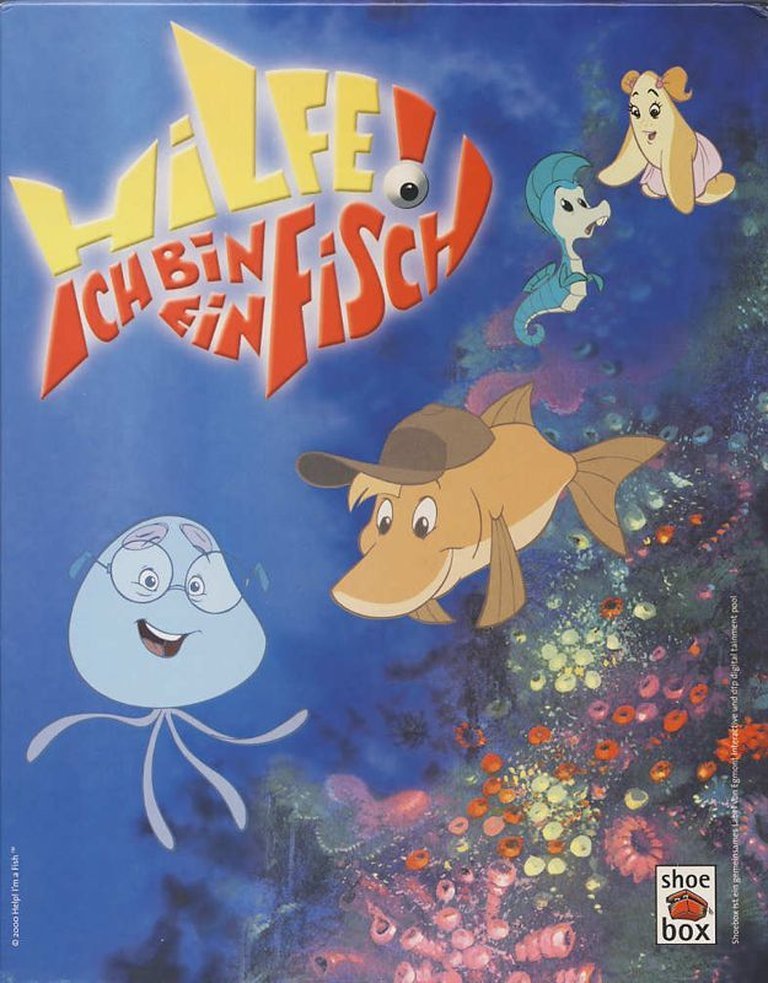
Description
Hilfe! Ich bin ein Fisch is a 3D underwater adventure game based on the movie of the same name. Players take on the roles of three children—Stella, Fly, and Chuck—who are transformed into sea creatures after drinking a magical potion. With only 48 hours to find the ingredients for an antidote, they must explore vast ocean environments, solve puzzles, and navigate mazes while avoiding enemies like crabs. The game features free-roaming underwater movement, item combination mechanics, and a mix of natural and man-made settings, including caves and a sunken ship.
Hilfe! Ich bin ein Fisch Reviews & Reception
mobygames.com (33/100): Average score: 33%
vgtimes.com (55/100): Hilfe! Ich bin ein Fisch is a third-person adventure with a hint of puzzle from the masters at FunDragoon Games & Entertainment GmbH.
mobygames.com (33/100): Average score: 33%
Hilfe! Ich bin ein Fisch: A Deep Dive into a Forgotten Underwater Oddity
Introduction: The Curious Case of a Fish Out of Water
In the vast ocean of early 2000s PC gaming, Hilfe! Ich bin ein Fisch (2001) emerges as a peculiar artifact—a game that, despite its obscurity, encapsulates the whimsy, ambition, and limitations of its era. Developed by FunDragoon Games & Entertainment GmbH and published by Egmont Interactive GmbH, this German-exclusive title is a loose adaptation of the animated film Help! I’m a Fish. It tasks players with navigating the trials of three children transformed into sea creatures, desperate to reverse their aquatic curse within 48 hours. Yet, beyond its premise, Hilfe! is a fascinating study in how licensed games of the time struggled to balance narrative fidelity with gameplay innovation.
This review aims to resurrect the game from the depths of obscurity, examining its development, narrative, mechanics, and legacy. Was Hilfe! Ich bin ein Fisch a hidden gem drowned by poor execution, or a well-intentioned misfire in the turbulent waters of early 3D adventure gaming? Let’s dive in.
Development History & Context: A Fish in a Sea of Constraints
The Studio and the Vision
FunDragoon Games & Entertainment GmbH, the studio behind Hilfe!, was a relatively unknown entity in the early 2000s, operating in a German gaming landscape dominated by larger publishers like dtp entertainment AG (which co-published the game). The studio’s portfolio was modest, and Hilfe! was one of its few notable releases. The game’s development was likely constrained by budget and time, typical for licensed titles tied to film releases. The film Help! I’m a Fish, a Danish-German-Irish co-production, was a modest success in Europe, but its adaptation into a game was an ambitious gamble.
The vision for Hilfe! was to create an immersive underwater adventure that captured the film’s playful tone while expanding its world. The developers opted for a 3D engine (Virtools, a middleware solution popular at the time) to render the underwater environments, aiming for a sense of freedom and exploration. However, the technological limitations of early 2000s hardware—particularly in rendering vast, open underwater spaces—posed significant challenges.
The Gaming Landscape of 2001
The year 2001 was a transitional period for PC gaming. 3D acceleration was becoming standard, but many developers were still grappling with how to design games that leveraged this technology effectively. Adventure games, once a dominant genre, were waning in popularity, overshadowed by the rise of first-person shooters and real-time strategy games. Meanwhile, licensed games—especially those tied to children’s films—were often rushed to market with mixed results.
Hilfe! arrived in this context, competing for attention alongside more polished titles like Black & White and The Sims. Its target audience—younger players familiar with the film—was niche, and its German-exclusive release further limited its reach. The game’s reliance on CD-ROM-based DRM (a common but increasingly unpopular practice) also hindered its longevity, as modern systems struggle to run it without workarounds.
Technological Constraints
The game’s use of the Virtools engine was a double-edged sword. On one hand, Virtools allowed for rapid prototyping and 3D rendering, which was crucial for a small team working under tight deadlines. On the other, the engine’s limitations became apparent in Hilfe!’s final product. The underwater environments, while ambitious, suffered from repetitive textures, muddy visuals, and a lack of distinct landmarks—issues that plagued many early 3D games.
The game’s control scheme, which utilized a third-person perspective with keyboard and mouse inputs, was another casualty of the era’s growing pains. Players often found themselves disoriented in the vast, featureless underwater expanses, a problem exacerbated by the absence of a map or compass system. These design choices, while understandable given the constraints, ultimately undermined the game’s potential.
Narrative & Thematic Deep Dive: A Tale of Transformation and Urgency
Plot Summary
Hilfe! Ich bin ein Fisch follows the misadventures of Stella, Fly, and Chuck, three children who, after drinking a mysterious potion, are transformed into a starfish, a flying fish, and a jellyfish, respectively. The potion’s effects are temporary—they have just 48 hours to gather the ingredients for an antidote before they are permanently stuck in their aquatic forms. This premise, lifted directly from the film, sets the stage for a race against time through a series of underwater locales, including caves, trenches, and a sunken ship.
The narrative is straightforward but effective, leveraging the inherent urgency of the characters’ predicament. The game’s writing, while simple, attempts to inject humor and personality into the trio’s interactions, though the dialogue is often overshadowed by the technical limitations of the voice acting (which, in the German release, is serviceable but unremarkable).
Character Analysis
- Stella (Starfish): The de facto leader of the group, Stella is resourceful and determined. Her starfish form allows her to cling to surfaces and navigate tight spaces, making her the most versatile of the trio.
- Fly (Flying Fish): Fly is the fastest and most agile, capable of darting through the water with ease. His role often involves scouting ahead or retrieving items from hard-to-reach places.
- Chuck (Jellyfish): Chuck is the strongest but also the most vulnerable, as his jellyfish form makes him susceptible to damage. His ability to stun enemies with his tentacles is crucial in later sections of the game.
The characters’ designs and abilities are tied to their fish forms, which adds a layer of strategic depth to the gameplay. However, the game fails to fully explore their personalities beyond their functional roles, a missed opportunity given the film’s emphasis on their dynamic.
Themes: Transformation, Teamwork, and Environmental Awareness
At its core, Hilfe! is a story about transformation—not just physical, but also personal. The children’s journey forces them to adapt to their new forms, relying on each other’s strengths to overcome obstacles. This theme of teamwork is reinforced by the game’s puzzle design, which often requires switching between characters to progress.
The underwater setting also allows for subtle environmental commentary. The game’s locales, while fantastical, are filled with details that highlight the beauty and fragility of marine ecosystems. The sunken ship, for instance, serves as both a puzzle hub and a reminder of human impact on the ocean. However, these themes are underdeveloped, relegated to background dressing rather than integral narrative elements.
Dialogue and Localization
The game’s dialogue is functional but unremarkable, with much of the humor and charm of the film lost in translation (both literally and figuratively). The German voice acting is competent but lacks the energy and personality that could have elevated the characters. The absence of an English localization further limited the game’s appeal, confining it to a niche audience.
Gameplay Mechanics & Systems: Swimming in a Sea of Frustration
Core Gameplay Loop
Hilfe! Ich bin ein Fisch is, at its heart, a 3D adventure game with puzzle elements. Players explore underwater environments, collect items, combine them to solve puzzles, and navigate mazes to progress. The game’s structure is linear, with each area gated by a puzzle or obstacle that must be overcome before moving forward.
The core loop is simple:
1. Explore: Swim through the environment, searching for items and clues.
2. Solve: Use collected items to solve puzzles, often by combining them in an inventory system.
3. Progress: Unlock new areas or abilities, allowing access to previously inaccessible sections.
This loop is reminiscent of classic adventure games like Myst or The Longest Journey, but Hilfe! struggles to execute it with the same polish. The lack of clear objectives or hints often leaves players directionless, a problem compounded by the game’s poor spatial design.
Character Abilities and Switching
One of the game’s most innovative mechanics is the ability to switch between the three characters, each with unique abilities:
– Stella can cling to walls and ceilings, allowing her to reach high or hidden areas.
– Fly can swim rapidly and jump out of the water, useful for crossing gaps or avoiding enemies.
– Chuck can stun enemies with his tentacles, a crucial ability in later sections.
This system adds a layer of strategic depth, as players must determine which character is best suited for each puzzle. However, the execution is flawed. Switching between characters is cumbersome, and the game often fails to clearly indicate when a switch is necessary. This leads to frustration, particularly in sections where trial-and-error is the only viable strategy.
Puzzle Design: A Mixed Bag
The puzzles in Hilfe! are a blend of inventory-based challenges and environmental obstacles. Some are clever, requiring players to think laterally (e.g., using a mirror to reflect light and open a door). Others, however, are arbitrary and illogical, relying on obscure item combinations that defy rational thinking.
A recurring issue is the lack of feedback. The game rarely provides hints or clues, leaving players to brute-force solutions. This is particularly problematic in the sunken ship section, where the maze-like corridors and repetitive textures make navigation a chore.
Combat and Enemy Encounters
Combat in Hilfe! is minimal and underdeveloped. The primary enemies are crabs, which must be avoided or stunned (using Chuck’s tentacles) rather than defeated outright. The absence of a traditional combat system is a double-edged sword: while it aligns with the game’s puzzle-focused design, it also makes enemy encounters feel like unnecessary obstacles rather than meaningful challenges.
The crabs’ AI is rudimentary, often leading to cheap hits or unfair deaths. This is exacerbated by the game’s save system, which is infrequent and unforgiving. Dying to a crab in a tight corridor can send players back several minutes, a design choice that feels punitive rather than challenging.
Inventory and Item Management
The inventory system is functional but clunky. Items are stored in a grid, and combining them requires dragging and dropping—a process that feels outdated even by 2001 standards. The lack of a “use” button means players must manually select items and interact with the environment, a cumbersome process that slows down the gameplay.
UI and Navigation
The game’s UI is sparse, with minimal on-screen information. While this contributes to the immersive underwater aesthetic, it also makes navigation difficult. The absence of a map or compass is a glaring omission, particularly in the game’s larger areas. Players are often left swimming in circles, unsure of where to go next.
The third-person camera, while serviceable, suffers from the “Rückenansicht” (rear view) perspective mentioned in critiques. This camera angle, combined with the game’s repetitive environments, makes spatial orientation a constant struggle.
World-Building, Art & Sound: A Dreamlike Descent
Setting and Atmosphere
Hilfe! Ich bin ein Fisch takes place entirely underwater, a bold choice that sets it apart from other adventure games of the era. The environments are varied, ranging from coral caves and kelp forests to the eerie corridors of a sunken ship. Each area is designed to evoke a sense of wonder and mystery, though the execution is uneven.
The game’s art direction leans into a hand-drawn, almost storybook aesthetic. Textures are soft and gradient-heavy, with sketchy outlines that give the world a dreamlike quality. This style is a deliberate contrast to the stark, polygon-heavy visuals of contemporary 3D games, and it largely succeeds in creating a unique atmosphere. However, the repetitive use of assets and the lack of distinct landmarks make the world feel smaller than it is.
Visual Design: A Double-Edged Sword
The visual design is both the game’s greatest strength and its most glaring weakness. On one hand, the underwater environments are vibrant and colorful, filled with schools of fish, swaying kelp, and shimmering light effects. The character models, while simple, are expressive and charming, particularly in their animations.
On the other hand, the technical limitations of the Virtools engine are evident. Textures are often muddy and low-resolution, and the draw distance is disappointingly short. The game’s lighting is flat, with little dynamic shadowing, which flattens the sense of depth. These issues are particularly noticeable in the sunken ship section, where the dark, claustrophobic corridors become a visual slog.
Sound Design and Music
The sound design in Hilfe! is understated but effective. The ambient underwater noises—bubbles, distant whale calls, the creaking of the sunken ship—create a sense of immersion. The game’s soundtrack, composed of light, jaunty tunes, complements the whimsical tone but lacks memorability.
Voice acting is serviceable but unremarkable. The German cast delivers lines with competence, but the performances lack the energy and charm that could have elevated the characters. The absence of subtitles or an English dub further limits the game’s accessibility.
The Sunken Ship: A Microcosm of the Game’s Strengths and Weaknesses
The sunken ship section is the most ambitious part of Hilfe!, both in terms of level design and atmosphere. The corridors are dark and labyrinthine, filled with puzzles that require careful exploration and item combination. The sense of isolation and urgency is palpable, as players race against the clock to find the antidote ingredients.
However, this section also highlights the game’s flaws. The lack of a map or clear objectives makes navigation a nightmare, and the repetitive textures make it easy to get lost. The puzzles, while initially engaging, quickly devolve into frustration as players struggle to discern the logic behind them.
Reception & Legacy: A Fish Out of Water
Critical Reception: A Wave of Disappointment
Hilfe! Ich bin ein Fisch was met with overwhelmingly negative reviews upon its release. German gaming outlets, including PC Player, GameStar, and PC Games, lambasted the game for its poor controls, confusing level design, and lack of polish. Scores ranged from 18% to 59%, with critics citing the game’s repetitive puzzles, disorienting camera, and technical issues as major detractors.
- PC Player (59%): “The underwater world offers little variety, making orientation difficult and the experience boring.”
- GameStar (38%): “The lack of a map and the confusing controls make navigation a nightmare.”
- PC Games (20%): “The puzzles lack logic, and the game’s visuals are a far cry from the film’s charm.”
Player reception was equally harsh, with an average score of 1.8/5 on MobyGames. Many players expressed frustration with the game’s lack of direction and punitive design choices.
Commercial Performance and Obscurity
The game’s commercial performance is difficult to gauge, but its German-exclusive release and poor critical reception likely limited its sales. Today, Hilfe! is considered “lost media” by some, with few playable copies in circulation. The game’s reliance on CD-ROM DRM has made it nearly unplayable on modern systems, further cementing its obscurity.
Influence and Legacy
Hilfe! Ich bin ein Fisch had little direct influence on subsequent games, but its failures offer valuable lessons in game design. The game’s struggles with navigation, puzzle design, and player feedback highlight the challenges of adapting a linear film narrative into an open-ended adventure game. Its use of character-switching mechanics, while flawed, foreshadowed later games like Trine and Brothers: A Tale of Two Sons, which refined the concept.
In the broader context of licensed games, Hilfe! serves as a cautionary tale. It demonstrates the pitfalls of rushing a game to market to capitalize on a film’s release, as well as the importance of playtesting and player feedback. While the game’s ambition is commendable, its execution ultimately drowned in a sea of technical and design missteps.
Conclusion: A Flawed Gem Worth Remembering
Hilfe! Ich bin ein Fisch is a game of contradictions. It is ambitious yet flawed, charming yet frustrating, immersive yet disorienting. Its underwater world is a testament to the creativity of its developers, but its execution is hampered by the technological and design limitations of its era. The game’s puzzles, while occasionally clever, are often arbitrary and punitive, and its lack of direction leaves players adrift in a sea of confusion.
Yet, for all its flaws, Hilfe! is not without merit. Its whimsical art style, understated sound design, and unique premise set it apart from the crowd of early 2000s adventure games. The character-switching mechanic, while underutilized, hints at a deeper game that could have been. And its underwater setting, though technically limited, remains a bold and memorable choice.
In the end, Hilfe! Ich bin ein Fisch is a relic of its time—a game that dared to swim against the current but ultimately found itself out of its depth. It is not a masterpiece, nor is it a complete disaster. Instead, it is a curious oddity, a flawed gem that offers a glimpse into the challenges and ambitions of early 3D adventure gaming. For those willing to brave its murky waters, it remains a quirky, if frustrating, experience—one that rewards patience and curiosity in equal measure.
Final Verdict: 5.5/10 – A noble experiment that sinks under the weight of its own ambitions.
Hilfe! Ich bin ein Fisch is a game best remembered as a footnote in gaming history—a reminder of the risks and rewards of innovation in an era of rapid technological change. While it may not have made a splash in its time, its legacy endures as a testament to the creativity and perseverance of its developers. For collectors and historians, it is a small but fascinating piece of the early 2000s gaming puzzle—one that, despite its flaws, is worth preserving.