
- Release Year: 2012
- Platforms: iPad, iPhone, Nintendo Switch, Windows
- Publisher: Springloaded Pte. Ltd.
- Developer: Springloaded Pte. Ltd.
- Genre: Action, Educational
- Perspective: Side view
- Game Mode: Single-player
- Gameplay: Music, rhythm
Description
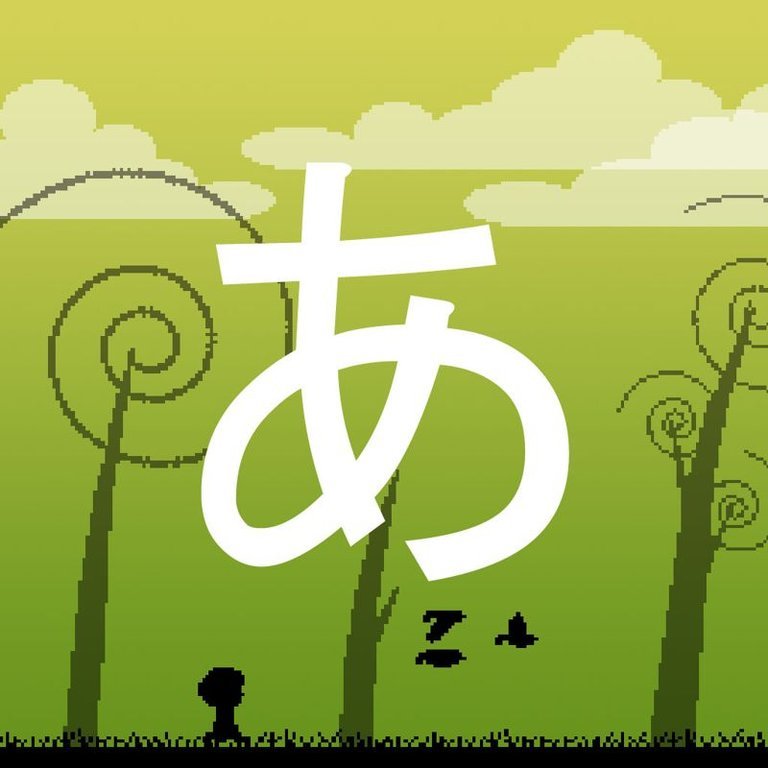
Hiragana Pixel Party is an educational rhythm-action platformer that teaches players to read and pronounce Japanese hiragana characters through engaging gameplay set in a vibrant pixel art world with a chiptune soundtrack. Available on Nintendo Switch, iOS, and PC, the game combines learning with fun, offering missions and challenges that make mastering the basics of Japanese an enjoyable adventure.
Gameplay Videos
Where to Buy Hiragana Pixel Party
PC
Hiragana Pixel Party Guides & Walkthroughs
Hiragana Pixel Party: Review
1. Introduction
In the crowded landscape of educational gaming, Hiragana Pixel Party emerges as a curious anomaly—a chiptune-infused rhythm game that masquerades as a gateway to Japanese literacy. Released in 2012 by Singaporean developer Springloaded Pte. Ltd., this title defies easy categorization: it’s part edutainment, part nostalgia trip, and part experimental fusion of gameplay and language acquisition. Yet its legacy is defined by a persistent tension: is it a genuinely effective learning tool, or a rhythm game dressed up as pedagogy? This review dissects Hiragana Pixel Party through the lenses of its design, reception, and cultural impact, arguing that while its core concept is brilliant, execution flaws and a failure to deepen its educational scope relegate it to a niche footnote in the history of serious gaming innovation.
2. Development History & Context
Springloaded Pte. Ltd., a small studio helmed by creator James Barnard, developed Hiragana Pixel Party with a clear vision: to leverage the addictive nature of rhythm games to demystify Japanese writing. The initial 2012 release on iOS (iPhone/iPad) arrived during a boom for mobile edutainment, but it faced stiff competition from flashcard apps and language software. Barnard’s goal, as articulated on the official site, was to create a game that “doesn’t feel like work” by combining memory, sound, and rhythm mechanics. Technologically, the game was constrained by mobile hardware’s limitations, resulting in minimalist pixel art and simple tap-based controls.
By 2016, the game expanded to Windows via Steam, adding controller support and rebalancing difficulty after player feedback. The 2017 Nintendo Switch release was a pivotal moment, capitalizing on the console’s hybrid appeal. However, the port suffered from a critical flaw: randomized button layouts that switched mid-level, which developer Springloaded defended as a “memory challenge” but critics deemed unplayable. This technical oversight underscored a recurring theme: Hiragana Pixel Party prioritized its educational premise over gameplay polish, a choice that would haunt its legacy.
3. Narrative & Thematic Deep Dive
As a non-narrative game, Hiragana Pixel Party eschews traditional storytelling in favor of thematic immersion in Japanese culture. Its world—a neon-drenched, 8-bit dreamscape—evokes retro arcade aesthetics while subtly framing Japanese characters as interactive puzzles. The “story” is one of incremental mastery: players progress through 15 themed worlds, each unlocking new hiragana and katakana symbols. Dialogue is minimal, restricted to voice-acted pronunciations by a native speaker, reinforcing the game’s focus on auditory and visual learning.
Themes of patience and repetition are central. The game positions language learning as a rhythmic journey, where failure (represented by a pixelated character “dying” after a missed tap) is framed as part of the process. However, this approach lacks deeper cultural context. Unlike titles that weave language into narrative (e.g., *Let’s Learn Japanese! Hiragana Battle*), *Hiragana Pixel Party isolates characters from real-world usage, reducing Japanese to abstract symbols. This abstraction is its greatest thematic weakness: it teaches recognition but not application, robbing learners of the cultural narrative that makes language acquisition meaningful.
4. Gameplay Mechanics & Systems
The core loop deconstructs language learning into rhythm-based challenges. Players tap the correct hiragana/katakana symbols as they appear on screen, synchronized to an original chiptune soundtrack. Five gameplay modes layer complexity:
– Memory: Remembering symbol sequences.
– Sound: Identifying audio cues.
– Reactions: Quick taps under time pressure.
– Rhythm: Syncing button presses to music.
– Epic!: High-speed obstacle dodging.
Progression is tied to “missions” (192 per syllabary), but difficulty spikes erratically. Early levels (e.g., learning “あい” for “love”) are accessible, yet by level 3, randomized button layouts force players to memorize arbitrary button-symbol pairings on the fly—a mechanic that shifts focus from language learning to rote reflexes. The UI, initially praised for its clean design, becomes cluttered on Switch, with no option to preview button layouts mid-level. Character progression is absent; players don’t grow stronger, but the game demands perfection. This punitive design alienates true beginners, as noted by critics like Nintendo World Report, who called the Switch version “merely an okay rhythm game” with “repetitive nature.”
5. World-Building, Art & Sound
Hiragana Pixel Party’s aesthetic is its strongest asset. The pixel art style—reminiscent of 16-bit platformers—creates a vibrant, low-fi world where neon kanji float against pastel backgrounds. Each world (e.g., “Cyber Forest,” “Pixel Temple”) offers thematic consistency without depth, serving as a backdrop for the real focus: the characters themselves. This visual clarity aids recognition, as hiragana and katakana are rendered in bold, contrasting colors.
Sound design, however, is double-edged. The chiptune soundtrack, composed by Barnard, is undeniably catchy and immersive, with 20 tracks post-2018 updates. Yet for learners, the music often drowns out the Japanese voice samples, a critical flaw in a game centered on pronunciation. The absence of background music toggle options exacerbates this, forcing players to choose between rhythm enjoyment and auditory learning. This tension between artistry and functionality epitomizes the game’s identity crisis: it’s a charming chiptune album masquerading as a language course.
6. Reception & Legacy
Upon its iOS debut, Hiragana Pixel Party was lauded as a revelation. Eurogamer hailed it as “incredibly simple, but really effective,” while Kotaku praised its “phonetic” approach. Early app store reviews were euphoric, with users calling it “genius” and “addictive,” citing its ability to make learning feel effortless. The Switch port, however, triggered a critical schism. Critics like Nintendo Life (80%) admired its educational efficacy, but Switch Player (60%) lamented its “simple” gameplay, and Cubed3 (20%) dismissed it as “about as useful as a deck of flash cards.”
User reviews on Switch and Steam were scathing, with a 1.6/5 Metacritic user score and Steambase’s 64/100 Player Score reflecting widespread frustration. Complaints centered on unplayable difficulty and a failure to teach practical Japanese. One Steam user called it “borderline fraud,” while another noted, “You need to be a savant to progress.” Despite this, the game retains cult status among rhythm enthusiasts and casual learners, thanks to its charming art and music. Its legacy lies in proving that gamification of learning is viable, but also in highlighting the pitfalls of neglecting gameplay balance. It influenced later titles like Learn Japanese RPG: Hiragana Battle, which merged education with deeper RPG mechanics.
7. Conclusion
Hiragana Pixel Party is a fascinating failure—an ambitious experiment in edutainment undone by its own design contradictions. It excels as a rhythm game and a visual introduction to Japanese characters, yet it falters as a serious learning tool by divorcing language from context and prioritizing reflexes over comprehension. For players seeking a fun, low-stakes way to recognize hiragana and katakana, it offers fleeting joy; for anyone aiming for fluency, it’s a dead end. Its legacy is cautionary: games that blend education and gameplay must either commit to pedagogical depth or embrace pure entertainment. Hiragana Pixel Party does neither, cementing its place not as a pioneer, but as a quirky, cautionary footnote in the evolution of gaming’s potential beyond entertainment. As a historian, I recognize its bold vision but lament its execution—for all its chiptune charm, it ultimately teaches players to jump boxes, not to read. がんばって (Ganbatte) indeed, but perhaps elsewhere.