
- Release Year: 2012
- Platforms: PlayStation 3, Windows, Xbox 360
- Publisher: Square Enix, Inc., Square Enix Limited
- Genre: Extra content, game, Physical extras, Special edition
- Game Mode: Single-player
- Average Score: 79/100
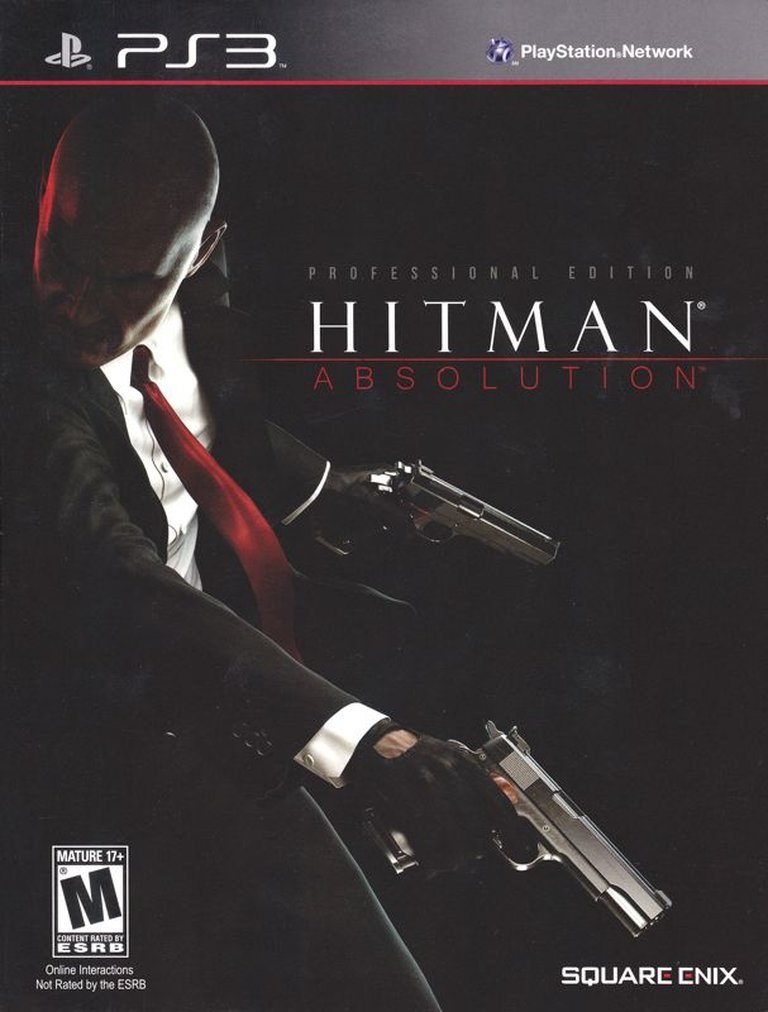
Description
Hitman: Absolution is a stealth action game and the fifth entry in the Hitman series, where players assume the role of Agent 47, a genetically engineered assassin, as he endeavors to protect a teenage girl with similar enhancements from various threats, including private military companies, criminal syndicates, and his former employers, the International Contract Agency. Set across diverse global locations, the game emphasizes intricate stealth mechanics, player-driven objectives, and introduces an online ‘Contracts’ mode for creating and sharing custom missions.
Hitman: Absolution (Professional Edition) Free Download
Hitman: Absolution (Professional Edition) Mods
Hitman: Absolution (Professional Edition) Guides & Walkthroughs
Hitman: Absolution (Professional Edition) Reviews & Reception
metacritic.com (79/100): One of the best stealth experiences in this generation.
ign.com : a game that wants to let you think for yourself.
imdb.com (80/100): solid game that I’m proud to own.
Hitman: Absolution (Professional Edition) Cheats & Codes
PC
Press F2 and enter any of the following codes at the indicated screen to activate the corresponding effect.
| Code | Effect |
|---|---|
| dinogod | Unlock God Mode |
| actor find | Go to Nearest Dinosaur of that type |
| momoney | Extra Money |
Hitman: Absolution (Professional Edition): A Flawed Monarch in a Changing Dynasty
Introduction: The Bald Man in the Storm
Six and a half years is a lifetime in the video game industry. When IO Interactive finally unveiled Hitman: Absolution in 2012, the world had changed utterly. The “hardcore” stealth genre that Hitman: Blood Money epitomized was being eclipsed by cinematic, linear action-adventures and the burgeoning age of “games as a service.” Absolution arrived not as a quiet successor but as a statement—a glossy, aggressively marketed, and deeply confident reinvention of Agent 47’s world. It aimed to be more accessible, more narrative-driven, and more connected, while somehow still retaining the cerebral, systemic joy of its predecessors. The result was a game of profound contradictions: a technical powerhouse hobbled by regressive design, a story of intimate betrayal drowned out by cartoonish villains, and a passionate fanbase split between those who saw evolution and those who saw desecration. This review will dissect Hitman: Absolution not merely as a product of its time, but as a pivotal, painful, and ultimately necessary crossroads for one of gaming’s most iconic franchises. Using the Professional Edition as our lens—with its physical art book and “Agency Gun Pack” DLC—we will examine a game that dared to be different, stumbled spectacularly, yet planted the seeds for its own glorious redemption.
Development History & Context: From Copenhagen to the Mainstream
IO Interactive’s Crucible: Developed by IO Interactive in Copenhagen, Absolution was the first major Hitman title under the full ownership and publishing muscle of Square Enix Europe (following Eidos’s acquisition). This shift from a niche, critically adored series to a flagship franchise for a major publisher set the tone. The team, led by Game Directors Tore Blystad and Peter Fleckenstein, was explicitly tasked with broadening the audience. As early as 2011, IO stated the goal was to make the game “more accessible” while keeping “hardcore aspects.” This dual mandate would become the game’s central creative tension.
The Long Hiatus and the Glacier 2 Engine: The six-year gap after Blood Money (2006) was unprecedented. In that time, the Hitman community had grown rabid, dissecting every minute detail of the previous games. IO used this time to build the Glacier 2 engine from the ground up, a monumental undertaking that delivered stunningly detailed environments, advanced lighting, and improved animation (especially for character faces and 47’s movements). The visual leap was undeniable, but the engine’s cost may have influenced other design decisions—the segmented, loading-screen-heavy levels are a stark contrast to the seamless, sprawling spaces of Blood Money, suggesting technical compromises or a focus on curated spectacle over systemic simulation.
A New Creative Direction: The game’s writing and design were helmed by a team including Greg Nagan and Michael Vogt, with Christian Elverdam (future creative director of the World of Assassination trilogy) as Gameplay Director. Early rumors spoke of 47 hitting a “low point” and being “rebuilding himself”—a narrative premise that excited fans seeking deeper character development. However, this personal journey was filtered through a more cinematic, action-oriented sensibility, influenced by the era’s popular thrillers (the Bourne films are a frequently cited, often undeserved, comparison). The infamous “Attack of the Saints” trailer, a pre-rendered CGI spectacle, set a tone of stylized, over-the-top action that many felt misrepresented the game’s (and the series’) core stealth ethos.
Voice Actor Controversy: In a bizarre pre-launch saga, original voice actor David Bateson—the iconic, dry monotone of 47—was unceremoniously replaced by William Mapother (Lost). Fan backlash was immediate and fierce. IOInteractive relented, re-hiring Bateson just six months before release. Mapother’s motion-capture performance, however, remains in the final game, creating a subtle dissonance between 47’s physicality and his voice—a fitting metaphor for the game’s identity crisis.
Narrative & Thematic Deep Dive: The Human in the Machine
Absolution’s story is its most polarizing element. It represents a deliberate, aggressive pivot from the abstract, player-driven contracts of the past to a tightly scripted, character-centric thriller.
Plot Deconstruction: The narrative begins with a profound betrayal: Agent 47 is ordered to kill his handler and sole emotional anchor, Diana Burnwood. Her dying request—to protect Victoria, a genetically engineered teenage girl—catapults 47 from a dispassionate instrument of the ICA into a protective, almost paternal figure. This is the game’s strongest, most resonant idea: 47 as a flawed father figure, grappling with a humanity he was never meant to have. The pursuit is three-fold: against the renegade ICA (now led by the ruthless Benjamin Travis), the mercenary forces of arms dealer Blake Dexter (who wants to weaponize Victoria), and a panoply of criminal gangs and corrupt officials.
Themes of Creation and Corruption: The central theme is the ethics of creation. Victoria is a clone, a weapon bred for the ICA without Travis’s superiors’ knowledge. 47 is her progenitor, a “successful” prototype. The game asks: can a being engineered for violence choose a different path? Diana’s sacrifice is to give Victoria that choice. Travis embodies the corruption of this creation myth—he sees Victoria not as a child but as a resource to be reclaimed. The final confrontation with Travis, where 47 coldly states “You will never know” about Diana’s fate, is a brilliantly ambiguous moment of defiance that reasserts 47’s own agency.
Character and Dialogue Flaws: Where the narrative collapses is in its supporting cast and tonal consistency. Blake Dexter is a cartoonish, mustache-twirling villain (played with scenery-chewing glee by Keith Carradine) whose motives—profit, ego—are never explored beyond the superficial. His son Lenny and the psychopathic mercenary Edward Wade are even more one-dimensional. The introduction of “The Saints,” Travis’s all-female assassin squad in PVC and latex, sparked the infamous “Attack of the Saints” controversy, framing them as fetishistic objects rather than credible threats. Dialogue often veers into cliché, and the plot relies on staggering coincidence (Birdie’s constant appearances, Lenny’s repeated, improbable escapes) and contrivance (the “isolation” plot device in the orphanage). The journey from Chicago to the backwater town of Hope, South Dakota, shrinks the international scope of 47’s world to a county-sized棋盘, undermining his legendary mystique.
The Ending: A Glimmer of Hope: The epilogue, set months later, is a masterful return to form. Diana’s survival and her quiet guardianship of Victoria, observed from a distance by 47, is poignant. It implies a new, unspoken family for 47. The final beat with Detective Cosmo Faulkner being approached by the weasely informant Birdie perfectly echoes the cyclical, paranoid world of the original games—a note of noir cynicism after the bombastic climax.
Gameplay Mechanics & Systems: Innovation Married to Constraint
Absolution’s gameplay is a landmine of brilliant ideas hampered by baffling restrictions.
The Core Loop, Constrained: The fundamental stealth-kill-hide cycle remains satisfying. The Glacier 2 engine allows for spectacularly detailed environments—from the chaotic, crowded streets of Chinatown during New Year’s to the oppressive heat of a South Dakota prison. Environmental kills (scaffolding drops, gas explosions, fireworks) are creatively implemented and viscerally fun. However, the level design has been fundamentally altered. Gone are the vast, multi-layered sandboxes like Blood Money’s “Mardi Gras” or “Heaven & Hell.” Levels are now heavily segmented into discrete “rooms” or streets, connected by linear corridors or forced traversal sections (e.g., the infamous fuse-box puzzle in the orphanage). This linearity kills emergent gameplay and makes exploration feel like progressing through a corridor shooter with stealth options, not a living world.
The Disguise System: A Step Sideways, Not Forward: The infamous disguise revision is the game’s greatest design failure. The intention—to prevent the “disguise as anyone, walk anywhere” trivialization—was sound. The execution was catastrophic. In Absolution, NPCs of the same job class (e.g., all Chicago cops, all kitchen staff) will always see through 47’s disguise if he gets too close. This creates the absurd scenario where 47, a world-class infiltrator, cannot walk among dozens of identical uniforms because every single one knows every colleague’s face. The counter-mechanics—Blend (ducking into crowds, turning away) and Instinct (expending a meter to briefly ‘fool’ observers)—are band-aids on a broken system. On higher difficulties, Instinct drains too fast to be reliable, making disguise-heavy playthroughs a frustrating exercise in trial-and-error. This single system arguably does more damage to the core Hitman fantasy than any other element.
Instinct & Point Shooting: New Tools, Old Problems: The Instinct meter is a multi-tool: it highlights enemies through walls, shows their patrol paths, and allows the “Blend” action. It’s a useful crutch for new players but feels like a gamified assistant rather than an organic skill. Point Shooting (slow-mo gunplay) is another borrowed mechanic (from Splinter Cell: Conviction) that feels utterly foreign to 47’s calculated style. Its inclusion seems designed for the occasional, mandatory shootout sequence, but it undermines the tension of pure stealth. Both features highlight the game’s split personality: is 47 a patient predator or an action hero?
Progression & Loadout: The Illusion of Choice: The RPG-lite upgrade system (spending points on skills like faster strangulation or better stealth) has no impact on the story mission’s core challenges. You cannot bring your customized loadout into the narrative; you use what is found in the level. This renders the upgrade system almost pointless for single-player, a clear sign of design aimed at the multiplayer-focused Contracts mode. The inability to pre-select weapons or outfits for story missions is a major regression from Blood Money’s pre-mission planning.
Contracts Mode: The Saving Grace: This is Absolution’s undisputed masterpiece and the reason its legacy is salvaged. An asynchronous multiplayer system where players create custom hits within the game’s levels, specifying targets, weapons, disguises, and rules (e.g., “no alarms,” “body must be hidden”). The depth is staggering. Contracts mode is the true, unfettered Hitman experience within Absolution’s engine—it leverages the detailed environments and varied tools while removing the narrative shackles and broken disguise rules. The community created thousands of ingenious, brutal, and hilarious challenges. Its server shutdown in 2018 due to GDPR was a tragedy, but its existence proved the core gameplay sandbox was still potent when liberated from the campaign’s constraints.
World-Building, Art & Sound: A Technical Triumph, Aesthetic Missteps
Visuals & Atmosphere: Technically, Absolution is a showcase for the Glacier 2 engine. Lighting is rich and dramatic, from the neon-soaked streets of Chinatown to the dusty, sun-bleached plains of South Dakota. Character models, especially 47, are remarkably detailed. The art direction, however, is wildly inconsistent. Chicago feels lived-in and atmospheric. Hope, South Dakota, is a fascinating change—a decaying, corrupt frontier town that feels uniquely American. But then you have the Waikiki Inn motel, a garish, saturated parody of tiki culture where you fight ninja-like assassins in a courtyard, and the Blackwater Park estate, a florid, over-the-top mansion that feels lifted from a Bond villain’s wishlist. This tonal whiplash—from gritty neo-noir to cartoonish excess—plagues the whole game. The “Attack of the Saints” aesthetic bleeds into the main story, making the world feel less like a real place and more like a theme park of violence.
Sound Design & Music: The audio is a high point. Gunfire is punchy and satisfying. Environmental sounds—the murmur of a crowd, the clink of glasses in a bar, the distant thump of a wrestling match—are exquisitely layered and often used as gameplay cues. The dynamic music system, swelling on detection and fading to silence on successful stealth, is effective. However, the score by Peter Peter, Peter Kyed, and Thomas Bartschi (replacing Jesper Kyd) is widely seen as inferior. It lacks the haunting, melodic identity of Kyd’s work for the series, resorting to generic “tense thriller” strings and percussion. It serves its purpose but leaves no memorable impression.
Voice Work: David Bateson’s return as 47 is a relief. His flat, precise delivery sells 47’s otherness. Marsha Thomason is excellent as Diana, bringing warmth and resolve to her limited scenes. Powers Boothe oozes slimy authority as Travis. The miscasting lies with the broader cast, particularly the broad caricatures of Dexter and his cronies, whose performances tip into camp.
Reception & Legacy: The Catalyst for a Phoenix’s Rise
Critical & Commercial Reception: Absolution received “generally favorable” reviews (Metacritic: 79-83), but the quality of that favor was starkly divided.
* Praise focused on: stunning graphics and atmosphere (IGN 9/10, Game Informer 8.75/10), the satisfying core stealth mechanics, the revolutionary Contracts mode, and the improved controls and feel of 47’s movement.
* Criticism was fierce and centered on: the regressive, linear level design (Edge: “diluted it”; PC Gamer: “betrays almost everything”), the broken disguise system (VideoGamer: “fundamentally misunderstood what made Hitman great”), the weak, cartoonish narrative (The Daily Telegraph: 2/5), and the removal of player agency in loadout planning.
The user score on Metacritic reflects this split (7.3), with a significant portion of low scores from disappointed series veterans. Commercially, it was a solid success, selling 3.6 million copies by March 2013, but reportedly missed Square Enix’s targets, suggesting the hoped-for mainstream breakthrough didn’t fully materialize.
Controversies: Two marketing missteps further soured the game’s launch:
1. The “Attack of the Saints” Trailer (May 2012): This pre-rendered CGI trailer featured 47 mowing down squads of fetishized,latex-clad nuns. It was lambasted as crass, sexist, and completely misrepresentative of the game’s actual tone. IO apologized, but the damage to the game’s reputation among core fans was done.
2. The “Facebook Assassin” App (December 2012): A promotional app allowed users to tag Facebook friends for “assassination” with misogynistic, body-shaming insults (“her hairy legs,” “her small tits”). Pulled within hours, it was a PR disaster that painted IO/Squeenix as tone-deaf and exploitative.
Legacy and Influence: The Road to World of Assassination: Here lies Absolution’s ultimate importance. IO Interactive internalized the criticism. Christian Elverdam’s 2023 statement—”Absolution is fundamentally a really good stealth-action game” and that its lessons fed into the World of Assassination trilogy—is key. What did they learn?
1. The Sandbox is Sacred: The failure of linearity directly inspired the vast, intricate, open-ended “sandbox” levels of Hitman (2016), which became the series’ defining feature again.
2. Player Agency is Non-Negotiable: The backlash to pre-determined loadouts and progression led to the “pick-up-and-play” philosophy of the 2016 reboot, where 47 can use any found item/disguise from the start.
3. Contracts Mode as a Proto-Patriarch: The user-generated content of Contracts was a clear precursor to the “Elusive Targets,” “Featured Contracts,” and community challenges that sustain the live-service model of the World of Assassination. It proved players wanted to create and share their own hits.
4. Narrative Tone: The overly cinematic, personal story of Absolution was pared back in the 2016 reboot, which favored environmental storytelling, mission briefings, and a more ambiguous, globe-trotting conspiracy that felt less like a Hollywood blockbuster and more like a classic Hitman yarn.
In essence, Absolution was the awkward, much-maligned bridge between the old Hitman and the new. Its commercial performance and internal feedback forced IO to retreat from its most radical changes and rediscover the series’ core tenets, resulting in the critically adored Hitman (2016) and its sequels.
Conclusion: The Prodigal Son of the Series
Hitman: Absolution is a paradox. It is a game with some of the most fluid, visually impressive stealth mechanics of its generation, trapped inside a rigid, corridor-like structure. It features a protagonist’s most emotionally charged journey, yet fills that journey with villains and set-pieces from a comic book. It invents one of gaming’s best asynchronous multiplayer modes, while crippling its own single-player campaign with a broken disguise system.
The Professional Edition, with its art book and DLC, represents the game at its most confidently presented—a premium product for a mainstream audience. Yet, the contents within are a bundle of contradictions. The gun pack is useless in the story; the art book celebrates a world the game itself doesn’t fully commit to.
As a historian, Absolution is a crucial case study. It demonstrates the peril of “evolving” a beloved niche formula by chasing mainstream trends and the corrosive effect of sacrificing systemic depth for narrative spectacle. Its failures are more instructive than its successes. However, to dismiss it entirely is to ignore its undeniable strengths: the sublime feel of 47’s movement, the joy of environmental kills, the sheer density of its world, and the visionary Contracts mode. Moreover, its creative missteps were the very fire that forged the near-perfect World of Assassination trilogy.
Final Verdict: Hitman: Absolution is not the best Hitman game. It is arguably the worst of the mainline, core stealth entries. But it is, paradoxically, one of the most important. It is the necessary, humbling failure that forced its creators to remember who they were making games for. It is the dark, gothic, and deeply flawed chapter that makes the triumphant return in 2016 so meaningful. For the historian, it is an essential study in franchise identity. For the player, it is a frustrating, beautiful, broken thing—a professional edition of a deeply imperfect hit. Its place in history is secured not by its own quality, but by the phoenix it helped birth from its own ashes.