
- Release Year: 2007
- Platforms: PlayStation 2, Windows
- Publisher: ak tronic Software & Services GmbH, Cenega Poland Sp. z o.o., Eidos Interactive Limited
- Genre: Compilation
- Perspective: Third-person
- Game Mode: Single-player
- Average Score: 71/100
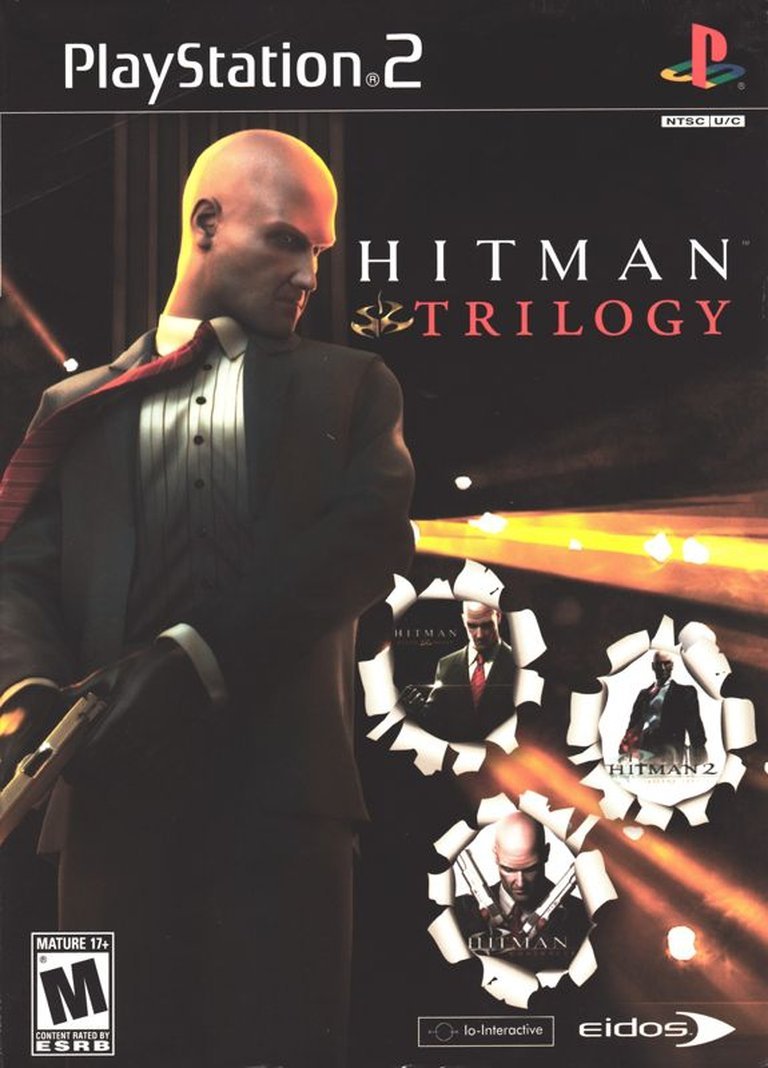
Description
Hitman Trilogy is a 2007 compilation release bundling three stealth-action games from the Hitman series—Hitman 2: Silent Assassin (2002), Hitman: Contracts (2004), and Hitman: Blood Money (2006)—where players control Agent 47, a genetically engineered assassin, executing high-profile contracts through creative stealth, disguises, and improvised weapons across diverse global settings like Eastern European churches, Parisian suburbs, and New Orleans festivals.
Hitman Trilogy Free Download
Hitman Trilogy Cheats & Codes
Hitman: Codename 47 (PC)
Edit ‘Hitman.ini’ in the Hitman directory and add ‘enableconsole 1’. During a mission, press ‘~’ to open the console and enter codes. Press [Tab] to scroll through available commands. For all missions access, enter ‘Kim Bo Kastekniv’ as profile name.
| Code | Effect |
|---|---|
| god [1 or 0] | God Mode. |
| giveall | All Weapons with Max Ammo. |
| infammo | Unlimited Ammo. |
| invisible [1 or 0] | Invisibility. |
| invisible off | Close the invisible. |
| ip_timemultiplier [0.01-5.00] | Change speed of time; 1.00 is default. |
| ip_debug [0 or 1] | Toggle debug mode. |
| murderdeathkill | makes u heal up the hill. |
| cmon | now win the game. |
| Killboy | kill everyone. |
| Kim Bo Kastekniv | instant access to all missions (enter as profile name) |
Hitman Trilogy: Review
Introduction
Imagine slipping into a impeccably tailored suit, barcode gleaming faintly on the back of your bald skull, as you navigate opulent mansions, shadowy brothels, and rain-slicked streets teeming with oblivious guards—all to orchestrate the perfect kill without a whisper of suspicion. This is the seductive allure of Hitman Trilogy, a 2007 compilation that bundles three seminal entries in IO Interactive’s stealth masterpiece series: Hitman 2: Silent Assassin (2002), Hitman: Contracts (2004), and Hitman: Blood Money (2006). Born from the gritty prototype of Hitman: Codename 47 (2000), these games represent the franchise’s golden era, where bald assassin Agent 47 evolved from a clunky experiment into a paragon of cold precision. As a game journalist and historian, I’ve dissected countless stealth titles, but Hitman Trilogy stands as a time capsule of emergent gameplay innovation amid early-2000s hardware limits. My thesis: This collection isn’t mere nostalgia bait—it’s the definitive archive of Hitman‘s purest form, distilling themes of identity, morality, and mechanical freedom into a sandbox symphony that influenced stealth design for decades, cementing 47’s legacy as gaming’s ultimate faceless killer.
Development History & Context
IO Interactive, founded in 1998 from the ashes of Zyrinx by a cadre of Danish developers including visionary Jacob Andersen, birthed Hitman amid the post-GoldenEye 007 stealth boom. Inspired by Hong Kong action flicks and the desire for a “guy in a suit blasting away in a Chinese restaurant,” the studio pivoted from a scrapped shooter (Rex Dominus) to craft Codename 47. Technological constraints defined the era: PCs boasted nascent 3D accelerators like the GeForce 256, while consoles like PS2 grappled with 32MB RAM limits. IO pioneered ragdoll physics in Codename 47, simulating limp bodies tumbling realistically—a feat that strained engines but set industry standards, predating Max Payne (2001).
Silent Assassin marked IO’s console leap (PS2, Xbox, GameCube), addressing PC-only exclusivity complaints. With Eidos Interactive’s backing post-Tomb Raider success, IO refined AI for unpredictable “odd moments” and introduced mid-level saves, alienating purists but broadening appeal. Contracts, dubbed “Hitman 2.5,” remade 10% of Codename 47‘s levels for console newcomers, leveraging motion blur and bloom for a noir aesthetic amid Xbox’s rising tide. Culminating in Blood Money (PS2, Xbox, Xbox 360, PC), IO harnessed increased budgets for dynamic crowds (up to 100 NPCs) and emergent “accident” kills, coinciding with next-gen teases.
The 2007 Trilogy (Windows June 19; PS2 later), aka Hitman Triple Pack or Trylogia, arrived post-Blood Money‘s cult acclaim, bundled by Eidos with a Kane & Lynch: Dead Men preview disc—IO’s next gritty shooter. Released amid a six-year Hitman hiatus (IO chased Kane & Lynch, Mini Ninjas), it targeted bargain hunters on DVD-ROM, supporting keyboard/mouse on PC. In a landscape dominated by linear stealth (Splinter Cell, Metal Gear Solid 2), Hitman‘s open-ended ethos bucked trends, foreshadowing sandbox revolutions like Deus Ex sequels.
Narrative & Thematic Deep Dive
Hitman Trilogy weaves a fragmented biography of Agent 47, a genetically engineered clone (born September 5, 1964, per canon retcons), blending pulp noir with existential dread. Silent Assassin opens post-Codename 47: 47 retires to Sicilian monastery groundskeeping, adopting faith under Father Vittorio—his sole emotional tether. Kidnapped by Russian arms dealer Sergei Zavorotko (brother to genetic “father” Arkadij Jegorov), Vittorio drags 47 into global hits: mafia dons in Sicily, generals in St. Petersburg, warlords in Afghanistan. Climaxing at Gontranno Sanctuary, 47 slays Zavorotko amid clones, rejecting peace for purpose. Themes probe redemption’s futility; 47’s “first cry” (over a pet rabbit, per comics) humanizes his stoicism.
Contracts frames as fever-dream flashbacks: Shot in Paris (linking to Blood Money), 47 relives asylum escape, Meat King cannibalism (“Campbell Sturrock’s” depraved party), and remade Codename 47 hits like Lee Hong’s triad massacre. Nonlinearity mirrors fractured psyche—Ort-Meyer’s serum-wiped memories surface, revealing 47’s clone brotherhood (e.g., Subject 6/Lucas Grey). Dialogue is sparse, potent: Diana Burnwood’s clipped intel underscores isolation.
Blood Money elevates to conspiracy thriller. Rival Franchise covets Ort-Meyer’s tech, assassinating ICA agents. 47 thwarts U.S. political puppets (e.g., Senator “Meat King’s” cronies, swing-voting Don in “Murder of the Crow”), culminating in presidential clone plot. Diana’s “betrayal”—sedating 47 for a fake funeral—allows Franchise annihilation. Themes deepen: Notoriety system reflects fame’s curse; accidents satirize excess (pool drownings, chandelier drops). Overarching: 47’s identity crisis—tool or man?—echoes Frankenstein, Providence’s shadow (retconned later) looms.
Characters shine: Diana evolves from handler to ally; Vittorio embodies lost innocence. Subtext critiques globalization—triads, cartels, arms dealers as villains. Timeline integrates canon (e.g., 2002-2006 events per wiki), tying to Ort-Meyer’s 1960s asylum.
Gameplay Mechanics & Systems
Hitman‘s loop—recon, disguise, execute, exfiltrate—peaks here, evolving from rigid to revolutionary.
Core Loops: Sandbox levels demand adaptation. Silent Assassin introduces ratings (Silent Assassin: no kills/alerts), dual Silverballers, non-lethal fiberwire/chloroform. AI pathing flaws yield “odd moments” (guards ignoring bodies), balanced by saves.
Combat & Progression: Stealth-first; combat is failure state. Contracts refines tension—darker visuals heighten paranoia, SWAT pursuits punish noise. Blood Money innovates: Notoriety scales heat (disguises fail in familiar areas), customizable weapons (ammo tweaks), accident layering (poisoned champagne cascades). UI evolves: Map reveals intel, instinct absent (pre-Absolution).
Innovations/Flaws: Disguises gate progress—body-hiding laundry chutes genius, but clunky animations frustrate. Blood Money‘s crowds enable pacifist mastery (20+ opportunities/level). Flaws: PS2-era load times, finicky guards (spot suits from afar). Progression via unlocks (e.g., miniguns) rewards replays. Trilogy faithful to originals—no patches—preserves raw challenge.
| Game | Key Mechanic | Innovation | Flaw |
|---|---|---|---|
| Silent Assassin | Rating System | First-person view, multi-path missions | Predictable AI |
| Contracts | Flashback Remakes | Noir filters, tighter levels | Repetitive |
| Blood Money | Accidents/Notoriety | Emergent kills, customization | Escalating difficulty spikes |
World-Building, Art & Sound
Diverse locales immerse: Sicily’s sunlit vineyards (SA), Paris’ gothic hotels (Contracts), Mardi Gras New Orleans (BM). Levels as dioramas—Hôtel Ritz’s opulence hides vice; Meat King’s abattoir reeks depravity. Art direction: Cel-shaded shadows in Contracts, Blood Money‘s volumetric fog/rain enhance mood. PS2/PC visuals hold—ragdolls flop convincingly.
Soundscape masterful: Jesper Kyd’s neo-noir score (piano stabs, orchestral swells) pulses tension. Ambient chatter (guards gossiping) builds verisimilitude; Silverballers’ thwip-thwip satisfies. VO sparse but iconic—47’s mute menace amplifies alienation. Trilogy’s DVD-ROM fidelity captures era’s grit, atmospheres fueling paranoia/mastery.
Reception & Legacy
Individuals shone: Silent Assassin (Metacritic 82-87) hailed refinements, sold 3.7M; Contracts (74-80) praised atmosphere, 2M units; Blood Money (82-83) cult classic (2.1M+), “greatest ever” nods (Polygon, GamesRadar). Trilogy: Sparse—4.2/5 from 6 MobyGames players, no critics; PS2 88% GameRankings. Commercial: Bargain hit, eBay rarities now $20-200.
Legacy profound: Pioneered sandbox stealth, inspiring Dishonored, World of Assassination trilogy (50M+ players). Blood Money remade 2023/2024. Influenced films (Hitman 2007, flops), novels (Enemy Within), comics. Post-Absolution (mixed), IO’s 2016 reboot fused classics with live-service, but Trilogy endures as pure Hitman.
Conclusion
Hitman Trilogy distills IO’s alchemy—turning hardware limits into timeless freedom—into an essential historical artifact. From Silent Assassin‘s redemption arc to Blood Money‘s satirical crescendo, it captures 47’s arc from clone to legend, flaws (dated controls) notwithstanding. In video game history, it occupies a pantheon slot beside Half-Life, proving stealth’s sandbox soul. Verdict: Masterpiece compilation (9/10)—play for the blueprint of assassination artistry. Newcomers, start here; veterans, revisit the shadows. Agent 47 endures.