
- Release Year: 2011
- Platforms: OnLive, PlayStation 3, Windows, Xbox 360
- Publisher: ak tronic Software & Services GmbH, THQ Entertainment GmbH, THQ Inc.
- Developer: Kaos Studios
- Genre: Action
- Perspective: 1st-person
- Game Mode: Online Co-op, Online PVP, Single-player
- Gameplay: Shooter
- Setting: Futuristic, North America, Post-apocalyptic, Sci-fi
- Average Score: 70/100
Description
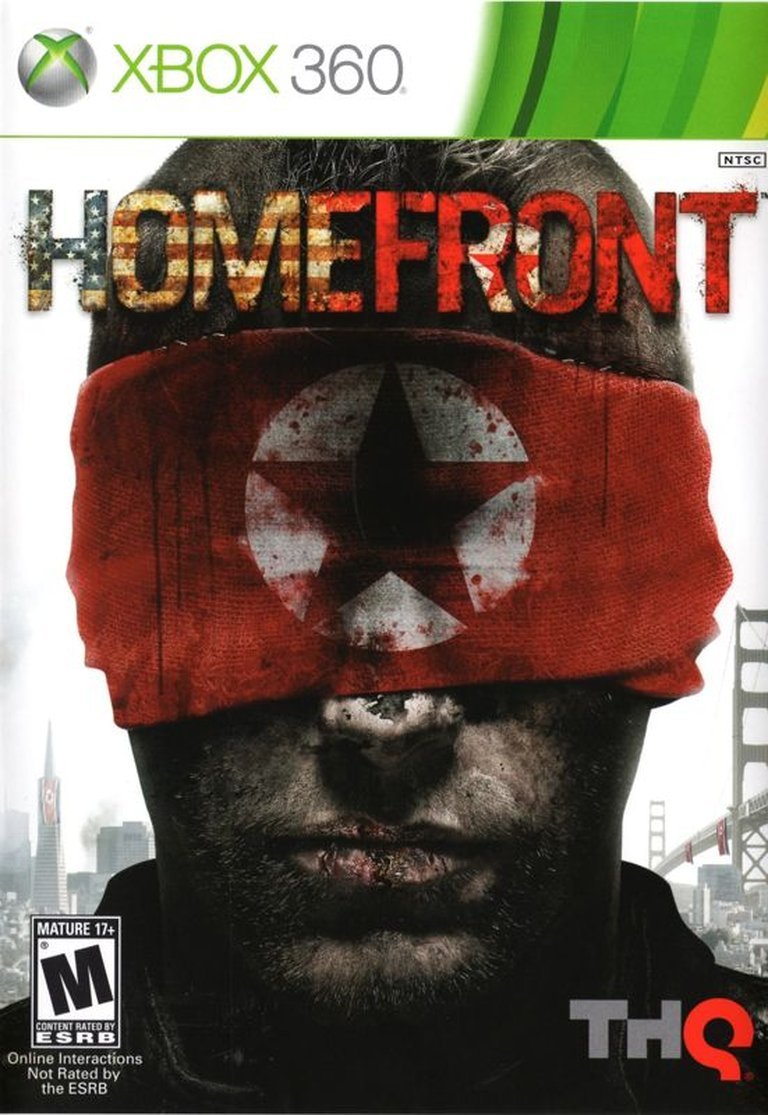
Set in a dystopian 2027, Homefront depicts a United States invaded by a unified Korea after losing its superpower status. Players control Robert Jacobs, a captured military pilot rescued by resistance fighters, engaging in guerrilla warfare across a crumbling America. The narrative-driven campaign features Modern Warfare-inspired mechanics, including weapon customization and the unique ‘Goliath’ robotic assault vehicle, while the multiplayer mode combines XP progression with Battle Points for in-match upgrades and introduces ‘Battle Commander’, an AI-driven objective system. Despite criticism for its short campaign, the game explores themes of occupation and rebellion across both solo and 32-player online battles.
Gameplay Videos
Where to Buy Homefront
Homefront Cracks & Fixes
Homefront Patches & Updates
Homefront Mods
Homefront Guides & Walkthroughs
Homefront Reviews & Reception
ign.com : Thankfully for Kaos Studios, Homefront does indeed do something special.
metacritic.com (70/100): Combining so many elements into such a cohesive story, THQ has reminded me why I love gaming.
thegamingreview.com : If Kaos wanted to get some shock value into Homefront, then you don’t need to wait long.
Homefront: Review
Homefront, released in 2011, stands as a bold and ambitious entry in the first-person shooter genre, offering a unique blend of guerrilla warfare and futuristic military tactics. Developed by Kaos Studios and published by THQ, the game presents a dystopian future where the United States has fallen from its status as a global superpower, invaded by a unified Korea. The narrative, penned by the renowned John Milius, sets the stage for an intense and emotionally charged experience. However, despite its promising premise, Homefront struggles to live up to its potential, leaving players with a mixed bag of innovative mechanics and frustrating shortcomings.
Development History & Context
Kaos Studios, the development team behind Homefront, had a vision to create a shooter that stood out in a crowded market dominated by franchises like Call of Duty and Battlefield. The studio, known for its previous work on Frontlines: Fuel of War, aimed to leverage the Unreal Engine 3 to deliver a visually impressive and technically sound game. The technological constraints of the era, however, limited the studio’s ability to fully realize their ambitions. The gaming landscape in 2011 was fiercely competitive, with players expecting high-quality graphics, engaging narratives, and innovative gameplay mechanics. Kaos Studios sought to differentiate Homefront by focusing on a unique setting and a compelling story, but the execution fell short in several key areas.
Narrative & Thematic Deep Dive
The narrative of Homefront revolves around Robert Jacobs, a former military pilot who finds himself conscripted by the Korean army and subsequently rescued by a local resistance cell. The story unfolds in a post-apocalyptic United States, where Jacobs joins the resistance in their fight against the occupying forces. The game’s setting is rich with detail, from the desolate landscapes to the grimy, war-torn cities. The dialogue is often gritty and realistic, reflecting the harsh realities of war. However, the narrative suffers from a lack of depth and character development. Jacobs, the protagonist, remains a largely one-dimensional character, and the supporting cast fails to leave a lasting impression. The thematic exploration of resistance and the struggle for freedom is compelling, but it is undermined by a storyline that feels rushed and incomplete.
The plot is divided into several key missions, each designed to highlight different aspects of the resistance’s fight. The gameplay mechanics, while innovative in some respects, often feel constrained by the linear nature of the story. The use of the Goliath robotic assault vehicle, for example, adds a unique layer to the combat, but it is not enough to save the campaign from feeling formulaic. The game’s ending, in particular, is a source of frustration for many players, who feel that it leaves too many questions unanswered and fails to provide a satisfying conclusion.
Gameplay Mechanics & Systems
Homefront’s gameplay mechanics are a mix of familiar and innovative elements. The core combat system is modeled closely after the Modern Warfare series, featuring snap-targeting, aiming down the sights, and a control scheme that will be familiar to genre veterans. The game supports up to two weapons at a time, with enemies dropping randomized attachments and scopes, adding a layer of unpredictability to the combat. The Goliath vehicle, in particular, stands out as a unique addition, allowing players to direct its firepower against specific targets.
The multiplayer mode is where Homefront truly shines. Combining elements of the Modern Warfare series’ fast-paced foot combat with vehicle combat similar to Frontlines: Fuel of War, the multiplayer offers a diverse and engaging experience. Players earn experience points (XP) during matches, which contribute to their overall rank. Additionally, the game features a Battle Points system, similar to Counter-Strike, which allows players to purchase new weapons, upgrades, and vehicles for that match only. The Battle Commander mode is a standout feature, where players are guided by an AI commander who assigns objectives and provides support. This mode adds a strategic layer to the multiplayer experience, encouraging teamwork and coordination.
However, the multiplayer is not without its flaws. The game requires a “Battle Code” for online play, which is provided free in new copies of the game or can be purchased separately. This system, similar to EA’s Online Pass, has been criticized for limiting access to the multiplayer and reducing the resale value of the game. Additionally, the multiplayer modes are somewhat limited, with only a few maps and game types available at launch. This lack of variety can lead to a repetitive experience over time.
World-Building, Art & Sound
The world-building in Homefront is one of its strongest assets. The game’s setting, a post-apocalyptic United States, is richly detailed and immersive. The art direction is gritty and realistic, with a color palette that reflects the bleakness of the world. The sound design is equally impressive, with a powerful orchestral score that enhances the game’s atmosphere. The sound effects are realistic and impactful, from the roar of explosions to the clatter of gunfire. The voice acting is generally strong, with the characters delivering their lines with conviction. However, the dialogue can sometimes feel stilted and unnatural, detracting from the overall immersion.
Reception & Legacy
Upon its release, Homefront received mixed reviews from critics and players alike. The game was praised for its unique setting and compelling narrative, but criticized for its short campaign and flawed multiplayer. The critical reception was generally positive, with an average score of 70% based on 153 ratings. However, the player reviews were more divided, with an average score of 3.5 out of 5 based on 58 ratings. The game’s legacy is somewhat mixed, with many players remembering it fondly for its innovative mechanics and engaging multiplayer, but also criticizing it for its shortcomings.
Homefront’s influence on subsequent games and the industry as a whole is difficult to quantify. The game did not achieve the commercial success of its competitors, but it did leave a mark on the genre. Its unique setting and narrative have been cited as inspirations for other games, and its multiplayer mechanics have been praised for their innovation. However, the game’s flaws, particularly its short campaign and limited multiplayer, have been cited as reasons for its lack of longevity.
Conclusion
In conclusion, Homefront is a game of missed opportunities. Its unique setting and compelling narrative hold great potential, but the execution falls short in several key areas. The gameplay mechanics are innovative but flawed, and the world-building is impressive but undermined by a lack of depth. The multiplayer mode is engaging but limited, and the single-player campaign is short and unsatisfying. Despite its flaws, Homefront remains a notable entry in the first-person shooter genre, offering a unique and engaging experience for players willing to overlook its shortcomings. Its legacy is one of a game that could have been great, but ultimately fell short of its potential. For those looking for a fresh take on the shooter genre, Homefront is worth a look, but it is not without its flaws.