
- Release Year: 2006
- Platforms: Windows
- Publisher: bhv Software GmbH & Co. KG, Daedalic Entertainment GmbH, Micro Application, S.A.
- Developer: Cyanide S.A.
- Genre: Driving, Racing, Simulation, Sports, Strategy, Tactics
- Perspective: Third-person
- Game Mode: Single-player
- Gameplay: Business simulation, Managerial
- Setting: Horse racing
- Average Score: 53/100
Description
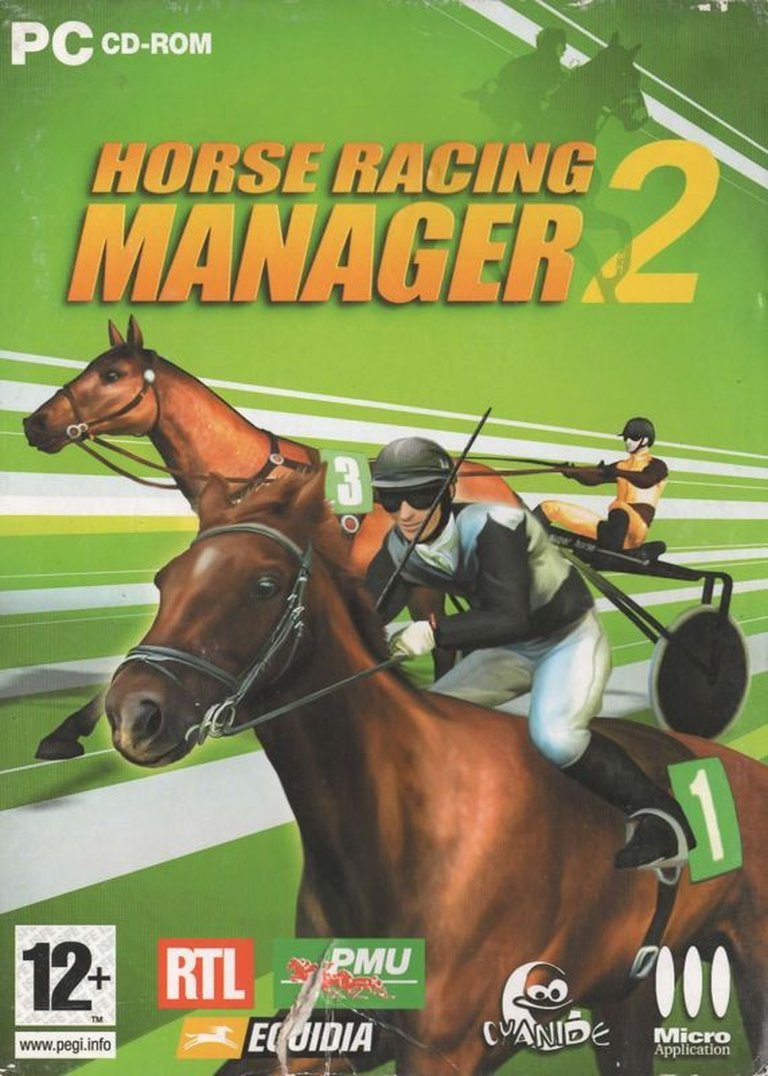
Horse Racing Manager 2 is a comprehensive simulation game immersing players in the world of horse racing through three distinct modes: as a stable manager, players handle business operations like buying/selling horses, infrastructure, jockeys, and training schedules to maximize profits; as a jockey, they pursue a career with statistics-driven racing performance; and as a bettor, they wager on virtual races. The game features flat, obstacle, and trot races in full 3D with a third-person perspective.
Gameplay Videos
Where to Buy Horse Racing Manager 2
PC
Horse Racing Manager 2 Free Download
Horse Racing Manager 2 Patches & Updates
Horse Racing Manager 2 Guides & Walkthroughs
Horse Racing Manager 2: A Niche Gem of Strategic Equestrian Ambition
Introduction
In the vast landscape of sports management simulations, where football and Formula One reign supreme, Horse Racing Manager 2 stands as a defiantly specialized cult classic. Released in 2006 by French developer Cyanide S.A., this sequel sought to immerse players in the multifaceted world of horse racing—a discipline rarely explored in interactive media. With its three-pronged approach (Stable Owner, Jockey, and Bettor modes), the game promised unparalleled access to the “Sport of Kings.” Yet, despite its ambitious scope and dedicated fanbase, Horse Racing Manager 2 remains a cautionary tale of niche ambition colliding with technical constraints and design flaws. This review deconstructs its legacy, arguing that while it fails to transcend its limitations, it remains an intriguing artifact of simulation history—a love letter to enthusiasts and a fascinating study in genre experimentation.
Development History & Context
Horse Racing Manager 2 emerged from Cyanide S.A., a studio already carving a niche for itself in unconventional sports simulations. Headed by Executive Producer Patrick Pligersdorffer and Director of Production Rémy Poirson, the team leveraged their experience from titles like Loki: Heroes of Mythology to craft a game that blended strategy, real-time tactics, and meticulous management. Their vision was clear: to replicate the intricate business and athletic ecosystems of horse racing, a notoriously complex sport with layers of genetics, finance, and human skill.
Technologically, the game was a product of its mid-2000s era. With recommended specs of a Pentium 4 1.5 GHz CPU, 256 MB RAM, and a 64 MB GeForce 3 graphics card, it pushed mid-range hardware to render 3D race courses, dynamic horse animations, and environmental effects like mud sprays. However, this ambition led to compromises: the game relied on “fummelige Menüs” (fussy menus) as noted by GameStar, and its networking capabilities—supporting LAN and Internet multiplayer—were hampered by limited optimization.
The 2006 gaming landscape saw the peak of Football Manager‘s dominance, making Horse Racing Manager 2 a stark anomaly. While niche sports like cycling or rallying had dedicated titles, horse racing was virtually unrepresented. Cyanide’s gamble was to fill this void, targeting an audience of horse enthusiasts and simulation purists rather than mainstream gamers—a strategy reflected in its modest commercial footprint and lukewarm critical reception.
Narrative & Thematic Deep Dive
Lacking a traditional narrative, Horse Racing Manager 2 derives its storytelling from player-driven progression across its three distinct modes. Each mode explores a facet of horse racing’s human drama, creating a thematic trifecta of ambition, risk, and legacy.
-
Stable Mode: Here, players embody a magnate, weaving a narrative of empire-building. The story isn’t linear but emergent: starting with modest capital, you acquire land, infrastructure, and equine assets, navigating a cutthroat market of buying and selling horses. The underlying theme is ruthless capitalism: success hinges on shrewd investments, hiring skilled jockeys (each with unique stats), and balancing training regimens against race entry fees. The “goal of making a lot of money” isn’t just gameplay—it’s a thematic core, reflecting the sport’s blend of passion and commerce.
-
Jockey Mode: This shifts focus to the athlete’s journey, emphasizing personal growth and resilience. Players navigate a career ladder, beginning in low-stakes races and ascending to prestigious events. Each victory or failure shapes your jockey’s attributes—precision, experience, renown—transforming your avatar from a novice to a legend. The theme here is perseverance: overcoming physical limitations (like weight restrictions) and the psychological pressure of high-stakes competition.
-
Bettor Mode: The most cynical yet philosophically rich mode, it frames racing as a system of chance and information. Players become “professional gamblers,” analyzing horse-jockey pairings, track conditions, and historical data to beat the odds. The narrative is one of calculated risk, where each bet is a micro-story of triumph or ruin. Themes of fate and data-driven decisionism collide, as luck favors the prepared.
Across all modes, the game avoids melodrama instead, offering a grounded exploration of human-horse relationships, ambition, and the delicate interplay of skill and luck that defines equestrian sports.
Gameplay Mechanics & Systems
Horse Racing Manager 2’s genius lies in its tripartite structure, though each mode suffers from inconsistent execution.
-
Stable Mode: As a manager, you engage in a robust loop of acquisition, development, and competition. Horses are differentiated by breed, stamina, and speed, acquired via auctions or breeding. Infrastructure (stables, training tracks) requires strategic investment to improve performance. Hiring jockeys involves evaluating their precision, experience, and cost, while training regimens demand balancing fatigue and skill gains. Race entry is a gamble: you must weigh prize money against potential damage to your horse’s health. The core loop—buy, train, race, profit—is compelling but undermined by shallow AI. Opposing stables rarely challenge your dominance, and economic decisions lack depth, reducing strategy to spreadsheet-like efficiency.
-
Jockey Mode: This transitions to real-time, third-person racing action, blending simulation with reflexes. Horses and jockeys have physics-based movement, influenced by terrain and fatigue. Players steer their mount, timing sprints and navigating obstacles. While the career mode offers progression, it feels perfunctory: races are repetitive, and AI opponents exhibit predictable patterns. The “prestigious career” promised feels more like a checklist of events than a narrative journey.
-
Bettor Mode: A stark departure, this mode strips away action for pure strategy. Players bet on races, leveraging dynamic odds influenced by real-time events. The system tracks horse/jockey statistics, allowing for informed wagers. However, its appeal is limited by passive gameplay—more akin to sports betting software than an interactive experience.
Race diversity is a strength, with flat, obstacle (hurdles), and trot racing offering varied challenges. Yet, as GameStar lamented, “Rennen sind nie vorhersehbar” (races are never predictable), with AI randomness overriding player skill. The UI, praised by Gameplay for being “sober and efficient,” was criticized by PC Action for “grausige Sound” (gruesome sound) and cumbersome menus. Overall, the systems are ambitious but lack refinement, creating a simulation that’s conceptually rich mechanically inconsistent.
World-Building, Art & Sound
The game’s world-building is meticulous in its specificity, capturing the atmosphere of European horse racing through its art and sound design.
-
Setting & Atmosphere: Tracks are rendered with varying locales—from sun-drenched flat courses to rain-slicked obstacle courses. Environmental details like mud splatters, night races, and dynamic weather (as highlighted by GamePressure) add immersion. The “Sport of Kings” ethos permeates the experience, from the grandeur of racecourses to the grit of stable management. Yet, this authenticity is undermined by repetitive layouts and limited event variety, making the world feel smaller than intended.
-
Visual Direction: Graphics, while “verzorgd” (well-cared-for) per Gameplay, lack ambition by 2006 standards. Horse models are detailed in coat colors and size variations, but animations are stiff, and crowd textures are rudimentary. The 3D third-person perspective showcases race dynamics effectively but falters during management menus, where static interfaces clash with the game’s dynamic core. PC Action’s barb about “Pferdesalami” (horse salami) underscores the visual mediocrity—functional but uninspired.
-
Sound Design: Audio is a point of contention. On one hand, the clatter of hooves, crowd roars, and commentary capture the race-day buzz. On the other, PC Action’s “dröger Musik” (dreary music) and GameStar’s complaints about repetitive soundtracks create a jarring disconnect. The audio work by Vincent Percevault is technically competent but emotionally flat, failing to elevate the tension of a neck-and-neck finish.
Ultimately, the art and sound succeed in grounding the simulation in reality but lack the polish to make it truly immersive.
Reception & Legacy
Horse Racing Manager 2 received a lukewarm critical reception, with a 52% average from four reviews, reflecting its polarizing appeal. Gameplay (Benelux) awarded it 72%, praising its “eenvoudige interface” (simple interface) and niche appeal, while Jeuxvideo.com (60%) noted its similarity to its predecessor. PC Action (51%) derided it as langweilig (boring), and GameStar (25%) savaged its unpredictability and “fummelige Menüs.” Players rated it 2.7/5, citing its niche focus but lamenting its lack of longevity.
Commercially, the game was a niche success, sustained by a dedicated audience of horse racing fans. Its legacy lies in its genre rarity: a 3D horse racing management simulation offering three distinct perspectives. Cyanide S.A. would later refine this formula with titles like Blood Bowl, but Horse Racing Manager 2 remains a cult curiosity. It influenced no major trends but preserved a niche interest, proving that even flawed simulations can serve passionate communities. Today, it survives on abandonware sites like MyAbandonware, where users report technical issues but praise its ambition.
Conclusion
Horse Racing Manager 2 is a product of its time and genre: a flawed, ambitious simulation that captures the essence of horse racing with mixed results. Its three-mode structure is a bold experiment, offering layered insights into the sport’s economic, athletic, and betting dimensions. Yet, technical limitations, shallow strategy, and inconsistent execution prevent it from transcending its niche. For horse racing enthusiasts, it remains a cherished time capsule—a detailed, if flawed tribute to the “Sport of Kings.” For broader gaming history, it stands as a testament to the risks of targeting specialized audiences. While not a classic by any metric, its existence enriches the simulation genre, proving that even the most esoteric sports can find a home in interactive media. Verdict: A cult classic for niche fans, a historical footnote for the rest.