
- Release Year: 2004
- Platforms: Windows
- Publisher: dtp entertainment AG, GOST Publishing SPRL, Mindscape SA
- Developer: Caipirinha Games GmbH, Espaço Informática Ltda
- Genre: Driving, Racing, Simulation, Sports
- Game Mode: Single-player
- Gameplay: Business simulation, Managerial
- Setting: Contemporary
Description
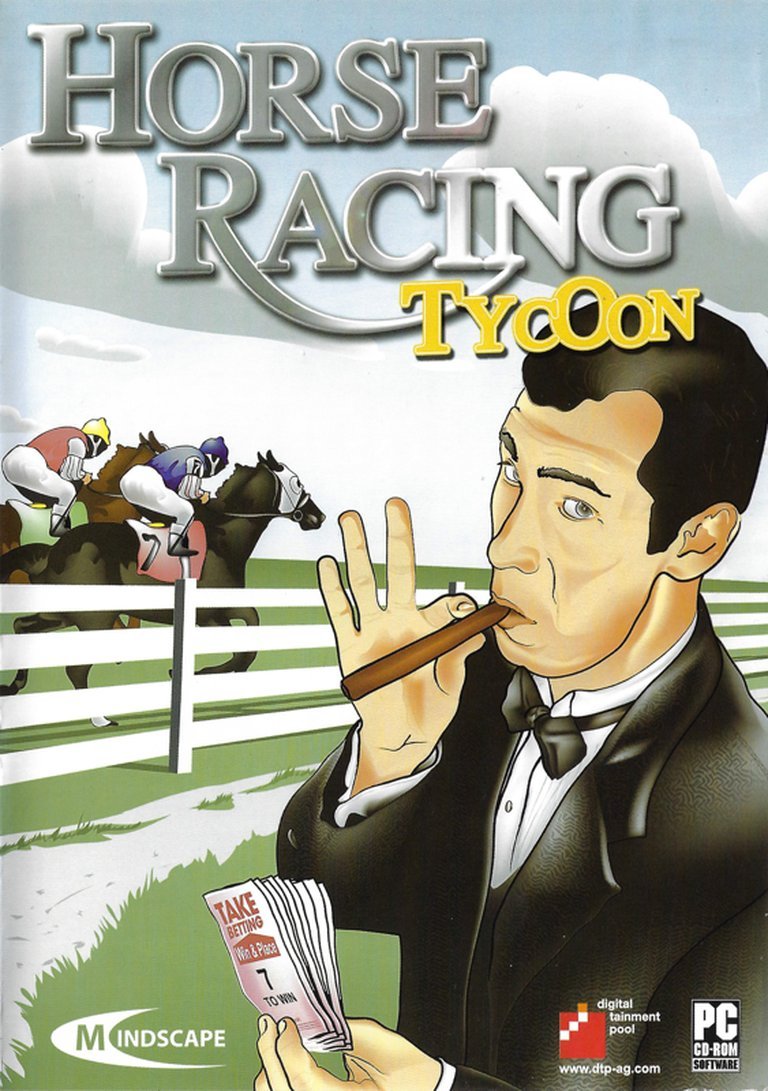
Horse Racing Tycoon is a real-time managerial simulation where players run a contemporary horse racing farm. You must build facilities, hire staff, care for horses, and engage in breeding or purchasing animals to train them for competitive races against AI opponents, all within a fully 3D environment featuring a day-night cycle.
Horse Racing Tycoon Free Download
Horse Racing Tycoon: A Forgotten Stable in the Tycoon Pasture
Introduction: The Ghost in the Machine of Management Sims
In the sprawling genealogical chart of the “Tycoon” genre—a lineage stretching from the isometric zenith of RollerCoaster Tycoon to the grimier industrialscapes of Prison Tycoon—there exists a curious, understudied branch dedicated to the equine world. Horse Racing Tycoon (2004), known in its native Germany as Der Pferderennstall and in the Netherlands as Mijn Renpaarden, represents a fascinating artifact of this niche. It is a game that promised the full cycle of thoroughbred stewardship: breeding, boarding, training, and racing, all wrapped in a then-impressive 3D engine with a real-time day-night cycle. Yet, it has evaporated from collective memory, leaving behind only the faintest tracks in databases and a void where critical discourse should be. This review posits that Horse Racing Tycoon is not merely a failed clone of its more famous cousins, but a poignant case study in the challenges of translating the nuanced, slow-burn drama of animal husbandry and sports management into the fast-paced, feedback-driven language of early-2000s PC gaming. Its legacy is one of ambitious scope hamstrung by technological modesty and market saturation, a game that galloped confidently into an empty field only to find few spectators watching.
Development History & Context: A Transatlantic Trot
The story of Horse Racing Tycoon is intrinsically tied to the peculiar economics of mid-2000s European game publishing. The game was developed by Espaço Informática Ltda, a Brazilian studio, under the production auspices of Caipirinha Games GmbH, a German subsidiary. It was commissioned by the German publisher dtp entertainment AG, with additional publishing handled by GOST Publishing SPRL and Mindscape SA for other European territories.
This development model—a Brazilian studio building a game for a German publisher—was not uncommon in the era. It leveraged lower development costs in South America to serve the lucrative German-speaking market for “Fachsimulationen” (professional simulations) and family-friendly “Pferd & Pony” (Horse & Pony) titles. The game was developed in an intense six-month window between May and November 2004, a timeline that speaks to a focus on leveraging existing engines or middleware rather than pioneering new technology. It was released for the 2004 Christmas season in Germany and surrounding regions, with plans for a broader international release (including Brazil) in 2005.
Technologically, the game touted “Completely 3D Graphics” and a “real-time day-night simulation,” which were notable features for a budget-title simulation in 2004. However, these claims must be viewed through the lens of the era’s constraints. The recommended system requirements (a Pentium 500 MHz, 64MB RAM, 8MB graphics card) place it firmly in the “runs on a potato” category, suggesting the 3D was stylized and lightweight, likely using a proprietary or licensed engine optimized for low-end PCs. This was a pragmatic choice, targeting the broad, non-gaming-spec household computers common in Europe at the time.
The gaming landscape of 2004 was dominated by the “Tycoon” and “Sim” genre. RollerCoaster Tycoon 3 had just released, SimCity 4 was a recent memory, and a wave of niche tycoon games (Zoo Tycoon 2, Atmosphere) were thriving. Simultaneously, the “Pferd & Pony” series and similar franchises (Let’s Ride!, Barbie Horse Adventures) were crowding the children’s and family sections. Horse Racing Tycoon attempted to straddle these worlds: offering the depth of a management sim with the theme of a children’s horse game. This identity crisis would prove fundamental to its reception.
Narrative & Thematic Deep Dive: The Unwritten Story
Paradoxically, for a game with “Tycoon” in its title, Horse Racing Tycoon possesses no explicit narrative, no characters, and no dialogue. The player is an unseen, disembodied manager/owner. The “story” is the emergent narrative of progression—the tale of a neglected stable transformed into a champion-breeding dynasty, told entirely through spreadsheets, stat bars, and race replays.
The game’s themes are therefore purely systemic:
1. The Cycle of Life and Commerce: The ad blurb mentions observing horses “since their birth until they are prepared to the races.” This suggests a full lifecycle management system, tying the emotional investment in a foal’s growth directly to its eventual economic utility as a racer or breeder.
2. The Illusion of Control vs. The Unpredictability of Sport: While the manager sets training regimes, purchases feed, and chooses jockeys, the actual race outcome involves AI opponents who “bet high to have the best horses.” This creates a tension between meticulous management and the inherent chaos of competition.
3. Domesticity as Gameplay: Caring for horses—”making the constructions, hiring workers, always caring of your horses”—elevates stable upkeep from a mundane task to the core thematic loop. The farm is not just a factory; it’s a home.
4. Accessibility and Universality: The repeated emphasis on being “Free for all ages” and “enjoyable for all ages” is not just a PEGI 3 rating compliance statement; it’s a declared design philosophy. The narrative is one of innocent enterprise, devoid of the gambling cynicism or gritty realism found in later horse sims like Starters Orders.
The absence of a traditional story is both a limitation and a reflection of its genre. It prioritizes systemic storytelling—the player’s own saga of rising from a “Sabet” (likely a typo or regional term for a simple horse) owner to a hall-of-famer—over prescribed plots.
Gameplay Mechanics & Systems: Parsing the Pferderennstall
Based on the official description and contextual comparisons, we can deconstruct the likely gameplay loop:
Core Loop:
1. Acquisition: Purchase horses via auction or from a “Hunter’s house” (likely a source for untamed or lower-cost horses).
2. Management: Build and upgrade stable infrastructure (stalls, tracks, feed storage). Hire staff (workers, trainers, jockeys).
3. Care & Training: Assign feed (impacting health/stats), manage rest cycles, and initiate training to improve core attributes: Speed and Stamina.
4. Breeding: The mention of breeding and observing growth implies a genetic or at least stat-inheritance system, allowing for long-term farm development.
5. Competition: Enter races against three AI opponents. The racing mechanic is the critical unknown. The ad blurb’s “amazing races” and the similar Racehorse Tycoon (Flash) description suggest a semi-active mechanic where the player may instruct the jockey (e.g., “go faster,” “hold back”) to manage the horse’s stamina, with risk of fatigue or error.
6. Progression & Economy: Race winnings fund expansion, better horses, and upgrades. The “Trophy Room” and “Hall of Fame” provide long-term goals. The mention of opponents betting high creates a meta-game of financial one-upmanship.
Innovative (or Presumed) Systems:
* Real-Time Day-Night Cycle: This was a standout feature for its time in a management sim. It likely affected horse routines (night rest),或许 facility availability, or simply added atmospheric dynamism.
* 3D Farm Visualization: Unlike the top-down isometrics of RollerCoaster Tycoon, players could likely navigate a 3D representation of their stud farm, clicking on horses and buildings directly.
* Lifecycle Management: Breeding and raising horses from foal to racer was a deeper system than many contemporaries, which often focused only on adult racehorses.
Probable Flaws & Omissions (Inferred):
* Shallow Racing Simulation: The “amazing races” claim is suspect. With only three opponents and likely simple stat-based resolution, races were probably spectacles of UI feedback rather than deep tactical contests. The Racehorse Tycoon (Kongregate) review complaining about betting mechanics suggests UI friction.
* Economy Balance: “Tycoon” games often suffer from runaway inflation or trivial late-game economies. With only three opponents, the economic challenge may have plateaued quickly.
* AI Opponent Depth: Three opponents betting high sounds repetitive. Without varied strategies or personalities, the competitive layer would become predictable.
* Interface & Feedback: Management sims live or die by their UI. The “completely 3D” interface might have made accessing deep management menus cumbersome compared to a clean 2D overlay.
World-Building, Art & Sound: A Pastoral Low-Budget Aesthetic
The game’s setting is explicitly Contemporary, a refreshing departure from fantasy or historical horse games. The world is a European-style countryside or peri-urban racing region, implied by the German/Dutch releases.
- Visual Direction: The “Hi-quality graphics” claim must be taken with a grain of salt given the hardware targets. The art style was almost certainly a stylized, low-poly 3D with bright, saturated colors appealing to a younger audience. The mention of graphics reminiscent of early The Sims games (GamePressure‘s note on Racing Horse Tycoon, a likely re-release/sequel) suggests a similar aesthetic: readable shapes, simple animations, and a bright, cheerful palette. The 3D city environment would be sparse, with low-detail buildings and vegetation.
- Atmosphere: The day-night cycle was the primary atmospheric tool. Sunrises and sunsets over the farm, the switch to nighttime with illuminated stable windows, would have been the game’s most “magical” technical achievement, injecting a sense of time passing and daily rhythm.
- Sound Design: The source material is silent on audio. Given the budget and target audience, expect:
- Music: Upbeat, generic classical or folk-inspired tunes during management, tense, driving music during races.
- SFX: Whinnying, hoofbeats, crowd murmurs, jockey shouts, and the clink of coins/auction hammer. The soundscape would serve functional feedback rather than immersive simulation.
The world was not meant to be a Red Dead Redemption 2-level immersive sandbox, but a legible, cheerful playset. Its contribution to the experience is to make the management feel situated in a place, however modestly rendered.
Reception & Legacy: A Horse That Never Left the Gate
Critical Reception: There is no evidence of any professional critic reviews for Horse Racing Tycoon. It was not reviewed on Metacritic, and MobyGames shows zero critic reviews. This suggests it was treated as a purely regional, budget, or children’s title, ignored by the enthusiast press.
Commercial Reception: Its release across multiple European territories (Germany, Netherlands, presumably others) through established publishers (dtp, Mindscape) indicates it found some commercial traction, likely selling in toy stores, computer shops, and via mail order alongside other “Pferd & Pony” titles. Its inclusion in the series chronology (Pferd & Pony series) confirms it was part of a commodified franchise line. However, its complete absence from “Best Horse Games” lists (like the Ranker compilation which features Gallop Racer, Starters Orders, and Derby Owners Club) signals it made no significant impact on the broader horse game landscape.
Evolution & The “Tycoon” Confusion:
The game’s title and MobyGames entry have caused significant genealogical confusion online. It is not the same as:
* Thoroughbred Tycoon (2006): A later game by IncaGold plc (developer Espaço Informática). My Abandonware lists Thoroughbred Tycoon (2006) as “above-average,” but this is a separate product. The similarity in naming and shared developer suggests Horse Racing Tycoon (2004) may have been a prototype or regional version that was later revamped and re-released as Thoroughbred Tycoon for other markets.
* Racehorse Tycoon (2008 Flash game): A browser-based game by Mousebreaker (also seen on Kongregate, SilverGames, AddictingGames). This is a completely different, simpler game with a more active jockey-riding minigame, but its identical naming is a source of major confusion. The TMQ Horse Game Database explicitly warns: “Don’t confuse with Horse Racing Tycoon.”
This naming quagmire has severely damaged its legacy, making it nearly unsearchable and ensuring it is lost in a sea of similarly titled, unrelated projects.
Influence on the Industry: Horse Racing Tycoon had no discernible influence on subsequent major horse games. The serious simulation track (Starters Orders, Winning Post) continued on its complex, data-driven path. The arcade/social path (Derby Owners Club, later Star Stable) evolved separately. Its attempt to blend family-friendly aesthetics with management depth was a dead end, quickly superseded by either more hardcore sims or more accessible, mission-based games.
Its true legacy is as a * footnote in the “Tycoon” boom* and the European children’s simulation market. It exemplifies the era’s practice of localizing and rebranding niche simulations for specific territories, a model that faded as digital distribution and global marketing took hold.
Conclusion: The Also-Ran of the Racetrack
Horse Racing Tycoon is a ghost in the machine. It is a game one can describe with perfect clarity from its marketing blurbs—”real-time strategy,” “3D graphics,” “day-night simulation,” “breeding and racing”—yet whose soul remains completely elusive. No critical voices ever analyzed it. No players have left memoirs of its triumphs or frustrations. It exists in a state of suspended animation, a title on a list, an alias on a database.
Its final verdict must be one of historical curiosity and commercial anonymity. It was a competent, low-budget, regionally-targeted simulation that failed to distinguish itself in a crowded field. Its technical achievements were modest and quickly outdated. Its gameplay systems, while logically sound for the genre, lacked the depth to satisfy serious sim fans or the polish and charm to captivate the family audience against flashier, branded competitors (like Barbie Horse Adventures).
In the grand museum of video game history, Horse Racing Tycoon occupies a small, unlabeled case. It is not a lost masterpiece. It is not an notorious flop. It is a perfectly representative artifact of a transient moment: when the “Tycoon” formula was applied to every conceivable hobby, when European publishers mined South American studios for低成本 family software, and when the horse game genre was a fragmented,地域化 marketplace before the consolidation of a few global giants. To study it is not to find a game to play, but to understand the vast, quiet stretches of the gaming pasture where countless other games like it grazed—unseen, unreviewed, and ultimately forgotten. Its place in history is as a cautionary epitaph for unfocused design in a saturated genre: a game that tried to be everything to everyone and ended up being nothing to anyone, leaving no hoofprint on the sand of time.