
- Release Year: 2007
- Platforms: PlayStation 2, Wii, Windows, Xbox 360
- Publisher: 1C Company, Activision Publishing, Inc., Activision Value Publishing, Inc.
- Developer: Eutechnyx Limited
- Genre: Action, Driving, Racing
- Perspective: 3rd-person (Other)
- Game Mode: Single-player
- Gameplay: Arcade, Shooter
- Setting: Backyards, Bedrooms
- Average Score: 61/100
Description
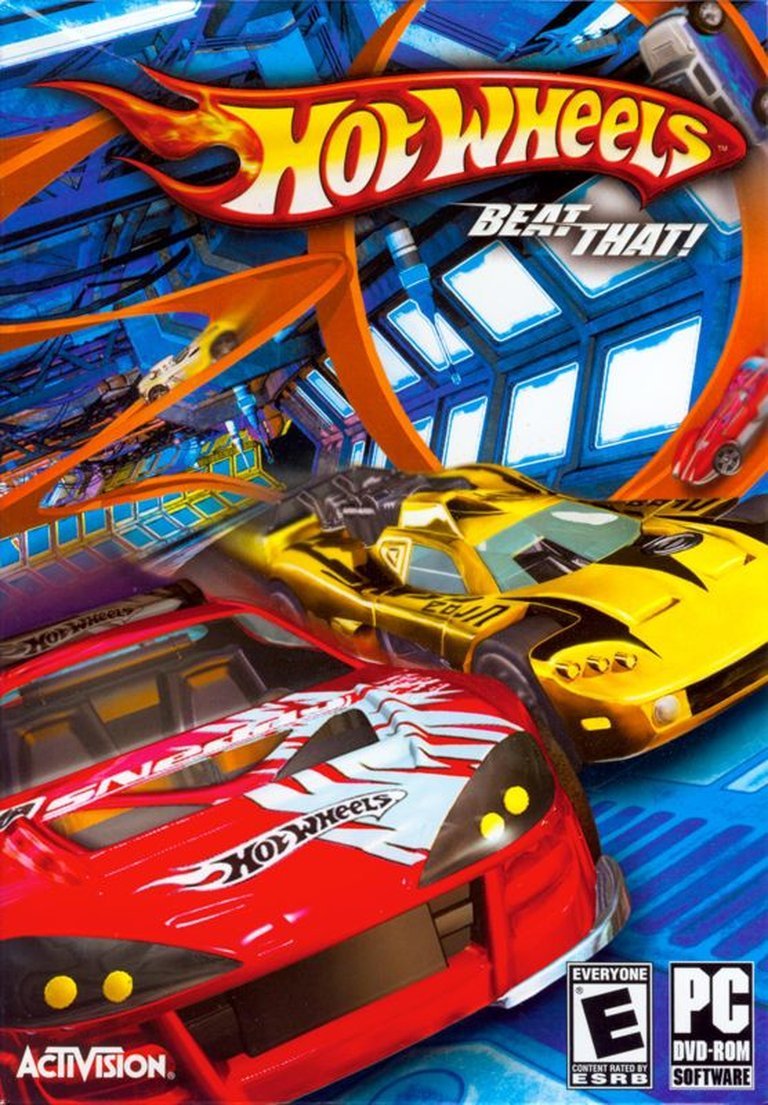
Hot Wheels: Beat That! is an arcade-style racing game where players control 30 authentic Hot Wheels cars across 12 diverse environments. The game features a mix of single-player and multiplayer modes, with players racing through scaled-up settings like bedrooms and backyards, performing stunts, and using power-ups to outmaneuver opponents. The gameplay includes standard races and elimination races where players can fire rockets to knock each other out.
Gameplay Videos
Hot Wheels: Beat That! Free Download
Hot Wheels: Beat That! Mods
Hot Wheels: Beat That! Guides & Walkthroughs
Hot Wheels: Beat That! Reviews & Reception
metacritic.com (70/100): It’s a fun title for the kids, and even older gamers may get a bit nostalgic value of their old Hot Wheels cars.
en.wikipedia.org (65/100): The DS, Wii and PlayStation 2 versions received mixed reviews, while the PC and Xbox 360 versions received “unfavorable” reviews.
ign.com (35/100): There’s really no charm in Hot Wheels: Beat That! other than the fact that this particular title serves as a perfect representation, unfortunately, of below-average videogames.
gamesreviews2010.com (80/100): Hot Wheels: Beat That! is a compact yet explosive racing and battle game that packs a punch.
gamepressure.com (58/100): It is not too complicated racing game in which we take control over one of thirty cars from the title Hot Wheels series.
Hot Wheels: Beat That! Cheats & Codes
PlayStation 2
During the vehicle selection screen, enter the code quickly using your controller.
| Code | Effect |
|---|---|
| Left, Square, Left, Square, L1, R1, R1, Square | Unlock Shadow Mk Lla |
| Left, Square, Left, R1, R1, Square | Unlock Cool New Car |
Xbox 360
At the car selection screen, enter the code.
| Code | Effect |
|---|---|
| Left, X, Left, X, LB, RB, RB | Unlock Shadow MkII |
Nintendo DS
Enter the code at the car select screen.
| Code | Effect |
|---|---|
| Hold Left Trigger + Up, Y, X, Down, X, Y, Up | Unlock Shadow MKII |
Hot Wheels: Beat That!: A High-Octane Toybox with Untapped Potential
Introduction
In the pantheon of licensed racing games, Hot Wheels: Beat That! (2007) occupies a curious space: a title bursting with childhood nostalgia but hamstrung by technical and design limitations. Developed by Eutechnyx and published by Activision, the game sought to translate the thrill of tiny die-cast cars racing through household environments into a chaotic arcade experience. While its charm resonated with younger audiences and die-hard Hot Wheels collectors, critics lambasted its repetitive structure and lack of polish. This review dissects its uneven legacy, from its imaginative premise to its flawed execution, ultimately positioning it as a fascinating misfire in the toy-to-game adaptation genre.
Development History & Context
Eutechnyx, known for Street Racing Syndicate and NASCAR titles, faced a unique challenge: adapting Mattel’s iconic Hot Wheels brand into a game that balanced arcade racing with vehicular combat. Released in 2007—a year dominated by Forza Motorsport 2 and Burnout Dominator—Beat That! aimed to capitalize on the rising popularity of “micro-scale” racing (e.g., Micro Machines) while leveraging Hot Wheels’ nostalgia factor.
The game’s multiplatform release (PS2, Xbox 360, Wii, PC, DS) spread development thin, resulting in inconsistent quality across versions. The DS iteration, handled by HumanSoft, featured unique car rosters but pared-down mechanics, while the Wii version’s motion controls failed to innovate. Technological constraints, such as the PS2’s aging hardware, led to compromised visuals and frame rates, particularly in hectic battles.
Narrative & Thematic Deep Dive
Beat That! eschews narrative for pure toybox mayhem. There’s no storyline—players simply race Hot Wheels cars through oversized domestic settings like bedrooms, mini-golf courses, and bowling alleys. This “toys come to life” concept taps into childhood fantasies but lacks depth. The absence of characters or context reduces the game to a series of disconnected events, leaving players to project their own imagination onto the action.
Themes of competition and destruction dominate. The titular “Beat That!” ethos encourages ruthless racing and sabotage, with power-ups like rockets and Tesla coils amplifying the chaos. While this aligns with Hot Wheels’ stunt-heavy identity, the lack of stakes or progression beyond unlocking cars (via “flame points”) makes the experience feel ephemeral.
Gameplay Mechanics & Systems
Core Racing & Combat
- Vehicle Handling: 30 licensed Hot Wheels cars are included, but differentiation is minimal beyond cosmetic changes. Cars handle like lightweight arcade machines, with stiff drifting and erratic collision physics. Getting stuck on environmental details (e.g., rug fibers) is a frequent frustration.
- Modes:
- Quick Race: Standard three-lap races across 12 tracks.
- Eliminator: Last-place racers are eliminated every 30 seconds.
- Rampage: Timed rocket-based destruction derby.
- Tournament: Four-race campaigns per zone.
- Power-Ups: Weapons like homing rockets, smoke screens, and shields add strategic depth, but their impact is diluted by uneven balancing. Supercharged variants, unlocked by filling a “Power Bar” via stunts, offer temporary advantages.
Progression & Customization
Unlocking cars requires placing in events and completing secondary objectives (e.g., “drift for 5 seconds”). However, the grind feels tedious, as tracks repeat across modes and difficulty levels. The DS version’s cheat code for the Shadow MkII car hints at hidden potential but underscores the lack of meaningful rewards.
Multiplayer
Local split-screen (up to four players) salvages some fun, particularly in “Stock Battle” and “Time Battle” modes. Yet the absence of online play and limited arena variety (four battle maps) curtails longevity.
World-Building, Art & Sound
Visual Design
The game’s toyetic aesthetic is its brightest spot. Tracks like Spooky Sprint (a mini-golf course with zombie decorations) and Bowling Ball Bash (lanes lined with pins) brim with creativity. Cars mirror their real-world counterparts, though damage modeling—bent frames and scratched paint—adds little to gameplay.
However, technical shortcomings plague certain platforms. The Xbox 360 version suffers from framerate drops during explosive moments, while PS2 textures appear blurry and lifeless.
Sound Design
A repetitive rock soundtrack grates over time, lacking the dynamic energy of rivals like TrackMania. Engine sounds are serviceable, but weapon effects (e.g., rocket explosions) lack punch.
Reception & Legacy
Critical Response
Beat That! earned a 50% average score from critics, with stark platform disparities:
– Wii/PS2: “Fun for kids” (Game Chronicles – 76%), praised for accessibility.
– Xbox 360/PC: “Uninspired and glitchy” (IGN – 3.5/10), criticized for poor controls and repetition.
Player reviews (3.9/5) were more forgiving, highlighting nostalgia and multiplayer fun.
Influence & Legacy
While not a commercial disaster, Beat That! faded into obscurity, overshadowed by later Hot Wheels titles like Velocity X and Unleashed. Its legacy lies in demonstrating the risks of licensing games without innovative design—a cautionary tale for toy-based adaptations.
Conclusion
Hot Wheels: Beat That! is a divisive relic. Its imaginative tracks and vehicular combat hold fleeting appeal for younger players and Hot Wheels enthusiasts, but repetitive gameplay, technical flaws, and a lack of depth prevent it from reaching greatness. For every moment of toybox whimsy, there’s a frustrating crash or bland race. In the annals of racing history, it’s a footnote—a charming but flawed tribute to childhood imagination, best remembered as a rental curiosity rather than a genre staple.
Final Verdict: A nostalgic novelty for die-hard fans, but easily beaten by superior arcade racers.