
- Release Year: 2011
- Platforms: Windows
- Publisher: Alawar Entertainment, Inc.
- Developer: Alawar Southpoint
- Genre: Action
- Perspective: 1st-person
- Game Mode: Single-player
- Gameplay: Time management
- Setting: Contemporary, North America
- Average Score: 75/100
Description
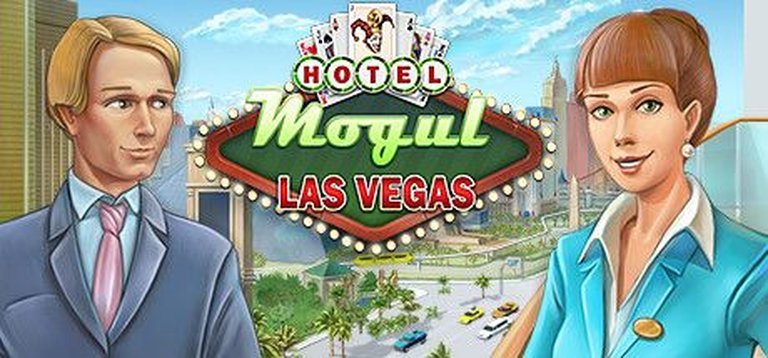
Hotel Mogul: Las Vegas is a real-time time management game set in the vibrant, contemporary city of Las Vegas, where players step into the shoes of a budding hotel tycoon aiming to build a lucrative empire. Using point-and-click interface, manage resources, construct lavish hotels, hire staff, and satisfy guests under tight deadlines to dominate the North American hospitality scene.
Gameplay Videos
Where to Buy Hotel Mogul: Las Vegas
PC
Hotel Mogul: Las Vegas Reviews & Reception
playingitlight.blogspot.com (80/100): Verdict ★★★★
Hotel Mogul: Las Vegas: Review
Introduction
Imagine the neon-drenched chaos of Las Vegas—the City of Lights, where fortunes are made and lost in the blink of an eye. Hotel Mogul: Las Vegas (2011) thrusts players into this glittering arena not as high-rolling gamblers, but as shrewd tycoons guiding the ambitious Lynette toward hotelier supremacy. As a sequel to the 2009 hit Hotel Mogul, this casual time management sim captures the essence of Sin City’s entrepreneurial frenzy, blending addictive resource juggling with the thrill of empire-building. Drawing from its modest roots in the booming downloadable casual games market, the title delivers bite-sized business strategy that punches above its weight. My thesis: While not a genre revolutionary, Hotel Mogul: Las Vegas exemplifies the polished efficiency of early 2010s casual gaming, offering timeless replayability for fans of tycoon sims in an era dominated by flashier blockbusters.
Development History & Context
Developed by Alawar Southpoint—a boutique studio under the Alawar Entertainment umbrella—and published by Alawar Entertainment, Inc., Hotel Mogul: Las Vegas launched on April 28, 2011, for Windows, with a Steam rerelease on May 25, 2011 (Steam App ID: 1061850). This small team of 17 credited creators, led by project managers Vladimir Bulanenko and Dmitriy Tsurikov, embodied the lean, agile ethos of Russia’s burgeoning casual game scene. Programmers like Alexey Zakharov, Dmitry Smirnov, and Pavel Yakovenko handled the real-time engine, while lead designer Alexey Bulanenko (also game designer Vladimir Bulanenko’s relation?) orchestrated the core loops. Designers such as Yuriy Nudga, Alexey Shugurov, Anna Fedorenko, Elena Gongalo, and Irina Gostischeva crafted the 39 levels across five Vegas-inspired settings, with art producer Maxim Mihaelis (veteran of 99 games) and content producer Eugene Sister ensuring visual pop. Konstantin S. Elgazin composed the music and sounds, a staple across 77 Alawar titles, and Yuri Martynov managed QA.
The game’s creation unfolded amid the casual gaming explosion of 2010-2011, fueled by portals like Big Fish Games, GameHouse, and GameFools. Technological constraints were minimal—requiring only a 1.5 GHz CPU, 512 MB RAM, and a 128 MB 3D card with DirectX 9—reflecting Flash-era optimization for broad accessibility on aging PCs. Alawar’s vision, rooted in the original Hotel Mogul‘s success, pivoted from generic hospitality to Vegas-specific glamour, capitalizing on the tycoon genre’s popularity post-RollerCoaster Tycoon and amid rising sims like Virtual Villagers. The 300 MB download model targeted impulse buys at $6.99, with free trials hooking players. This era’s landscape favored quick, addictive sessions over epic narratives, positioning Hotel Mogul: Las Vegas as a bridge between browser games and Steam’s emerging indie wave.
Narrative & Thematic Deep Dive
At its heart, Hotel Mogul: Las Vegas weaves a straightforward rags-to-riches tale centered on Lynette, a fresh graduate dispatched by her father to conquer Las Vegas’s cutthroat hotel market. Players serve as her “guiding hand,” transforming her from novice to mogul in a winner-takes-all saga of acquisition, construction, and competition. The plot unfolds across 39 levels in five thematic settings—from gritty outskirts to the neon Strip—each with goals like amassing income, erecting landmarks, or outbidding rivals. Dialogue is sparse but punchy, delivered via pop-up tutorials and objectives, emphasizing Lynette’s determination: “She’s not there for fun… it’s going to take hard work and perseverance.”
Thematically, the game romanticizes American capitalism through Vegas iconography—the “diamond in the desert” where low buys yield high sells, mirroring real estate booms and busts. Themes of opportunity, rivalry, and transformation dominate: Lynette outsmarts faceless competitors by snapping up properties, hiring workers, and upgrading to five-star splendor (hotels, casinos, restaurants). Subtle nods to excess emerge in decorative upgrades and animations of bustling crowds, critiquing (or celebrating?) the Strip’s superficial shine. Characters are archetypal—Lynette as the plucky protagonist, workers as interchangeable cogs, rivals as shadowy threats—prioritizing empowerment fantasy over depth. Yet, this simplicity amplifies replay value; failing a level due to mismanaged supplies evokes the high-stakes gamble of real Vegas ventures. In extreme detail, progression mirrors entrepreneurial stages: early levels teach land flips, mid-game demands supply chains, late ones test optimization amid escalating goals. No voice acting or branching paths exist, but the interactive tutorial masterfully integrates story beats, making narrative a seamless scaffold for mechanics.
Gameplay Mechanics & Systems
Hotel Mogul: Las Vegas distills time management into a hypnotic core loop: acquire land, build/upgrade structures, manage resources, and hit profit targets before time expires. Point-and-click interface (mouse-only, 1st-person perspective on action hubs) governs a real-time economy sans combat or RPG progression. Start by buying undervalued plots cheaply, then sell high or develop into 30+ buildings (hotels generate passive income, boosters like casinos amplify earnings). Workers (hireable via a shop with 25 upgrades) haul supplies from stores, but bottlenecks arise if materials lag—demanding frantic clicks to balance chains.
Key systems shine in depth:
– Resource Management: Money funds everything; supplies (wood, steel) deplete rapidly, forcing prioritization. Sell assets for quick cash, but risk stalling builds.
– Upgrades & Progression: 25 shop perks speed workers, cut costs, or add flair (e.g., neon signs boosting appeal). Levels escalate: early ones forgive errors, later demand perfection amid rival bids.
– UI Excellence: Clean, animated HUD tracks timers, profits, and goals. Autoplay options (noted in reviews) aid casual play, while interactive tutorials prevent overwhelm.
– Innovations/Flaws: Five settings vary visuals and goals, adding variety. No multiplayer or permadeath keeps it accessible, but repetition creeps in post-20 levels—mitigated by expert modes. No FOV tweaks or remapping (per PCGamingWiki), but low-req fluidity ensures smooth sessions.
Flaws include opaque rival AI (unpredictable land grabs) and no save-scumming beyond Steam Cloud, heightening tension. Overall, loops evoke Cake Mania meets Zoo Tycoon, with 3-5 hour campaigns rewarding efficiency.
World-Building, Art & Sound
Las Vegas pulses as a vibrant sandbox, evolving from dusty lots to skyscraping empires across five districts (e.g., Glitter Gulch). Atmosphere thrives on transformation: barren plots bloom into neon paradises, with animations of churning construction, happy guests, and slot-machine jackpots. Visual direction—colorful, cartoonish 2D/3D hybrids—pops on modest hardware, courtesy of Mihaelis’s production. Levels teem with detail: flashing signs, worker ants, rising profits visualized as coin cascades.
Sound design by Elgazin complements: upbeat jazz-funk tracks evoke casino floors, layered with satisfying clicks, builds, and chimes. No voiceover, but UI beeps and ambient Strip hums immerse without distracting. These elements synergize for escapism—upgrading a hotel to five-stars feels triumphant amid twinkling lights—elevating a casual sim to atmospheric delight. Multi-language support (9 on Steam) broadens appeal, though English interfaces dominate.
Reception & Legacy
Launch reception was quietly positive in casual circles: Big Fish, GameHouse, and GameFools touted it as a “jackpot of fun,” with a 2011 blog review awarding 4/5 stars for addictiveness and familiarity. MobyGames lists no critic scores, Steam holds 6-7 user reviews (71/100 on Steambase: 5 positive, 2 negative), praising challenge but noting brevity. Commercial success mirrored Alawar’s model—budget-friendly ($3.49 Steam sales)—selling via downloads amid 2011’s tycoon surge (Cities XL, SimCity Societies).
Legacy endures niche: sequel to Hotel Mogul (2009, iOS/Android ports), influencing Alawar’s catalog (Outta This Kingdom). Sparse Steam discussions (one 2022 thread) and no guides signal obscurity, yet it pioneered mobile-like accessibility pre-Steam Deck. No industry-shaking influence, but as a Wikidata/MobyGames artifact, it preserves 2010s casual DNA—fueling modern idles like AdVenture Capitalist. Collected by few (6 Moby users), its cheap permanence cements evergreen status.
Conclusion
Hotel Mogul: Las Vegas masterfully captures Vegas’s entrepreneurial allure in 39 brisk levels of shrewd building and resource wrangling, bolstered by charming visuals, tight UI, and Alawar’s craftsmanship. Though narrative-lite and mechanically familiar, its addictive loops and transformative progression transcend casual trappings. In video game history, it occupies a cozy niche: a testament to 2011’s downloadable golden age, ideal for tycoon aficionados seeking unpretentious fun. Verdict: 8/10—a sparkling gem for casual sim fans, eternally affordable on Steam. Play it, build your empire, and hit the jackpot.