
- Release Year: 2017
- Platforms: Windows
- Publisher: Palomino Studio
- Developer: Palomino Studio
- Genre: Action
- Perspective: Side view
- Game Mode: Single-player
- Gameplay: Arcade, Beat ’em up, Platform
- Setting: Fantasy
- Average Score: 83/100
Description
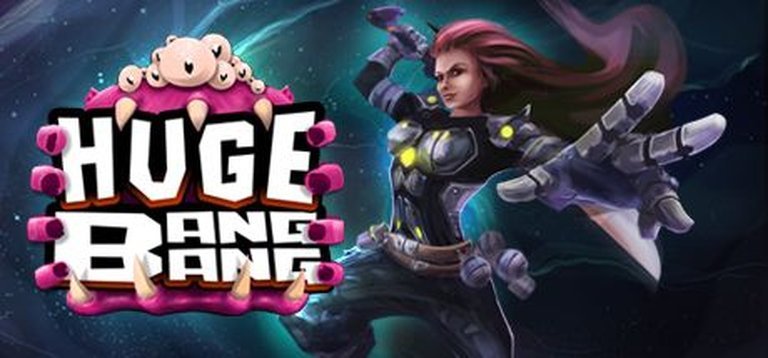
In the year 5616 Tchiss Era (XXI Century Earth time), the Adryssiens, a jelly-like alien species from planet Adryssis, discover humanity through an ancient space probe. Fascinated by human history and culture, they create ‘Huge Bang Bang,’ a televised gladiatorial combat show where Adryssiens control humanoid avatars in holographic arenas inspired by Earth’s landmarks and historical events. As an Adryssian gladiator, you enter this brutal yet entertaining spectacle, battling to become the ultimate champion in a society that has abandoned its peaceful ways for the thrill of violent competition.
Where to Buy Huge Bang Bang
PC
Huge Bang Bang Patches & Updates
Huge Bang Bang Guides & Walkthroughs
Huge Bang Bang Reviews & Reception
steambase.io (83/100): Huge Bang Bang has earned a Player Score of 83 / 100.
Huge Bang Bang: A Forgotten Gem or a Cautionary Tale of Early Access?
Introduction: The Rise and Fall of an Alien Gladiator Spectacle
In the vast, often unforgiving landscape of Early Access games, Huge Bang Bang (2017) stands as a curious artifact—a game that dared to blend the frenetic energy of a 2D platformer with the strategic depth of a MOBA, all wrapped in a bizarre, sci-fi premise. Developed by the small French studio Palomino Studio, this title envisioned a world where jelly-like aliens, the Adryssiens, become obsessed with human history and reenact its most violent moments as a bloodsport television show. Players take on the role of these slug-like beings, controlling customizable human avatars in 4v4 arena battles inspired by Earth’s past.
At its core, Huge Bang Bang was an ambitious experiment: a side-scrolling MOBA-platformer hybrid that sought to simplify the often intimidating complexities of games like League of Legends while retaining competitive depth. Yet, despite its intriguing premise and early promise, the game faded into obscurity, leaving behind a trail of unfulfilled potential. This review seeks to dissect Huge Bang Bang in its entirety—its development, its mechanics, its narrative quirks, and its ultimate legacy—as both a fascinating oddity and a cautionary tale about the perils of Early Access.
Development History & Context: The Birth of a Jelly MOBA
The Studio Behind the Slugs: Palomino Studio’s Vision
Palomino Studio, a relatively unknown indie developer based in France, set out to create something distinctly different with Huge Bang Bang. The studio’s previous work is sparse, but their ambition was clear: they wanted to merge multiple genres—platforming, MOBA strategy, RPG progression, and even a touch of sci-fi satire—into a cohesive, accessible package.
The game’s development began in earnest around 2016, with the team leveraging Unreal Engine 4 and PhysX to craft a visually distinctive 2D experience. The art style was a standout feature: soft, almost gelatinous character models for the Adryssiens contrasted with the more rigid, human-like avatars they controlled. This aesthetic choice wasn’t just for show—it reinforced the game’s central theme of alien fascination with human violence.
Crowdfunding and Early Access: A Rocky Launch
To fund development, Palomino Studio turned to Kickstarter in April 2017, following a successful Steam Greenlight campaign in March of the same year. The Kickstarter pitch emphasized the game’s unique blend of genres, promising:
– A side-scrolling MOBA with platforming mechanics.
– Deep customization for player avatars.
– Historically inspired arenas, from ancient battlefields to futuristic dystopias.
– Regular updates, including new maps, weapons, and game modes.
The studio framed Huge Bang Bang as a “surprising mix of platform, RPG, action, and MOBA”, positioning it as an entry point for players intimidated by traditional top-down MOBAs. However, despite the enthusiasm, the Kickstarter campaign did not gain significant traction, and the game entered Steam Early Access on October 3, 2017, in a somewhat unfinished state.
The Early Access Promise—and Its Collapse
Palomino Studio’s Early Access roadmap was optimistic:
– One year in Early Access, with a full release slated for late 2018.
– Additional content, including more weapons, skins, and game modes.
– Balancing updates to refine the competitive experience.
– A transition to a free-to-play model post-launch, with Early Access backers receiving exclusive rewards.
However, the reality was far less promising. The last major update was before Christmas 2017, mere months after launch. By 2018, player activity had dwindled, and the Steam forums were filled with concerns about the game’s future. One user, Friggin’ Taser, bluntly asked in March 2018: “Last update was before Christmas… Is this game dead in the water?”
The answer, it seemed, was yes. Despite the studio’s initial plans, Huge Bang Bang stagnated, leaving Early Access in a state of permanent limbo. The game’s Steam page still bears the ominous note: “The last update made by the developers was over 7 years ago.”
The Gaming Landscape in 2017: A Crowded MOBA Market
Huge Bang Bang entered a market dominated by titans:
– League of Legends and Dota 2 ruled the MOBA space.
– Smite offered a third-person alternative.
– Brawlhalla and Rocket League proved that competitive multiplayer games could thrive outside traditional MOBA structures.
Against this backdrop, Huge Bang Bang’s 2D side-scrolling MOBA concept was both innovative and risky. While games like Awesomenauts (2012) had explored similar territory, they had done so with more polished execution and stronger community support. Palomino Studio, lacking the resources or experience of larger developers, struggled to carve out a niche.
Narrative & Thematic Deep Dive: A Satirical Take on Violence as Entertainment
The Premise: Aliens Obsessed with Human History
Huge Bang Bang’s narrative is as bizarre as it is intriguing. The game is set in the year 5616 Tchiss Era (roughly the 21st century by Earth’s calendar), where the peaceful, slug-like Adryssiens discover a human space probe. Fascinated by the violent history of humanity, they dispatch a scout to Earth, who returns with photos, a computer, and a history book.
This discovery sparks a cultural obsession. The Adryssiens, who have lived in peace for millennia (violence being strictly forbidden), become enthralled by human warfare. A television network capitalizes on this fascination, creating Huge Bang Bang, a gladiatorial show where Adryssiens control human avatars in historically themed arenas.
Themes: Media, Violence, and the Spectacle of History
At its core, Huge Bang Bang is a satire of media consumption and the glorification of violence. The game’s premise mirrors real-world phenomena:
– Reality TV and competitive gaming (e.g., The Hunger Games, Battle Royale, esports).
– Historical reenactments as entertainment (e.g., Gladiator, Assassin’s Creed’s animus).
– The alienation of modern audiences, who consume violence as spectacle without consequence.
The Adryssiens, with their jelly-like bodies and pacifist society, serve as a darkly comedic foil to humanity. They are both the audience and the puppeteers, controlling human avatars in battles they themselves could never physically engage in. The game’s narrative framing—where players are both the alien controller and the human gladiator—creates a layered, if underdeveloped, commentary on detachment and voyeurism.
Characters and World-Building: A Missed Opportunity
Unfortunately, Huge Bang Bang’s narrative potential is largely squandered. The game’s Steam description and IndieDB page provide the bulk of the lore, but in-game storytelling is minimal. Players are given:
– An unnamed coach (a mysterious sponsor who provides a spaceship).
– A customizable human avatar (with no backstory or personality).
– Arenas inspired by Earth’s history (though these are more aesthetic than narrative-driven).
The lack of character development or in-game lore delivery means the satire feels undercooked. The Adryssiens’ society, their reaction to human history, and the ethical implications of their gladiatorial show are never explored in depth. What could have been a thought-provoking sci-fi narrative instead serves as little more than a quirky backdrop for the gameplay.
Dialogue and Tone: Lighthearted but Underutilized
The game’s tone is playfully absurd, leaning into the ridiculousness of its premise. The Adryssiens’ slug-like movements and their obsession with human violence are presented with a cartoonish, almost Monty Python-esque sensibility. However, with no voice acting and minimal in-game text, the humor and satire are largely lost.
The Steam Community forums reveal that some players found the premise charming but confusing. One user, JosanuaVir, noted:
“Fun looking game guys, you have my support! But I can’t even change the language to English…”
This highlights a broader issue: Huge Bang Bang’s narrative and thematic depth were overshadowed by technical and localization problems, leaving its most interesting ideas underexplored.
Gameplay Mechanics & Systems: A MOBA-Platformer Hybrid with Flaws
Core Gameplay Loop: MOBA Meets Platformer
Huge Bang Bang’s most defining feature is its genre-blending gameplay. At its heart, it is a 4v4 MOBA, but with several key twists:
1. Side-Scrolling Perspective: Unlike traditional top-down MOBAs, Huge Bang Bang plays like a 2D platformer, with players moving left and right across a scrolling arena.
2. Avatar Control: Players are Adryssiens controlling human avatars, adding a meta-layer to the combat.
3. Minion Management: Like in League of Legends, players must defend towers, push lanes, and defeat enemy minions to earn gold and experience.
4. Boss Mechanics: Each team has a boss at their base; deactivating the enemy boss wins the match.
This hybrid approach was both innovative and problematic.
Combat and Controls: A Clunky Experience
The side-scrolling combat is where Huge Bang Bang stumbles most. While the concept of a platformer MOBA is intriguing, the execution feels unpolished:
– Movement and attacks are stiff, lacking the fluidity of games like Awesomenauts.
– Hit detection is inconsistent, leading to frustrating moments in combat.
– The UI is poorly optimized, with some players reporting unable to reach buttons on certain screen resolutions.
One Steam user, Sir Seal The Slippery, lamented:
“The game is in French, even when you select English in the settings… This is kinda problematic when you want to create a character.”
This localization issue, combined with clunky controls, made the game difficult to recommend even to fans of niche MOBAs.
Progression and Customization: A Glimpse of Potential
Where Huge Bang Bang shines is in its character customization. Players can:
– Edit their avatar’s appearance (though options are limited in Early Access).
– Upgrade minions to gain strategic advantages.
– Purchase items and abilities using in-game gold.
The RPG-lite progression gives matches a sense of growth, rewarding players for strong performances. However, the lack of depth in the meta (due to the game’s unfinished state) means that strategy feels shallow compared to established MOBAs.
Multiplayer and Matchmaking: The Death Knell
The most damning issue plaguing Huge Bang Bang was its lack of a player base. MOBAs live or die by their communities, and Huge Bang Bang failed to cultivate one.
- Matchmaking was slow, with players often waiting minutes for a game (if they found one at all).
- The Steam forums are filled with posts like “Personne n’y joue…” (“No one is playing…”).
- No ranked mode or competitive scene ever materialized.
Without a dedicated player base, the game’s multiplayer-focused design became its greatest weakness.
World-Building, Art & Sound: A Visually Distinct but Underdeveloped Experience
Art Style: Soft 3D Models in a 2D World
Huge Bang Bang’s visual identity is its strongest asset. The game employs:
– Soft, gelatinous models for the Adryssiens, giving them a unique, almost tactile appearance.
– Detailed human avatars that contrast with the aliens’ squishy designs.
– Historically inspired arenas, from ancient coliseums to futuristic battlefields.
The Unreal Engine 4 rendering gives the game a polished, if somewhat stiff, look. The color palette is vibrant, with a sci-fi aesthetic that blends retro-futurism with alien weirdness.
Sound Design: A Missed Opportunity
The game’s audio design is largely forgettable. There is:
– No voice acting, which hurts the narrative immersion.
– Generic combat sounds (swords clashing, guns firing).
– A lack of memorable music, despite the game’s TV show premise begging for over-the-top commentary or thematic tracks.
Given that the game was crowdfunded partially for sound design, the underwhelming audio is a significant letdown.
Atmosphere: A TV Show Without an Audience
The game’s biggest missed opportunity is its failure to sell the “TV show” atmosphere. A game about alien gladiatorial combat should feel like a spectacle, with:
– Commentary from alien announcers.
– Crowd reactions from the Adryssien audience.
– Dynamic camera angles to emphasize the broadcast feel.
Instead, matches play out in silence, with no sense of stakes or excitement. The satirical potential of the premise is wasted, making the world feel hollow.
Reception & Legacy: The Slow Fade into Obscurity
Critical Reception: Nonexistent
Huge Bang Bang received virtually no critical coverage. Metacritic has no listed reviews, and MobyGames has no critic scores. The game fell through the cracks, overshadowed by bigger releases in 2017 (PlayerUnknown’s Battlegrounds, Destiny 2, The Legend of Zelda: Breath of the Wild).
Player Reception: Mixed but Mostly Negative
On Steam, the game has:
– 4 user reviews (as of 2024), with a mixed but leaning negative sentiment.
– Complaints about localization, controls, and lack of players.
– A few defenders who appreciated its unique premise.
Steambase gives it a Player Score of 83/100, but this is based on a tiny sample size (23 reviews). The lack of activity speaks volumes—most players who bought the game never engaged with it long-term.
Legacy: A Cautionary Tale of Early Access
Huge Bang Bang serves as a textbook example of Early Access pitfalls:
1. Overpromising and Underdelivering: The studio’s roadmap was too ambitious for their resources.
2. Failure to Build a Community: Without a dedicated player base, a multiplayer game cannot survive.
3. Technical and Localization Issues: Basic QA problems (unreachable UI elements, language barriers) doomed the game at launch.
4. Abandonment: The lack of post-launch support ensured the game faded into obscurity.
While Huge Bang Bang is not a terrible game, it is a flawed one, and its development missteps make it a case study in how not to handle Early Access.
Conclusion: A Fascinating Experiment That Never Found Its Footing
Huge Bang Bang is a game of contradictions:
– Innovative in concept, but clunky in execution.
– Visually distinctive, but narratively shallow.
– Ambitious in scope, but abandoned in development.
Its greatest strength—the bizarre, satirical premise of aliens reenacting human history as a TV show—is also its greatest missed opportunity. Had Palomino Studio focused on refining the gameplay, expanding the lore, and fostering a community, Huge Bang Bang could have been a cult classic.
Instead, it remains a footnote in gaming history—a curious experiment that failed to evolve.
Final Verdict: 5/10 – A Flawed but Fascinating Relic
For:
– Unique premise with satirical potential.
– Visually distinctive art style.
– Innovative genre-blending (MOBA + platformer).
Against:
– Clunky controls and hit detection.
– No player base, making multiplayer unplayable.
– Abandoned in Early Access with no post-launch support.
– Underdeveloped narrative and world-building.
Who Should Play It?
– MOBA historians curious about failed experiments.
– Indie game enthusiasts who appreciate weird, ambitious concepts.
– Patients willing to mod/fix the game’s issues (though no modding scene exists).
Who Should Avoid It?
– Competitive MOBA players—this is not a viable alternative to League or Dota.
– Casual gamers—the clunky controls and lack of content make it frustrating.
– Anyone expecting a finished product—this is Early Access in the worst sense.
Final Thoughts: What Could Have Been
Huge Bang Bang is not a bad game, but it is an incomplete one. It stands as a reminder of the risks of Early Access—where ambition without execution leads to abandonment. Had Palomino Studio secured more funding, refined the gameplay, and built a community, this could have been something special.
Instead, it remains a fascinating “what if?”—a game that dared to be different, but failed to follow through.
For now, Huge Bang Bang is a relic—a jelly-like alien fossil in the vast graveyard of Early Access dreams.