
- Release Year: 2006
- Platforms: Windows
- Publisher: Tivola Publishing GmbH
- Developer: Spirit Projektgesellschaft mbH & Co. KG
- Genre: Strategy, Tactics
- Perspective: 3rd-person (Other)
- Game Mode: Single-player
- Gameplay: Arcade, Puzzle
- Setting: Fantasy
- Average Score: 41/100
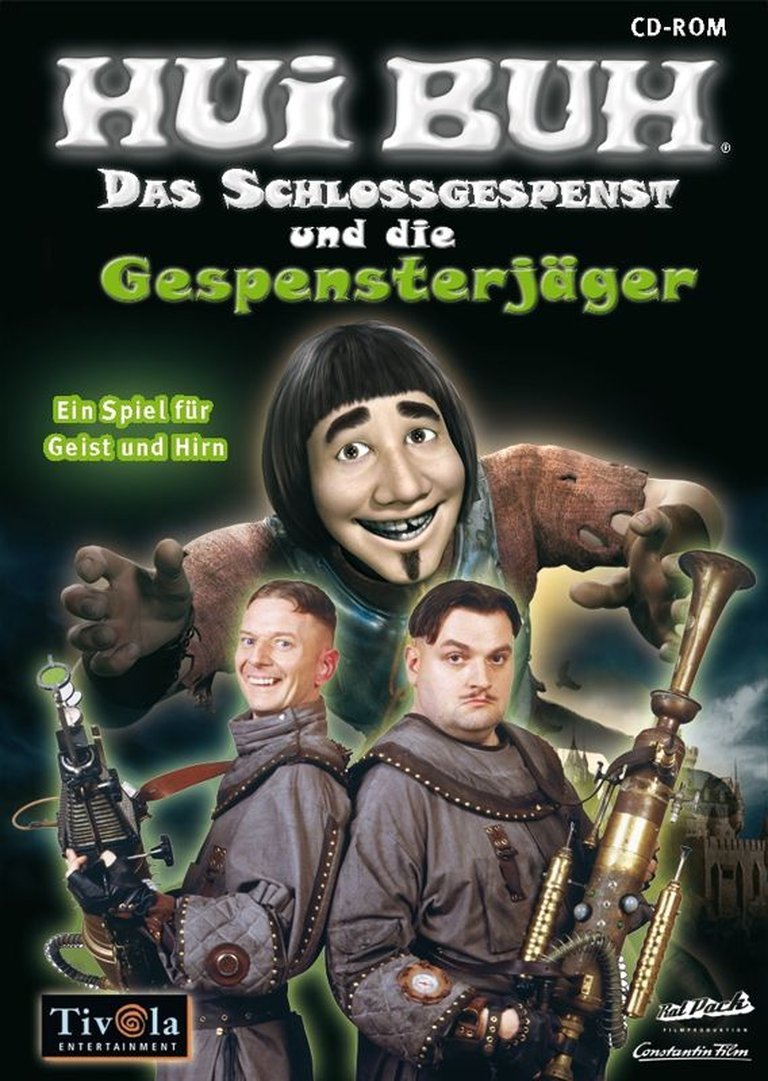
Description
Hui Buh: Das Schlossgespenst und die Geisterjäger is a real-time isometric puzzle game based on the German movie, where players help the ghost Hui Buh flee from two pursuing ghost hunters intent on cooking him, by quickly building paths with limited pipe-like segments across castle levels to guide him to the exit while collecting items for points amid positive bonuses like diamonds and penalties like spiced mazes.
Hui Buh: Das Schlossgespenst und die Geisterjäger: Review
Introduction
In the shadowed corridors of early 2000s licensed gaming, where Hollywood blockbusters and regional media darlings spawned quick-cash tie-ins, few titles evoke the peculiar charm of obscurity quite like Hui Buh: Das Schlossgespenst und die Geisterjäger. Released in 2006 as a digital companion to a blockbuster German family film based on a beloved radio play series, this isometric puzzle game casts players as frantic path-builders guiding the titular mischievous ghost through perilous chases. Born from a franchise spanning decades of audio adventures—where Hans Clarin’s iconic voice brought the bumbling specter to life—Hui Buh arrived amid a wave of kid-friendly edutainment, but its simplistic Pipe Mania-inspired mechanics and barebones execution mark it as a relic of tie-in mediocrity. This review argues that while it captures fleeting whimsy for its youngest audience, Hui Buh ultimately exemplifies the pitfalls of rushed licensed games: brevity over depth, nostalgia bait without substance, cementing its place as a footnote in German pop culture rather than gaming history.
Development History & Context
Developed by the obscure Spirit Projektgesellschaft mbH & Co. KG—a small German studio with scant portfolio beyond this title—and published by Tivola Publishing GmbH, Hui Buh: Das Schlossgespenst und die Geisterjäger emerged in July 2006, mere days before the film’s theatrical debut on July 20. Tivola specialized in accessible, child-oriented PC software, often blending education with light entertainment; titles like Fred und das Flaschenfahrrad and Luka und das geheimnisvolle Silberpferd reflect their focus on narrative-driven puzzles for the under-10 crowd. Spirit, likely a contract developer, crafted a low-budget affair tailored for Windows XP-era machines, emphasizing mouse-only controls and download distribution—prescient in an era when Steam was nascent and casual gaming portals proliferated.
The 2006 gaming landscape was bifurcated: AAA spectacles like The Elder Scrolls IV: Oblivion dominated, while the mid-tier teemed with movie merch—think Cars racers or Over the Hedge platformers. Hui Buh rode the wave of the film’s hype; the movie, directed by Sebastian Niemann with a €10 million budget, grossed €10.4 million domestically and drew over two million viewers, ranking fifth among German films that year. Voiced by comedy star Michael “Bully” Herbig (as Hui Buh) alongside Christoph Maria Herbst, it adapted Eberhard Alexander-Burgh’s radio plays, where the ghost originated in 1978. Technological constraints were minimal—2D isometric visuals sidestepped 3D demands—but the era’s Flash-like casual boom (e.g., PopCap’s Bejeweled) influenced its real-time puzzle core. Creators envisioned a quick, family-friendly escape game, loosely nodding to the franchise’s “Geisterjäger” (ghost hunter) audio episode #9, where Hui Buh dodges villagers lured by bakery scents. Yet, with no patches, specs, or promo images archived on MobyGames, it screams rushed production: a 22MB download now relegated to abandonware sites like MyAbandonware.
Narrative & Thematic Deep Dive
Stripped to its ectoplasmic essence, Hui Buh‘s story diverges sharply from the source film, prioritizing arcade brevity over cinematic depth. The movie chronicles Ritter Balduin’s 1399 transformation into Hui Buh via a self-inflicted curse during a rigged card game, his 500-year haunt of Schloss Burgeck, and ensuing chaos when König Julius (Herbst) arrives for his betrothal—culminating in license loss, a ghostly exam, and a conspiracy involving the villainous Adolar/Daalor (Nick Brimble) and Gräfin Leonora (Heike Makatsch). Themes of redemption, bureaucratic afterlife absurdity, and family bonds shine through slapstick, with Hans Clarin’s final role as the Kastellan adding poignant legacy.
The game, however, boils this down to a skeletal premise: Hui Buh must “flee from two ghost hunters who want to cook him,” echoing the franchise’s recurring hunter chases (e.g., the 1977 audio drama Hui Buh und die Geisterjäger, featuring narrator Hans Paetsch, Clarin as Hui Buh, and pursuers like the Nachtwächter). No castle intrigue, no royal wedding—just relentless pursuit across 16 levels of castle grounds and village environs. Characters are archetypal: the goofy, green-tinted Hui Buh (with Herbig’s custom voice samples for quips like “Bully”-esque exclamations), dim-witted hunters (dicker and dünner, mirroring film cameos by Christoph Hagen Dittmann and Michael Kessler), and incidental Kastellan/König figures as set dressing. Dialogue is sparse, limited to timed audio cues—Herbig’s contributions a highlight, infusing chaotic energy amid the pursuit.
Thematically, it explores mischief triumphant: Hui Buh’s path-laying embodies clever evasion over brute force, collecting diamonds for bonuses or dodging “spiced mazes” for penalties symbolizes risk-reward in ghostly pranks. Underlying motifs of gluttony (hunters “cooking” him, bakery lures from audio lore) and impermanence nod to the franchise’s childlike horror-comedy blend—gruesome yet silly, FSK 0-rated. Yet, the disconnect from the film’s emotional arc (license redemption, Julius-Konstanzia romance) renders it narratively adrift, a promotional sketch rather than deep dive. Levels escalate from simple dashes to score-gated escapes, thematizing progression from novice spook to master haunter, but without cutscenes or branching paths, it’s themeless filler.
Gameplay Mechanics & Systems
At its core, Hui Buh is a real-time Pipe Mania (aka Pipe Dream) clone dressed in spectral garb, demanding players connect start-to-exit paths using limited tile sets before a timer triggers Hui Buh’s auto-run. Mouse-drag places pieces—straights, bends, splits—in an isometric grid cluttered with collectibles: diamonds boost scores, hazards deduct. Failure? Hui Buh hits a dead end, captured by hunters; success unlocks the next of 16 levels, later mandating point thresholds amid escalating complexity (more tiles, tighter timers).
The loop is addictive in bursts: a 30-second build phase builds tension, Hui Buh’s dash delivers payoff (or hilarious ragdoll fails), scores tally for stars. No combat, progression, or multiplayer—just arcade purity, single-player mouse-only. UI is minimalist: top timer/score bar, bottom tile inventory, isometric view with zoom absent. Flaws abound—clunky rotation (click-to-spin), no undo, path previews missing—exacerbating frustration in score-heavy stages. Innovation? Collectible routing adds strategy (reroute for gems?), but it’s derivative; “Spuk ‘n’ Runs” mode per PC Games hints at endless variants, unverified. At under two hours total (PC Games clocked it), replayability hinges on high-score chases, yet no leaderboards or extras kill longevity. For kids, it’s intuitive; adults find it rote after 15 minutes (PC Action’s verdict).
World-Building, Art & Sound
Schloss Burgeck and Dorf Burgeck form a quaint, comic-book microcosm: isometric 2D vistas of turrets, graveyards, bakeries, and fog-shrouded paths evoke Neuschwanstein whimsy from the film, blending medieval kitsch with supernatural flair. Atmosphere leans playful horror—twinkling gems, steaming pots—contributing cozy tension, hunters’ silhouettes looming like Looney Tunes foes. Visual direction? “PC-Steinzeit” (PC Action): blocky sprites, flat shading, aliasing galore; 2006 tech screamed Flash-demo, not polished isometric like Frozen Bubble. No dynamic lighting or animations beyond Hui Buh’s wobbly glide.
Sound design amplifies charm: Herbig’s bespoke samples (“custom-recorded for the game,” per reviews) deliver Hui Buh’s manic laughs and taunts, syncing with path runs for slapstick glee. Ambient creaks, chases’ footsteps, and bubbly SFX build urgency; BGM loops jaunty harpsichord tunes, evoking radio-play whimsy. Yet, repetition grates—same cues recycle—and absence of full voice acting (no Clarin, Paetsch) mutes franchise soul. Collectively, these craft a kid-safe haunt: visuals invite tinkering, audio hooks nostalgia, but dated polish undermines immersion.
Reception & Legacy
Launch reception was tepid: MobyGames aggregates 41% from two German critics—PC Games (49/100, Aug 2006) praised Herbig’s voices but lamented two-hour brevity (“only young ghost hunters amused”); PC Action (33/100) eviscerated “stone-age graphics” and Tetris-weariness (“fun for 15 minutes”). No user reviews, one Moby collector; commercial flops inferred from abandonware status. Movie’s success (IMDb 4.9/10, €15.7M global) overshadowed it—franchise endures via 2022 sequel Hui Buh und das Hexenschloss, theater adaptations (Naturtheater Heidenheim, 2023), Tonie audio.
Influence? Negligible—epitomizes disposable kids’ tie-ins, akin to Wickie or Bernd das Brot games. No sequels, clones, or citations; preserved via MobyGames (added 2009 by Patrick Bregger). Reputation evolved to cult curiosity: German nostalgia for Hui Buh (Clarin’s 20+ year voice legacy) sustains it on abandonware, but globally unknown. In licensed history, it underscores pitfalls—prioritize film sales over game merit—foreshadowing mobile cash-grabs.
Conclusion
Hui Buh: Das Schlossgespenst und die Geisterjäger endures as a spectral snapshot: a charming, fleeting puzzle romp capturing franchise mischief, buoyed by Herbig’s voice and Pipe Mania familiarity, yet hamstrung by brevity, dated tech, and narrative thinness. For German kids of 2006 or radio-play diehards, it’s lighthearted escapism; broader gamers find a 15-30 minute novelty before repetition sours. In video game history, it claims no throne—merely a haunted footnote amid edutainment ephemera—but preserves a cultural ghost, whispering of better-executed dreams. Verdict: 3/10—play for curiosity, not classics; essential for franchise completists, abandonware fodder otherwise.