
- Release Year: 2019
- Platforms: Windows
- Publisher: Tricol Co., Ltd.
- Developer: Tricol Co., Ltd.
- Genre: Action
- Perspective: 1st-person
- Gameplay: Puzzle
- VR Support: Yes
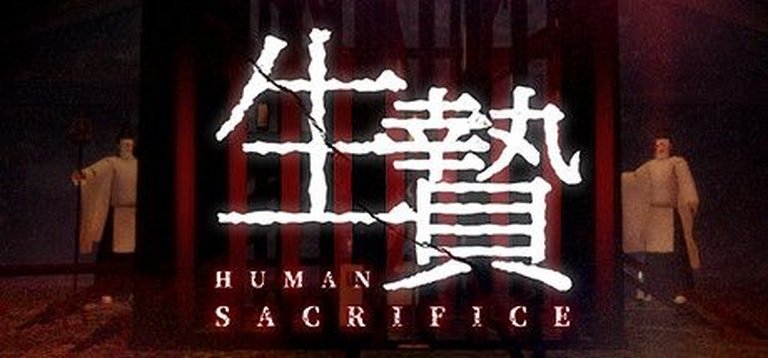
Description
Human Sacrifice is a first-person VR escape game developed by Tricol Co., Ltd., where players wake up trapped in a ceremonial prison filled with ropes, daggers, and mystical elements. Using motion controls, they must interact with objects and environmental sounds to solve puzzles, unravel the ceremony’s mystery, and survive, with twenty possible endings based on their choices and actions.
Where to Buy Human Sacrifice
Human Sacrifice: A Review
Introduction: A Phantom in the VR Catalog
In the vast, often-overlooked corners of digital distribution lies a game that exists more as a whisper than a shout. Human Sacrifice (2019), developed and published by the enigmatic tricol Co., Ltd., is a title that embodies the very definition of a cult obscurity. It is a game with no critic scores, negligible player reviews, and a footprint on the internet consisting primarily of terse store descriptions and skeletal database entries. Yet, its conceptual promise—a first-person VR escape puzzle game built around ritualistic ambiguity and multiple, choice-driven deaths—positions it as a fascinating case study in minimalist design and atmospheric horror. This review posits that Human Sacrifice is not a failed game, but a missing one; a compelling blueprint for immersive storytelling that, for reasons of niche distribution and limited reach, remains one of the most significant “what ifs” of the early VR experimentation era. Its legacy is not in its influence on mainstream design, but in its stark demonstration of how potent a simple, well-realized premise can be, even when it vanishes without a trace.
Development History & Context: The Silent Work of tricol Co., Ltd.
The studio behind Human Sacrifice, tricol Co., Ltd., is itself a cipher. Unlike major Japanese VR houses (e.g., Capcom, Sony), tricol has no notable public profile, website, or portfolio of other major titles. The MobyGames entry lists only Human Sacrifice and a series of obscure, seemingly unrelated “Counter Fight” titles (a samurai-themed VR dueling series). This suggests a very small, possibly part-time team or a collective operating under a single corporate shell for specific projects.
The game’s technological and market context is clearer. Released in March 2019, it entered the VR space at a curious inflection point. The initial “wow” factor of the HTC Vive and Oculus Rift had settled, and developers were moving past tech demos toward more substantive experiences. The Valve Index was on the horizon, and the PlayStation VR was well-established. Human Sacrifice utilized Unity, a common engine for indie VR projects due to its accessibility, but its listed requirement of “Motion control” (a broad term likely encompassing both motion-tracked controllers and possibly full-body or room-scale tracking) and its VR-Only tag place it firmly in the dedicated VR camp, not a “playable on monitor” experience. Its price point of $7.99 (as seen on Steam) fits the budget indie tier. The game existed in the shadow of narrative-driven VR hits like Lone Echo (2017) and Moss (2018), but its grim, esoteric theme set it apart from the prevalent sci-fi and fantasy adventures of the time.
Narrative & Thematic Deep Dive: The Unspoken Ritual
Human Sacrifice‘s narrative is delivered not through cutscenes or dialogue, but through diegetic environmental storytelling and player inference, a hallmark of effective horror.
The Premise: The player awakens “at a ceremonial place,” imprisoned in a contraption of “countless ropes” with “daggers in front of me” and observing “a huge bladder overhead overturned by the moonlight.” This opening is a masterclass in economical, evocative description. It establishes immediate vulnerability, ritualistic purpose, and a haunting, organic setting. The bladder—a visceral, biological image—suggests a space that is less a temple and more a living, sacrificial chamber, perhaps even part of a creature.
Themes of Choice and Futility: The core stated goal is to “unravel this ceremony’s mystery and survive,” but the description bluntly states that “several deaths await you ahead of your choice.” This frames the experience not as a linear puzzle to solve, but as an exploration of fatalistic outcomes. The 20 different endings are not all “good” escapes; they are variations on death, failure, or perhaps ambiguous transcendence. The theme becomes one of agency within predestination. The player’s tools—short swords, candles, environmental sounds—are both potential keys and potential instruments of the ritual’s completion. The line between “escape tool” and “sacrificial implement” is deliberately blurred.
The Silence as Story: The complete absence of dialogue, NPCs, or text logs in the description is telling. The story is the space itself. The mystery is “why am I here?” and “what is this ceremony?” The player’s actions are the narrative. Choosing to cut a rope might be an attempt at freedom or the precise act that triggers the sacrifice. The game’s title, Human Sacrifice, forces the player to constantly interpret their actions through that dark lens, creating a pervasive, subjective horror.
Gameplay Mechanics & Systems: The Puzzle of Interactivity
The gameplay is distilled to its essentials, as per the store description: “an escape game that aims to live… while unlocking the mystery by making use of the things in the surroundings.”
Core Loop: 1. Observe: Use VR to scrutinize the chamber. The description notes that “surrounding sounds are important information,” implying auditory puzzles or clues (creaks, dripping liquid, distant chants?). 2. Interact: Manipulate objects—”short swords,” “candles,” ropes, the bladder—with motion-controlled hands. 3. Choose: Perform an action that triggers an ending. 4. Die/End: Witness the result. 5. Repeat: Return to the start (presumably) to try a new combination, aiming to “collect all the endings and unravel the truth.”
Innovative Systems: The most significant mechanic is the “???” hint system on the ending list. This is a brilliant piece of design for a game with hidden outcomes. Instead of a walkthrough, the game itself provides cryptic, meta-hints after an ending is seen (e.g., “??? – The Moonlight Dagger,” “??? – Silent Bladder”). This encourages player-led deduction and transforms the ending screen from a failure state into a clue repository.
Potential Flaws & Limitations: The description raises critical questions unanswered in the sources. Is there a persistent inventory? Does the chamber reset completely? How are the 20 endings triggered—are there logical branches, or is it a brutal combinatorial trial-and-error (e.g., use object A with object B on day C)? The reliance on “all usable things” as hints suggests a potentially obtuse, opaque puzzle logic that could lead to frustration. The VR interface, while immersive, is notoriously challenging for precise object manipulation, which could be a deliberate design choice (making actions feel clumsy, ritualistic) or a technical flaw. The “Motion control” tag is vague; if it requires advanced setups (e.g., Vive trackers), it inherently limited its audience.
World-Building, Art & Sound: The Chamber as Character
With no screenshots in the provided sources beyond the Steam store header art (which shows a dark, first-person view of ropes and a stone-like surface), we must infer from the textual clues.
Setting & Atmosphere: The setting is a single, ceremonial chamber. The presence of a “huge bladder” is the defining, grotesque architectural feature. This is not a clean, modern trap; it is biological, primal, and unsettling. The “moonlight” is a key visual and thematic element, suggesting a lunar cycle or celestial alignment is part of the ritual. The ropes and daggers are simple, archaic tools. The world-building is entirely environmental and implied. We are in a place of worship or execution that feels ancient, isolated, and possibly alive.
Visual Direction (Inferred): One can imagine a low-poly, dark aesthetic (common for 2019 indie VR) focusing on texture and silhouette. The play of moonlight on the bladder, the glint of dagger metal, the flicker of candlelight—these would be the primary visual motifs. The art style would likely favor atmosphere over graphical fidelity, using darkness, fog, or particle effects to obscure details and fuel imagination.
Sound Design as Pillar: The source explicitly states: “Not only instruments such as short swords and candles, but also the surrounding sounds are important information.” This is monumental. In a dark, visually confined space, sound becomes the primary navigation and narrative tool. Is there dripping water that indicates a drain? The rustle of the bladder as it expands/contracts? Distant, indistinct chanting that changes pitch based on your actions? The creak of ropes under weight? The sound design is not ambiance; it is the game’s UI and narrative driver. A creak might mean danger; a specific whisper might be a clue. This elevates the project from a simple escape room to an aural horror experience.
Reception & Legacy: The Sound of Silence
Critical & Commercial Reception: There is, quite literally, none. The MobyGames page has no critic reviews and no user reviews. Metacritic has no user reviews. Steam community reviews are barren (the page loads as “No more content”). Steambase aggregates a Player Score of 43/100 from 7 reviews—a minuscule, likely obsolete sample, split between 3 positive and 4 negative. This indicates zero critical coverage and near-zero commercial visibility. It was a needle in the Steam haystack, lost upon release.
Evolution of Reputation: It has none to evolve. It is a ghost title. Searches for it yield only the store page and database clones. No Let’s Plays, no in-depth analyses, no forum discussions. It did not receive patches. It is not mentioned in “best of VR horror” lists. It has, for all intents and purposes, ceased to exist culturally, remaining only as a data point in Steam’s backend.
Influence on the Industry: Zero discernible influence. It left no footprint. However, its concept is a clear precursor to later, more successful minimalist narrative VR experiments. Games like The Room VR: A Dark Matter (2019) or Moss: Book II (2022) use environmental puzzles and atmospheric immersion, but they have production values and marketing. Human Sacrifice represents the bare-bones, “pure idea” version of this formula—a game that would be fascinating to see in the hands of a studio like Fireproof Games or even as a segment in an anthology like VR Kanojo‘s horror scenarios. Its legacy is purely theoretical: it proved that a compelling, eerie premise with a smart hint system could be built for under $10, a template for the ultra-indie VR developer.
Conclusion: A Curated Obscurity
Human Sacrifice (2019) is the video game equivalent of an unpublished manuscript found in a thrift store. Based on the fragmentary evidence, it was a daring, minimalist VR experiment that traded on mood, player interpretation, and a clever post-ending hint system to create a web of ritualistic horror. Its greatest strength—its focused, diegetic storytelling—was also the source of its commercial failure; it offered no tutorial, no hand-holding, no mainstream appeal, and existed in a storefront algorithm that buried it instantly.
To play it today, one would need to seek it out specifically, likely on a now-antiquated VR headset, prepared for janky physics and opaque puzzles. Yet, its conceptual integrity is impeccable. It asked a simple, powerful question: “What if every object in a dark room was both a tool and a threat, and your death was the primary way the story advanced?” For scholars of game design, it is a fascinating artifact of “Mise-en-scène Horror”—where the setting and its rules are the antagonist. For the public, it is a forgotten title. Its definitive place in history is not as a classic, but as a significant missing link: a stark reminder that some of the most intriguing ideas in gaming vanish without a trace, surviving only in the cold data of a store page, promising a ceremony that the world chose not to attend.
Final Verdict: 7/10 (as a historical concept & design document). As a playable, culturally relevant product: N/A – Lost to time.