
- Release Year: 2014
- Platforms: Linux, Macintosh, Windows
- Publisher: Humble Bundle, Inc.
- Genre: Compilation
Description
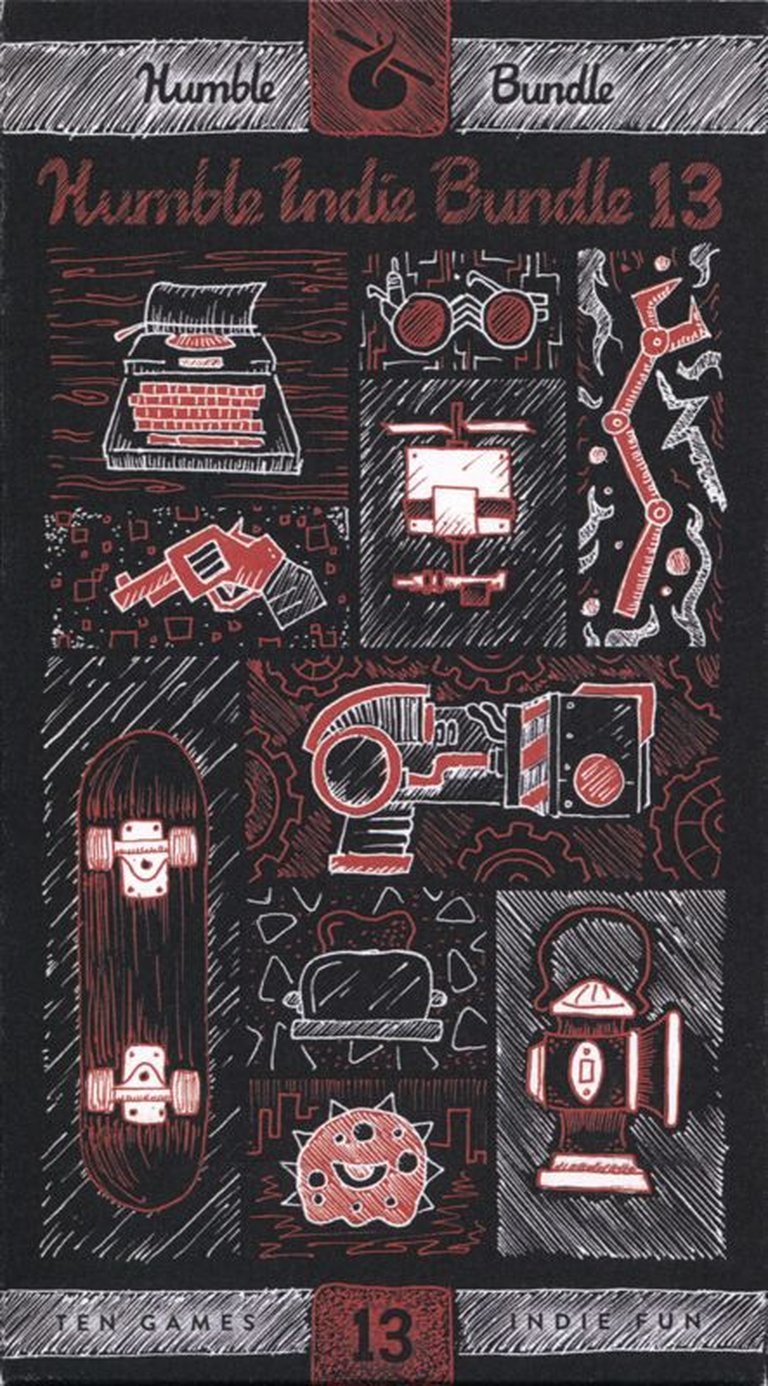
Humble Indie Bundle 13 was a limited-time, Halloween-themed compilation released in October 2014, featuring a pay-what-you-want model for a collection of over 10 indie games like OlliOlli, Amnesia: A Machine for Pigs, and Shadowrun Returns. Purchasers could split their payment between developers and charities (EFF and Child’s Play), received DRM-free downloads and Steam keys for payments over $1, and a special ‘Box O’ Treats’ physical collector’s edition was offered for $65.
Gameplay Videos
Humble Indie Bundle 13: A Landmark in Curated Indie Gaming and Charitable Commerce
Introduction: The Indie Zeitgeist in a Bundle
In the autumn of 2014, the digital shelves of PC gaming were already bursting with a staggering array of independent titles. Yet, the release of Humble Indie Bundle 13 on October 28th served not merely as another collection of games, but as a potent cultural artifact—a meticulously curated snapshot of the indie landscape at a pivotal moment. Operating under the playful, Halloween-tinged banner of the “Humble InDIE Bundle,” this 13th iteration of the iconic pay-what-you-want series transcended its function as a simple sale. It was a statementpiece, a charity drive, a technological milestone for cross-platform play, and a masterclass in value-driven curation. This review argues that Humble Indie Bundle 13 represents a zenith in the Humble Bundle model’s evolution: a period where the service had fully matured its tiered, incentive-laden structure, leveraged its influence to directly fund platform ports (surpassing 100 Linux games), and assembled a collection that, despite thematic incongruities, captured the creative diversity and quality that defined the early-mid 2010s indie renaissance.
Development History & Context: The Maturation of a Model
The Humble Bundle Ecosystem
By 2014, the Humble Bundle was no longer a novelty but an institution. Founded in 2010, the “pay-what-you-want” (PWYW) model with split-payment charity options had been refined over 12 preceding bundles. Bundle 13 existed within a well-established ecosystem:
* Tiered Progression: The classic structure was in full effect: a base set (OlliOlli, Insanely Twisted Shadow Planet, Tower of Guns) for any price; a “beat the average” tier (hovering around $6-$7) adding 4+ games (Amnesia: A Machine for Pigs, Jazzpunk, Risk of Rain x4); a $12+ tier for Shadowrun Returns; and a premium $65 “Box O’ Treats” physical collectible tier.
* Dynamic Additions: Following established practice, new games (Eldritch, The Novelist, Tales from Space: Mutant Blobs Attack!!!) were added mid-bundle on November 4th, 2014, exclusively for those who had paid above the average or new customers meeting that threshold. This “evergreen” tactic maintained momentum and rewarded early, generous supporters.
* Platform Integration: The bundle strongly enforced its cross-platform, DRM-free ethos. Crucially, the Linux and Mac versions of Insanely Twisted Shadow Planet, Risk of Rain, and Tower of Guns were originally developed for this bundle. As DualShockers reported, this pushed the total number of games Humble had helped port to Linux past the 100-game milestone. Humble had effectively hired a full-time in-house porter to facilitate this, demonstrating a tangible, industry-shaping commitment to platform parity beyond mere inclusion.
The Gaming Landscape of Late 2014
The bundle arrived at a fascinating juncture:
1. Indie Maturity: The “indie boom” was no longer about surprise hits but about established studios and genres. The included games reflected this: Shadowrun Returns (a successful Kickstarter revival of a classic IP), Risk of Rain (a polished roguelike), OlliOlli (a refined skateboarding game born from a 2D prototype).
2. Genre Diversity: The collection was strangely eclectic—a skate sim, a Metroidvania, a first-person shooter with procedurally generated levels, a tactical RPG, a narrative-driven walking sim, a psychedelic comedy adventure, and a surreal horror experience. There was no cohesive genre theme, despite the Halloween/13th branding. This underscored Humble’s role as a curator of “excellent indie” rather than a thematic sampler.
3. Business Models: Many games were still transitioning from early access or had recent console releases (OlliOlli on PS Vita/PS4, Risk of Rain on 3DS). The bundle served as a powerful PC visibility and revenue boost for these titles.
Narrative & Thematic Deep Dive: Ten Stories in a Box
As a compilation, “Humble Indie Bundle 13” possesses no singular narrative. Its thematic weight is distributed across its disparate components, reflecting the broader indie design philosophy of the era: personal vision, mechanical innovation, and often, minimalist storytelling.
- Atmospheric Dread & Psychological Horror: The most direct nod to the bundle’s “InDIE” Halloween theme came from Amnesia: A Machine for Pigs (The Chinese Room/Frictional Games), a masterclass in oppressive, industrial horror where narrative is碎片化, delivered through audio logs and environmental decay. Its companion, Eldritch (Minor Key Games), translated Lovecraftian cosmic horror into a tight, procedurally generated first-person roguelike, emphasizing exploration and sanity mechanics over combat.
- Narrative as Environment: The Novelist (Kentucky Route Zero team) presented a ghost story where the “monster” is familial tension and artistic compromise. Players eavesdrop on a haunted family’s summer, with choices affecting their relationships. It represented the peak of “walking simulator” emotional storytelling.
- Cyberpunk & Surreal Satire: Jazzpunk (Luis Cervantes/Necrophone Games) was an anarchic, joke-dense episodic adventure set in a retro-futuristic world. Its narrative was a series of absurdist vignettes, prioritizing comedic timing and visual gags over plot.
- Legacy & Revival: Shadowrun Returns (Harebrained Schemes) was a deep, tactical RPG that successfully resurrected a beloved 90s franchise. Its narrative, drawn from classic Shadowrun lore, was dense with corporate intrigue, magic, and cyberpunk noir, delivered through rich dialogue and turn-based combat.
- Minimalist Mythos: Risk of Rain (Hopoo Games) and Tower of Guns (Terrible Posture Games) offered almost no narrative exposition. Risk of Rain used item descriptions and environmental hints to build a mythos around a dying planet and ancient gods. Tower of Guns was pure, exuberant gameplay with a wry, self-aware tone—”story? You’re a wizard in a tower of guns.”
- Alien & Abstract: Tales from Space: Mutant Blobs Attack!!! (DrinkBox Studios) and Insanely Twisted Shadow Planet (Shadow Planet Productions/Utsuro) leaned into wordless, alien perspectives—a blob consuming everything, a hexagonal insectoid creature exploring a dark, bioluminescent planet. Their themes were exploration, consumption, and survival, communicated purely through gameplay and art.
- Pure Expression: OlliOlli (Roll7) had no story. Its narrative was the perfect execution of a trick, the flow of a line, the player’s personal triumph over gravity and concrete. It was the antithesis of narrative-driven design, a pure mechanical game.
Thematic Cohesion? There is none, deliberately. The bundle’s strength was in presenting the vast spectrum of indie expression—from deep, text-heavy RPGs to story-less sports games—unified only by a spirit of creative independence and, often, a willingness to experiment with form over AAA-scale polish.
Gameplay Mechanics & Systems: A Pantheon of Innovation
The bundle is a museum of key indie mechanics from the early 2010s.
- Procedural Generation & Permadeath: Risk of Rain became a benchmark for 2D action roguelikes. Its core loop—jump, shoot, collect, survive—was deepened by a universal difficulty timer that increased with every second, creating relentless tension. Item synergy was its genius, allowing for absurdly powerful build combinations. Eldritch applied similar principles to a first-person grid-based dungeon crawler, with sanity mechanics adding a resource management layer.
- Physics-Based Mastery: OlliOlli reduced skateboarding to a perfect 2D timing and momentum puzzle. Its “Raldo” system, rewarding clean lines over Tricks, created a sublime “one more try” loop. Insanely Twisted Shadow Planet used a unique hex-based movement and a radial equipment wheel for a tactical, Metroidvania-inspired shooter.
- Tactical Depth & Planning: Shadowrun Returns offered complex, turn-based tactical combat on a grid, with character builds (street samurai, mage, decker) that fundamentally altered engagement strategies. Its editor also fostered a massive community of custom campaigns.
- Pure Cathartic Action: Tower of Guns was a distilled FPS: run, jump, shoot, die, try again with a new gun. Its hundred-plus quirky weapons (the “Piano” that shoots notes, the “Rainbow Blaster”) and procedurally generated levels made each run a fresh, chaotic experiment.
- Exploration & Discovery: Jazzpunk and The Novelist prioritized interaction and observation over traditional challenge. Jazzpunk’s humour was found in clicking everything; The Novelist’s weight was in the quiet act of listening and choosing.
- Flaws & Limitations: The bundle’s main mechanical “flaw” was its own lack of cohesion. A player seeking pure action might be frustrated by the slow burn of Shadowrun Returns or the static nature of The Novelist. Some games, like Tales from Space: Mutant Blobs Attack!!!, were simpler, almost arcade-y experiences that felt dated compared to the polish of OlliOlli or the depth of Risk of Rain.
Innovation Summary: The bundle did not innovate as a single product, but it served as a definitive showcase for the era’s indie mechanical trends: roguelike permadeath, physics-driven precision, tactical turn-based systems, and interactive narrative experimentation. It highlighted how constraints (2D, low poly, small teams) bred creative solutions.
World-Building, Art & Sound: A Concert of Distinct Visions
The visual and auditory experience of Bundle 13 is one of stark, delightful contrasts.
- Insanely Twisted Shadow Planet: A landmark in 2D art. Its bioluminous, hand-drawn alien world, seen from a top-down perspective, was a masterclass in dark, atmospheric, and cohesive sci-fi. The soundtrack by ian Lyness and the visuals by the small, dedicated team created a sense of lonely, eerie majesty.
- OlliOlli: A perfect marriage of form and function. Its stark, geometric skateparks in a minimalist colour palette emphasized the clean lines of the player’s trajectory and tricks. The chiptune-inspired soundtrack by 8 Bit Weapon & ComputeHer was an infectious, driving force.
- Risk of Rain: A homage to 8-bit and 16-bit aesthetics, but with modern fluidity. Its pixel art was detailed, its enemy designs monstrously creative, and its colour palette shifted dramatically between biomes. The dynamic soundtrack by Chris Christodoulou was a genre-blending masterpiece that escalated with the in-game timer, becoming a core part of the tension.
- Jazzpunk: A unique, collage-based visual style. The world felt like a living, breathing anti-joke—a surreal mix of 50s futurism, Cold War paranoia, and internet-age absurdity. The sound design was equally eccentric, full of record scratches, cartoon sound effects, and a jazzy, noir-ish score.
- Shadowrun Returns: Used a detailed, isometric, painted style to bring 2070s Seattle to life. The art was dense with cyberpunk and fantasy elements coexisting, from neon-drenched streets to magical spirits. The sound was moody and ambient, punctuated by the iconic “Matrix-style” data-stream audio for hacking.
- The Novelist & Amnesia: A Machine for Pigs: Both leaned into environmental storytelling. The Novelist’s summer coastal house was warm, lived-in, and slowly revealed its secrets. A Machine for Pigs’ industrial hellscape was claustrophobic, metallic, and dripping with grimy realism, its soundscape a symphony of clanging, pneumatic hisses, and distant screams.
Contribution to Experience: The bundle’s artistic range was its strength. It didn’t present a single world but ten, each with a wholly unique aesthetic identity. This prevented fatigue and allowed players to jump from the vibrant comedy of Jazzpunk to the oppressive horror of A Machine for Pigs without dissonance. The soundtracks, often bundled as part of the purchase, were frequently of standalone quality, with Risk of Rain‘s and Insanely Twisted Shadow Planet‘s being particularly revered.
Reception & Legacy: A Quietly Monumental Success
- Critical & Commercial Reception: The bundle itself was not “reviewed” in the traditional sense by major outlets, as it was a storefront event, not a single product. However, the included games received individual coverage. Polygon, for instance, had recent reviews for Eldritch, Jazzpunk, OlliOlli, Risk of Rain, Shadowrun Returns, and The Novelist at the time of the bundle’s launch. Sales figures were not publicly broken down per bundle, but the Humble Bundle model consistently generated millions. The $65 Box O’ Treats, assembled by Fangamer, was a notable premium offering that catered to the collector market.
- The Linux Milestone: The most significant legacy point, emphasized by multiple sources (OMG Ubuntu, DualShockers), was the 100th game ported to Linux via Humble Bundle. This was not an accident. The Humble team actively worked with developers, sometimes providing porter resources, to ensure Linux (and Mac) versions were ready for the bundle’s launch. This had a direct, measurable impact on the viability of Linux as a gaming platform, encouraging more developers to consider ports.
- Industry Influence:
- Proof of Concept for Curated Indie Value: Bundle 13 demonstrated that a diverse, high-quality set of indies could attract a high average payment ($7.26+ as noted by Polygon) when presented with clear tiers and bonuses.
- Charity Integration as Standard: The seamless split-payment system between developers, charities (EFF, Child’s Play), and Humble was by now a perfected model that other storefronts and bundles have since emulated.
- Physical Premium Tier: The $65 “Box O’ Treats” prefigured later Humble “Collector’s Editions” and the broader industry trend of offering physical goods for digital bundles.
- Platform Holder Responsibility: Humble’s active role in funding ports positioned it as more than a seller; it was a platform advocate, a role later taken up more formally by initiatives like Steam’s Proton and the Epic Games Store’s嫉恨 towards macOS/Linux parity.
- Evolving Reputation: In the history of Humble Bundles, Bundle 13 is remembered fondly as a “classic” late-2014 bundle. Its games are frequently cited in “best indie bundle” lists for their consistent quality and variety. The Halloween theme was largely ignored by the games themselves, but the “InDIE” pun was clever. Its legacy is cemented by the Linux milestone and the strength of its mid-tier games (Risk of Rain, OlliOlli, Jazzpunk), which went on to become cult classics.
Conclusion: The Bundle as Historical Document
Humble Indie Bundle 13 is not a game to be assessed for its narrative coherence or mechanical unity. To judge it as such would be a profound misunderstanding of its purpose and achievement. Instead, this review treats it as a historical document and a curatorial event of exceptional importance.
It arrived at the peak of the Humble Bundle’s creative and charitable influence, offering a smorgasbord of indie design philosophy that was remarkably representative of its time. It included nascent classics (Risk of Rain), polished gems (OlliOlli), ambitious narrative experiments (The Novelist), and revivals of legacy properties (Shadowrun Returns). More critically, it used its platform power to directly address a major industry gap—native Linux support—surpassing 100 ports and materially changing the landscape for open-source gaming.
Its “flaws”—the thematic whiplash, the varying quality and complexity of its games—are actually features of its identity. It was a bundle for the curious, the charitable, and the platform agnostic. It did not dictate taste; it celebrated plurality. In doing so, Humble Indie Bundle 13 stands as a testament to the power of curated aggregation in the digital age. It was less a product and more a service to the gaming community: a gateway, a fundraiser, and a record of indie creativity at a moment when the movement was confidently, and diversely, coming into its own. Its place in history is secure, not for a single game, but for its role in building bridges—between developers and players, between genres, and most tangibly, between the world of PC gaming and the open platform of Linux.