
- Release Year: 2020
- Platforms: Windows
- Genre: Action
- Perspective: 1st-person
- Game Mode: Single-player
- Gameplay: Survival horror
- Setting: Horror, Survival
- Average Score: 47/100
Description
Released in 2020 for Windows, Hunted is a first-person survival horror game that immerses players in a dark and hostile environment where survival is paramount. Assuming the role of a hunted individual, players must navigate through atmospheric settings, confront terrifying creatures, and overcome intense challenges using direct controls. The game emphasizes resource management, tension-building gameplay, and the constant threat of lurking dangers, creating a harrowing experience focused on endurance and survival against overwhelming odds.
Where to Buy Hunted
PC
Hunted Free Download
Hunted Patches & Updates
Hunted Reviews & Reception
imdb.com (47/100): A bit average
Hunted: Review
Introduction
In the shadowed annals of video game history, certain titles transcend mere entertainment to become visceral experiences that burrow into the player’s psyche. Hunted, developed by David Long and released on September 4, 2020, is one such title. A survival horror gem that flew under the mainstream radar, it thrusts players into an abyss of claustrophobic terror where survival hinges not on sight, but sound. This review dissects Hunted‘s harrowing journey—from its deceptively simple premise to its masterful execution—arguing that it stands as a testament to minimalist design and psychological dread. While overshadowed by AAA blockbusters, Hunted carves a unique niche as a masterclass in tension, proving that true horror lies not in what is seen, but in the anticipation of what lurks unseen. Through its relentless atmosphere, punishing mechanics, and innovative audio design, Hunted emerges not just as a game, but as an unforgettable descent into primal fear.
Development History & Context
Hunted emerged from the vision of solo developer David Long, a project born from a passion for minimalist horror. Released on Windows as a digital download, it arrived in an era saturated with action-oriented survival games like Resident Evil 7 and The Evil Within 2. Yet Hunted deliberately bucked trends, eschewing complex narratives and sprawling worlds in favor of a singular, suffocating experience. The game’s development was a labor of love, with Long focusing on refining its core mechanic: sound-based navigation. Drawing inspiration from classic survival horror and “less is more” philosophy, Hunted was crafted to be a concentrated dose of terror. Its release in September 2020—a month crowded with high-profile titles—meant it was largely overlooked by mainstream critics and audiences. However, its Steam debut at just $0.99 signaled a commitment to accessibility, inviting players into its darkness without financial barrier. This context is crucial: Hunted was never intended to compete with AAA productions but to deliver a pure, unadulterated horror experience for a niche audience of connoisseurs.
Narrative & Thematic Deep Dive
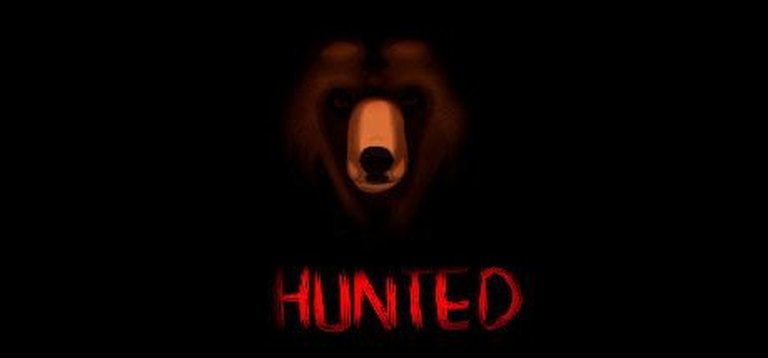
Hunted dispenses with traditional exposition, thrusting players into a scenario stripped to its terrifying essence: you are lost in a pitch-black cave, hunted by a relentless cave bear. There are no cutscenes, no character backstories, and no dialogue. The narrative is conveyed entirely through environmental storytelling and psychological implication. The cave itself becomes a character—a labyrinthine tomb of stalactites and unseen chasms, its darkness a metaphor for ignorance and vulnerability. The bear is not merely a monster; it is nature’s apex predator, an embodiment of primal fear. Its footsteps, growls, and the occasional rustle of fur are the only narrative threads, weaving a tale of survival against overwhelming odds. Thematically, Hunted explores humanity’s fragility. The lantern’s limited oil—a finite resource—symbolizes hope’s fleeting nature, while the shotgun represents both salvation and hubris. The game’s power lies in its ambiguity: Who are you? How did you end up here? The answers are irrelevant, replaced by the raw, instinctual drive to survive. This deliberate vagueness transforms Hunted from a game into a primal ritual, where every sound is a threat and every decision carries irreversible consequence.
Gameplay Mechanics & Systems
Hunted’s genius lies in its brutal simplicity, where every mechanic is designed to heighten tension. The player is equipped with only three tools: a lantern, a shotgun, and their ears. The lantern’s oil supply depletes rapidly, forcing players to venture into darkness to refill it—a calculated risk that could lead to a grisly encounter. The shotgun, while a potential escape, has limited ammo and a deafening roar that alerts the bear to your position. This creates a vicious cycle: light attracts the hunter, but darkness conceals it. The core gameplay loop revolves on a knife’s edge: use the lantern to navigate, listen intently for the bear’s approach, and decide whether to flee, hide, or fight. The game’s “One Bullet Clips” mechanic is unforgiving—miss with the shotgun, and you’re left defenseless. Permadeath is absolute; a single mistake means starting over, amplifying the stakes. The minimal UI reinforces the immersion—no health bars, no objectives, just the player’s wits and the oppressive void. This design philosophy is Hunted’s greatest strength, transforming routine actions into acts of courage. The jump-scare warning is not a gimmick but a contract: Hunted is not for the faint of heart, and its mechanics ensure every moment is fraught with dread.
World-Building, Art & Sound
Hunted’s world is a masterclass in atmospheric design. The cave is a labyrinthine hellscape, rendered in stark, oppressive darkness that feels both infinite and confining. Stalactites loom like teeth, and unseen voids promise oblivion. The art direction prioritizes subtlety—flickering lantern light casts eerie shadows, and distant rockfalls hint at the cave’s instability. This minimalism is intentional; it forces players to imagine the horrors beyond sight, making the bear’s presence more terrifying than any visual model could achieve. Sound design, however, is the game’s crown jewel. Footsteps echo with deafening clarity, growls reverberate through the cavern, and the bear’s breathing becomes a metronome of impending doom. The audio is meticulously crafted to disorient and terrify, using spatial audio to make every sound feel dangerously close. Even the player’s actions—oil canisters clinking, the lantern’s hiss—betray their position, turning survival into a symphony of risk. The absence of a soundtrack amplifies the tension, leaving only the player’s racing pulse and the bear’s relentless pursuit. This audio-visual synergy creates an unparalleled sense of presence, where the player’s imagination becomes the most terrifying special effect.
Reception & Legacy
Despite its innovative design, Hunted received scant critical attention at launch. Metacritic lists no critic scores, and OpenCritic records no aggregated reviews—a stark testament to its obscurity. Player reviews on IMDb and Steam are polarized, with some praising its “pure horror” and others dismissing it as “too repetitive.” Common criticisms include its punishing difficulty and lack of narrative depth, while fans laud its “blood-pumping” tension and “masterful” sound design. The game’s legacy lies in its niche influence. It has become a cult favorite among survival horror purists, often compared to Outlast and Amnesia: The Dark Descent for its reliance on psychological dread. Its $0.99 price point and DRM-free availability on platforms like GOG have preserved its accessibility years after release. Though it never achieved mainstream success, Hunted endures as a bold experiment in minimalist design—a reminder that horror thrives not in spectacle, but in the spaces between sounds. Its legacy is not in awards or sales, but in the visceral memories it etches into those brave enough to enter its darkness.
Conclusion
Hunted is a paradox: a game defined by absence, yet overwhelmingly present in its terror. By stripping away visuals and narrative, David Long crafted an experience that speaks directly to the player’s primal instincts. Its mechanics are unforgiving, its atmosphere suffocating, and its sound design a masterpiece of psychological manipulation. While it may lack the polish of AAA titles, Hunted compensates with raw, unfiltered horror that lingers long after the game ends. It is a testament to the power of restraint, proving that true fear does not require monsters or jump-scares—only the relentless, unseen threat of what might be lurking in the dark. For those seeking a pure, uncut horror experience, Hunted is not just recommended; it is essential. Verdict: A harrowing, minimalist masterpiece that redefines survival horror through its absence of light.