
- Release Year: 2015
- Platforms: Linux, Macintosh, Windows
- Publisher: Hunter Gatherer Games
- Developer: Hunter Gatherer Games
- Genre: Action
- Perspective: Top-down
- Setting: Fantasy
- Average Score: 60/100
Description
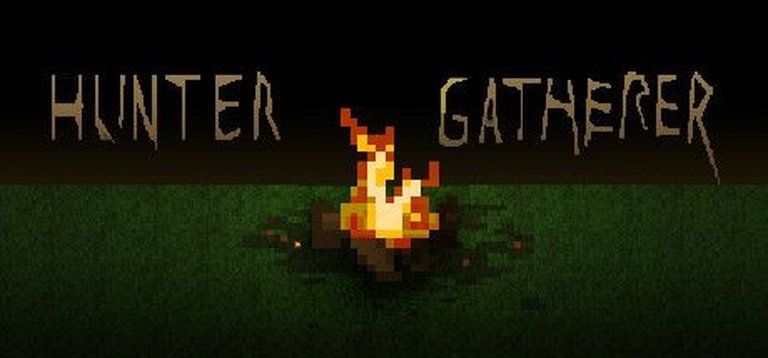
Hunter Gatherer is a top-down fantasy survival adventure where players, lost in the woods, are aided by a forest spirit who tasks them with gathering rare ingredients for his cooking. To earn directions home, players must explore a randomly generated world, hunt monsters, collect resources, set traps, and manage survival needs like food and fire amidst dangerous wilderness challenges.
Where to Buy Hunter Gatherer
PC
Hunter Gatherer Reviews & Reception
metacritic.com (60/100): What Hunter Gatherer is missing, really, is content. There’s not an awful lot to do, but it can take a while to get the hang of accomplishing it.
twinfinite.net : Hunter Gatherer is a simple yet addicting quick-play survival game.
Hunter Gatherer: A Review
Introduction: The Ghost in the Machine
In the sprawling digital archives of gaming history, some titles blaze across the sky like supernovas—Super Mario 64, The Witcher 3, Minecraft—while others flicker and die in the deep field, known only to a handful of archivists and collectors. Hunter Gatherer, released in March 2015 for Windows by the eponymous, now-apparently-defunct studio Hunter Gatherer Games, belongs decisively to the latter category. It is a game that exists more as a data point—a single entry in a database with a Steam store page, a MobyGames profile with two collectors—than as a lived cultural experience. My thesis is this: Hunter Gatherer is not a “lost classic” or a “hidden gem.” It is a fascinating case study in digital obscurity, a minimalist design experiment that arrived at a moment of indie saturation and vanished without a trace, leaving behind only the faintest imprint on the fabric of the medium. This review will not “unearth” a masterpiece; it will dissect the quiet, compelling archaeology of a game that history almost forgot.
Development History & Context: The Studio That Wasn’t
The study of Hunter Gatherer begins and almost ends with a void. The developer, Hunter Gatherer Games, leaves no digital footprint beyond this one title. There is no archived website (the “Official Site” link on MobyGames is dead), no knowndeveloper blogs, no press releases, no interviews. The studio name itself is a generic descriptor, evoking the most fundamental human activity, suggesting perhaps a design philosophy centered on primal mechanics, yet offering no concrete connection to the game’s actual content.
The game’s context is therefore defined by its release window: early 2015. This was a pivotal, crowded time for indie titles. The golden age of Steam’s gated curation had ended in 2012, leading to an avalanche of games. The “Walking Simulator” and “Roguelite” genres were crystallizing, and survival-crafting hybrids were becoming enormously popular following the success of Don’t Starve (2013) and The Long Dark (2014). Against this backdrop, Hunter Gatherer’s positioning is intriguingly vague. It is tagged as Action, with a Top-down perspective, Fantasy setting, and Survival narrative. This hybrid identity—mixing top-down action (like a simplified Diablo or Enter the Gungeon) with the systemic pressures of survival—was not uncommon, but the game made no notable waves. Its price point of $1.99 on Steam places it squarely in the “impulse buy” tier, a strategy that often leads to high volumes of low-engagement sales and rapid obscurity.
Technologically, with no credits or technical data beyond the platforms (Windows, Linux, Macintosh), we must assume it was built in a common indie engine of the time—likely Unity or GameMaker Studio—prioritizing function over graphical fidelity. The total lack of patches or updates noted on MobyGames suggests a finished, static product released into the wild and left to its own devices. The “Collected By 2 players” statistic on MobyGames is a stark, almost poetic indicator of its niche status. This is not a cult hit; it is a whisper.
Narrative & Thematic Deep Dive: A Story in a Steam Paragraph
The entire narrative of Hunter Gatherer is contained within its official Steam store ad copy: “Hunter Gatherer is a top down adventure in which you are found, lost in the woods, by a forest spirit. He has a passion for cooking and will point you in the direction of your home town if you help him find some ingredients. Some though, are hard to find, and you must travel long distances, find food, avoid and combat dangerous monsters, set traps, and gather materials to make a fire, before it gets dark.”
From this, we can extrapolate a minimalist plot structure: The Call to Adventure (lost in woods), The Mentor (forest spirit), The Quest (gather ingredients for spirit’s meal), The Reward (directions home). It’s a classic monomyth skeleton, stripped bare. Thematically, the game appears to explore reciprocity with nature (you gather for the spirit, it guides you), the primacy of survival needs (food, fire, shelter from darkness), and the anthropological concept of gift exchange—a transaction not of currency, but of sustenance and knowledge.
The genius, or perhaps the profound limitation, is the complete absence of traditional narrative scaffolding. There are no named characters beyond the amorphous “forest spirit.” There is no dialogue, no lore books, no environmental storytelling in the conventional sense. The story is the gameplay loop. The theme is the system. This aligns with a certain strand of “process narrative” found in games like The Oregon Trail (1971) or The Long Dark, where the story emerges from player action and systemic consequence, not authored text. However, where The Long Dark uses sparse audio logs, Hunter Gatherer offers nothing but a premise. It’s a narrative hypothesis waiting for a player to generate a personal story within its confines. The “home town” is never described; the spirit’s motivation is a “passion for cooking.” The emotional and mythological weight is entirely projected by the player onto these empty vessels. This could be seen as a bold, poetic emptiness, or as a critical failure of imagination and world-building. Without the game itself to analyze, we are left debating the intent of a sentence.
Gameplay Mechanics & Systems: Loops of Foraging and Fear
The Steam description provides a clear, if brief, inventory of systems. The core loop is a survival-driven foraging quest:
- Objective: Gather specific, hard-to-find ingredients for a forest spirit.
- Exploration: Travel long distances through a completely random world every time you play. This procedural generation is the game’s stated centerpiece, promising vast replayability through unique landscapes.
- Resource Management:
- Food: You must find food to survive. This is both a direct need and potential ingredient.
- Fire: You must gather materials to make a fire before it gets dark. This introduces a critical time-pressure mechanic. Day/night cycles are not merely atmospheric; failure to kindle a fire likely results in game-over (from cold, predators, or the spirit’s wrath? The description is silent).
- Traps: “Set traps” implies a non-combat, tactical approach to acquiring food or possibly defense. This suggests a resource-conversion system (materials -> trap -> caught animal).
- Conflict: “Avoid and combat dangerous monsters.” This indicates two layers of threat. Avoidance suggests stealth or evasion mechanics, possibly with stamina or noise systems. Combat implies direct confrontation, likely simple top-down brawling or projectile-based, given the perspective. The monsters “congregate in many different forms,” hinting at ecological or faction-based grouping.
- Progression: The only clear progression is ingredient collection. There is no mention of skill trees, permanent upgrades, or crafting beyond basic fire/traps. Progression is linear and quest-bound: find X, deliver to spirit, get next location.
The innovation lies in the intertwining of the time-pressure (fire at night) with the spatial pressure of a vast, random world and the need for specific ingredients. It creates a trinity of stress: time, space, and resource specificity. A player might find all but one rare herb in a vast forest, only to see night fall and be forced to retreat to a known fire-making spot, delaying the quest.
However, the description also reveals potential flaws. “Fighting” monsters while managing hunger and a fire timer could lead to frantic, potentially frustrating gameplay if not perfectly tuned. The lack of any mention of a personal inventory limit or carrying capacity is a conspicuous omission that would be crucial for survival gameplay. The “home town” goal is distant and abstract, potentially undermining long-term motivation if the journey is punishing and the reward is just more location directions. The game’s systems, as described, are elegant in their sparse concept but would require exquisite balancing—procedural generation that places key ingredients within reachable distance before nightfall, combat that is dangerous but not overwhelming, a fire system that is crucial but not punitive—to succeed. With no gameplay videos, no reviews, and no player accounts, we cannot judge if this balance was achieved or if the game collapsed under the weight of its own ambitious minimalism.
World-Building, Art & Sound: The Unseen Forest
Here, the historical record is a blank slate. No screenshots, no video footage, no sound samples are preserved in the provided sources. MobyGames has no “Screenshots” section populated for this title. Therefore, any description of its aesthetic is pure conjecture, informed only by genre conventions of 2015 indie top-down survival games.
The setting is a “fantasy” woods. This could range from a slightly whimsical, Studio Ghibli-inspired forest to a grim, dark fantasy wood full of lurking horrors. The “forest spirit” is the only named entity, suggesting a world with a touch of the mythical, possibly influenced by European folklore or Shinto kami. The procedural generation would theoretically create dense thickets, clearings, rivers, and ruins, all rendered in a top-down view.
Visual Direction: Given the 2015 indie context and low price point, the art style was likely 2D pixel art or simple 2D vector/paper-cutout graphics. It may have aimed for a clean, readable aesthetic (like Don’t Starve but top-down) or a more atmospheric, shadowy look. The lack of any visual archive makes it impossible to say if it had a distinctive identity or fell into generic indie tropes.
Sound Design: Completely unknown. Likely minimal: ambient forest sounds (wind, birds, insects), perhaps tense music during combat or at night, simple sound effects for gathering, combat hits, fire crackling. The atmospheric weight of the night cycle would depend entirely on audio cues if visuals were limited.
The atmosphere is the game’s most promising unstated element. The core prompt—”make fire before dark”—implies a transition from a (presumably) safer daytime exploration to a dangerous, uncertain night. This is a powerful survival-horror trope (The Forest, Valheim‘s night cycle). The “fantasy” twist with monsters suggests a lurking supernatural threat, not just wildlife. The smallest fragment of evidence for this is the game’s inclusion of a “narrative” tag related to survival; this hints at an intent to build tension and story from the act of surviving. The world, therefore, is not just a grid of resources; it is an antagonistic force—the dark, the cold, the unknown monsters—against which the player’s small, fragile fire is a beacon of civilization and progress. This is a potent, classic survival fantasy that, if executed with even modest competence in audio/visual design, could have been deeply immersive. But again, we cannot know. It exists as a conceptual ghost.
Reception & Legacy: The Echo That Wasn’t
There is no critical reception to report. No metacritic score, no reviewed articles in any archived publication, no YouTube let’s plays from the era with any significant view count (based on silence in search results). The MobyGames “Reviews” page is empty: “Be the first to add a critic review for this title! Contribute.” The player review section is identically void. This is the sound of a game falling completely outside the discourse.
Commercially, the only metric is its continued presence on Steam at a $1.99 price point over seven years later. This is ironically a sign of failure in the Steam ecosystem. Successful indie games typically go on sale, get bundled, or see their prices adjusted based on demand and age. A static, full-price listing after this long suggests zero sales momentum, zero publisher interest, and likely a developer that has moved on or dissolved. The “2 collectors” on MobyGames are probably the developer and a friend.
Its influence on the industry is nil. It left no discernible mark on the survival, roguelike, or top-down action genres. It did not pioneer a mechanic, create a memorable aesthetic, or even generate enough conversation to be cited as an example of a failed experiment. It is a data point that proved nothing except the extreme difficulty of achieving visibility in a saturated market.
The game’s legacy, therefore, is one of erasure. It serves as a monument to the ephemerality of digital distribution. Unlike a cartridge that might be found in a attic, a game like Hunter Gatherer can vanish completely if its storefront is delisted (a risk, though it persists now) and its files are not preserved by archival projects like the Internet Archive or gaming preservation groups. It is a warning about the fragility of our digital cultural history. It also stands as a case study in unrealized potential. The core concept—procedural survival with a narrative goal and a dire time pressure—is sound. One imagines a more polished, better-marketed version (perhaps by a studio like Klei or Capybara Games) achieving modest success. Instead, it is a footnote that asks more questions than it answers: Who made it? Why did they stop? What did it actually look and feel like? The absence of answers is its legacy.
Conclusion: The Void and the Value
Hunter Gatherer is, by any conventional metric, a failure. It was ignored, forgotten, and left to digital dust. Yet, in its utter obscurity, it becomes something else: a perfect artifact of indie game obscurity.
Its proposed design—a minimalist survival loop wrapped in a mythic premise and powered by procedural generation—remains conceptually intriguing. The tension between a specific, spirit-given goal and the chaotic, random world is a brilliant narrative mechanic waiting for a capable execution. The fire-before-dark rule is a stroke of elegant, high-stakes design.
But a design document does not make a game. The gap between concept and execution is where Hunter Gatherer apparently collapsed. Whether due to technical shortcomings, poor balancing, lack of marketing, or simply bad timing, it failed to materialize in the collective consciousness. It exists as a what-if, a blank space on the timeline of survival games.
As a historian, my final verdict is not on the game’s quality—for that, we lack the evidence—but on its historical significance. Hunter Gatherer is significant precisely because it isn’t. It is the silent majority of games, the vast ocean of titles that flood storefronts and disappear. It reminds us that the canon we study is a tiny, curated island in a sea of forgotten projects. It challenges us to consider the thousands of games like it: born from passion, conceived with interesting ideas, and lost to the void because they could not capture an audience in an oversaturated market.
To play Hunter Gatherer today would be an act of archaeology. You would not be engaging with a lost masterpiece, but with a fossil—a preserved moment of ambition that found no ecosystem to sustain it. Its true value lies not in what it is, but in what it represents: the humble, often tragic, fate of most creative works in the digital age. It is a ghost in the machine of gaming history, and its silent testimony is perhaps more valuable than any forgotten gem could be.