
- Release Year: 2023
- Platforms: Windows
- Publisher: Orange Popcorn
- Developer: Orange Popcorn
- Genre: Action
- Perspective: Side view
- Game Mode: Single-player
- Gameplay: Hack and Slash
- Setting: Fantasy
- Average Score: 61/100
Description
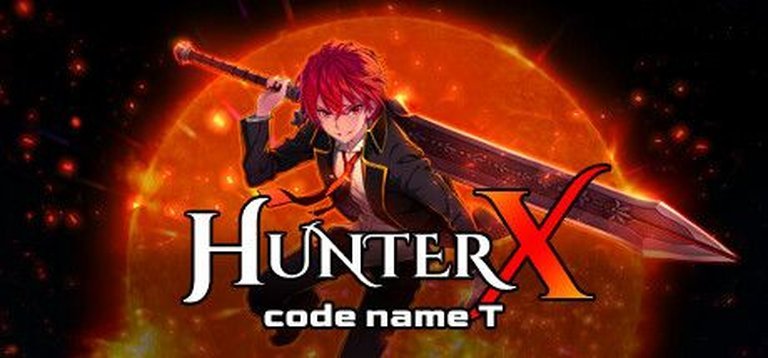
HunterX: code name T is a Metroidvania action game and sequel to HunterX, developed by Korean indie studio Orange Popcorn, where protagonist Taiyo, a monster hunter, regains his lost memories under the eerie light of a dark purple moon and embarks on a fateful adventure through the crevices of another world to confront monstrous foes and uncover his true self, featuring side-view 2D scrolling exploration, hack-and-slash combat, and anime-inspired visuals in a fantasy setting.
Gameplay Videos
Where to Buy HunterX: code name T
PC
HunterX: code name T Free Download
Crack, Patches & Mods
Guides & Walkthroughs
Reviews & Reception
metacritic.com (50/100): HunterX: code name T is a middle-of-the-road experience… remains simply functional and little else.
gamerescape.com : The execution that’s lacking here, and it all culminates to a point where the experience is significantly lessened by its shortcomings.
HunterX: code name T: Review
Introduction
In the ever-expanding labyrinth of Metroidvania titles, where pixelated shadows and echoey caverns have become as familiar as old friends, HunterX: code name T emerges as a curious heir to the throne—one that whispers promises of stylish devil-slaying adventures while grappling with the weight of its predecessors. Released in late 2023 by Korean indie studio Orange Popcorn, this sequel to 2022’s HunterX arrives amid a renaissance of the genre, fueled by indie darlings like Hollow Knight and Blasphemous. Yet, as players don the boots of devil hunter Taiyo and step through rifts into fractured worlds, the game invites a deeper question: Can a title built on refined combat and evocative atmospheres truly carve its niche in a crowded field? My thesis is clear: HunterX: code name T shines as a competent evolution of its lineage, delivering rewarding parry-based action and a visually charming 2.5D world, but it stumbles under underdeveloped narrative threads and monotonous exploration, rendering it a solid but unremarkable entry that favors accessibility over innovation.
Development History & Context
Orange Popcorn, a South Korean indie studio founded by industry veterans, represents the burgeoning wave of East Asian developers leveraging accessible tools to craft intimate, story-driven experiences. Comprising a small team of creators with prior credits on titles like 3000th Duel, the studio’s ethos centers on blending retro-inspired action with modern polish, drawing from the rich tapestry of Korean gaming culture—think the precision of Metal Slug meets the atmospheric depth of Castlevania. HunterX: code name T was announced as a direct sequel to HunterX, with the team explicitly aiming to expand its scope: increased volume through larger maps, strengthened narrative elements, and a more sophisticated combat system. Development utilized Unity, a engine choice that democratized high-fidelity 2D visuals for indies, allowing for smooth 2.5D animations without the budgetary heft of AAA productions.
The game’s creation unfolded against the backdrop of 2023’s indie explosion, a year when Metroidvanias flooded platforms like Steam and Nintendo Switch. Technological constraints were minimal—requiring only modest specs like an Intel Core 2 Duo and 2GB RAM for minimum viability—reflecting Unity’s efficiency. However, the era’s challenges were more market-driven: post-pandemic, players craved bite-sized adventures amid economic pressures, yet the genre’s saturation demanded standout mechanics to avoid blending into the noise. Orange Popcorn’s vision, as gleaned from press releases, was to craft a “strategically-driven experience” that bridged past and future, echoing the studio’s roots in reinterpreting 16-bit action RPGs for contemporary audiences. Released on December 12, 2023, for PC via Steam at $16.99, with a Nintendo Switch port following in early 2024, the game navigated this landscape by leaning into its “Soulsvania” hybrid—melding Dark Souls-esque risk-reward combat with Metroidvania exploration. Yet, as a solo-developer effort in a global indie scene dominated by polished Kickstarter successes, it highlights the double-edged sword of ambition: bold ideas constrained by resources, resulting in a title that’s evolutionary rather than revolutionary.
Narrative & Thematic Deep Dive
At its core, HunterX: code name T unfolds as a tale of rediscovery amid cosmic rupture, where the protagonist Taiyo—a stoic devil hunter shadowed by a diminutive demon companion—confronts the cyclical “Night of the Purple Moon.” This celestial event, a harbinger of chaos, pierces Taiyo’s amnesia, propelling him from a neon-drenched futuristic cityscape into “cracks” in reality: surreal realms blending arid deserts, spider-infested mountains, and labyrinthine citadels. The plot’s inciting incident—a rift teleporting Taiyo to these fantastical domains—serves as a portal (pun intended) to themes of identity and fate. Taiyo’s journey isn’t just monster-slaying; it’s a quest to “hunt devils… and find himself,” symbolizing the fragmentation of self in a world torn between temporal eras. Comrades emerge sporadically, offering glimpses of camaraderie and betrayal, while riddles and lore items hint at a larger mythology involving ancient curses and otherworldly incursions.
Yet, this narrative ambition falters under execution woes. The story is paper-thin, more a scaffold for gameplay than a compelling arc. Characters like the enigmatic Marka or the skill-master Mia appear and vanish with abruptness, their dialogues reduced to vague mutterings about “goals” or “clues,” often muddled by awkward translations that render Korean nuances lost in English localization. For instance, Taiyo’s internal monologues, meant to evoke introspective torment, come across as fragmented poetry: “The moonlight whispers secrets long buried.” Without meaningful cutscenes—relying instead on static anime-style illustrations—the emotional beats feel aimless, leaving players piecing together themes of memory and monstrosity through environmental storytelling alone.
Thematically, the game grapples with duality: the purple moon as a metaphor for inevitable cycles, devils as manifestations of inner demons, and the “cracks” representing existential rifts. Echoes of Jungian psychology surface in Taiyo’s self-discovery, paralleled by boss fights that personify his fragmented psyche—spider queens embodying entrapment, colossal guardians symbolizing suppressed rage. However, these layers remain underdeveloped; dialogue lacks the punchy wit of Hades or the brooding depth of Bloodborne, often devolving into exposition dumps via collectible lore. In a genre where narrative often elevates traversal (e.g., Ori and the Will of the Wisps), code name T‘s story feels like an afterthought—indecipherable at worst, justifying aimless wandering at best. This isn’t to say it’s devoid of intrigue; subtle motifs of time-straddling worlds critique modernity’s disconnection from myth, but without tighter scripting, they dissipate like moonlight at dawn.
Gameplay Mechanics & Systems
HunterX: code name T thrives in its core loop: explore interconnected zones, harvest souls from foes to level up or shop, unlock abilities to backtrack, and conquer bosses that gate progress. This Metroidvania foundation is infused with Souls-like rigor, where death scatters currency (retrievable à la Dark Souls), demanding precise platforming and combat mastery. Movement is fluid—Taiyo dashes, double-jumps, and wall-clings with alacrity—encouraging verticality in hand-drawn maps that sprawl across futuristic ruins and fantasy biomes.
Combat is the game’s beating heart, a hack-and-slash ballet emphasizing variety and timing. Players wield an arsenal of weapons (swords, spears, guns) each with unique actions: a katana for rapid slashes, a whip for ranged pokes, augmented by magic spells like fireballs or buffs. The expansive skill tree—branching into strength, health, and parry enhancements—allows customization, letting players forge aggressive glass-cannon builds or defensive tanks. Central to this is the parry system, a standout innovation akin to Ys‘ Flash Guard: time a deflection perfectly, and Taiyo counters with boosted attack power while debuffing enemy defense, turning defense into offense. It applies universally, from fodder mobs to bosses, yielding clutch moments that reward rhythm over button-mashing. Dodges, guards, and counterattacks add layers, creating “stylish” combos that feel empowering, especially with over 190 items to exploit weaknesses—e.g., a frost shard vulnerable to fire magic.
Yet, flaws abound, undermining the loop’s potential. Enemies, while varied (spider swarms, armored knights, ethereal wisps), boast predictable one- or two-attack patterns, felled in 3-4 hits, rendering parries optional rather than essential. Placement is sparse, favoring isolated skirmishes over chaotic multi-foe brawls, which saps tension in open zones. Bosses, meant as climaxes, suffer under-tuned HP and damage; without self-sabotaging builds, they’re trivialized, lacking the pattern-learning depth of Sekiro. Puzzles—pressure plates, bat-summoning riddles—are simplistic and infrequent, often spoiled by lore pickups, making traversal feel like aimless jogging through homogenous rooms. UI is clean but unpolished: the map lacks a minimap (a community gripe), forcing constant pauses, and jank mars fluidity—midair hits ground you abruptly, and collision bugs stutter movement near foes.
Innovations like item-based strategy shine in theory, encouraging experimentation, but the overall simplicity borders on easiness, with frequent saves and shortcuts enabling steamrolling. Progression feels gated yet forgiving, ideal for casual players but frustrating for veterans seeking challenge. In sum, mechanics deliver functional fun but lack the refinement to elevate beyond “adequate.”
World-Building, Art & Sound
The game’s world is a tapestry of temporal dissonance, straddling cyberpunk spires and arcane ruins in a “crack”-fractured realm that evokes a shattered hourglass. Starting in a bustling futuristic city—neon lights flickering against purple skies—Taiyo breaches into fantastical domains: sun-baked desert castles hiding oases of lore, mist-shrouded Spider Mountains teeming with webbed horrors, and damp citadels riddled with magical doors. This blending of eras crafts an atmosphere of disorientation, where ancient devils lurk in high-tech crevices, reinforcing themes of blurred realities. Exploration rewards with hidden paths, lore scraps chronicling the Purple Moon’s curse, and ability-unlocking relics, fostering a sense of discovery amid the interconnected sprawl.
Visually, code name T adopts a 2.5D anime/manga aesthetic, reminiscent of mid-2000s gems like Castlevania: Aria of Sorrow. Hand-animated sprites imbue Taiyo with fluid, expressive motions—his parry a graceful spin, attacks popping with cel-shaded flair. Environments are cute yet menacing: chibi-style demons contrast grotesque bosses, while backgrounds layer parallax scrolling for depth, from starry rifts to echoing caves. Predictability creeps in—biomes feel derivative, with spider motifs overused—but the charm persists, enhanced by dynamic lighting that casts eerie purple glows during moonlit sequences.
Sound design, however, is a mixed bag. The soundtrack, composed in-house, leans synth-heavy with occasional orchestral swells; Spider Mountain’s track—a thumping rhythm laced with groovy bass and string harmonies—stands as a highlight, pulsing like a heartbeat to match the tension. Yet, most tunes are forgettable, fading into ambiance without memorable hooks. Audio glitches jar: uneven SFX mixes overpower music, and looping winds stutter noticeably in silent areas, breaking immersion. Voice work is absent, relying on text and sparse effects—clangs of steel, demonic howls—that suit the hack-and-slash vibe but lack punch. Collectively, these elements build a cozy yet foreboding atmosphere, where visuals carry the load, elevating traversal into a visually poetic, if sonically inconsistent, journey.
Reception & Legacy
Upon launch, HunterX: code name T garnered modest attention in the indie sphere, with critical reception polarized yet sparse. Metacritic’s PC aggregate sits at TBD due to limited reviews, but the sole critic score from Gamer Escape clocks in at 5/10, lambasting its “paper-thin” story, unchallenging gameplay, and monotonous areas as a “middle-of-the-road experience” that fails to capitalize on its parry mechanic. User scores fare better at 7.4/10, praising “solid level design” and “awesome boss battles” for fans of the original, with Steam boasting a “Very Positive” 89% from 58 reviews—lauding its accessibility and combat flow. The Switch port, released February 2024, averages 7.17/5 on Switch Scores from three outlets, mixing praise for atmosphere with gripes over recycled elements from HunterX.
Commercially, it performed adequately for an indie: priced at $16.99 on Steam and £13.89 on eShop, it found a niche among Metroidvania enthusiasts, evidenced by community guides for 100% completion and achievement hunting. Discussions highlight bugs (e.g., map completion glitches) and suggestions like minimaps, signaling engaged but nitpicky players. Reputation has evolved positively post-launch; patches addressed audio stutters and jank, boosting recent Steam ratings to 100% from 12 reviews, as word-of-mouth among Korean gamers and Souls-like fans grew.
Legacy-wise, as a 2023 release, its influence is nascent but noteworthy in Korean indies. Orange Popcorn’s follow-up teases (Maid of Salvation) build on its 2.5D formula, suggesting a studio template for blending anime aesthetics with parry-focused action. It subtly impacts the “Soulsvania” subgenre, popularizing accessible hybrids for non-hardcore audiences, though it hasn’t reshaped the industry like Dead Cells. In video game history, it occupies a footnote as a bridge title—evolving indie Metroidvanias in Asia while underscoring the genre’s need for narrative depth amid visual splendor.
Conclusion
HunterX: code name T is a parry-perfect snapshot of indie ambition: a stylish devil-hunting jaunt through fractured worlds that rewards combat experimentation and visual flair, yet falters on narrative thinness, unchallenging encounters, and sonic inconsistencies. Orange Popcorn delivers an accessible sequel that expands its predecessor’s scope, crafting moments of rhythmic satisfaction amid its Soulsvania sprawl. Ultimately, it earns a place as a commendable mid-tier Metroidvania—worthy for fans seeking 20 hours of low-stakes exploration but overshadowed by genre titans. In video game history, it stands as a testament to the Korean indie’s rising voice: functional, charming, and poised for greater things, if only it dared to crack deeper into its own potential. Final Verdict: 7/10 – A solid hunt, but no legendary quarry.