
- Release Year: 2019
- Platforms: Linux, Macintosh, Nintendo Switch, PlayStation 4, Windows Apps, Windows, Xbox Cloud Gaming, Xbox One
- Publisher: No More Robots Ltd.
- Developer: Tendershoot, ThatWhichIs Media, LLC
- Genre: Adventure
- Perspective: 3rd-person (Other)
- Game Mode: Single-player
- Gameplay: Graphic adventure, Point and select, Simulated Internet
- Setting: Alternate history, Cyberpunk, dark sci-fi
- Average Score: 83/100
Description
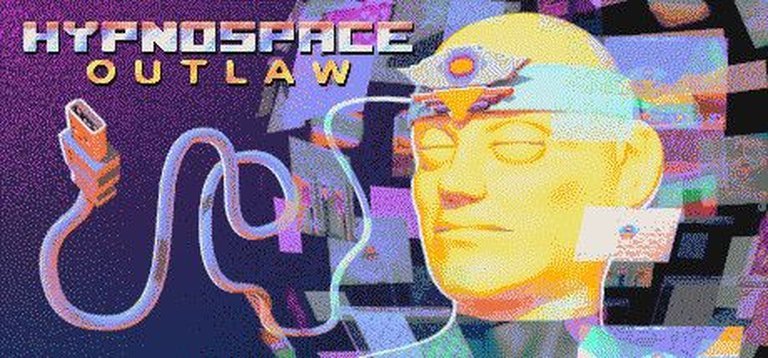
Hypnospace Outlaw is a detective adventure game set in an alternate 1999 where users access a virtual internet called Hypnospace via a brain-implant interface while sleeping. As an Enforcer for the company Merchantsoft, you moderate the network by investigating and flagging harmful content, solving puzzles that range from straightforward to deeply intricate, all within a cyberpunk-inspired world filled with nostalgic early-internet aesthetics, a meditative pace, and rich lore to uncover.
Gameplay Videos
Where to Buy Hypnospace Outlaw
Hypnospace Outlaw Free Download
Hypnospace Outlaw Mods
Hypnospace Outlaw Guides & Walkthroughs
Hypnospace Outlaw Reviews & Reception
metacritic.com (83/100): The game is a monumental achievement, not just for its detailed rendering of another place and time but for the observed humanity of its writing and the things it has to say about the intersection of capitalism and art.
opencritic.com (83/100): A satisfying detective adventure based around a weird and wonderfully imaginative retro internet.
pcgamer.com : A satisfying detective adventure based around a weird and wonderfully imaginative retro internet.
Hypnospace Outlaw Cheats & Codes
Hypnospace Outlaw PC
Enable the console in the Hypnospace BIOS (accessed via the green button in the lower right corner or by pressing B during boot). Then, press the tilde key (~) to open the console in-game.
| Code | Effect |
|---|---|
| getpaid:(Insert number here) | Adds hypnocoins to your wallet because work is for suckers |
| downloadfile:(Insert file name including extension here | Download any file in the Hypnospace Outlaw/data/downloads folder |
| openfile:(Insert file name including extension here) | Open any file in the Hypnospace Outlaw/data/downloads folder |
| hypnos_dreamtools.hex | Use with openfile or download file to get a special tool you’re not supposed to have until the final chapter of the game. |
| outlawpkgy2k.txt | Use with openfile to retrigger final glitch. Note: Can progess chapter past 5, so use MB_master cheat to get back there if you need to. |
| popup:[title],[message],[left-button-title],[right-button-title],[left-button-action],[right-button-action],[left-button-params],[right-button-params],[left-button-close-on-click],[right-button-close-on-click],[uid],[icon],[internal-name] | Display popup with message and two actions |
| install:[name],[post-install-message],[post-install-action] | Display installation popup and perform action after progress is done |
| hypii:[text] | Narrate voice through Hypii |
| hypiishutup | Stop Hypii from talking |
| hypii:die:1 | Terminate Hypii |
| activatehypii | Activate Hypii |
| password:[password-1]#[password-2]#[password-3]#[password-4] | Display password form popup and perform action on correct input |
| wait:[seconds] | Wait for specific amount of seconds |
| repeat:[count] | Repeat the command specific amount of times |
| virus:[name] | Execute virus |
| email:[name] | Receive e-mail message |
| ad:[name] | Display advertisement |
| loadwebpage:[path] | Load webpage |
| 2000update:[path] | Display non-interactive video |
| settings | Launch Settings |
| tunebox | Launch Tunebox |
| Axxelera | Launch Axxelera |
Hypnospace Outlaw: A Digital Archaeology of the Pre-Millennial Web
Introduction: The Time Machine in Your Desktop
To play Hypnospace Outlaw is to engage in a form of digital archaeology, not of a lost civilization, but of a recently vanished one. It is a meticulously constructed, deeply affectionate, yet sharply critical time capsule of the internet at the precipice of the new millennium—a world of dial-up modems, GeoCities-esque personal pages, MIDI soundtracks, and a chaotic, user-generated “wild west” ethos that feels both hauntingly familiar and alien in our era of algorithmic feeds and consolidated platforms. Released in 2019 by the tiny indie studio Tendershoot, the game transcends mere nostalgia to become a profound meditation on the cyclical nature of internet culture, the ethics of digital moderation, and the enduring tension between corporate control and grassroots creativity. This review will argue that Hypnospace Outlaw is not merely a brilliant parody of 1990s web aesthetics, but a landmark work of interactive storytelling and simulation that uses its detective gameplay framework to deliver a sobering, often hilarious, critique of the digital architectures we inhabit today. It is a masterclass in world-building that leverages its game mechanics to force players into the morally ambiguous role of a content moderator, making it one of the most prescient and artistically complete games of the late 2010s.
Development History & Context: From Microgame to Monumental Simulation
The genesis of Hypnospace Outlaw lies in a two-minute microgame. In 2014, during the development of his critically acclaimed, surreal point-and-click adventure Dropsy, lead designer Jay Tholen created Hypnospace Enforcer. This prototype was an endless runner where players piloted a “virtual cop cruiser” down a pastel-hued “information superhighway,” apprehending outlaws whose personal details would reveal themselves as you approached. The core concept—a dream-based internet accessed via sleep headbands—was born here, but the gameplay was initially oriented around arcade-style driving.
Tholen, a Florida-born developer with a background in prog rock and a penchant for the quirky (his influences include Mr. Rogers and Brian Eno), was fascinated by the aesthetic and cultural relics of the early web. Following Dropsy‘s release, he expanded the prototype into a full game, but a pivotal shift occurred. Early builds and GIFs showcasing the faux-operating system (HypnOS) and its browser environment generated astronomically more interest and engagement from the community than the highway driving sequences. As Tholen later reflected, “the response to gifs and clips of the faux-OS garnered astronomically more attention than the car sections did, and fiddling with a fake operating system was tons of fun, so development veered pretty hard in that direction.”
This pivot was cemented with the arrival of programmer Mike Lasch in 2016, who built out the intricate, glitch-ridden desktop interface and its companion applications. The project also brought on narrative designer Xalavier Nelson Jr. in 2017, a crucial hire that helped transform what was initially a “sandbox that we kept adding fun little features to with no real narrative progression” into a structured detective story with thematic weight. Nelson’s work infused the countless user-generated pages with a observed humanity and serialized drama, turning background lore into a compelling, evolving narrative.
The game was financed through a successful Kickstarter campaign launched on September 7, 2016, which raised $35,994 from 1,664 backers. The campaign’s stretch goals, though modest, reveal the team’s focus: the first (met) brought in musician Erik Helwig (“Hot Dad”) to create the iconic, in-game “Chowder Man” persona and music. The second, for two animators to create virtual pets, was not met, yet three pets were still included, showcasing the team’s commitment to the world’s verisimilitude over strict crowdfunding promises.
A significant portion of the development history involves what was cut. The “Hypnospace Highway” driving mechanic, a holdover from the original microgame, was ultimately removed in mid-2017. Tholen articulated the design conflict brilliantly: “If Hypnospace has attracted folks of all ages and backgrounds, why does it operate like an endless runner driving game? …Just what the heck are NPCs doing on the highway anyway? They just drive in loops?” This decision was fundamental; it purified the experience into a pure simulation and detective game, aligning the player’s actions (browsing, investigating) directly with the core fantasy of being an Enforcer within the system, not outside it.
The game was built using Construct 2, an HTML5-based engine chosen for its suitability in simulating a browser environment. This technical choice allowed for the creation of a custom page builder tool using a fictional “STML” (Sleeptime Markup Language), enabling the team to generate hundreds of unique, interactable web pages that felt authentically hand-crafted by a diverse user base. After a closed beta in 2018, Hypnospace Outlaw launched for Windows, macOS, and Linux on March 12, 2019, published by No More Robots. Console ports for Switch, PS4, and Xbox One followed on August 27, 2020, handled by Ratalaika Games, and included the substantial “Hypnospace Plus” free update, which added over 75 new pages, themes, apps, and music tracks.
Narrative & Thematic Deep Dive: Moderating a Dream, Confronting a Dystopia
The plot of Hypnospace Outlaw is deceptively simple on the surface: an unnamed Enforcer for Merchantsoft, the corporation behind the HypnOS network, is tasked with policing user-generated content for violations of the Hypnospace Program Agreement (HPA)—copyright infringement, harassment, malware, etc.—in the waning days of 1999. Yet, beneath this procedural veneer lies a complex, multi-layered narrative that escalates from petty internet squabbles to corporate conspiracy and existential threat.
The story is delivered non-linearly through the environment itself. There is no traditional dialogue tree; communication arrives via in-game email, voicemail, and, most importantly, the content of the websites you investigate. The player’s cases, assigned by the Hypnospace Patrol Department (HSPD), start as mundane chores: reporting a teacher’s copyright-violating student art, shutting down a spammer’s adware farm, or mediating a “flame war” between teens. However, the narrative richness emerges from the context. These pages are not isolated; they update in real-time (simulated in-game time) as a direct result of your actions. Reporting a page might cause its creator to post a bitter new entry, or a related conspiracy thread to spiral. This creates a powerful sense of a living, reactive world happening just outside your direct control—a community you are policing, not participating in.
The central thematic conflict is the morality of moderation within a proprietary, corporate-controlled space. You are an “Enforcer,” a glorified volunteer paid in HypnoCoin, enforcing draconian rules set by Merchantsoft. The game constantly forces you to question: Who benefits from these rules? Early cases already introduce unease—policing a beloved teacher for posting children’s drawings feels dystopian, not just. The investigation into the “Mindcrash,” a Y2K-related hack blamed on a teenager named Timothy “T1MAGEDDON” Stevens, reveals the true villainy: corporate negligence. The game’s climax exposes that Merchantsoft’s executives, particularly the game-obsessed Dylan Merchant, knew of fatal bugs in their headband technology but prioritized shipping their in-universe game, Outlaw, over fixes, ultimately framing Timothy for the “real” Mindcrash that caused deaths. This plotline is a potent allegory for tech industry “move fast and break things” culture, where user safety is subordinate to market release and corporate reputation.
The narrative is also a study in internet subcultures and their economies. You navigate Zones like the corporate “Marketplace,” the teen-centric “Teentopia,” and the radical “Deep Web.” You encounter vivid archetypes: the l33t-speak hacker kid Zane Lofton (creator of the nu-metal band KLYFTA), the bitter psychic Missy, the empty-nest mother Mrs. Bower, the scandal-plagued pop singer Barnaby. Their interconnected dramas—music feuds, personal betrayals, creative rivalries—play out across dozens of pages, creating a tapestry that feels more real than many NPC-driven narratives. The “I Stand With Gooper” movement, sparked by the banning of a teacher’s student art, is a direct parallel to real-world online activism against platform censorship.
The game’s final act and multiple endings are a testament to its nuanced themes. Your cumulative actions—how many pages you censored, which alliances you forged, which rebels you helped—determine whether Hypnospace is shut down, reformed, or its secrets buried. The “Hypnospace Archival Project” framing, where you join a historian years later to preserve the network’s “final months,” adds a layer of meta-commentary on digital preservation and the rewriting of history by those in power. It asks: What do we choose to save from our digital past, and what narratives are we complicit in erasing?
Gameplay Mechanics & Systems: Detective Work in a Dreamscape
At its mechanical core, Hypnospace Outlaw is a point-and-click detective simulator disguised as a web browser. The gameplay loop is methodical: you log into HypnOS, check your HSPD inbox for assigned cases, use the Hypnospace Explorer search bar and linked navigation to find suspect pages, examine content for violations (using the “Merchant” tool to tag copyright-infringing images, harassing text, etc.), and submit a report to earn HypnoCoin and advance the in-game clock toward the end of the day.
This simplicity belies a deeply satisfying escalation in complexity. Early cases provide obvious clues—a page name, a visible image. Later investigations require genuine detective work: deducing passwords from biographical details scattered across multiple pages, navigating the “Deep Web” via obscure link chains, interpreting coded messages in MIDI files or image steganography, and even troubleshooting in-game software glitches and viruses that hinder your investigation. The puzzles are rarely obtuse; they are logical extensions of the environment. Finding a hacker might involve downloading a debug tool to view page source code, or playing a mini-game to clean a virus from your HypnOS desktop. The game respects the player’s intelligence, offering almost no hand-holding, but includes a cleverly integrated hint system (accessed via a paid “Hint Disk” app) for when you hit a wall.
Progression is gated by HypnoCoin, which you earn by resolving official cases but can also gather by reporting any additional violations you find. This currency is spent on essential tools: password crackers, deep web access licenses, desktop customizations, and apps that solve specific puzzles. This creates a compelling risk/reward dynamic: do you pursue only the mandated cases for steady income, or explore off-script to find hidden pages and secret lore that might unlock better gear? The economy feels both authentic to the era (monetized through microtransactions within the game’s fiction) and satisfyingly gamey.
The interface is both the game’s greatest strength and its most divisive feature. It is a painstaking recreation of a late-90s operating system: low-resolution (800×600 by default), non-resizable windows, a clunky alt-tab-like app switcher, and a desktop cluttered with downloadables. The team deliberately avoided modern conveniences like tabs or scalable UI to preserve authenticity, a choice that some critics found frustratingly retro. The “experimental scaler” to blow up the image is intentionally ugly, admitting its own shortcomings. This design decision is a double-edged sword: it authentically recreates the friction and inefficiency of the early web, but can become genuinely cumbersome during long play sessions. It is a brilliant simulation of a feeling—the patience required for dial-up, the management of a chaotic desktop—but not necessarily an optimal interface.
The game’s structure is open-ended within its episodic case framework. While the main plot progresses through key mandatory cases, the vast majority of the game’s 200+ pages and their evolving stories are optional. This encourages a ” Detective Mode” playstyle: you might have a goal, but the joy is in the periphery—reading a webcomic’s entire archive, listening to a band’s discography, uncovering a hidden forum. The meta-puzzles, like cracking the ultimate “A1Z26” cipher or finding the last unmarked pages, reward obsessive exploration. The game’s length is highly variable; a player rushing cases might finish in 8-10 hours, but a thorough archaeologist can easily spend 20+ hours uncovering every secret, a testament to the density of the world.
World-Building, Art & Sound: The Aesthetics of a Forgotten Internet
Hypnospace Outlaw’s greatest achievement is its total, uncompromising immersion in an alternate-reality 1999. The world-building is not just a backdrop; it is the game’s primary narrative vehicle. Every pixel, every MIDI note, every broken HTML tag serves the satire and the story.
Visual & Interface Design: The art direction, led by Jay Tholen, is a masterclass in specific parody. It doesn’t just copy GeoCities; it embodies its spirit. Pages are garish, cluttered, and visually deafening, featuring:
* Animated GIFs: Blinking cursors, spinning “under construction” signs, dancing baby gifs, and low-frame-rate banner ads that capture the era’s desperate, joyous ugliness.
* Typography & Layout: Comic Sans, Times New Roman, and bizarre web-safe color palettes. Tables used for layout, centered text, and marquee elements create that signature chaotic, un-designed look.
* Iconography: Pixelated cursors, 16-color system icons, and primitive CG renders that evoke early 3D modeling and clip-art libraries.
* The HypnOS Desktop: This is where the simulationdeepens. It’s not just a browser; it’s a full OS with a Start-like menu, a Recycle Bin, a Tunebox for music, a Chat client (with canned, absurd responses), and a litter of virtual pets (from the met Kickstarter stretch goal). Pop-up adware and toolbars that you must manually close are not just aesthetic; they are gameplay hazards that can obscure windows or trigger mini-games.
This low-fidelity presentation is a deliberate, artistic choice that critics widely praised. As The Guardian noted, it “conjures that time, when the internet was a place to go rather than a liminal omnipresence.” The limitation to a small window, while frustrating, is part of the artifact—it mimics the bounded experience of a single monitor in a bedroom, a private dream-space.
Sound Design & The Soundtrack: If the visuals are the body of Hypnospace Outlaw, its soundtrack is the soul. This is universally cited as the game’s “killer component.” The audio design operates on two levels:
1. Diegetic MIDI/MP3s: Every website has its own background music, streamed from the page’s source. This creates an unparalleled sense of place. The “Teentopia” zone might blare angsty nu-metal (KLYFTA’s “Squisherz”), while a spiritualist’s page hums with ambient drones (Holoangel), and a corporate site plays sterile corporate jingles.
2. The In-Game Music Ecosystem: The game features invented genres—”coolpunk,” “earthaze,” “glamocaster”—that parody real-world scenes (emo, chillwave, glam metal). The music is not just pastiche; it is often genuinely excellent, catchy, and era-authentic. Tracks from in-game bands like Barnaby’s Chair (“Satellite Orchestra”), Seepage, and the rap-rock villain Chowder Man (performed by Hot Dad) are highlighted by critics as infectious and memorable. This soundtrack was mostly commissioned specifically for the game from indie artists (Chris Schlarb, Jazz Mickle, Niklas Åkerblad), creating a vast, cohesive library of “lost 90s music.”
The act of discovering, downloading (often by circumventing DRM mimicry), and curating these tracks in the Tunebox app is a core gameplay loop and a huge reward. It transforms the player from passive observer to active collector, mirroring the mixtape and MP3-collecting culture of the era. The sound design also includes the satisfying click of a modem connecting, the scratch of a low-bitrate video, and the chime of a new email, all reinforcing the tactile, technological nostalgia.
World-Building Through Lore: The sheer density of invented lore is staggering. Merchantsoft’s corporate history, the origins of HypnOS, the biographies of hundreds of users, the discographies of fictional bands, and the interconnected drama of the zones are all documented across the sites. Reading a user’s “About Me” page, then following a link to their fan site for a fictional TV show, then finding a forum argument about that show’s finale, creates a feeling of discovering a real, complex community. The fact that these pages change over the in-game weeks—relationships sour, bands break up, news breaks about the Mindcrash—makes the world feel alive and autonomous.
Reception & Legacy: Critical Darling and Cultural Touchstone
Upon its March 2019 PC release, Hypnospace Outlaw was met with widespread critical acclaim, mirrored in its aggregate scores: 83/100 on Metacritic (PC) and 84/100 on Nintendo Switch. It was a finalist for the 2019 Independent Games Festival’s Seumas McNally Grand Prize, Excellence in Audio, Design, and Visual Art, and the Nuovo Award. Reviews consistently lauded its unique synthesis of mechanics and theme.
Critical Consensus: The praise centered on four pillars:
1. Unparalleled Authenticity: Critics like PC Gamer‘s Andy Kelly celebrated it as “a joyous explosion of art, music, creativity, and weirdness,” while The Guardian‘s Keza MacDonald wrote of being “temporarily unmoored” by its powerful evocation of teenage late-night browsing.
2. Sharp Satire & Thematic Depth: Slant Magazine awarded a perfect 100, calling it “a monumental achievement… for the things it has to say about the intersection of capitalism and art.” Paste Magazine‘s Dante Douglas highlighted its commentary on “the fears of today,” noting how its critique of corporate control and moderation feels “even more essential in 2019” (and, by extension, today).
3. Engaging Detective Gameplay: GameSpot and Adventure Gamers praised the puzzles as “layered and complex, but never unfair,” and the progression as satisfying.
4. The Soundtrack: Universally hailed as exceptional, a standalone work of art that enhances immersion.
Criticisms: The critiques were minor but consistent. The most common was about the interface’s retro fidelity becoming a gameplay hurdle. The fixed low resolution and lack of tabbed browsing, while authentic, were seen by some (notably eShopper Reviews at 67%) as a genuine obstacle, making navigation tedious. Some found the pacing in the mid-to-late game to drag as clue-hunting became more convoluted, and the shift from chill exploration to urgent narrative beats could feel jarring. The console ports, while praised for their portability (especially on Switch), received criticism for clunky controller implementations, as the precision of a mouse is ideally suited to this kind of navigation.
Legacy and Cultural Impact: Hypnospace Outlaw has cemented its place as a cult classic and a touchstone for several reasons:
* Reviving the Retro-Internet Simulator Genre: It successfully mainstreamed a niche concept, paving the way for games like Progressbar95 (a satirical OS sim) and Videoverse (a social network simulation).
* A Key Text in Digital Preservation & Nostalgia Studies: It is frequently cited in academic and journalistic discussions about pre-social media internet culture, Y2K aesthetics, and the ethics of digital archiving. Its depiction of user-generated content is studied as a contrast to today’s platform-dominated web.
* Vibrant Modding Community: Official mod support introduced in 2019 has led to custom pages, cases, and even integrations like a Discord client for HypnOS, extending the game’s life and proving its systems are a fertile creative space.
* A Thriving Speedrunning Scene: With world records hovering around 16 minutes, the game’s predictable case structure and RNG elements have created a dedicated competitive community on Speedrun.com.
* The Unfinished Sequel: The announced sequel, Dreamsettler, which would have simulated the 2003-2005 internet (the rise of Web 2.0, MySpace, early YouTube), was tragically cancelled in June 2025. Developer Jay Tholen cited severe scope creep, burnout, and insufficient funding. Its cancellation is a significant event, marking the end of a planned trilogy exploring three distinct internet eras (90s, 00s, 10s). However, the spin-off FPS Slayers X: Terminal Aftermath: Vengance of the Slayer, centered on the in-game character Zane, was successfully released in 2023, keeping the universe alive.
Conclusion: An Indispensable Artifact
Hypnospace Outlaw is a singular achievement in video game history. It is a meticulously crafted simulation that functions simultaneously as a hilarious parody, a poignant elegy, and a rigorous detective game. Its genius lies in its synthesis of form and content: the friction of its low-resolution UI is not a bug but a feature, immersing you in the cognitive load of the early web; the moral ambiguity of its moderation mechanics forces a direct engagement with the present-day consequences of corporate content policies.
While not without its minor flaws—the occasionally tedious navigation and a narrative that can feel rushed in its final act—these are small blemishes on an otherwise flawless piece of interactive art. It transcends its “nostalgia trip” label by using that nostalgia as a lens to examine unresolved questions about digital freedom, corporate power, and community. For players who lived through the era, it is a profound and often emotional mirror. For those who didn’t, it is an accessible, captivating education in a foundational moment of digital culture.
In the pantheon of games that have shaped how we think about technology and society, Hypnospace Outlaw deserves a place alongside titles like The Stanley Parable (for narrative agency) and Papers, Please (for moral bureaucracy). It is a game that remembers the internet’s promise and warns of its perils, all while delivering a ingenious, rewarding, and endlessly surprising adventure. It is, simply put, one of the most important and inventive indie games of the decade, and its legacy as a cultural and artistic touchstone is assured. To play it is not just to visit a past that never was, but to better understand the present that we now inhabit.