
- Release Year: 2012
- Platforms: PlayStation 3, Windows, Xbox 360, Xbox One
- Publisher: Ubisoft Entertainment SA
- Developer: Shanghai UBIsoft Computer Software Co., Ltd.
- Genre: Action
- Perspective: Third-person
- Game Mode: Single-player
- Gameplay: Bluffing system, Climbing, Melee Combat, Moral choices, Resource Management, Shooter
- Setting: Post-apocalyptic
- Average Score: 71/100
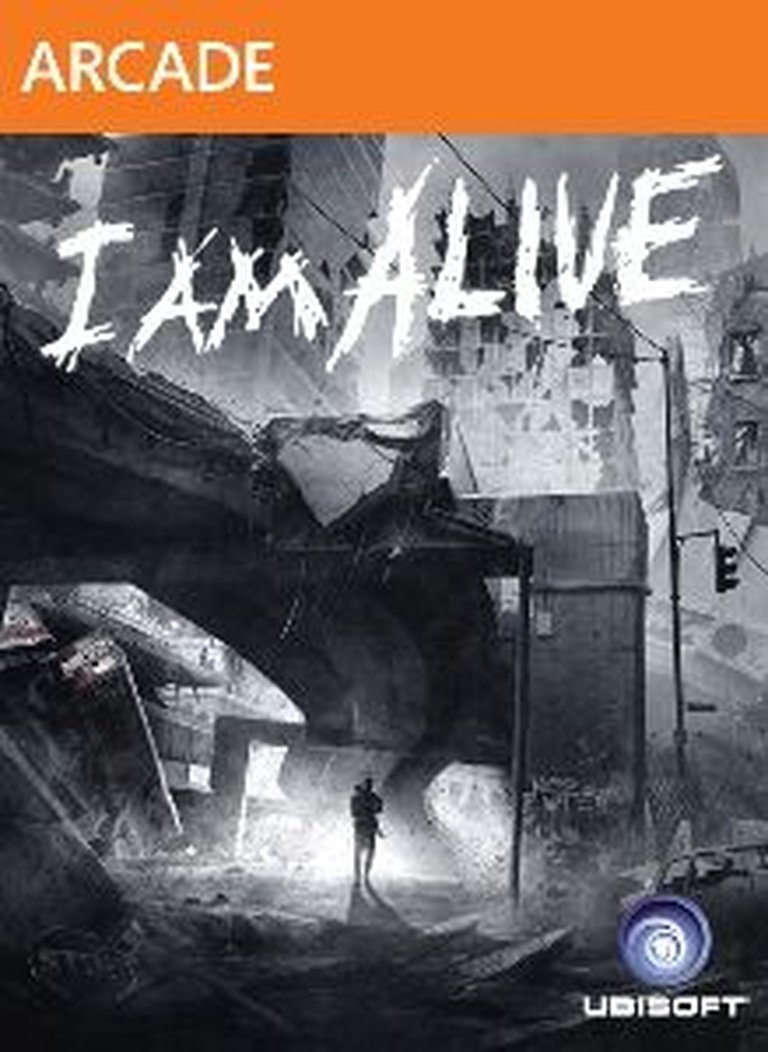
Description
I Am Alive is a post-apocalyptic survival game set in the fictional American city of Haventon, one year after a catastrophic event has devastated civilization. The player controls an unnamed protagonist navigating a ruined urban landscape filled with hazards, scarce resources, and hostile survivors while searching for his missing wife and children. The game blends third-person exploration with first-person combat, emphasizing resource management, bluffing tactics, and melee encounters due to limited ammunition and health supplies. Along the way, the protagonist aids other survivors, including a young girl named Mei, while uncovering the story through video journals and environmental clues.
Gameplay Videos
Where to Buy I Am Alive
PC
I Am Alive Free Download
PC
I Am Alive Cracks & Fixes
I Am Alive Patches & Updates
I Am Alive Mods
I Am Alive Guides & Walkthroughs
I Am Alive Reviews & Reception
metacritic.com (69/100): I Am Alive uses its post-apocalyptic environment far more effectively than many other games that share its nightmare vision of the future.
ign.com : I Am Alive has great ideas and poor execution. It ends up being a flat, frustrating game that isn’t worth your time or money.
gamesbeat.com : I Am Alive is 100% raw, gritty survival. You won’t find any zombies or evil corporations here.
pcgamer.com (73/100): A dark action-platformer which shows fleeting signs of life, but lacks the vivacity to climb above the competition.
I Am Alive: A Flawed but Unforgettable Survival Masterpiece
Introduction
In the crowded landscape of post-apocalyptic games, I Am Alive stands as a haunting, deeply flawed, yet unforgettable experience. Released in 2012 after a tumultuous seven-year development cycle, the game is a survival adventure that strips away the power fantasies of its contemporaries, leaving players vulnerable, desperate, and morally conflicted. It is a game that dares to ask: What would you do to survive? And more importantly, What would you sacrifice to remain human?
I Am Alive is not a game about heroism. It is a game about desperation, about the fragility of civilization, and the dark corners of human nature when the rules of society collapse. Its legacy is one of ambition—both realized and squandered—a game that could have been a defining masterpiece of its genre but instead remains a fascinating, if incomplete, experiment.
This review will dissect I Am Alive in exhaustive detail, exploring its development history, narrative depth, gameplay mechanics, world-building, reception, and lasting impact. It is a game that divides critics and players alike, but one that undeniably leaves a mark on those who endure its harrowing journey.
Development History & Context
A Game Born from Chaos
I Am Alive began life in 2005 under the French studio Darkworks, initially conceived as a first-person survival game titled Alive. The project was ambitious from the start, aiming to deliver a mature, emotionally charged experience set in a post-apocalyptic Chicago. Early trailers and press releases positioned it as a game that would challenge players morally and psychologically, emphasizing survival over combat.
However, the game’s development was plagued by delays, shifts in vision, and corporate restructuring. By 2009, Ubisoft had taken the project away from Darkworks, handing it to Ubisoft Shanghai, which effectively restarted development from scratch. The original first-person perspective was abandoned in favor of a third-person view, and the setting was moved from Chicago to the fictional city of Haventon.
The game’s troubled development is a cautionary tale of corporate interference and creative pivots. According to interviews with the development team, the first iteration of I Am Alive was nearly complete but ultimately deemed unsatisfactory by Ubisoft’s leadership. Creative director Stanislas Mettra admitted in a 2011 interview with Digital Spy that the team essentially built two separate games, with the final version being a complete overhaul designed specifically for digital distribution on Xbox Live Arcade (XBLA) and PlayStation Network (PSN).
The Gaming Landscape of 2012
When I Am Alive finally released in March 2012, it entered a gaming ecosystem dominated by blockbuster titles like Mass Effect 3, The Elder Scrolls V: Skyrim, and Call of Duty: Modern Warfare 3. The post-apocalyptic genre was already well-trodden, with franchises like Fallout and Metro offering deep, immersive experiences.
Yet I Am Alive carved out a niche for itself by rejecting the power fantasies of its peers. Unlike Fallout’s VATS-driven combat or Metro’s gunplay-heavy survival, I Am Alive focused on vulnerability. The protagonist is not a super-soldier or a vault dweller—he is an ordinary man, physically and emotionally broken, struggling to survive in a world that has long since given up on mercy.
The game’s digital-only release also set it apart. Priced at $15 (1200 Microsoft Points), it was positioned as a mid-tier experience, neither a full retail release nor a cheap indie experiment. This pricing strategy, combined with its mature themes, made it a risky but intriguing proposition for players tired of the same old post-apocalyptic tropes.
Technological Constraints
I Am Alive was built using Unreal Engine 2, a choice that reflected both its development timeline and budgetary limitations. While the engine was capable of rendering detailed character models and atmospheric environments, it also imposed restrictions on the game’s scope and visual fidelity.
The game’s Havok physics and Wwise audio systems were used to create a sense of weight and immersion, particularly in climbing sequences and combat encounters. However, the engine’s age showed in the game’s occasionally clunky animations, stiff controls, and repetitive environmental designs.
Despite these limitations, Ubisoft Shanghai managed to craft a game that felt oppressive and claustrophobic, using dust clouds, dim lighting, and a muted color palette to reinforce the protagonist’s isolation and desperation.
Narrative & Thematic Deep Dive
The Story: A Man’s Desperate Search
I Am Alive follows an unnamed protagonist (referred to in promotional materials as Adam Collins, though the name is never used in-game) as he returns to his hometown of Haventon one year after a catastrophic event known only as “The Event.”
The nature of The Event is deliberately left ambiguous. Clues scattered throughout the game—earthquakes, toxic dust clouds, failed infrastructure—suggest a possible asteroid impact or volcanic eruption, but the game never confirms this. The lack of concrete answers forces players to focus on the human cost of the disaster rather than its scientific explanation.
The protagonist’s journey begins as he arrives in Haventon, a city reduced to rubble and dust. His apartment is empty, save for a letter from his wife, Julie, revealing that she and their daughter, Mary, left for an emergency shelter shortly after The Event. The letter is heartbreaking in its simplicity:
“We have to go now because of the earthquakes. The evacuation team is waiting for us. We’ll be taken to one of the emergency shelters. It’s very hard to get precise information about the evacuation plan. I have no idea where we’ll be in the next hour. If only you were here. I would tell you that I forgive you for everything. For now, all we can do is pray that you are alive. And if you are, I know you’ll come back here.”
This letter sets the emotional tone for the entire game. The protagonist is not just searching for his family—he is seeking redemption. The line “I forgive you for everything” hints at a past transgression, one that is never fully explained but looms over every decision he makes.
Themes: Survival, Morality, and Humanity’s Dark Side
I Am Alive is, at its core, a game about moral ambiguity. It forces players to confront uncomfortable questions:
- How far would you go to survive?
- Would you kill to protect a child?
- Would you leave someone to die to save yourself?
- Would you eat human flesh if it meant living another day?
The game’s world is a Crapsack World, where the remnants of humanity have devolved into tribals, scavengers, and predators. Gangs roam the streets, capturing women for sexual slavery, and survivors hoard resources with paranoid desperation. The protagonist is not a hero—he is a man trying to hold onto his humanity in a world that has abandoned it.
One of the game’s most powerful sequences involves Mei, a young girl the protagonist rescues early in the story. Mei is searching for her mother, Linda, who was captured by a gang and held in a hotel. The protagonist’s decision to help Mei—despite his own desperate search for his family—highlights the game’s central theme: Humanity is defined by the choices we make in the face of despair.
The game’s ending is bittersweet and ambiguous. After reuniting Mei with her mother and signaling a rescue ship, the protagonist chooses to stay behind, still searching for Julie and Mary. The final scene reveals that the person watching his recorded messages is a young woman—implied to be Julie, suggesting that the protagonist may have died before finding her.
This ending is frustratingly open-ended, leaving players to wonder whether the protagonist’s journey was ultimately futile. However, it also reinforces the game’s central message: Survival is not the same as living.
Character Depth and Dialogue
The protagonist is a silent but expressive character, with his emotions conveyed through body language, grunts, and recorded video diaries. His voice actor delivers a raw, exhausted performance, making the protagonist feel like a real person rather than a video game avatar.
Supporting characters, such as Henry (a disabled former fire department worker) and Linda (Mei’s mother), are similarly well-written. Their dialogue is natural and understated, avoiding the melodramatic tropes of many post-apocalyptic stories.
However, the game’s lack of named characters (beyond Mei and Linda) can make some interactions feel impersonal. Many survivors are little more than voiceless figures who exist solely to provide exposition or resources.
Gameplay Mechanics & Systems
A Survival Game Unlike Any Other
I Am Alive is a third-person action-adventure game with a heavy emphasis on climbing, resource management, and psychological combat. Unlike traditional survival games, it does not feature crafting, base-building, or open-world exploration. Instead, it is a linear, narrative-driven experience that forces players to conserve resources, make tough choices, and adapt to constant danger.
Core Gameplay Loop
The game’s structure is divided into chapters, each focusing on a specific objective (e.g., finding Mei’s mother, retrieving a radio transmitter, signaling the rescue ship). Between these objectives, players explore Haventon’s ruined streets, climbing buildings, avoiding hazards, and engaging in tense encounters with hostile survivors.
The game’s stamina system is its most innovative (and frustrating) mechanic. Every action—running, climbing, jumping, even hanging from a ledge—drains the protagonist’s stamina. If the stamina meter empties, the protagonist collapses, forcing players to mash a button to avoid falling to their death.
This system creates a constant sense of tension, as players must balance speed and caution to avoid exhaustion. The dust clouds in lower areas of the city further complicate matters, draining stamina even when standing still and forcing players to retreat to higher ground to recover.
Combat: Bluffing, Intimidation, and Brutality
Combat in I Am Alive is not about gunplay. The protagonist starts the game with no bullets, and ammunition remains extremely scarce throughout. Instead, combat revolves around psychological manipulation, bluffing, and melee kills.
The game’s intimidation system is its most unique feature. Players can draw their gun (even if it’s empty) to scare enemies into surrendering. However, this is a double-edged sword:
- If you hesitate too long, enemies will call your bluff and attack.
- If you kill a leader, the remaining enemies may surrender.
- If you kill a weak enemy first, the leader may become enraged and charge.
This creates a rock-paper-scissors dynamic, where players must assess each encounter and decide the best course of action. The machete is the protagonist’s primary melee weapon, used for stealth kills, struggle fights, and executions.
The game’s bow (acquired later) is a game-changer, allowing players to kill enemies silently and retrieve arrows. However, it is not intimidating, meaning enemies will not surrender unless isolated.
Resource Management: Every Item Counts
Resources in I Am Alive are extremely limited. Players must scavenge for:
- Water and food (restores health and stamina)
- Medicine (fully restores health)
- Ammo (rare and precious)
- Batteries (for the protagonist’s flashlight)
- Pitons (used for climbing rests)
The game tracks the player’s morality based on how they interact with survivors. Helping others (e.g., giving food to a starving woman) earns retries, while selfish actions (e.g., stealing supplies) reduce the player’s score.
Difficulty Modes: Normal vs. Survivor
I Am Alive offers two difficulty modes:
- Normal Mode: Players receive five retries per checkpoint and slightly more resources.
- Survivor Mode: No retries, fewer resources, and permanent stamina loss if the meter empties.
Survivor Mode is brutally difficult, forcing players to master the game’s mechanics and make every decision count. It is the definitive way to experience the game, as it amplifies the desperation and tension that define I Am Alive.
UI and Controls: A Mixed Bag
The game’s UI is minimalist, with no HUD clutter beyond the stamina and health meters. This immersive approach works well for the game’s atmospheric tone, but it can also make resource management confusing.
The controls are stiff and occasionally unresponsive, particularly in climbing sequences. The auto-aim system is clunky, and melee combat can feel imprecise. These issues are frustrating but also thematic, reinforcing the protagonist’s physical limitations.
World-Building, Art & Sound
Haventon: A City of Dust and Despair
Haventon is one of the most oppressive and atmospheric settings in post-apocalyptic gaming. The city is covered in a toxic dust cloud, reducing visibility and draining the protagonist’s stamina. Buildings are collapsed, looted, and abandoned, with makeshift shelters and roadblocks littering the streets.
The game’s art direction is deliberately monochromatic, with muted browns, grays, and blacks dominating the palette. This desaturated look reinforces the hopelessness of the world, making the rare splashes of color (e.g., Mei’s red jacket) stand out as symbols of hope.
Sound Design: The Silence of the Apocalypse
The game’s sound design is minimalist but effective. The wind howls through the ruins, dust swirls in the air, and distant screams echo through the streets. The lack of music in most areas creates a sense of isolation, while the pulsing heartbeat during climbing sequences heightens tension.
The voice acting is strong, particularly for the protagonist and key characters like Henry and Linda. The lack of dialogue for most survivors reinforces their dehumanization, making them feel like ghosts of a dead world.
Reception & Legacy
Critical Reception: A Divided Response
I Am Alive received mixed but generally positive reviews, with critics praising its atmosphere, tension, and moral complexity while criticizing its clunky controls, repetitive combat, and abrupt ending.
- Metacritic Scores:
- Xbox 360: 69/100
- PlayStation 3: 75/100
- PC: 66/100
Positive Reviews:
– The Guardian called it “a work of art that speaks to the human condition.”
– GameSpot praised its “engrossing experience that’s difficult to forget.”
– Destructoid hailed it as “a remarkable accomplishment” for its atmospheric world and mature themes.
Negative Reviews:
– IGN dismissed it as “a cumbersome, frustrating mess.”
– Giant Bomb criticized its “unfulfilled potential.”
– PC Gamer found it “repetitive and unsatisfying.”
Commercial Success and Sales
Despite its divisive reception, I Am Alive was a commercial success, topping the Xbox Live Arcade and PlayStation Network charts for weeks after its release. It became one of the top-ten selling digital games of 2012, proving that there was an audience for mature, narrative-driven survival experiences.
Legacy: A Cult Classic
I Am Alive has since gained a cult following, with many players and critics revisiting it as a bold experiment in survival gaming. Its influence can be seen in later titles like The Last of Us (which shares themes of moral ambiguity and parental protection) and Days Gone (which explores humanity’s dark side in a collapsed world).
In 2025, Atari SA acquired the IP from Ubisoft, releasing it on GOG.com as part of its Preservation Program. This has introduced the game to a new generation of players, ensuring its legacy as a flawed but unforgettable survival experience.
Conclusion: A Flawed Masterpiece
I Am Alive is not a perfect game. Its clunky controls, repetitive combat, and abrupt ending prevent it from being a true masterpiece. However, its atmospheric world, moral complexity, and unrelenting tension make it one of the most unique and memorable survival games ever made.
It is a game that challenges players not just with its mechanics, but with its questions about humanity, survival, and sacrifice. It is a game that lingers in the mind long after the credits roll, haunting players with its bleak beauty and emotional weight.
For those willing to endure its frustrations, I Am Alive offers an unforgettable journey—one that reminds us that being alive is not the same as living.
Final Verdict: 8.5/10 – A Flawed but Essential Survival Experience
I Am Alive is not for everyone. Its punishing difficulty, moral ambiguity, and oppressive atmosphere will turn away casual players. But for those who seek a game that challenges both their skills and their conscience, it remains a haunting, unforgettable masterpiece.
Play it. Survive it. And ask yourself: What would you do to stay human?