
- Release Year: 2023
- Platforms: Windows
- Genre: Adventure
- Perspective: 1st-person
- Game Mode: Single-player
- Setting: Futuristic, Sci-fi
- Average Score: 95/100
Description
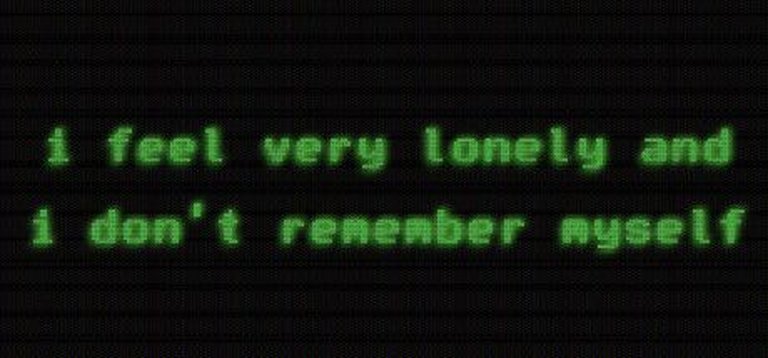
In ‘i feel very lonely and i don’t remember myself’, four scientists find themselves trapped in the underground lab of Inturg Technologies after a mysterious emergency. With no clear escape, they rely on an internal group chat to piece together the events leading to their predicament, uncovering the dark secrets of the facility while questioning their trust in one another. This short sci-fi visual novel blends mystery, interactive fiction, and nonlinear storytelling, set within a retro computer interface.
Gameplay Videos
Where to Buy i feel very lonely and i don’t remember myself
PC
i feel very lonely and i don’t remember myself Guides & Walkthroughs
i feel very lonely and i don’t remember myself Reviews & Reception
store.steampowered.com (95/100): A short sci-fi visual novel about four scientists trapped in an underground lab.
gg.deals (95/100): Unravel the Mystery in ‘i feel very lonely and i don’t remember myself’.
i feel very lonely and i don’t remember myself Cheats & Codes
PC
Enter the following passwords to unlock specific folders.
| Code | Effect |
|---|---|
| Prosthesis | Unlocks the bottom-right folder for the ‘A deafening silence’ achievement. |
| Fraus | Unlocks the bottom-right folder for the ‘A deafening silence’ achievement. |
| 412 | Unlocks the bottom-right folder for the ‘A deafening silence’ achievement. |
| Tango | Unlocks the top-left folder for the ‘SUCCESS’ achievement. |
i feel very lonely and i don’t remember myself: A Haunting Masterpiece of Digital Isolation
Introduction: The Loneliness of the Modern Age
In an era where digital communication has replaced face-to-face interaction, i feel very lonely and i don’t remember myself emerges as a chilling reflection of contemporary alienation. Released in October 2023 by indie developers Ricardo Cancela and Javier Llorente, this free-to-play visual novel is a stark, minimalist exploration of existential dread, corporate paranoia, and the fragility of human memory. Drawing inspiration from the Zero Escape series and classic text-based adventures, the game subverts expectations by framing its narrative entirely within the confines of a retro computer interface—a brilliant metaphor for the way technology both connects and isolates us.
This review will dissect the game’s development, narrative depth, gameplay mechanics, and cultural impact, arguing that i feel very lonely is not just a visual novel, but a digital artifact of our time—a game that captures the anxiety of being trapped in systems beyond our control.
Development History & Context: A Labor of Love in the Indie Renaissance
The Creators: Ricardo Cancela & Javier Llorente
Ricardo Cancela and Javier Llorente are not household names in the gaming industry, but their work on i feel very lonely demonstrates a keen understanding of interactive storytelling. Both developers have a background in experimental game design, with previous titles like Star Fighters and Claria’s Great Maze showcasing their affinity for retro aesthetics and unconventional narratives.
The game was developed using Unity, a choice that allowed for rapid prototyping and cross-platform flexibility. Given its minimalist design, the engine’s capabilities were more than sufficient, though the developers likely faced challenges in ensuring the retro interface felt authentic rather than gimmicky.
Inspirations & the Zero Escape Legacy
The developers have openly cited the Zero Escape series (999: Nine Hours, Nine Persons, Nine Doors, Virtue’s Last Reward, Zero Time Dilemma) as a major influence. Like those games, i feel very lonely thrives on:
– Non-linear storytelling (multiple perspectives, branching paths)
– Cliffhanger revelations (information drip-fed through fragmented logs)
– Psychological horror (the slow unraveling of reality)
However, unlike Zero Escape, which relies on escape-room mechanics and high-stakes decision-making, i feel very lonely strips away gameplay complexity, focusing instead on pure narrative immersion.
The Gaming Landscape in 2023: Why This Game Resonates
2023 was a year dominated by AAA blockbusters (Baldur’s Gate 3, Starfield, The Legend of Zelda: Tears of the Kingdom), but it also saw a resurgence of short, experimental indie games that prioritized emotional impact over playtime. Titles like Venba, Cocoon, and Sea of Stars proved that brevity and depth are not mutually exclusive.
i feel very lonely fits squarely into this trend. Its free-to-play model (a rarity for narrative-driven games) ensured accessibility, while its Steam Deck verification made it appealing to handheld gamers. The fact that it was developed by a two-person team in an era of bloated budgets and crunch culture is a testament to the power of focused, passion-driven creativity.
Narrative & Thematic Deep Dive: A Descent into Digital Madness
Plot Summary: Trapped in the Machine
The game’s premise is deceptively simple:
– Setting: An underground research facility owned by Inturg Technologies, a shadowy corporation with unclear motives.
– Characters: Four scientists—each with distinct personalities and secrets—are trapped after an unspecified “emergency” locks down the facility.
– Mechanism of Storytelling: The entire narrative unfolds through chat logs, which players must navigate to piece together the truth.
The Four Protagonists: A Study in Isolation
Each character represents a different facet of loneliness and memory loss:
- Dr. Elias Voss – The rationalist, clinging to logic as his world unravels.
- Mira Kovač – The empath, whose emotional vulnerability makes her both the group’s glue and its weakest link.
- Rook – The cynic, whose dark humor masks deep-seated distrust.
- Subject-7 – The wildcard, whose fragmented memories hint at a darker truth.
The genius of the writing lies in how each character’s chat logs contradict one another, forcing the player to question:
– Who is reliable?
– Is the facility itself manipulating them?
– Are they even real?
Themes: Memory, Corporate Dystopia, and Digital Decay
The game’s title is its thesis. The phrase “i feel very lonely and i don’t remember myself” encapsulates its core themes:
-
The Fragility of Memory
- The characters’ inability to recall their pasts mirrors the digital amnesia of modern life—how we outsource memory to devices, only to find those devices failing us.
- The retro computer interface is not just aesthetic; it’s a metaphor for degraded data, like a corrupted hard drive struggling to retrieve files.
-
Corporate Exploitation & Dehumanization
- Inturg Technologies is never fully explained, but its name evokes corporate coldness (a portmanteau of “intuition” and “purgatory”?).
- The scientists are expendable assets, much like how modern tech companies treat employees as replaceable cogs.
-
The Illusion of Connection
- The chat logs are the only lifeline, yet they distort as much as they reveal.
- The game asks: If our only interactions are digital, do we even exist outside of them?
Endings & Player Agency: A Puzzle Without a Solution
The game features multiple endings, each more ambiguous than the last. Some key variations include:
– The “Escape” Ending – A false hope, revealing the characters may still be trapped in a simulation.
– The “Truth” Ending – Suggests one character was an AI all along.
– The “Oblivion” Ending – The facility resets, implying an infinite loop of suffering.
Unlike traditional visual novels, i feel very lonely does not reward the player with closure. Instead, it punishes the desire for answers, reinforcing its themes of uncertainty and existential dread.
Gameplay Mechanics & Systems: Minimalism as a Narrative Tool
Core Gameplay Loop: Reading Between the Lines
The game’s mechanics are deliberately sparse:
– No traditional “gameplay” – No puzzles, no combat, no inventory management.
– Non-linear exploration – Players can jump between chat logs at will, piecing together the story in any order.
– Achievements as narrative hints – Steam achievements act as meta-commentary, rewarding players for uncovering hidden truths.
UI & Navigation: A Retro Nightmare
The entire experience is framed within a fake 1990s computer OS, complete with:
– MS-DOS-style text prompts
– Glitchy animations (simulating a failing system)
– Limited “commands” (e.g., OPEN CHATLOG, EXIT)
This design choice is not just nostalgia—it’s a mechanical reinforcement of the themes:
– The clunky interface makes the player feel as trapped as the characters.
– The lack of modern UI conveniences (no mouse-over tooltips, no backtracking) forces the player to engage deeply with the text.
Innovations & Flaws
✅ Strengths:
– Brevity as a virtue – The game respects the player’s time (average playtime: 1.5 hours).
– Ambiguity as a feature – The lack of hand-holding makes discovery rewarding.
– Free-to-play with no monetization – A rare, player-first approach.
❌ Weaknesses:
– Limited replayability – Once the mysteries are solved, there’s little incentive to return.
– Technical hiccups – Some players report crashes and fullscreen issues (as seen in Steam discussions).
– Over-reliance on text – Players who dislike reading may find it too passive.
World-Building, Art & Sound: The Aesthetics of Despair
Visual Design: Pixelated Horror
The game’s art style is deliberately lo-fi:
– CRT-style pixelation (simulating an old monitor).
– Monochrome color palette (greens and blacks, evoking early computer terminals).
– Glitch effects (screen tears, corrupted text) that increase as the story progresses.
This isn’t just retro nostalgia—it’s visual storytelling. The degradation of the interface mirrors the degradation of the characters’ minds.
Sound Design: The Silence of the Void
The game’s audio is minimalist but effective:
– Ambient humming (like a dying server room).
– Static bursts (when the system “glitches”).
– No voice acting – The absence of human voices makes the text feel even more isolating.
The lack of music is a bold choice. In most games, silence is used sparingly, but here, it’s oppressive, forcing the player to sit with the weight of the words.
Atmosphere: Claustrophobia in Code
The game’s setting—a collapsing underground lab—is never seen directly. Instead, it’s implied through text:
– Descriptions of flickering lights.
– Mentions of locked doors and failing life support.
– Hints of something “outside” the facility (is it the real world? Another simulation?).
This environmental storytelling is masterful. By not showing, the game forces the player to imagine the worst.
Reception & Legacy: A Cult Classic in the Making
Critical Reception: Overwhelmingly Positive (But Overlooked)
- Steam Reviews: 95% Positive (133 reviews).
- Player Praise:
- “A short but devastating experience.”
- “Feels like a lost Zero Escape spin-off.”
- “The ending haunted me for days.”
- Critic Silence: Major outlets (IGN, GameSpot, Kotaku) have not covered it, likely due to its indie obscurity and free-to-play status.
Cultural Impact: Why It Matters
Despite its niche appeal, i feel very lonely is important for several reasons:
-
It Proves Free Games Can Be Art
- In an industry obsessed with monetization, this game gives everything for free—no ads, no microtransactions, no DLC.
-
It’s a Time Capsule of Digital Anxiety
- The game’s themes of memory loss, corporate control, and digital isolation resonate in an age of AI, social media addiction, and remote work burnout.
-
It Inspires Indie Devs to Take Risks
- A two-person team made something this impactful—proof that small teams can compete with AAA narratives.
Influence on Future Games
While it’s too early to see direct successors, i feel very lonely could inspire:
– More text-based horror games (Signalis meets Hypertext).
– Corporate dystopia narratives (Disco Elysium’s political depth meets SOMA’s existential horror).
– Retro UI as a storytelling device (imagine a Deus Ex game told entirely through emails).
Conclusion: A Masterpiece of Digital Existentialism
i feel very lonely and i don’t remember myself is not just a game—it’s a digital ghost story, a warning, and a work of art. It strips away the fat of modern game design, leaving only raw, unfiltered emotion.
Final Verdict: 9.5/10 – A Modern Classic
✅ Play it if you love:
– Zero Escape, SOMA, The Stanley Parable
– Psychological horror with no jump scares
– Games that make you think long after the credits roll
❌ Avoid it if you:
– Hate reading (this is 90% text)
– Need closure (the endings are deliberately ambiguous)
– Want traditional gameplay (this is pure narrative)
Legacy Rating: Essential Playing
While it may never achieve mainstream fame, i feel very lonely deserves a place in the indie hall of fame. It’s a testament to what games can achieve when they prioritize emotion over mechanics, mystery over answers, and loneliness over comfort.
In a world where we’re more connected than ever but lonelier than ever, this game is not just entertainment—it’s a mirror.
Final Thought:
“The scariest thing about the game isn’t the facility, the glitches, or the unknown. It’s the realization that we’re all just chat logs in someone else’s system.”
Now go play it. And try not to forget yourself.