
- Release Year: 2018
- Platforms: Windows, Xbox One, Xbox Series
- Publisher: GameChanger Charity, ++Good Games
- Genre: Action
- Perspective: 3rd-person
- Game Mode: Single-player
- Gameplay: Platform
- Average Score: 61/100
Description
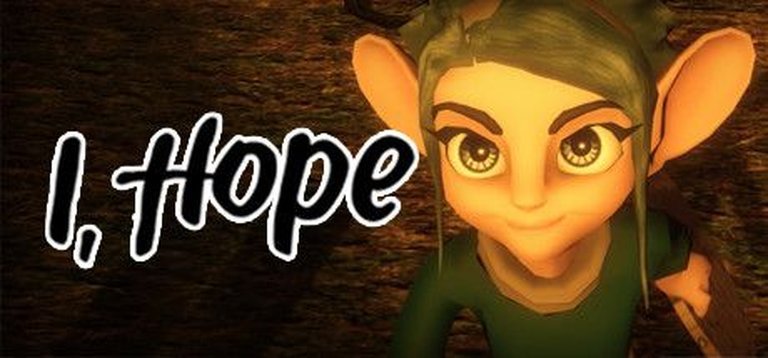
I, Hope is a 3D adventure game designed to help children with cancer cope with their illness and treatment. Players take on the role of Hope, a young girl whose island home is destroyed by a monster named ‘Cancer.’ Throughout the game, Hope embarks on a journey across five unique islands, each representing a different weapon—such as Knowledge, Strength, Courage, and Support—to ultimately battle the disease. Developed with input from child-life experts and featuring original music by a cancer survivor, the game delivers a heartfelt message of resilience and hope, with all proceeds benefiting GameChanger Charity.
Where to Buy I, Hope
PC
I, Hope Reviews & Reception
metacritic.com (40/100): I, Hope doesn’t do an awful lot right with its relatively short, couple of hours, adventure, with problems in the gameplay mechanics standing in the way and immense frustration found at dying through no fault of your own.
twobeardgaming.wordpress.com (80/100): All in all, this is a great game which is worth the £7.99 it costs on the Microsoft store or £7.49 on steam and the game is donating 100% of the profits to a charity that is worthwhile.
steambase.io (84/100): I, Hope has earned a Player Score of 84 / 100.
thexboxhub.com (40/100): Unfortunately, the underlying message behind the game is one of very few positives in I, Hope and the story here is very basic.
I, Hope: A Game of Courage, Compassion, and the Power of Play
Introduction: A Game Born from Heartbreak and Hope
Few video games dare to tackle the raw, unfiltered pain of childhood illness. Fewer still manage to do so with the kind of tenderness and purpose that I, Hope embodies. Released in 2018 by solo developer Kenny Roy, this third-person adventure is not just a game—it’s a lifeline, a therapeutic tool, and a testament to the healing power of interactive storytelling. At its core, I, Hope is a metaphorical journey through the emotional and psychological battles faced by children fighting cancer, framed as a fantastical quest where a young girl named Hope must reclaim her world from a monstrous entity called Cancer.
This review will dissect I, Hope in its entirety—its development, narrative depth, gameplay mechanics, artistic vision, and lasting impact. We’ll explore how it succeeds as both a charitable endeavor and a gaming experience, while also acknowledging its technical shortcomings. Most importantly, we’ll examine why, despite its flaws, I, Hope remains one of the most emotionally resonant and socially significant indie games of the past decade.
Development History & Context: A Labor of Love and Loss
The Vision Behind the Game
Kenny Roy, a former animator and VFX artist with nearly two decades of experience, shifted his focus to game development with a deeply personal mission. Inspired by the struggles of children battling cancer—including his own experiences with loved ones affected by the disease—Roy sought to create a game that could serve as both a distraction and an empowering narrative for young patients. The result was I, Hope, a project that took two years to develop and was funded in part through an Indiegogo campaign, with additional support from Microsoft’s ID@Xbox program.
A Game for a Cause
From its inception, I, Hope was designed to be more than entertainment. Roy partnered with GameChanger Charity, a nonprofit dedicated to easing the suffering of children with life-threatening illnesses through technology and innovation. In an unprecedented move, 100% of the game’s proceeds were pledged to the charity, ensuring that every purchase directly supported families in need. This philanthropic model was groundbreaking in the gaming industry, where even the most well-intentioned “charity games” often retain a portion of profits.
Technological and Industry Context
Released in February 2018 for PC (via Steam) and later for Xbox One, I, Hope was built using the Unity engine, a popular choice for indie developers due to its accessibility. The game’s development coincided with a growing trend of “games for good”—titles like That Dragon, Cancer (2016) and Sea of Solitude (2019) that used interactive media to explore themes of grief, mental health, and illness. However, I, Hope distinguished itself by targeting a younger audience and incorporating child-life therapy principles, developed in consultation with medical experts to ensure its emotional messaging resonated with its intended players.
The Gaming Landscape in 2018
At the time of its release, the indie scene was flourishing, with narrative-driven experiences like Celeste and Night in the Woods gaining critical acclaim. Platformers, too, were experiencing a renaissance, thanks to titles like Hollow Knight and Ori and the Blind Forest. I, Hope entered this space not as a competitor but as a complementary experience—one that prioritized emotional impact over mechanical complexity.
Narrative & Thematic Deep Dive: A Metaphor for Survival
Plot Summary: The Battle Against the Monster
The game opens on a serene, floating island where Hope, a young girl, lives with her wise Grandpa. Their peace is shattered when a monstrous entity—Cancer—crashes onto the island, corrupting the land and its creatures. Grandpa, serving as both narrator and guide, sends Hope on a quest to five distinct islands, each representing a different weapon in the fight against cancer:
- Knowledge – The power of understanding one’s illness.
- Strength – The physical and emotional resilience needed to endure treatment.
- Courage – The bravery to face fear and uncertainty.
- Support – The importance of community and loved ones.
- Hope – The inner light that sustains the fight.
Each island culminates in a battle against one of Cancer’s tentacles, symbolizing the incremental victories in a patient’s journey. The final confrontation is not just a boss fight but a metaphorical triumph of the human spirit.
Characters and Dialogue: Simplicity with Depth
- Hope – The silent protagonist, whose determination and vulnerability make her relatable to young players. Her lack of spoken dialogue allows players to project their own emotions onto her.
- Grandpa – The game’s moral compass, voiced with a gentle, encouraging tone. His dialogue, while occasionally repetitive, reinforces the game’s themes of perseverance.
- The Creatures – Corrupted by Cancer, these enemies represent the physical and emotional toll of the disease. Freeing them (via combat) symbolizes reclaiming agency.
Themes: More Than Just a Metaphor
I, Hope is a masterclass in symbolic storytelling. Every element of its design serves a dual purpose:
– The Islands as Stages of Treatment – Each island reflects a different phase of a cancer patient’s journey, from diagnosis (Knowledge) to remission (Hope).
– Combat as Therapy – Battling enemies and solving puzzles mirror the mental and physical struggles of treatment.
– Collectibles as Milestones – The hidden “HOPE” letters scattered across levels serve as reminders of progress, much like small victories in real-life recovery.
Emotional Resonance: Why It Works
The game’s greatest strength is its authenticity. Roy consulted with child-life specialists to ensure the narrative aligned with the psychological needs of young cancer patients. The result is a story that:
– Empowers – By framing the player as the hero, it counters the helplessness often felt during illness.
– Educates – It demystifies cancer in a way that’s accessible to children.
– Comforts – The soothing narration and uplifting ending provide a sense of closure.
Gameplay Mechanics & Systems: A Flawed but Functional Adventure
Core Gameplay Loop: Platforming with Purpose
I, Hope is, at its heart, a 3D platformer with light puzzle and combat elements. The structure is linear, with each island introducing a new ability that alters gameplay:
| Island | Ability | Gameplay Impact |
|---|---|---|
| Knowledge | Goggles (Reveal Hidden Paths) | Solves environmental puzzles. |
| Strength | Gauntlets (Move Objects) | Enables object manipulation puzzles. |
| Courage | Gong (Freeze Enemies) | Adds combat strategy. |
| Support | Trumpet (Create Platforms) | Expands traversal options. |
| Hope | (Final Ability) | Combines all skills for the climax. |
Combat: Simple but Satisfying
Combat is basic but effective, consisting of:
– Staff Attacks (X button) – A light melee strike.
– Roll Dodge (B button) – Essential for avoiding enemy attacks.
– Energy Blast (Right Trigger) – Charged by absorbing “dark cells” from defeated foes.
While combat lacks depth, it serves its purpose: providing a sense of agency without overwhelming younger or less experienced players.
Puzzles: Clever but Occasionally Frustrating
The puzzles start simple (e.g., using goggles to find hidden paths) but ramp up in complexity, requiring multi-step solutions that combine abilities. Some standout examples:
– The Labyrinth of Knowledge – A maze where only the goggles reveal the correct path.
– The Strength Gauntlet Challenges – Moving blocks to create bridges or activate switches.
– The Support Island’s Platforming – Using the trumpet to create temporary bridges mid-air.
However, the game’s biggest flaw lies in its technical execution:
– Imprecise Controls – Jumping and platforming can feel stiff, leading to unfair deaths.
– Buggy Physics – Objects sometimes fail to move when using the Strength gauntlets.
– Camera Issues – The fixed isometric perspective occasionally obscures critical platforming sections.
Progression and Replayability
- Linear but Meaningful – The game is short (2-3 hours), but its emotional weight makes it memorable.
- Collectibles – The “HOPE” letters encourage exploration but don’t add significant replay value.
- No Difficulty Options – A missed opportunity, as younger players might struggle with some sections.
UI and Accessibility
The UI is minimalist and child-friendly, with large, clear icons and a narrative-driven HUD that avoids overwhelming players. However, the lack of customizable controls or subtitles (beyond the narration) limits accessibility.
World-Building, Art & Sound: A Dreamlike Escape
Visual Design: A Storybook Aesthetic
I, Hope’s art style is its most striking feature—a vibrant, storybook-inspired world that contrasts the darkness of its themes with whimsical, colorful environments.
- The Islands – Each has a distinct visual identity:
- Knowledge – Lush greenery and ancient ruins.
- Strength – A volcanic landscape with crumbling bridges.
- Courage – A haunted, misty forest.
- Support – A celestial, star-filled sky island.
- Hope – A radiant, golden paradise.
- Character Design – Hope’s design is intentionally simple and expressive, making her relatable to children.
Atmosphere: A Balance of Wonder and Dread
The game’s tone shifts seamlessly between:
– Hopeful – Bright, open spaces with soaring music.
– Ominous – Dark, corrupted areas where Cancer’s influence is strongest.
This duality reinforces the game’s central theme: even in darkness, light persists.
Sound Design and Music: An Emotional Soundtrack
Composed by Taylor Carol, a cancer survivor and founder of GameChanger Charity, the soundtrack is ethereal and moving, blending orchestral and electronic elements. Key tracks include:
– “Hope’s Theme” – A gentle, uplifting melody that plays during moments of triumph.
– “The Monster’s Roar” – A deep, distorted sound that accompanies Cancer’s appearances.
– “Island of Courage” – A haunting, atmospheric piece that underscores the game’s darker moments.
Voice Acting – Grandpa’s narration is warm and reassuring, though some lines are repeated ad nauseam, which can break immersion.
Reception & Legacy: A Game That Transcends Scores
Critical Reception: Mixed but Meaningful
I, Hope received polarized reviews from critics:
– Praised for:
– Its emotional impact and charitable mission.
– Its unique premise and artistic vision.
– Criticized for:
– Technical issues (bugs, controls, camera).
– Short length and lack of depth in gameplay.
Notable Reviews:
– TheXboxHub (40/100) – “The execution of the idea is what hampers the experience.”
– Xbox Tavern (36/100) – “A shoddy platformer that’s bland, frustrating, and underdeveloped.”
– Two Beard Gaming (8/10) – “A great game… worth the £7.99, and 100% of profits go to charity.”
Player Reception: A Cult Following
Despite mixed critical reception, player reviews on Steam (84% Positive) highlight the game’s emotional resonance:
– Many players praised its message of hope and charitable model.
– Parents of children with cancer reported that the game helped their kids cope during treatment.
Legacy: Paving the Way for “Games for Good”
I, Hope’s most significant impact lies in its philanthropic model and therapeutic design:
– It proved that games could be both commercially viable and socially impactful.
– It inspired other developers to explore games as tools for mental health and healing.
– It set a precedent for 100% charity-driven game development, a rarity in the industry.
Influence on Later Games
While I, Hope didn’t spawn direct sequels, its influence can be seen in:
– Games like Sea of Solitude (2019) – Which also deals with emotional struggles through metaphorical gameplay.
– Charity-driven indie titles – Such as Before Your Eyes (2021), which donates proceeds to mental health organizations.
Conclusion: A Flawed Masterpiece of Heart and Hope
I, Hope is not a perfect game—far from it. Its clunky controls, repetitive puzzles, and technical shortcomings prevent it from being a standout platformer in a mechanical sense. However, to judge it solely on gameplay would be to miss the point entirely.
This is a game that transcends traditional metrics of success. It is:
– A therapeutic tool for children facing unimaginable hardship.
– A beacon of hope for families affected by cancer.
– A testament to the power of games as empathy machines.
In an industry often criticized for prioritizing profit over purpose, I, Hope stands as a rare, shining example of what games can achieve when made with genuine compassion.
Final Verdict: 7.5/10 – “A Must-Play for the Heart, Despite Its Flaws”
- For Gamers: A short but meaningful experience, best appreciated for its narrative and artistic merits.
- For Parents & Caregivers: An invaluable resource for children undergoing treatment.
- For the Industry: A reminder that games can—and should—be forces for good.
If you play one game this year that makes a difference, let it be I, Hope.
Where to Buy:
– Steam ($9.99)
– Xbox Store
All proceeds go to GameChanger Charity.