
- Release Year: 2022
- Platforms: Macintosh, Nintendo Switch, PlayStation 5, Windows
- Publisher: Boomzap Inc, Ocean Media d.o.o.
- Developer: Tiny Little Lion
- Genre: Puzzle
- Game Mode: Single-player
- Gameplay: Hidden object, Point and select
- Average Score: 75/100
Description
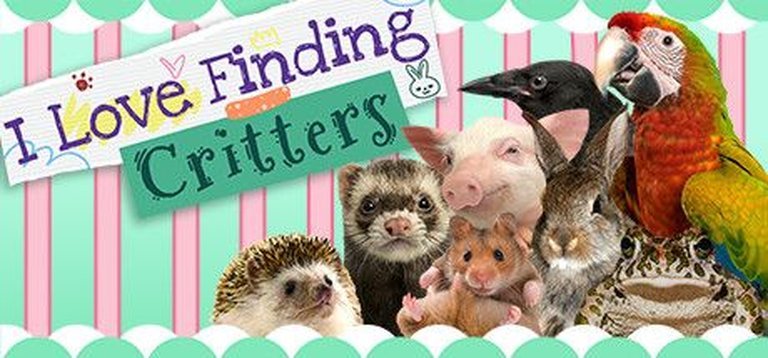
I Love Finding Critters! (Collector’s Edition) is a hidden object puzzle game where players explore beautifully animated scenic locations to search for a diverse range of cute animals, including squirrels, hamsters, chicks, and ducks. Alongside the core hidden object gameplay, it offers over 20 minigames, puzzle-solving, and the unique mechanic of discovering and adopting found critters, all enhanced with Collector’s Edition digital extras and vibrant visuals.
Gameplay Videos
I Love Finding Critters! (Collector’s Edition): A Casual Connoisseur’s Compendium
Introduction: The Gentle Art of Finding
In the vast and varied ecosystem of video games, some titles carve out a niche not through groundbreaking innovation or narrative profundity, but by perfecting a specific, soothing loop of engagement. I Love Finding Critters! (Collector’s Edition) is precisely such a title. Released in 2022 by the prolific studio Tiny Little Lion and published by Boomzap Inc. and Ocean Media, this game is a quintessential entry in the “hidden object” genre—a digital rendition of the classic children’s activity book, elevated with production polish and a Collector’s Edition glut of content. This review will argue that while I Love Finding Critters! exemplifies the comforting, formulaic excellence of the casual puzzle genre, its historical significance lies not in its mechanics, which are par for the course, but in its role as a meticulously packaged commodity within a thriving, underserved market. It is a game less about transformative play and more about providing a reliably pleasant, low-stakes cognitive retreat.
Development History & Context: The Assembly Line of Adoration
To understand I Love Finding Critters!, one must understand its developer and its genre. Tiny Little Lion is not a household name in the AAA sphere, but within the realm of casual and hidden object games (often termed “HOGs”), it is a consistent and productive studio. The game emerges from a lineage of similar titles from both this studio and its publisher, Boomzap, which has a vast portfolio of such games. The “I Love Finding…” series itself is a branding strategy, with variants focusing on Cats, Pups, Birds, and more, released annually or semi-annually. This context reveals the game’s primary constraint: technological and creative resources are focused on quantity, efficiency, and a proven aesthetic formula, not on pushing hardware limits or reinventing gameplay.
The gaming landscape of 2022 was bifurcated. While blockbusters and live-service games dominated discourse, a robust and profitable market for “casual” and “hyper-casual” games persisted, primarily on PC (via Steam and platforms like Big Fish Games), mobile, and Nintendo Switch. These titles cater to an audience seeking stress relief, short play sessions, and zero punishing mechanics. I Love Finding Critters! was developed for this exact ecosystem. Its multi-platform release (Windows, Macintosh, Nintendo Switch in 2022; PlayStation 5 in 2023) demonstrates a strategic approach to maximize reach within this demographic. The “Collector’s Edition” moniker is a direct import from the PC casual game market, where bundling bonus content, wallpapers, and soundtracks is standard practice to justify a premium price point (here, $11.99 on most stores, with a lower $5.99-$9.99 tier on some platforms).
Narrative & Thematic Deep Dive: The Plot is the Player’s Own
If one searches for a traditional narrative in I Love Finding Critters!, they will find only the faintest of scaffolding. The official description provides the entire plot: “Find them all in beautiful scenic locations and solve puzzles and play mini games as you go along… Discover and adopt all the animals!” There is no protagonist, no villain, no dialogue, and no overarching story. This is not a oversight but a design philosophy. The narrative is emergent and entirely player-driven. The “theme” is pure, unadulterated positivity and collection.
The “adopt all the animals” mechanic is the game’s only persistent goal and its de facto narrative arc. Each successful hidden object scene or minigame presumably yields a new virtual pet to populate a personal gallery or “home.” This taps into deep-seated psychological rewards: the joy of collecting, the nurturing impulse (even if simulated), and the satisfaction of completing a set. The critters themselves—”squirrels, hamsters, chicks, ducks, and so many more!”—are archetypes of cuteness, designed to elicit an “aww” response without complex animation or personality. The thematic depth lies in its therapeutic simplicity: the world is a beautiful place full of adorable things waiting to be found and cherished. Conflict, loss, or complexity is absent by design, making it a digital sanctuary.
Gameplay Mechanics & Systems: The Relentless, Satisfying Loop
The core gameplay is the definition of a hidden object game (HOG), executed with genre-standard precision. The interface is “point and select,” typically presenting a cluttered, illustrated scene (the “location”) on one side and a list of items to find on the other. The player scans the scene, clicks on the matching items, and checks them off. The “Visual” genre tag of “Fixed / flip-screen” indicates these scenes are static, beautifully drawn illustrations, not dynamic 3D environments.
The core gameplay loop is thus:
1. Enter a location (a garden, a meadow, a cozy living room).
2. Receive a list of 10-15 animals/objects to find within the scene.
3. Use the mouse or touchscreen to locate and click them.
4. Receive immediate feedback (a satisfying sound/visual cue), the item is removed from the list and the scene.
5. Upon completion, receive a reward (likely one of the adoptable critters, in-game currency, or progress towards the next area).
6. Repeat with a new scene or intersperse with a minigame.
The “over 20 fun minigames” mentioned in all descriptions are the primary source of gameplay variety. These are almost certainly classic casual minigame templates: jigsaw puzzles, memory matching (concentration), Mahjong solitaire, spot-the-difference, bubble-shooter variants, or simple tile-matching games (match-3). They serve as palate cleansers between the primary hidden object searches. Their inclusion in the “Collector’s Edition” (12 additional minigames) suggests the base game had a set of standard ones, and the CE expands the library.
The “Collector’s Edition” content is the game’s main value proposition beyond the base loop:
* 6 extra BONUS locations: Extends the total number of unique scenes, directly increasing playtime and variety in the HOG core.
* 12 new mini games: Further diversifies the secondary gameplay.
* Downloadable wallpapers and music player: Non-gameplay bonuses that cater to fans wanting to extend the aesthetic experience to their desktop.
* “Meet the developers’ adorable critters!”: A charming, meta-textual bonus where the actual pets of the Tiny Little Lion team are featured, blurring the line between game and developer persona—a common touch in indie/casual scenes to foster community.
Innovation or Flaw? There is no evidence of innovative systems in the provided material. The game is explicitly positioned as “a classic hidden object game.” A potential flaw is noted in the Steam community discussions: a reported bug in a Cinco de Mayo-themed scene where a butterfly is obscured by a doll, making it impossible to complete. This highlights a typical risk in such content-heavy games: with hundreds of items placed across dozens of scenes, collision detection or layering bugs can occur, breaking the completionist’s satisfaction. The UI is described as “point and select,” implying a clean, accessible, and likely intuitive interface with no reported major usability issues.
World-Building, Art & Sound: Beauty in the Static
The world of I Love Finding Critters! is not a world of lore but a world of aesthetic. The sources repeatedly emphasize “beautiful, animated backgrounds” and “stunning hidden object scenes.” This suggests a visual style characterized by:
* Fixed/Flipped-Screen Art: High-detail, hand-drawn (or digitally painted) 2D illustrations. These are likely colorful, saturated, and cheerful, evoking storybook or greeting card aesthetics.
* Thematic Cohesion: Locations are “scenic”—forests, parks, farmyards—reinforcing the nature/animal theme.
* Animated Elements: While the screen is fixed, individual items (a waving tail, a blinking eye, a rustling leaf) are likely subtly animated to create life and make the search more dynamic.
The sound design is implied by the “relaxing, themed soundtrack” included as a bonus. This points to a score consisting of light, acoustic, or gentle piano music, perhaps with nature soundscapes (birds chirping, soft breezes). The sound effects for finding items would be crisp, pleasing, and non-intrusive (a chime, a happy animal noise). The entire audiovisual package is engineered for calm. There is no tension, no dissonance, no surprise scares. It is an aural and visual blanket.
These elements contribute to the overall experience by reinforcing the therapeutic premise. The player is not exploring a dangerous world or solving a grim mystery; they are virtuously strolling through a perpetually sunny, well-ordered garden where every creature is friendly and every click yields positive reinforcement. The art and sound are the primary carriers of the game’s “vibe.”
Reception & Legacy: Quiet Success in a Quiet Genre
Critical reception for I Love Finding Critters! (Collector’s Edition) is virtually non-existent in the provided sources. MobyGames has no critic reviews, and Nintendo Life states “sorry, no… review yet.” This is telling. The hidden object genre operates almost entirely outside the traditional games press. Its audience discovers titles through digital storefronts (Steam, Nintendo eShop, Big Fish Games), word-of-mouth in casual gaming communities, or algorithm-driven recommendations. As such, it has a different critical ecosystem, often based on star ratings in stores.
The commercial reception can be gauged from platform store data:
* On the PlayStation Store, it holds an average rating of 3.76 out of 5 stars from 25 ratings. This is a middling-to-good score, suggesting satisfaction but not狂热 devotion. The breakdown (48% 5-star, 20% 4-star, 12% 3-star) indicates most players are pleased, with a significant minority feeling neutral or negative.
* The price point strategy is key. At $5.99-$11.99, it is an impulse buy. The Collector’s Edition content justifies the higher end of that range for enthusiasts.
* Its legacy is tied to the “I Love Finding” series. It is one entry in a long-running, successful franchise for Boomzap/Tiny Little Lion. Its influence is not on the broader industry—it does not inspire clones in the AAA space—but it cements and perpetuates the conventions of the casual HOG. It proves there is a consistent market for a specific, low-friction, high-comfort gaming experience. It is a testament to the power of niche markets and the enduring appeal of the “find the thing” mechanic when wrapped in a charming, animal-centric package.
Conclusion: A Masterclass in Comfort Food Gaming
I Love Finding Critters! (Collector’s Edition) is not a game that will be debated in “greatest of all time” lists. It will not be studied for its narrative design or technical prowess. Its place in video game history is as a perfect embodiment of a sustainable, niche genre. It delivers exactly what it promises: a large collection of beautiful, static scenes filled with cute animals to find, interspersed with a variety of simple minigames, all wrapped in a cheerful aesthetic and packaged with generous digital bonuses for collectors.
Its strengths are also its limitations: it is flawlessly functional, utterly stress-free, and perfectly predictable. For its target audience—players seeking a mindful, rewarding, and uncomplicated diversion—it is likely a five-star experience. For the historian, it is a fascinating data point on the economics and design of casual gaming, demonstrating how a studio can build a reliable brand (I Love Finding…) by iterating on a beloved formula with thematic variations. It is the gaming equivalent of a well-made, soothing cup of tea: not revolutionary, but deeply satisfying when that is precisely what one needs.
Final Verdict: 3.5 out of 5. A genre-defining, if genre-constrained, example of polished casual entertainment. Highly recommended for its intended audience; irrelevant for those seeking challenge or narrative depth.