
- Release Year: 2007
- Platforms: Windows
- Publisher: Merscom LLC, rondomedia Marketing & Vertriebs GmbH, Tri Synergy, Inc.
- Developer: cerasus.media GmbH
- Genre: Action, Puzzle
- Perspective: Behind view, Side view, Top-down
- Game Mode: Single-player
- Gameplay: Arcade, Mini-games, Paddle, Pong
Description
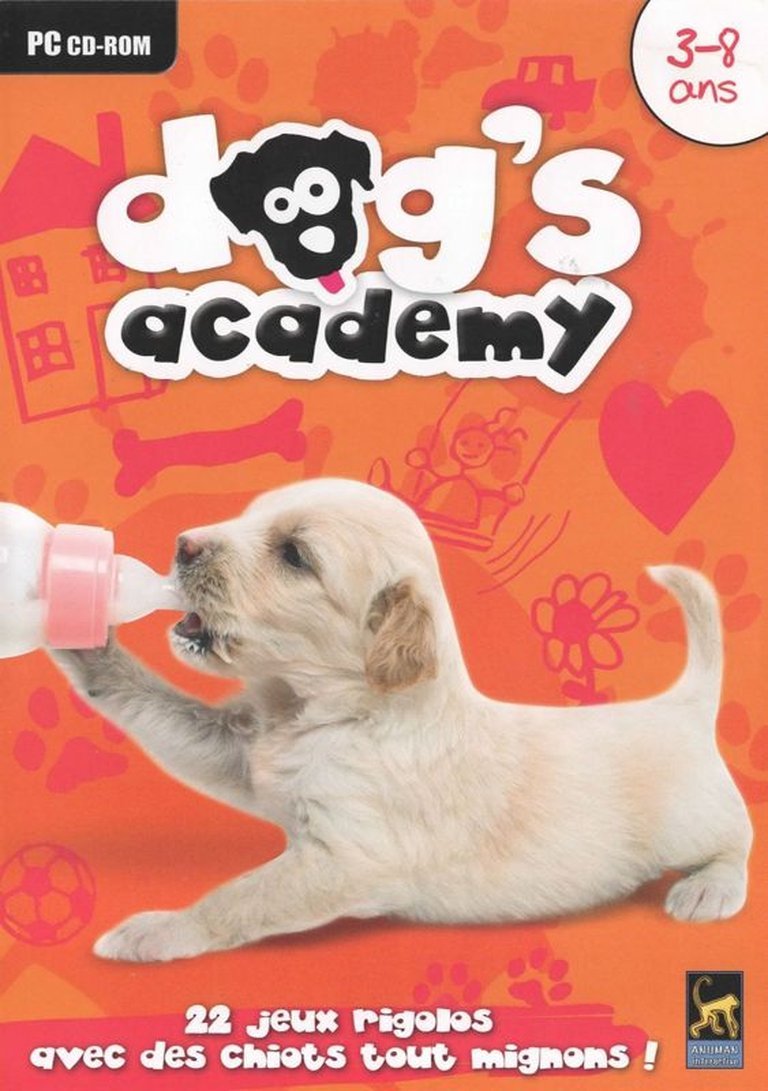
I Love Puppies! is a compilation of 22 canine mini-games that combines traditional dog show activities like hurdle jumping and grooming with imaginative and outlandish scenarios such as launching puppies skyward to score sausages. Organized into Training, Care, and Fun and Games categories, players interact with various breeds including Chihuahuas and Labradors, guided by a perky voice, and can unlock printable dog images through the Treasure Chest feature.
I Love Puppies!: Review
Introduction: The Bark That Echoed in Obscurity
In the vast, sprawling library of video game history, some titles achieve legendary status through critical acclaim or commercial dominance, while others occupy a more curious niche: the culturally specific, commercially modest, and critically ignored artifact that tells us more about its era than any blockbuster. I Love Puppies! is unequivocally one of the latter. Released for Windows in February 2007 by the German studio cerasus.media GmbH, this collection of 22 canine-themed mini-games is a product of the mid-2000s casual gaming boom, a period defined by the explosive success of Nintendo’s DS (Nintendogs, 2005) and the burgeoning market for simple, accessible, and often hyper-specific PC titles. It is a game with no traditional narrative, minimal mechanical depth, and zero recorded critic reviews on major aggregators like Metacritic. Yet, as a historian, its value lies precisely in this transparency: it is a pure, unadorned specimen of a business model and design philosophy aimed squarely at a non-gaming demographic. My thesis is this: I Love Puppies! is not a failed game, but a perfectly successful artifact of its targeted niche—a cheerful, disposable, and functional piece of interactive entertainment that successfully commodified the innate appeal of puppies for a PC audience, even as it left virtually no lasting imprint on the industry’s creative or technical trajectory.
Development History & Context: The Puppy Mill of Casual PC Gaming
To understand I Love Puppies!, one must first understand the studio and the market it served. cerasus.media GmbH, the developer, is a relatively obscure German company whose portfolio consists almost entirely of similarly themed “I Love…” titles (e.g., I Love Horses!, I Love Kittens!) and other casual collections. This was not a studio chasing innovation but operating within a proven, low-risk formula. Their vision, as inferred from the game’s structure, was clear: create a low-cost, low-specification product that could be easily distributed via retail shelves (CD-ROM) and nascent digital storefronts (like GamersGate for the 2008 worldwide release), appealing to parents, casual players, and perhaps dog enthusiasts looking for a lighthearted diversion.
The technological constraints of 2007 for this genre were telling. The game’s listed specs are minimalist: keyboard and mouse support, a top-down/side-view/behind-view perspective mix, and an “Everyone” ESRB rating. This indicates a design built for maximum compatibility with average家庭 PCs of the time, eschewing advanced 3D acceleration for likely simple 2D sprites or very basic 3D models. The simultaneous release across multiple publishers—rondomedia (Germany), Tri Synergy (USA), and Merscom (worldwide digital)—speaks to a fragmented distribution strategy common in the casual PC space, where regional publishers handled localization and retail chains. The gaming landscape was one where the Wii was redefining motion controls, but the PC casual market was still dominated by match-3 puzzles (Bejeweled), time management sims (Diner Dash), and pet simulator hybrids. I Love Puppies! entered this arena not with a new mechanic, but with a potent thematic wrapper: the universal appeal of puppies, a marketing angle more potent than any novel gameplay hook for its intended audience.
Narrative & Thematic Deep Dive: The Absence of Story as a Feature
I Love Puppies! possesses no conventional narrative. There is no plot, no character arc, and no dialogue-driven storyline. Its “narrative” is entirely implicit and experiential, framed by the three categorical umbrellas: Training, Care, and Fun and Games. This structure itself tells a story of idealized pet ownership. The “Training” mini-games (hurdle jumping, obedience) represent the disciplined, responsible side of having a dog. “Care” (feeding, grooming) represents the nurturing, domestic responsibility. The “Fun and Games” category (puppy pong, sausage-swinging) represents the frivolous joy and playfulness that justifies the responsibilities.
The protagonists are not characters but archetypes: the “tiny Chihuahua, the spotty Dalmatian, a sweet Dachshund, [and a] mellow yellow Labrador.” These are not individualized beings with personalities but breed-based collectibles, reducing dogs to a set of recognizable visual traits for the player to interact with. The sole voice actor, described as “a perky girl,” serves as an announcer and comforter. Her function is purely utilitarian and atmospheric: she provides instructions (substituting for on-screen text tutorials, aiding accessibility) and offers soothing feedback (“soothe you when loose” likely meaning when a puppy escapes or a task fails). This vocal presence constructs a gentle, encouraging, and non-judgmental environment, crucial for a game targeting children and stressed adults seeking uncomplicated fun. The underlying theme is pure, unthreatening utilitarianism: your interaction with these digital canines has no stakes, no consequences beyond score, and no emotional narrative beyond the base pleasure of making a cute thing do a cute thing. It is a simulation of pet ownership stripped of all mess, cost, and long-term commitment—a fantasy of control and affection.
Gameplay Mechanics & Systems: The 22-Fold Grind
The core gameplay loop is brutally simple: select a mini-game from one of three categories, perform a single, repetitive task with a puppy avatar, receive a score, and repeat. The 22 mini-games are the entire product, and an analysis of their inferred types from the description reveals a staggering lack of diversity.
Training Category: Presumably consists of timing-based or precision tasks. “Hurdle jumping” suggests a simple button-press or mouse-click timing game (akin to Track & Field but with a single button). “Obedience type games” likely involve following simple, rapidly displayed commands (“Sit!”, “Stay!”) with a mouse gesture or key press.
Care Category: “Feeding” might be a drag-and-drop task placing food in a bowl. “Grooming” almost certainly involves clicking/rubbing specific spots on a puppy sprite to clean or brush it, a direct lift from countless hidden-object and time-management games.
Fun and Games Category: This is where the description ventures into the surreal. “Puppy pong” is a direct reference to Pong, suggesting a two-paddle (or one paddle vs. an AI) game where puppies or toys are the paddles/ball. “Swinging from sausage chains” implies a Peggle or Breakout-style (arkanoid) mechanic, where a puppy or a toy swings on chains/sausages to break targets, earning points. “Launch puppies skyward to score sausages” is the most vividly described, suggesting a physics-based trajectory game where you launch a puppy (with a catapult, spring, or slingshot) to land on or collect suspended sausages.
The “Treasure Chest” is the game’s meta-progression system. It is not integrated into the gameplay meaningfully but acts as an extrinsic reward database. “Unlock special printable images of dogs based on your scores.” This is a fascinating and dated feature: a digital game whose ultimate reward is a physical printable, a bridge to the real world that was common in early 2000s edutainment and casual titles (e.g., Carmen Sandiego prints). It incentivizes replay not for gameplay mastery, but for accumulating digital currency (high scores) to unlock desktop wallpaper-style art. There is no character progression, no skill tree, no unlockable content within the mini-games themselves. The only “progression” is the filling of a gallery.
Innovation is virtually non-existent. The systems are a collage of decades-old arcade and casual game mechanics (Pong, Breakout, quick-time events) reskinned with canine aesthetics. Flaws are inherent to the design: the mini-games are described as ranging from “traditional” to “more outlandish,” implying a disjointed, poorly cohesive experience. The “perky girl” voice is likely repetitive and unskippable. The core flaw is a profound lack of systemic depth; with 22 games, it’s a quantity-over-quality approach, where the novelty of the theme is expected to carry the repetition.
World-Building, Art & Sound: Aesthetic of Cheerful Emptiness
The world of I Love Puppies! is not a cohesive “world” at all, but a menu hub from which to launch disjointed mini-game instances. The setting is “Puppyville,” a term used in the later DS version’s description, evoking a sanitized, idyllic, and entirely safe space for dogs. There is no atmosphere of exploration or discovery, only the atmosphere of a menu screen—likely bright, colorful, and cluttered with icons.
Visually, the game represents a specific, low-budget aesthetic of the mid-2000s casual space. The dogs are described with simple, positive adjectives (“tiny,” “spotty,” “sweet,” “mellow”), suggesting a stylized, cartoonish, and non-threatening art direction. The perspectives shift between behind-view (for following a running puppy), side-view (for platforming/jumping), and top-down (for puzzle or arena-based games). This mixed perspective approach is a cost-saving and design-flexibility measure, not a coherent artistic choice. The graphics would have been considered simple even in 2007, targeting a player base impressed more by the subject matter (puppies!) than by technical fidelity.
Sound design is centered entirely on the “perky girl” voice. This was likely a single voice-over session providing all instruction, feedback, and encouragement. The music, if any, would have been generic, cheerful, MIDI-based tracks common in budget casual titles, designed to be inoffensive andloop endlessly. The soundscape’s primary function is to establish a tone of unwavering positivity and low stress. The汪汪 (bark) sound effects, if present, would be the only diegetic audio connecting the player to the digital puppies, but the voice guide acts as a constant, non-diegetic narrator, replacing any sense of the puppies’ own “personality” with an external, human interpretation of the action.
Reception & Legacy: The Silence of the Kennel
The critical and commercial reception of I Love Puppies! is defined by near-total invisibility. There are zero recorded critic reviews on Metacritic. MobyGames shows it was “Collected By” only 4 players as of the latest data, a microscopic number indicating negligible cultural footprint. No sales figures are publicly available, but its presence on multiple budget publisher rosters (Tri Synergy, Merscom) and its later appearance on abandonware sites suggest it was a commercial quiet release, likely sold in bargain bins or as a digital impulse buy for $5-$10. The Kotaku search yields no specific articles about the title, a stark indicator of its irrelevance to core gaming discourse.
Its legacy is almost entirely非-existent in an industry sense. It did not spawn sequels that changed the formula (the 2010 Nintendo DS version, I Love Puppies! (Moby ID: 149560), is a separate entry with 20 mini-games and stylus controls, suggesting a portable adaptation rather than a true sequel). It did not influence any notable designers or games. It represents not a creative lineage, but a dead-end commercial niche: the thematically narrow, mechanically shallow PC casual collection. Its influence is purely as a data point in the history of publishing strategies for the ” mom gamer” or “casual PC” market of the late 2000s—a market soon to be overwhelmingly dominated by social networks (Facebook games) and mobile app stores. I Love Puppies! is a last gasp of a certain type of retail-focused, CD-ROM casual game, where the box art featuring puppies was the primary selling point, and the gameplay inside was an afterthought.
Conclusion: A Curio, Not a Classic
In the grand canon of video games, I Love Puppies! is a footnote, and a faint one at that. It offers no revolutionary mechanics, no compelling narrative, and no artistic vision to speak of. It is, by any traditional critical metric, a profoundly average and forgettable product. However, as a historical artifact, it is illuminating. It demonstrates the peak of a specific business model: leveraging a universally appealing theme (puppies) to sell a package of repurposed arcade and mini-game mechanics to an audience for whom “fun” is defined by simplicity, low commitment, and tangible, cute rewards (printable images).
Its place in history is not on a pedestal, but in a display case labeled “Mid-2000s PC Casual Gaming.” It is a perfect example of a game that prioritized thematic marketing over interactive substance, a strategy that worked well enough for its publishers to greenlight but failed to create any lasting engagement or industry impact. For the professional historian, it is a reminder that gaming history is not just a timeline of masterpieces, but also a catalog of commercial experiments, many of which—like this cheerful, shallow collection of puppy-themed chores and arcade snippets—are destined to be remembered only by the most dedicated archivists and the few players who, for whatever reason, once clicked their mouse to make a digital Dalmatian jump a fake hurdle. It is, ultimately, a game that loves puppies far more than it loves games.