
- Release Year: 2020
- Platforms: Browser, Windows
- Developer: Arvi Teikari
- Genre: Puzzle
- Perspective: Top-down
- Gameplay: Fixed, Flip-screen, Point and select
Description
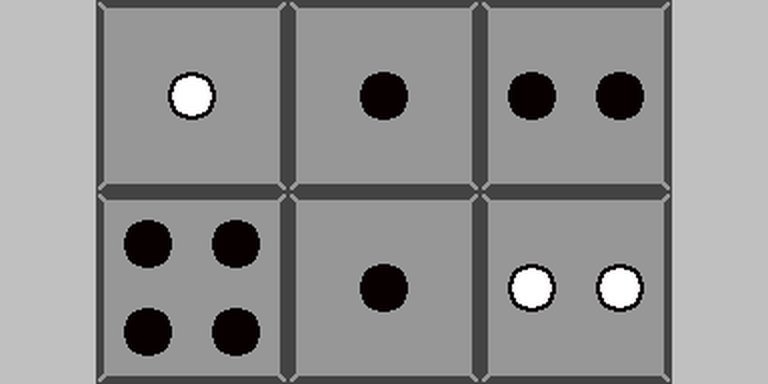
I Solved It Wrong and Now You Will Too! is a 2020 puzzle game developed by Arvi Teikari, featuring a top-down perspective and point-and-select interface on fixed screens. Based on the developer’s mistaken solution to a logic puzzle called WITLESS, the game inverts that flawed logic into the correct approach, creating an obtuse and unconventional puzzle experience that requires careful attention to in-game instructions.
I Solved It Wrong and Now You Will Too!: Review
Introduction: The Elegance of Erroneous Logic
In the vast, overcrowded library of video games, there exists a peculiar and fascinating subcategory: the game that is not merely about a puzzle, but is itself a puzzle of perception, logic, and player expectation. Few titles embody this meta-intellectual challenge more succinctly—or more maddeningly—than Arvi Teikari’s 2020 browser game, I Solved It Wrong and Now You Will Too! (abbreviated ISIWANYWT). This is not a game you play to unwind; it is a deliberate, almost confrontational, philosophical exercise packaged in a minimalist point-and-click interface. Its thesis, stated plainly by its creator, is revolutionary in its simplicity: what if the flawed, internally consistent logic you used to solve a puzzle was, in fact, the correct logic? This review will argue that I Solved It Wrong and Now You Will Too! stands as a brilliant, infuriating, and historically significant piece of interactive conceptual art—a direct descendant of the “thinky puzzle” genre that proves a game’s greatest strength can be its wilful, calculated obtuseness. It is a game that does not just challenge your problem-solving skills, but the very framework upon which you build those skills.
Development History & Context: A Day’s Work, A Legacy Forged
To understand I Solved It Wrong, one must first understand its creator and the ecosystem that birthed it. Arvi Teikari, operating under the alias Hempuli, is a legendary figure in the indie and “Klik” game communities, with a catalogue on MobyGames spanning over 115 titles. His work is characterized by relentless experimentation, often built in rapid succession using accessible tools like Clickteam Fusion 2.5. Games like Abstractica, Excavatorrr, and Baba Is You (Jam Build) demonstrate a mind constantly probing the boundaries of game mechanics and player assumption.
I Solved It Wrong and Now You Will Too! emerged from this fertile ground of rapid prototyping. Its development history, as told in the official ad blurb from hempuli.com, is as stark as the game itself: “This led to roughly 1½ days of hasty work, resulting in this little thing.” There was no grand studio, no multi-year production cycle. This was a personal response—a creator encountering a logic puzzle called “WITLESS – A puzzling journey,” solving it with a coherent but fundamentally wrong set of assumptions, and then experiencing a moment of creative revelation: “What if my wrong logic was the right logic?”
The technological context is equally important. In 2020, the year of its release, the indie puzzle landscape was dominated by masterpieces like Baba Is You (2019) and the enduring influence of Jonathan Blow’s The Witness (2016). These games deconstructed rule-based systems. Teikari’s game takes this a step further: it deconstructs the player’s deductive process itself. Built in Clickteam Fusion 2.5, a tool prized for its accessibility but often associated with more traditional arcade or adventure games, the choice is telling. It grounds the experiment in a familiar, almost utilitarian, development environment, stripping away any distraction of high-fidelity graphics or complex engines. The game’s visual style—described on MobyGames as “Top-down” with “Fixed / flip-screen” visuals and a “Point and select” interface—is not a stylistic choice born of limitation, but a philosophical one. It presents the puzzle as a pure, abstract system, unadorned.
Narrative & Thematic Deep Dive: The Plot is Your Wrong Assumption
Here, conventional analysis must dissolve. I Solved It Wrong and Now You Will Too! has no traditional narrative. There are no characters, no dialogue, no plot beats. The “story” is a one-sentence meta-premise delivered in the instructions: your goal is to solve a logic puzzle where the solution path is based on a specific, erroneous, but self-consistent internal logic that you, the player, are expected to discover and adopt.
The theme, therefore, is epistemological rebellion. It confronts the player with a core, unsettling question: What if the foundational truths you take for granted in a system are false? The game’s title is not a boast but a command and a prophecy. “I solved it wrong” establishes the creator’s own flawed methodology. “And now you will too!” extends that flawed methodology to the player, making complicity in the error the key to progress. This is a profound thematic departure from most puzzles, which reward the discovery of correct, often singular, solutions. Here, “correctness” is redefined as internal consistency within a deliberately flawed framework. The experience is one of mounting cognitive dissonance. You apply your standard deductive reasoning—”if A then B,” “the green door must be locked because the red key was used”—only to hit a wall. The breakthrough comes not from finding a new rule, but from suspending your trust in the apparent rules and adopting the creator’s original, wrong mindset. The narrative, then, is the player’s own journey from logical frustration to the surrender of logical purity. It is a silent, solitary drama of intellectual humility.
Gameplay Mechanics & Systems: The Obtuse Engine
The gameplay loop is as brutally simple as its development time suggests. You are presented with a top-down, fixed-screen interface depicting a rooms-and-connections puzzle, a classic “map traversal” or “key-door” logic grid. The core mechanic is point-and-select navigation and interaction. You click to move a protagonist (a simple sprite) between rooms, interact with objects (keys, doors, switches), and attempt to reach a goal.
The “innovative or flawed system” is the entire logic engine. The puzzle’s ruleset is not explained upfront; they must be reverse-engineered through trial, error, and—crucially—the acceptance of contradictions that would normally signal a bug or a dead end. A door might open not with the key of its colour, but with the key of a different colour, based on a rule like “doors are coloured by the key that isn’t inside them.” The game’s infamous description admits: “The logic of the puzzle is probably way too obtuse for its own good.”
This obtuseness is the central, divisive mechanic. It is not a flaw in the traditional sense ( like a glitchy hitbox or poor UI), but a designed feature. The “UI” is the puzzle itself. The “character progression” is the player’s shifting mental model. The game’s brilliance lies in its commitment to this conceit. Every interaction must be interpreted through the lens of the “wrong logic.” The systems are minimalist to the point of austerity, ensuring no extraneous element distracts from the brutal mental gymnastic required. It is a solipsistic puzzle: the only solution is the one that agrees with the creator’s specific, quirky, and wrong-headed original reasoning. The feeling of solving it is not one of triumph over a challenge, but of eerie, almost complicit recognition: “Ah, I see. You thought *this. Now I must too.”* It is less a test of intellect and more a test of empathetic imagination—the ability to think like someone else’s delightful mistake.
World-Building, Art & Sound: The Aesthetic of the Abstract
If the game’s world is built of logic, its aesthetic is built of retro-informed minimalism. The fixed, flip-screen perspective and top-down view recall early puzzle games and adventure titles from the DOS era, a conscious callback to an age of simpler interfaces and more direct cognitive load. The visual palette is likely sparse—function over form. Colours are used not decoratively, but as semantic signifiers (the colour of a door is its most important property). Sprites are simple, likely placeholder-esque, because the idea is the protagonist, not the avatar.
The sound design, based on typical Hempuli releases and the Clicktool heritage, is probably similarly utilitarian: simple beeps, clicks, or perhaps a looping, unobtrusive chiptune melody to accompany the mental labour. There is no attempt at immersion in a diegetic world; the game exists in the player’s mind, on the screen, and in the space between. The atmosphere is one of sterile, intellectual pressure. The “world” is the puzzle’s rule set, and its “atmosphere” is the growing frustration and eventual epiphany of the player. This aesthetic choice is crucial. Any richer visual or audio design would undermine the game’s core thesis by suggesting a narrative context or emotional tone that isn’t there. It is a game played in a void, where the only landscape is the topology of your own assumptions.
Reception & Legacy: The Cult of the Obtuse
Given its nature as a freeware browser/Windows game released with minimal marketing on the creator’s personal site (hempuli.com), I Solved It Wrong and Now You Will Too! exists almost entirely outside the mainstream critical and commercial spheres. It has no MobyScore, no critic reviews on MobyGames (the “Critic Reviews” section is empty, calling for contributions), and no player reviews listed. Its “reception” is therefore a matter of niche cultural impact and scholarly discussion within puzzle game circles.
Its legacy is twofold:
- As a “Thinky Puzzle” Artifact: It is cited (implicitly, through its creator’s credentials and thematic links) as a direct dialogue with the lineage of rule-bending puzzles from The Witness to Baba Is You. It represents an extreme endpoint: not just learning and manipulating rules, but willingly adopting a wrong rule set. It is a game that could only exist after the genre had thoroughly established its own conventions, conventions it now seeks to subvert at the player’s foundational level.
- As a Hempuli Hallmark: For followers of Arvi Teikari’s prolific output, it is a quintessential example of his style: a rapid-fire, conceptually dense experiment that prioritizes a single, potent mechanical or narrative idea over scope, polish, or accessibility. It sits alongside other brief but impactful works like Jump, Copy, Paste or Brownie Baking as proof of the creative power of constrained, rapid development.
Its influence is subtle but profound. It has not spawned clones, because its core idea is too specific and too difficult to translate into a scalable commercial formula. Instead, its legacy is as a curated experience—a game passed around by puzzle enthusiasts as a “you have to see this” mind-bender. It contributes to a broader industry understanding that puzzle design can be a vehicle for philosophical statement, not just entertainment. In a year (2020) highlighted by IGN and PC Gamer for massive titles like Half-Life: Alyx, Hades, and Ghost of Tsushima, I Solved It Wrong is the antithesis: a tiny, silent, stubbornly obtuse counterpoint that asks, “What if the most memorable experience isn’t fun, but uncomfortably smart?”
Conclusion: A Masterpiece of Misdirection
I Solved It Wrong and Now You Will Too! is not for everyone. It offers no pixel-perfect graphics, no sweeping narrative, no power fantasy. By standard metrics, it is almost negligible: a 2 MB executable, a handful of rooms, a puzzle that can be solved in minutes once you grasp its cruel trick. Yet, to dismiss it on these grounds is to miss its monumental achievement.
It is a definitive masterpiece of game design* in its purest, most reductionist form. It takes a single, audacious idea—”the solution is wrong logic”—and builds an entire, functional game around it without a single extraneous ounce of fat. Its “obtuseness” is its virtue; its short development time is its strength, lending it a raw, unfiltered quality that a larger team might have polishes into banality. It is a game that creates a memorable experience not through content, but through **structural and philosophical surprise.
In the canon of video game history, it will not be listed among the best-selling or most award-winning titles. Instead, it will be preserved—as it is on sites like Kliktopia and MobyGames—as a critical artifact. It is a potent reminder that games can be arguments, thought experiments, and intellectual jokes. It challenges the player’s identity as a “solver” and forces a moment of uncomfortable collaboration with a flawed perspective. For that courageous, streamlined, and brilliantly wrong-headed commitment to its own paradox, I Solved It Wrong and Now You Will Too! earns its place as a tiny, eternal landmark in the landscape of interactive puzzle design. You will solve it wrong. And when you do, you will understand why that was the only way to solve it at all.