
- Release Year: 2009
- Platforms: Windows
- Publisher: Nickelodeon Online
- Developer: Big Blue Bubble Inc.
- Genre: Adventure
- Perspective: First-person
- Game Mode: Single-player
- Gameplay: Hidden object, Mini-games, Puzzle
- Setting: Cartoon
- Average Score: 60/100
Description
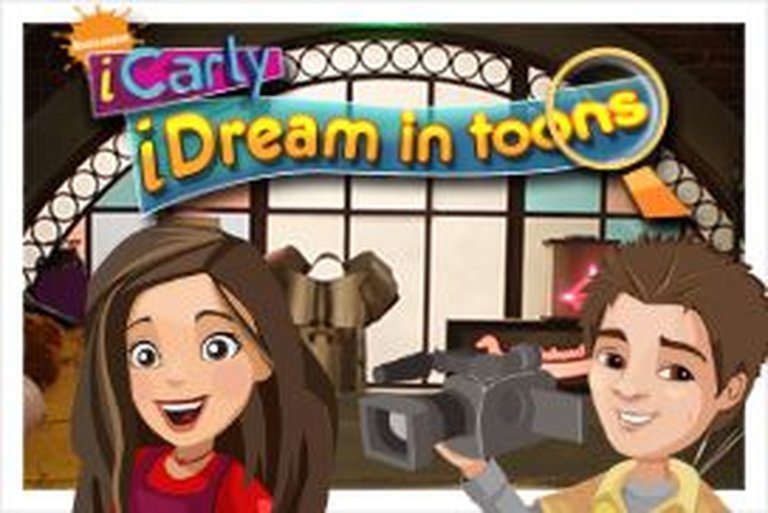
In iCarly: iDream in Toons, Spencer falls asleep during a Nickelodeon cartoon marathon and dreams he’s trapped inside the television set, where all his friends have been transformed into cartoon characters. The game is a hidden object adventure where players search for items from lists on static photos of actual iCarly sets, using tools like an x-ray scanner and magnifying glass to find concealed objects. Between hidden object sections, players encounter various mini-games including Mastermind, Concentration, spot-the-differences puzzles, jigsaw puzzles, and scrambled letter games.
Gameplay Videos
Where to Get iCarly: iDream in Toons
Guides & Walkthroughs
Reviews & Reception
mobygames.com (60/100): Mixed reception with a 60% critic score.
iCarly: iDream in Toons: A Forgotten Portal to the Web Show Era
In the vast and often bizarre ecosystem of licensed video games, certain titles transcend their commercial purpose to become cultural artifacts. They are time capsules, preserving not just the likeness of a popular franchise, but the very specific technological and marketing ethos of their moment in history. iCarly: iDream in Toons, a 2009 PC release from developer Big Blue Bubble and publisher Nickelodeon Online, is one such artifact. More than a mere hidden-object game, it is a strange, ambitious, and deeply flawed digital curio that attempted to bottle the anarchic energy of the early internet’s favorite web show. This review will argue that while iDream in Toons fails as a conventional game, its peculiar blend of genre mechanics, multimedia ambition, and stark production limitations offers a uniquely fascinating window into a bygone era of children’s software.
Development History & Context
To understand iDream in Toons, one must first understand the landscape of 2009. The casual games market, particularly on PC, was dominated by downloadable titles from portals like Big Fish Games. The “Hidden Object Game” (HOG) was a genre powerhouse, offering accessible, low-stakes gameplay primarily to an adult audience. Simultaneously, the licensed games industry was in a transitional phase; while the era of low-quality, quick-turnaround console tie-ins was waning, the digital PC space presented a new, cost-effective frontier for brand extension.
Into this space stepped Big Blue Bubble, a developer known for a prolific output of casual and licensed titles. Their mandate was clear: create a game for the massive, hyper-engaged iCarly fanbase. The show itself was a phenomenon, unique for its integration of user-generated content and its meta-commentary on internet fame. The developers’ vision, as pieced together from the game’s features, was surprisingly multifaceted. They didn’t just want to create a simple HOG; they sought to create a hybrid experience that incorporated the show’s core premise—making a web show.
The technological constraints are palpable. The game was released as both a CD-ROM and a download, a standard for the time. The use of “static photos shot from various angles on the actual sets used in the show” points to a budget-conscious decision to utilize existing assets, avoiding the cost of full 3D modeling or original 2D art. This “photo-realistic” approach, set against a cartoon-themed dream narrative, creates a distinct, if jarring, visual dissonance. Furthermore, the fact that only Jerry Trainor (Spencer) reprised his role, with the other characters’ voices “dubbed with typing sounds on a keyboard,” is a telling detail. It speaks to the budgetary and scheduling limitations of licensing a live-action cast, forcing the developers to find an abstract, almost avant-garde solution for audio representation.
Narrative & Thematic Deep Dive
The premise of iDream in Toons is pure, unadulterated Spencer Shay logic. The eccentric older brother falls asleep during a Nickelodeon cartoon marathon and dreams himself into the television, where his friends Carly, Sam, and Freddie have been transformed into cartoon characters. This narrative framework is a classic licensed-game trope, providing a thin but serviceable excuse to transport the characters into a more game-friendly, fantastical setting.
Thematically, the game attempts to mirror the show’s focus on creativity and performance. The central mechanic of progression is tied to a “Fan-meter,” a direct parallel to the show’s obsession with viewership and online engagement. Success in the game is measured not just in points, but in popularity—a clever, if underdeveloped, thematic tie-in.
However, the most ambitious narrative element is buried in the game’s purported “Create your very own webisodes” feature. The promise of using “200+ skits directly from the show” and adding “Intros, Outros, and Music, experiment with green screen, sound effects, and more” suggests a game that wanted to be a proto-YouTube Kids or a simplified video editing suite. This was an attempt to gamify the very act of content creation that the show celebrated. It positioned the player not just as a spectator or a problem-solver, but as a producer, echoing the show’s empowering message that anyone with a camera and an idea could find an audience. The degree to which this feature was successfully implemented is unclear from available sources, but its mere inclusion signifies a bold, forward-thinking design intention that far exceeded the standard “find the object” gameplay.
Gameplay Mechanics & Systems
At its core, iDream in Toons is a standard Hidden Object Game. The primary loop involves being presented with a cluttered, static scene and a list of items to find. The scenes are described as being filled with “assorted paraphernalia,” a hallmark of the genre designed to challenge the player’s perception.
The game incorporates several quality-of-life features common to late-2000s HOGs:
* Hint System: A button that reveals the location of one required item.
* Collectibles: Hidden “i symbols” that, when collected, provide extra hints.
* Special Tools: An “x-ray scanner” for finding concealed objects and a “magnifying glass” for inspecting small details. These tools add a slight layer of interaction beyond simple clicking.
Interspersed between the HOG sections are a suite of mini-games, which the source material explicitly lists as:
* Mastermind implementations (logic deduction puzzles)
* Concentration implementations (memory matching games)
* Spot-the-differences between two images
* Jigsaw puzzles
* Scrambled letters games similar to Hangman
This variety was intended to break up the monotony of the core gameplay, a common design practice to appeal to a broader casual market. The GameZebo review notes the game is “over in a couple of short hours,” confirming its status as a brief, consumable experience rather than a deep, engaging one.
The most intriguing, and potentially most flawed, system is the claimed “Multiplayer mode that allows you to enjoy your iCarly experience with up to 3 of your friends.” How this was implemented in a primarily first-person, static-image HOG is a subject of speculation—it may have involved turn-taking on puzzles or collaborative searching. Its presence, however, again highlights the developers’ attempt to create a more social, shareable experience, in keeping with the iCarly brand.
World-Building, Art & Sound
The aesthetic of iDream in Toons is its most conflicted element. The decision to use photographs of the actual iCarly sets (presumably the apartment and school) grounds the game in the show’s reality. For a young fan, being able to digitally explore and scrutinize Spencer’s living room would have been a powerful draw. This creates a strange sense of verisimilitude.
This realism, however, clashes violently with the “Toons” of the title. The narrative promises a cartoon world, but the core gameplay is rooted in live-action photography. This dissonance is never resolved and likely contributed to a disjointed atmosphere. The promotional images available on the Internet Archive show a box art and UI that are bright, cartoonish, and branded, which again stands in stark contrast to the in-game screenshots described.
The sound design, as previously mentioned, is a point of major compromise. The replacement of the main cast’s voices with “typing sounds on a keyboard” is a profoundly odd choice. While undoubtedly a cost-cutting measure, the effect is surreal. It strips the characters of their personality and replaces it with an abstract, digital cacophony. It transforms the experience from an interactive episode of the show into something far more alien and experimental. The soundtrack and other sound effects are not detailed in the sources, but one can assume they consisted of generic, upbeat loops typical of the genre and brand.
Reception & Legacy
iCarly: iDream in Toons was met with a muted and limited critical response. Its sole recorded critic score on MobyGames is a 60% from GameZebo, which summarized it as “a decent HOG for kids to teens, and for fans of the television series,” while noting “annoying problems” and a short runtime. It was, in essence, reviewed as a passable, forgetlicensed product.
Commercially, it exists now as a niche collector’s item, with sealed copies still available on eBay for around $10-$20. It was not a game that set the world on fire, but rather one that fulfilled a specific, temporary need in the Nickelodeon marketing machine.
Its legacy is twofold. First, it stands as a fascinating failure of ambition over execution. It attempted to be three games in one: a hidden-object puzzle game, a party game, and a video creation tool. In trying to be everything for an iCarly fan, it likely mastered none of them. Second, it is a perfect historical document of a very specific moment: the point where the casual PC games market, the licensing industry, and the dawn of the creator economy briefly collided. It is a game that understood the iCarly brand’s core appeal—user-driven content—but was technologically and budgetarily unequipped to fully realize it. Its influence is negligible in a direct sense, but it represents an early, crude blueprint for the kind of interactive, creator-focused experiences that would later become commonplace on platforms like Roblox and Fortnite Creative.
Conclusion
iCarly: iDream in Toons is not a good game by traditional metrics. Its gameplay is derivative, its presentation is dissonant, and its execution is hobbled by evident constraints. However, to dismiss it entirely is to ignore its value as a cultural artifact. It is a game that reaches for the stars with the budget of a school play. Its bizarre narrative premise, its audacious inclusion of a video editor, its surreal replacement of voice acting with keyboard clacks, and its attempt to blend live-action photography with cartoon fantasy all coalesce into a product that is infinitely more interesting to analyze than to actually play.
For the game historian, it is a rich case study in licensed game development during the casual games boom. For the iCarly completionist, it is an essential, if awkward, piece of the franchise’s extended universe. For everyone else, it remains a charmingly odd footnote—a dream of a cartoon world, filtered through the stark reality of a hidden-object engine, and preserved forever as a testament to the wild, ambitious, and wonderfully strange world of late-2000s children’s software. Its final verdict is not one of quality, but of fascination: a three-star experience that earns a five-star place in the museum of gaming curiosities.