
- Release Year: 2014
- Platforms: Macintosh, Nintendo Switch, PlayStation 4, PlayStation 5, PS Vita, Wii U, Windows, Xbox One, Xbox Series
- Publisher: Dolores Entertainment S.L., Hidden Trap, Starsign, Inc.
- Developer: Dolores Entertainment S.L.
- Genre: Action
- Perspective: Side view
- Game Mode: Co-op
- Gameplay: Shooter
- Average Score: 61/100
Description
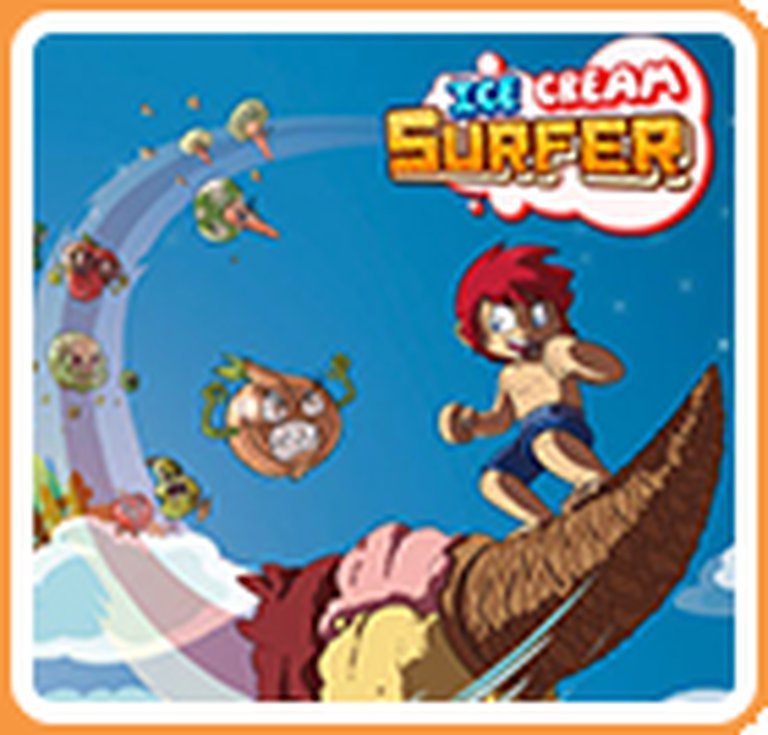
Ice Cream Surfer is a side-scrolling action shooter set in a wacky, colorful world where players control an ice cream-themed character. The game features quirky characters, varied enemies, and vibrant locales, offering two-player co-op and a short, accessible experience that can be completed within an hour despite its niche premise.
Gameplay Videos
Where to Buy Ice Cream Surfer
PC
Ice Cream Surfer Guides & Walkthroughs
Ice Cream Surfer Reviews & Reception
metacritic.com (53/100): Ice Cream Surfer deserves full credit for offering a taste the Wii U could use more of. I just wish the developers focused less on decking their digital sundae with chocolate sauce and realised that the ice cream beneath it was past its prime.
nintendolife.com : All our criticism may sound a bit harsh when you consider the mobile origins of the product and the low price point which is being sold on the eShop, but it is impossible to overlook the amount of shmup sins it commits in such a short amount of playtime, aggravated by the coexistence of other scrolling horizontal shmups on the system such as Sine Mora EX or the nearly flawless Steredenn: Binary Stars.
monstercritic.com : Ice Cream Surfer tells the story of a maniacal vegetable hell bent on destroying the sugary world of the flying gelato-influenced heroes, but just as fast food and candy treats are light on essential nutrients and likely to do you more harm than good, this is a game that is probably best left on the shelf, with other far more healthy options available to the discerning shooter fan. AVERAGE.
infinitefrontiers.org.uk : I really didn’t quite know what to make of this. The level design doesn’t seem to make a great deal of sense and neither do the creatures you encounter on them.
nintendoworldreport.com (70/100): Ice Cream Surfer is a fun little shoot’em up, and is both wonderful to look at and play. With only six levels it is a short adventure, though the game is really playable. It is sad that online leaderboards were not included as it would have rounded out the experience nicely. Bugs aside, the creativity of the title does shine through.
Ice Cream Surfer: Review
The Scoop on a Sugary Shoot-’em-Up
Introduction
In the vast, often absurd landscape of indie gaming, few premises are as delightfully ridiculous as Ice Cream Surfer. Here, the villain isn’t a galaxy-conquering alien warlord or a shadowy cabal, but an evil broccoli enraged by humanity’s love of ice cream. Armed with a motley crew of dessert-themed heroes—including Ace the cornetto rider, Super Cream, and a yeti on an ice cream cone—it promises a sugar-fueled escapade. Yet beneath its whimsical exterior lies a deeply flawed experience, one that exemplifies the double-edged sword of budget game development. This review dissects Ice Cream Surfer‘s legacy: a game that charms with its audacity but crumbles under technical debt, design oversights, and a fleeting runtime. Its thesis is clear: Ice Cream Surfer is a curiosity—a neon-drenched, half-baked concept that fails to deliver on its wild promise, ultimately relegated to footnote status in the shoot-’em-up (shmup) canon.
Development History & Context
Born from Spanish studio Dolores Entertainment S.L., Ice Cream Surfer emerged in September 2014 on the Wii U eShop—a console struggling for third-party support. Its development was a testament to indie perseverance: the project survived a failed Kickstarter campaign, fueled by a small team of seven, including Daniel Navarro (design/development), Stephen Hausdorff (art direction), and Machinet (David Serrano Jaime, composer). Built on the Unity engine, it targeted a market hungry for affordable, nostalgia-infused experiences.
The game’s context is pivotal. It arrived during the Wii U’s twilight, amid a surge of indie titles like Steamworld Dig and Shovel Knight. Yet while those titles polished their retro aesthetics into modern masterpieces, Ice Cream Surfer felt constrained. Its cross-platform odyssey—ported to Windows, Mac, Switch, PS4, PS Vita, and Xbox by 2018—reflected a developer chasing accessibility over refinement. As the Infinite Frontiers review noted, it mirrored Western 16-bit attempts to mimic Japanese arcade shooters, where style often eclipsed substance. The result was a game brimming with personality but hampered by its budget origins, where ambition outpaced technical polish.
Narrative & Thematic Deep Dive
The narrative is a gleeful parody of schmup tropes, distilled into a single, absurd conflict: Evil Broccoli, seething at children’s vegetable aversion, wages war on the “Flavor Galaxy.” The five heroes—Ace, Sailor Twister, Super Cream, Rei Tou, and Hima the yeti—represent sugary rebellion. Their dialogue is minimal, existing only in loading screens and unlockable comic art by Hausdorff, but it leans into self-aware absurdity. Broccoli’s monologues drip with malice (“Your cholesterol levels will plummet! Ha ha!“), while the heroes’ quips (“Ice cream for everyone!“) reinforce the game’s anti-vegetable, pro-indulgence ethos.
Thematic layers are surprisingly nuanced. At its core, Ice Cream Surfer satirizes dietary dogma, framing healthy eating as tyranny and dessert as liberation. The “Flavor Galaxy” setting—a kaleidoscope of candy planets and floating sweets—symbolizes escapism, contrasting with the sterile, broccoli-fortified enemy strongholds. Yet the narrative’s brevity (six stages, no cutscenes) undermines this. As Nintendo Life lamented, the plot “exists to justify button-mashing,” with Broccoli’s motivations never fully explored. The unlockable comics (post-game rewards) offer deeper lore but feel like an afterthought, reducing the story to a backdrop for pixelated carnage.
Gameplay Mechanics & Systems
Ice Cream Surfer is a side-scrolling shmup, but its mechanics reveal a game in identity crisis. Core gameplay revolves around destroying enemies to drop gems, which power up weapons and unlock “smart bomb” special attacks. Auto-fire—standard in Switch/PS4 ports but absent on Wii U—highlights inconsistent design. Three difficulty levels cater to newcomers, but the game’s one-hit-kill mechanic amplifies frustration.
Flaws define the experience:
– Collision Detection: Bullets blend into backgrounds, and power-up containers (which must be destroyed before collection) often cause instant death. Digitally Downloaded noted this “digital sundae decked with chocolate sauce” hid “ice cream beneath its prime.”
– Enemy Design: Stages feature disjointed foes—lightbulbs, floating heads—clashing with the vegetable-army premise. Infinite Frontiers criticized the “bizarre” lack of thematic cohesion.
– Progression: Death resets weapons to default mid-level, a Gradius-esque punishment exacerbated by checkpoints (except in the final stage). Special attacks frequently miss bosses, questioning their “smart” designation.
– Brevity: Six levels complete in 45–60 minutes, with replay value reliant on co-op (local two-player, except on Vita) or character diversity. Each hero plays uniquely—Ace’s balanced shots contrast Sailor Twister’s niche spread fire—but this can’t offset the short runtime.
World-Building, Art & Sound
The world is a triumph of visual design. Pixel art by Pedro Sanchez and Andrés Vidal bursts with Parodius-esque vibrancy: cherry landscapes, cotton-cloud skies, and enemies like “Sour Cherry Splat” or “Broco-Bot.” Bosses screen-filling absurdity (e.g., a towering broccoli monstrosity) embodies the game’s chaotic spirit. As Nintendo World Report praised, it’s “one of the most colorful shmups to grace the Wii U.”
Sound design leans into retro homage. Machinet’s chiptune soundtrack is upbeat but forgettable, while sound effects—sizzling waffle cones, squelching veggies—add playful texture. Yet technical flaws mar immersion. Frame drops on Wii U/PS Vita disrupt action, and the lack of online leaderboards (cited by Nintendo World Report as a missed opportunity) starves competitive depth. The Switch/PS4 ports improve stability but can’t salvage core design issues. The art, while charming, ultimately fails to compensate for gameplay shortcomings.
Reception & Legacy
Critical reception was mixed-to-negative, with a Metascore of 53/100 (“Mixed or Average”). Nintendo Life (40/100) damned it as “not particularly fun,” while Digitally Downloaded (40/100) lamented its “unrealized potential.” Positive reviews, like Gamegravy (50/10), praised its “quirky characters and co-op,” and Starburst Magazine (50/10) noted appeal for “youngsters.” Player reviews diverged sharply: Metacritic users scored it 7.6/10, with comments like “Adictivo… recuerda a las arcades noventeras” (addictive, reminiscent of 90s arcades), though others cited its short length.
Legacy-wise, Ice Cream Surfer remains a niche footnote. Its ports spanned generations, but it never achieved cult status. It’s remembered for its absurd premise rather than gameplay—a curiosity cited in shmup discussions as a “what if” example. As Nintendo Life concluded, the Switch’s superior alternatives (e.g., Steredenn: Binary Stars) rendered it obsolete. Its influence is minimal, save for highlighting the risks of prioritizing style over substance in budget development.
Conclusion
Ice Cream Surfer is a game of delightful contradictions: a vibrant, absurd world undermined by frustrating mechanics, a charming narrative lost in brevity, and a legacy of unrealized potential. It’s a $5 “fun little timewaster” for genre masochists or fans of Stephen Hausdorff’s comics, but its technical flaws and shallow design relegate it to the freezer aisle of gaming history. For shmup enthusiasts, it’s a cautionary tale of ambition unchecked; for casual players, it’s a fleeting sugar rush. Ultimately, Ice Cream Surfer serves as a reminder that even the wildest concepts need more than sprinkles to stick. Verdict: A quirky, flawed curiosity best left frozen.