
- Release Year: 2003
- Platforms: Windows
- Developer: Steve McCrea
- Genre: Adventure
- Perspective: Side view
- Game Mode: Single-player
- Gameplay: Graphic adventure, Puzzle elements
- Setting: Reality-on-the-Norm world
Description
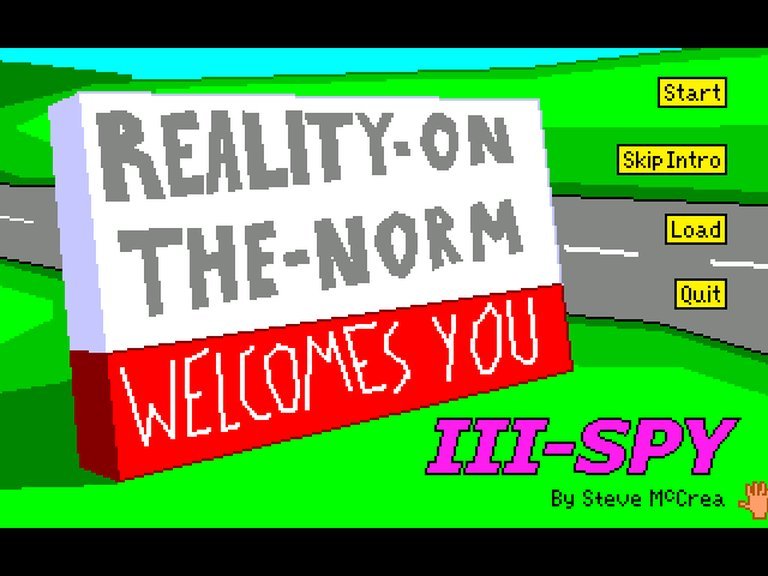
III-Spy is a 2D point-and-click comedy adventure game set in the quirky Reality-on-the-Norm universe, starring Mika Huy, a female reporter tasked with freeing a zombie mayor jailed for ‘showing pink’ during election season. As the third installment in the I Spy series, players navigate a humorous narrative, solve puzzles, and manage inventory using mouse-only controls while uncovering absurd political antics in this freeware graphic adventure.
III-Spy Free Download
PC
III-Spy: The Zombie Mayor Rescue That Time Forgot – A Cult Classic Declassified
Introduction
In the annals of indie gaming history, buried beneath mountains of shovelware and AAA blockbusters, lies III-Spy (2003)—a quirky, criminally overlooked gem from the Reality-on-the-Norm universe. Developed using Adventure Game Studio (AGS), this freeware point-and-click adventure represents a fascinating microcosm of early-2000s DIY game design, where ambition collided with technological constraints. Set in a bizarre world where zombie mayoral candidates face incarceration for “showing pink,” III-Spy blends absurdist humor with classic adventure tropes. Though it vanished into obscurity, its legacy as a testament to grassroots creativity demands excavation.
Development History & Context
Studio & Vision
III-Spy emerged from the mind of Steve McCrea, a developer deeply entrenched in the AGS community—a toolset democratizing game creation in an era before Unity or GameMaker. Released in September 2003, the game is the third entry in the I Spy spin-off series set in the Reality-on-the-Norm universe, a shared fictional realm known for its dry wit and supernatural satire. McCrea’s design ethos leaned into AGS’s strengths: 2D side-scrolling environments, mouse-driven navigation, and dialogue-driven puzzles.
Technological Constraints
Built on AGS’s engine (spearheaded by Chris Jones), III-Spy operated within tight technical limits. The early 2000s indie scene was defined by modest hardware—think Pentium III processors and Windows 98—forcing developers to prioritize simplicity over spectacle. Yet, these constraints birthed ingenuity: AGS empowered creators like McCrea to focus on narrative and puzzle design rather than graphical fidelity. Beta testers, including Wadjet Eye founder Dave Gilbert, lent credibility to the project, hinting at its narrative ambitions.
Gaming Landscape
The game debuted against a backdrop of industry consolidation, as AAA studios chased 3D photorealism while franchises like Monkey Island waned. Indie gems like III-Spy thrived in niche corners, distributed via freeware portals and forums. Its release mirrored the rise of Newgrounds-era experimentation, where humor and brevity trumped budget.
Narrative & Thematic Deep Dive
Plot & Characters
Players assume the role of Mika Huy, a tenacious reporter for the Reality-on-the-Norm Gazette. Tasked by her editor, Davy Jones, Mika must liberate a zombie mayor imprisoned after a scandal involving “showing pink” (a cheeky metaphor for societal hypocrisy). The premise—elections derailed by undead politics—serves as a satirical jab at bureaucratic absurdity, amplified by deadpan dialogue and eccentric NPCs. While character development is minimal, Mika’s snarky demeanor channels classic adventure protagonists like Gabriel Knight.
Themes
– Absurdism vs. Authority: The game lampoons political theater through undead candidates and arbitrary laws, echoing Discworld’s lunacy.
– Media Critique: As a journalist, Mika navigates a world where truth is malleable—a prescient nod to 2000s media skepticism.
– Incarceration & Freedom: The zombie mayor’s imprisonment symbolizes society’s fear of “otherness,” dressed in darkly comedic garb.
Dialogue & Writing
McCrea’s script thrives on understated humor:
Guard: “He showed pink. We don’t tolerate that here.”
Mika: “Was it a flag? A handkerchief? A particularly aggressive blush?”
The writing embraces literalism and wordplay, resonating with fans of Space Quest or Sam & Max.
Gameplay Mechanics & Systems
Core Loop
III-Spy adheres to classic adventure tenets:
1. Exploration: Side-scrolling environments (e.g., City Hall, Jail) filled with interactive objects.
2. Puzzle-Solving: Inventory-based challenges, like forging documents or distracting guards.
3. Dialogue Trees: Conversational minigames to extract clues from NPCs.
Innovations & Flaws
– Mouse-Only Design: Streamlined for accessibility but lacks keyboard shortcuts, slowing navigation.
– Puzzle Design: Logic occasionally descends into moon logic (e.g., combining unrelated items), frustrating purists.
– UI/UX: Functional but dated—item descriptions are minimalist, relying on player intuition.
Progression
No traditional leveling system exists, but puzzle completion unlocks narrative branches. The game’s brevity (2-3 hours) prevents tedium, though abrupt endings leave threads dangling.
World-Building, Art & Sound
Setting & Atmosphere
The Reality-on-the-Norm universe merges mundane bureaucracy with supernatural chaos. Locations like the monochromatic City Hall (where “showing pink” is a crime) contrast with Mika’s neon-lit office, visualizing societal repression.
Visual Direction
Leveraging AGS’s 2D toolkit, art leans into pixelated charm:
– Character Sprites: Expressive but limited animations; Mika’s idle tap of her foot adds personality.
– Backgrounds: Minimalist yet evocative—jail cells are cramped, with barred windows casting moody shadows.
Sound Design
Budget constraints are evident:
– Music: Looped chiptune tracks reinforce settings (e.g., suspenseful synth in jail).
– SFX: Sparse but effective (e.g., typewriter clicks during dialogue).
Silence dominates, amplifying the game’s eerie undertones.
Reception & Legacy
Launch Reception
Documented reviews are nonexistent—a fate common to freeware indies pre-Steam. Player anecdotes on forums like AGS United label it a “hidden gem” with clever writing but janky puzzles.
Evolution of Reputation
Today, III-Spy is a footnote, revered by AGS historians and Reality-on-the-Norm completists. Its MobyGames entry—added by user “Sunset Sundowner”—boasts a mere 3 collectors, underscoring its obscurity.
Industry Influence
While not a commercial powerhouse, III-Spy exemplifies AGS’s impact on narrative-driven indies. It paved the way for Wadjet Eye’s Blackwell series, proving that compelling stories need not rely on AAA budgets.
Conclusion
III-Spy is a time capsule of early-2000s indie grit—a game where ambition eclipsed resources, and humor masked technical limitations. Its satirical bite and inventive puzzles deserve recognition, even as clunky design choices date it. For historians, it’s a vital artifact of AGS’s golden age; for players, a charming, if flawed, curiosity. In the pantheon of forgotten adventures, III-Spy remains a testament to gaming’s democratic spirit: sometimes, the weirdest ideas leave the deepest marks.
Final Verdict: A cult classic for the patient and nostalgic—proof that great stories can thrive in the margins.