
- Release Year: 2005
- Platforms: Windows
- Publisher: RTL Playtainment
- Developer: Exozet Games GmbH
- Genre: Adventure
- Perspective: 3rd-person
- Game Mode: Single-player
- Gameplay: Detective, Educational, Point-and-click
- Setting: Legal, Modern
- Average Score: 48/100
Description
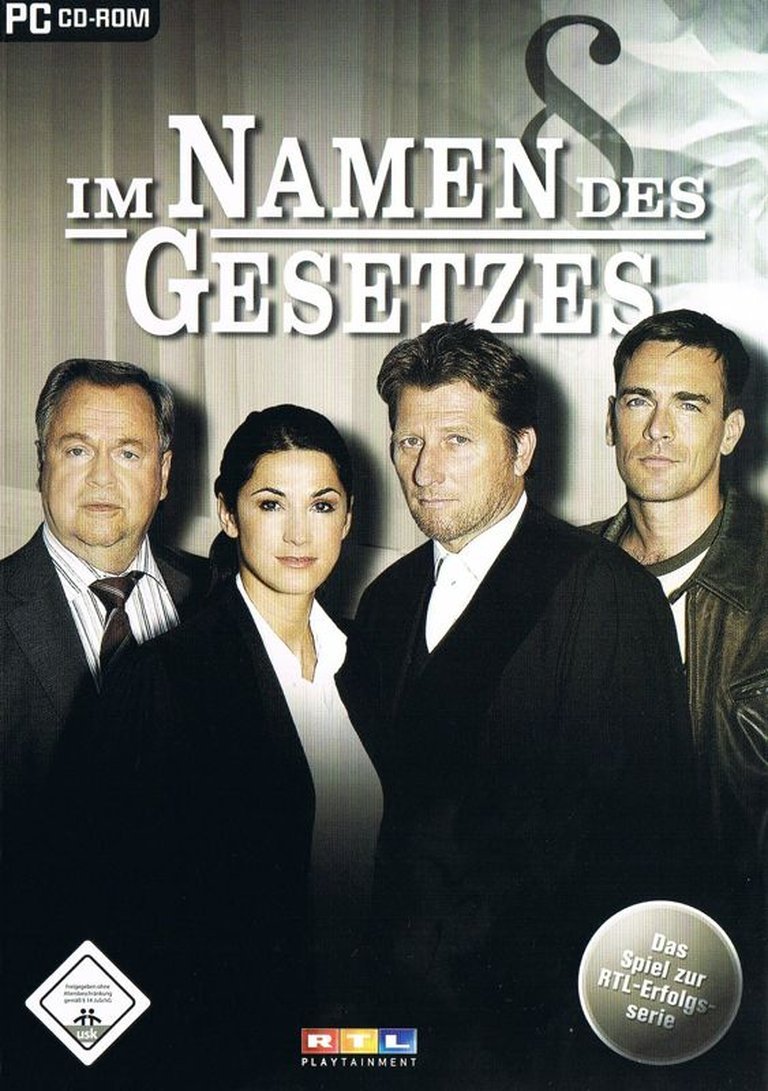
Im Namen des Gesetzes is a 3D point-and-click adventure game based on the German TV series of the same name, blending entertainment with education about the German judicial system. Players take on the role of an investigator solving a criminal case, gathering clues, interacting with characters from the series, and navigating the complexities of legal proceedings, including dealing with prosecutors, defense attorneys, and judges.
Im Namen des Gesetzes Cracks & Fixes
Im Namen des Gesetzes Guides & Walkthroughs
Im Namen des Gesetzes Reviews & Reception
mobygames.com (24/100): A 3D point-and-click adventure that educates players about the German judicial system while solving a criminal case.
retro-replay.com : A fully realized procedural simulator that blends detective work with educational insights into Germany’s justice system.
sockscap64.com (60/100): An above-average detective/mystery title that combines entertainment with education about the German judicial system.
myabandonware.com (60/100): An above-average detective/mystery title in its time, blending entertainment with education.
Im Namen des Gesetzes: A Forensic Examination of a Forgotten Legal Drama
Introduction: The Case of the Overlooked Procedural
Im Namen des Gesetzes (2005) stands as one of gaming’s most peculiar artifacts—a licensed adventure game that dared to merge the thrill of criminal investigation with the dry intricacies of German jurisprudence. Based on the long-running RTL television series of the same name, this 3D point-and-click title promised players not just a mystery to solve, but an education in the mechanics of justice. Yet, despite its noble ambitions, the game vanished into obscurity, leaving behind a trail of scathing reviews and unanswered questions. Was it a bold experiment in “edutainment,” or a misguided attempt to gamify bureaucracy? This review dissects Im Namen des Gesetzes with the precision of a coroner’s scalpel, examining its development, design, and the cultural context that doomed it to the evidence locker of gaming history.
Development History & Context: The Birth of a Legal Simulator
The Studio and the Vision
Developed by Exozet Games GmbH—a Berlin-based studio with a portfolio heavily skewed toward licensed properties and educational software—Im Namen des Gesetzes was a natural extension of their expertise. Exozet had cut their teeth on titles like Hinter Gittern (a prison management sim) and Alarm für Cobra 11 (based on the German Highway Patrol series), making them the ideal candidates to adapt RTL’s legal drama. The game’s executive producer, Arnold Scheele, and development director Bartol Ruzic envisioned a title that would entertain and educate, leveraging the TV series’ reputation for blending crime-solving with civic instruction.
The project was greenlit in the mid-2000s, a time when:
– Licensed games were booming, with titles like CSI: Crime Scene Investigation (2003) and Law & Order: Criminal Intent (2005) proving that procedural dramas could translate to interactive media.
– Educational gaming was gaining traction, though often relegated to niche markets. Im Namen des Gesetzes sought to bridge this gap by embedding legal tutorials directly into its gameplay.
– Technological constraints were still a factor. The game’s 3D engine, while functional, was limited by the hardware of its era (minimum specs: Pentium III, 128MB RAM), forcing Exozet to prioritize clarity over graphical fidelity.
The TV Series’ Influence
The source material—a German Law & Order-esque series that aired from 2002 to 2007—was known for its realistic portrayal of the German judicial system, often featuring cases inspired by real-life legal dilemmas. The show’s creators consulted with judges, prosecutors, and defense attorneys to ensure accuracy, a tradition the game sought to uphold. Key actors from the series, including Wolfgang Bathke, Wolfgang Krewe, and Mariella Ahrens, reprised their roles, lending the game an air of authenticity.
However, the transition from television to interactive media was fraught with challenges. While the TV series could rely on narrative momentum and character drama, the game had to gamify legal procedures—a task that proved easier said than done.
Narrative & Thematic Deep Dive: Justice as a Puzzle
Plot Structure: A Case Study in Bureaucracy
Im Namen des Gesetzes casts the player as an unnamed investigator tasked with solving a high-profile murder case. The narrative unfolds in a linear fashion, with the player progressing through distinct phases:
1. Crime Scene Investigation: Gathering evidence (fingerprints, witness statements, forensic reports).
2. Interrogation: Questioning suspects and witnesses, with dialogue choices affecting their cooperation.
3. Legal Proceedings: Presenting evidence to prosecutors, countering defense objections, and advising judges on procedural matters.
The game’s educational mission is woven into every step. Pop-up windows explain legal terms (“Alibi,” “Zeuge,” “Staatsanwaltschaft”), while mini-lectures detail the roles of judges, prosecutors, and defense attorneys. The case itself is a generic whodunit, but the real “mystery” lies in navigating the labyrinthine German legal system.
Characters and Dialogue: The Weight of the Law
The game’s cast is divided into three categories:
1. Original Characters: Generic witnesses, suspects, and legal professionals who exist solely to advance the plot.
2. TV Series Cameos: Familiar faces from the show, whose appearances serve as fan service but add little to the gameplay.
3. The Player’s Avatar: A silent protagonist, whose lack of personality reinforces the game’s procedural focus.
Dialogue is functional but stiff, with exchanges often devolving into legal jargon or exposition dumps. The voice acting—delivered by the TV series’ cast—is competent but lacks emotional range, a common pitfall in licensed adaptations.
Themes: The Illusion of Justice
At its core, Im Namen des Gesetzes grapples with the tension between idealism and reality in the legal system. The game’s themes include:
– The Burden of Proof: Players must meticulously gather evidence, only to have it challenged or dismissed by the defense.
– Procedural Fairness: The game emphasizes the rights of the accused, forcing players to confront ethical dilemmas (e.g., whether to withhold exculpatory evidence).
– Bureaucratic Frustration: The legal system is portrayed as a slow, cumbersome machine, where even the most obvious truths must be painstakingly documented.
Yet, the game’s educational mandate often undermines its dramatic potential. Instead of a gripping legal thriller, players are treated to a interactive textbook, where the stakes feel artificial and the outcomes predetermined.
Gameplay Mechanics & Systems: The Courtroom as a Puzzle Box
Core Gameplay Loop: Evidence and Explanation
Im Namen des Gesetzes is a classic point-and-click adventure, with mechanics lifted straight from the Monkey Island playbook:
– Inventory Management: Players collect and combine items (e.g., matching a fingerprint to a suspect’s file).
– Dialogue Trees: Conversations branch based on the player’s choices, though most paths lead to the same legal tutorial.
– Puzzle-Solving: Challenges range from lock-picking to cross-referencing alibis, though none are particularly innovative.
The game’s most unique feature is its legal simulation layer. Players must:
– File motions with the court.
– Challenge evidence presented by the defense.
– Navigate procedural hurdles (e.g., obtaining search warrants).
These mechanics are ambitious but flawed. While they succeed in teaching players about German law, they often grind the gameplay to a halt, reducing the experience to a series of bureaucratic chores.
Combat and Progression: The Absence of Action
Unlike its American counterparts (CSI, Law & Order), Im Namen des Gesetzes eschews action entirely. There are:
– No chase sequences.
– No shootouts.
– No physical confrontations.
Progression is tied to legal milestones (e.g., securing an indictment, winning a motion), which are rewarded with more legal tutorials. The lack of traditional “gaming” elements makes the experience feel more like a training simulator than a video game.
UI and Innovation: A Study in Functional Design
The game’s interface is clean and intuitive, with:
– A radial inventory system for managing evidence.
– Highlighted interaction points to guide players.
– Context-sensitive legal glossaries for quick reference.
However, the UI’s greatest strength—its clarity—is also its greatest weakness. The game holds the player’s hand at every turn, eliminating any sense of discovery or challenge.
World-Building, Art & Sound: The Aesthetics of Authority
Setting and Atmosphere: The Cold Precision of the Law
Im Namen des Gesetzes takes place in a generic German city, with locations ranging from crime scenes to courtrooms. The environments are functional but uninspired, with:
– Drab office interiors.
– Sterile forensic labs.
– Imposing judicial buildings.
The game’s art direction mirrors the austere realism of the TV series, but the low-poly models and repetitive textures betray its budget constraints.
Visual Design: A Case of Dated Graphics
By 2005 standards, the game’s graphics were already outdated:
– Character models are stiff, with limited facial animations.
– Lighting is flat, with little dynamic shadowing.
– Textures are low-resolution, particularly in background elements.
The crime scenes are the most detailed environments, featuring blood spatter, chalk outlines, and forensic markers, but even these feel lifeless compared to contemporaries like Fahrenheit (2005).
Sound Design: The Sound of Silence (and Legal Jargon)
The game’s audio is minimalist:
– Ambient noise (e.g., courtroom murmurs, police radio chatter) is sparse.
– The score is unobtrusive, consisting of generic suspense cues.
– Voice acting is competent but unremarkable, with the TV series’ cast phoning in their performances.
The lack of atmospheric sound design robs the game of tension, making even high-stakes courtroom scenes feel perfunctory.
Reception & Legacy: The Verdict of History
Critical Reception: A Guilty Pleasure?
Im Namen des Gesetzes was savaged by critics:
– PC Action (Germany): 38/100 – “A snore-fest with grating dialogue and ugly graphics.”
– Adventurespiele: 10/100 – “Over in an hour; not worth the €30 price tag.”
Players were equally unimpressed, with the sole user review on MobyGames awarding it 0.5/5 stars.
The game’s short length (reportedly beatable in under 60 minutes) and lack of replayability were major sticking points, as was its over-reliance on legal exposition.
Commercial Performance: A Case Closed Too Soon
The game faded into obscurity, failing to capitalize on the TV series’ popularity. Its niche appeal (German law + point-and-click adventures) limited its audience, and its educational focus alienated casual gamers.
Legacy: A Footnote in Gaming History
Im Namen des Gesetzes is rarely discussed in gaming circles, but it remains a fascinating curiosity for several reasons:
1. It was ahead of its time in blending education and entertainment, a trend that would later define games like Phoenix Wright: Ace Attorney.
2. It highlighted the challenges of adapting TV procedurals into interactive media, a lesson that later titles (CSI: Deadly Intent) would heed.
3. It serves as a time capsule of early 2000s licensed games, warts and all.
Conclusion: The Final Judgment
Im Namen des Gesetzes is not a good game by conventional standards. Its clunky mechanics, dated visuals, and overbearing educational focus make it a chore to play. Yet, it is not without merit. As a historical artifact, it offers a unique glimpse into:
– The challenges of licensed game development.
– The evolution of educational gaming.
– The cultural differences between German and American legal dramas.
Final Verdict: 2/5 – A noble failure.
Im Namen des Gesetzes is best experienced as a museum piece, a relic of an era when developers dared to experiment with unconventional genres. For legal enthusiasts and adventure game historians, it may hold some academic interest, but for most players, it remains a case better left unsolved.
Recommended for: Legal scholars, point-and-click completionists, and masochists.
Avoid if: You seek thrilling gameplay, compelling storytelling, or visual polish.
In the annals of gaming history, Im Namen des Gesetzes will forever be the game that tried to make German law fun—and failed spectacularly. But in its failure, it paved the way for future titles to succeed where it could not. And for that, it deserves a place in the evidence locker of gaming’s oddities.