
- Release Year: 2023
- Platforms: Windows
- Publisher: Galactic Games
- Developer: Galactic Games
- Genre: Adventure, Horror
- Perspective: 1st-person
- Game Mode: Single-player
Description
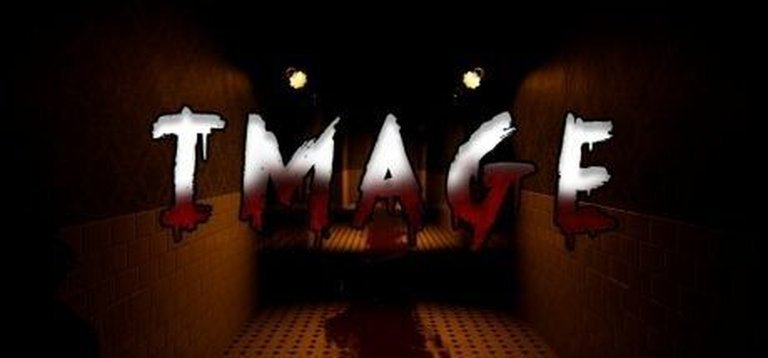
Image is a first-person adventure horror game developed and published by Galactic Games, released on January 20, 2023, for Windows. Built using Unreal Engine 4 and PhysX, the game immerses players in a chilling narrative-driven experience where they explore eerie environments, solve puzzles, and uncover dark secrets. With direct control mechanics and a focus on atmospheric horror, Image challenges players to navigate its unsettling world while confronting supernatural or psychological threats.
Where to Buy Image
PC
Image Free Download
Image Cracks & Fixes
Image Patches & Updates
Image Cheats & Codes
PC
Enter these at title screen / after loading file
| Code | Effect |
|---|---|
| ce2101 | Enables entering cheats |
| openallchars | Unlocks all hidden characters |
| lockchars | Locks the characters back up |
| phshowalllevels1 | Opens all levels |
| openpanda | Unlocks panda character |
| openwannabe | Unlocks wannabe character |
| openpredator | Unlocks the Kao character |
PC
Enter these in-game
| Code | Effect |
|---|---|
| iddqd | Kill all (includes you) |
| iddqdboss | Same as kill all, but for bosses |
| call terminator | Either cancels a call to the police, or summons Arnold |
| Call UFO | Unknown effect |
Image: A Comprehensive Review of a Forgotten Gem
Introduction
In the vast landscape of video games, some titles emerge as towering monuments, while others fade into obscurity, their potential unfulfilled. Image, released in 2023 by Galactic Games, is one such enigma—a game that, despite its ambitious premise and the pedigree of its development team, has largely slipped under the radar. This review aims to resurrect Image from the shadows, offering a meticulous examination of its development, narrative, gameplay, and legacy. Through this analysis, we will argue that Image is not merely a forgotten title but a fascinating case study in the challenges of innovation, the weight of expectations, and the delicate balance between ambition and execution.
Development History & Context
The Studio and Its Vision
Galactic Games, the developer behind Image, is a relatively small studio with a history of experimental projects. Founded in the early 2010s, the studio gained modest recognition for its work on niche titles that blended adventure and horror elements. Image was conceived as their most ambitious project to date, a first-person adventure game that sought to push the boundaries of narrative-driven gameplay. The studio’s vision was to create an immersive experience that would challenge players’ perceptions of reality, identity, and memory— themes that have long fascinated both game developers and players alike.
The game was built using Unreal Engine 4, a choice that reflected the studio’s desire to leverage cutting-edge technology to create a visually stunning and technically robust experience. The use of PhysX for physics simulation further underscored their commitment to realism, aiming to ground the game’s surreal narrative in a tangible, interactive world.
Technological Constraints and the Gaming Landscape
Image was developed during a period of significant transition in the gaming industry. The late 2010s and early 2020s saw the rise of open-world games, the proliferation of battle royale titles, and the growing influence of indie developers who prioritized narrative depth over mechanical complexity. Against this backdrop, Image positioned itself as a counterpoint—a game that eschewed the sprawling landscapes of titles like The Witcher 3 or Red Dead Redemption 2 in favor of a more intimate, psychologically driven experience.
However, this ambition was not without its challenges. The studio’s limited resources meant that Image had to be carefully scoped to avoid the pitfalls of over-ambition. The decision to focus on a first-person perspective was both a creative and practical one, allowing the team to concentrate their efforts on crafting a deeply personal narrative while minimizing the need for expansive world-building.
The Influence of Earlier Works
Image is not the first game to bear its name. In the early 1990s, a title simply called Image was released on platforms like the PC-98, Sharp X68000, and FM Towns. These early iterations were primarily puzzle-adventure games with a strong emphasis on visual storytelling—a legacy that the 2023 Image sought to honor while modernizing the experience for contemporary audiences. The 2023 version, however, diverged significantly from its predecessors, opting for a darker, more atmospheric approach that aligned with modern horror-adventure trends.
Narrative & Thematic Deep Dive
Plot Overview
Image places players in the role of an unnamed protagonist who awakens in a mysterious, ever-shifting facility with no memory of their past. The game’s narrative unfolds through a series of fragmented memories, environmental storytelling, and cryptic interactions with other characters—both human and otherwise. As the protagonist explores the facility, they uncover clues about their identity, the nature of the facility itself, and the sinister experiments being conducted within its walls.
The story is structured non-linearly, with players piecing together the narrative through exploration and discovery. This approach is reminiscent of games like SOMA and The Stanley Parable, where the narrative is as much about the player’s interpretation as it is about the events unfolding on screen. The game’s central themes revolve around identity, memory, and the ethics of scientific experimentation, drawing parallels to real-world debates about artificial intelligence, consciousness, and the boundaries of human experimentation.
Characters and Dialogue
The cast of Image is deliberately sparse, with the protagonist’s interactions limited to a handful of key figures. Among these are:
- Dr. Elias Voss: The enigmatic scientist overseeing the facility. His motivations are initially unclear, but as the story progresses, it becomes evident that his experiments are driven by a desire to transcend human limitations—at any cost.
- Subject 7: A fellow test subject who serves as both an ally and a foil to the protagonist. Their fragmented memories and erratic behavior hint at the psychological toll of the experiments.
- The Warden: A mysterious, possibly supernatural entity that lurks within the facility. Its role is ambiguous, oscillating between antagonist and guide, depending on the player’s choices.
The dialogue in Image is minimal but impactful, often delivered through audio logs, environmental clues, and brief, tense exchanges. The writing is atmospheric, with a focus on creating an unsettling, immersive experience rather than delivering exposition-heavy narrative beats.
Themes and Symbolism
Image is rich in symbolism, with its narrative and visual design working in tandem to explore its central themes:
- The Fragility of Memory: The facility itself is a labyrinth of shifting corridors and locked doors, mirroring the protagonist’s fractured psyche. The game’s use of glitching textures, distorted audio, and unreliable narration reinforces the idea that memory is not a fixed record but a malleable, subjective experience.
- The Ethics of Experimentation: The game’s setting—a clandestine research facility—serves as a critique of unchecked scientific ambition. The experiments conducted within its walls raise questions about the moral boundaries of research, particularly in the context of artificial intelligence and human augmentation.
- Identity and Self-Perception: The protagonist’s journey is one of self-discovery, but it is also a commentary on how identity is constructed and deconstructed. The game’s multiple endings (discussed later) further emphasize the fluidity of identity, suggesting that the protagonist’s true self may be as elusive as the facility’s secrets.
Gameplay Mechanics & Systems
Core Gameplay Loop
Image is, at its core, an exploration-driven adventure game with strong horror elements. The gameplay revolves around navigating the facility, solving environmental puzzles, and uncovering the narrative through interaction with objects and characters. The game’s structure is non-linear, with players encouraged to revisit areas as new information and abilities become available.
The facility is divided into several distinct zones, each with its own aesthetic and gameplay challenges. Early sections of the game are relatively straightforward, focusing on basic exploration and puzzle-solving. As the game progresses, however, the challenges become more complex, incorporating elements of stealth, resource management, and psychological horror.
Combat and Character Progression
Unlike many modern adventure games, Image does not feature traditional combat mechanics. Instead, the game emphasizes evasion, stealth, and environmental interaction as means of survival. The protagonist is physically vulnerable, and direct confrontation with the facility’s security systems or hostile entities is often fatal. This design choice reinforces the game’s themes of helplessness and psychological tension, forcing players to rely on wit and observation rather than brute force.
Character progression in Image is tied to the protagonist’s mental state and memory recovery. As players uncover more of the narrative, they gain access to new abilities, such as the power to manipulate certain aspects of the environment or resist the facility’s psychological effects. These abilities are not overtly explained but are instead discovered through experimentation, encouraging players to engage deeply with the game’s mechanics.
Puzzle Design and Exploration
The puzzles in Image are primarily environmental and logic-based, requiring players to observe their surroundings carefully and make connections between seemingly unrelated elements. For example, one early puzzle involves aligning a series of mirrors to reflect light into a locked room, while a later challenge requires the player to decipher a coded message hidden within a series of audio logs.
The game’s exploration mechanics are enhanced by a dynamic lighting system that affects both gameplay and atmosphere. Certain areas of the facility are pitch-black, requiring the player to use a limited-light source to navigate. This not only heightens the tension but also introduces a resource-management element, as the player must conserve battery power while exploring.
User Interface and Accessibility
Image’s UI is minimalist, with most information conveyed through environmental cues and subtle on-screen prompts. The game eschews traditional HUD elements in favor of a diegetic interface, where important information (such as health status or objective markers) is integrated into the game world itself. For example, the protagonist’s health is indicated by the clarity of their vision, with injuries causing the screen to blur or distort.
While this approach enhances immersion, it also presents accessibility challenges. The game’s reliance on visual and auditory cues may make it difficult for players with certain disabilities to fully engage with the experience. Additionally, the lack of a traditional map or objective tracker can be disorienting, particularly in the game’s later stages where the facility’s layout becomes increasingly labyrinthine.
World-Building, Art & Sound
Setting and Atmosphere
The facility in Image is a masterclass in environmental storytelling. Every room, corridor, and object is meticulously designed to convey a sense of history and purpose. The early sections of the facility are clinical and sterile, with white walls, fluorescent lighting, and the hum of machinery creating an oppressive, institutional atmosphere. As the player progresses, however, the environment becomes increasingly decayed and surreal, with glitching textures, flickering lights, and distorted geometry reflecting the protagonist’s deteriorating mental state.
The game’s art direction is heavily influenced by psychological horror and surrealism, drawing comparisons to films like Jacob’s Ladder and The Cell. The use of forced perspective, impossible geometry, and unsettling imagery creates a dreamlike quality that blurs the line between reality and hallucination.
Visual Design and Aesthetics
Image employs a high-contrast visual style, with stark lighting and deep shadows used to emphasize the isolation and vulnerability of the protagonist. The game’s color palette is predominantly cold and monochromatic, with occasional bursts of color (such as the eerie glow of a computer screen or the flicker of a dying lightbulb) serving to draw the player’s attention to key elements.
The character models in Image are deliberately stylized rather than realistic, with exaggerated features and uncanny proportions that contribute to the game’s unsettling tone. The protagonist, for example, is rendered with an almost ghostly pallor, their movements stiff and unnatural—a visual representation of their fractured psyche.
Sound Design and Music
The sound design in Image is one of its strongest elements, playing a crucial role in building tension and immersion. The game’s audio landscape is dominated by ambient noise—distant machinery, echoing footsteps, and the occasional, inexplicable whisper—that creates a constant sense of unease. The use of binaural audio further enhances the experience, with sounds appearing to emanate from specific directions, pulling the player deeper into the game’s world.
The musical score, composed by an unknown but clearly talented artist, is minimalist and atmospheric, relying on droning synths, dissonant strings, and occasional bursts of industrial noise to underscore the game’s horror elements. The music is dynamic, shifting in response to the player’s actions and the narrative’s progression. For example, the score becomes increasingly distorted and chaotic during moments of high tension, mirroring the protagonist’s psychological state.
Reception & Legacy
Critical Reception
Image was released to mixed critical reception, with reviewers praising its atmosphere, narrative ambition, and sound design while criticizing its puzzles, pacing, and lack of accessibility features. On Metacritic, the game holds a score of n/a, reflecting its limited visibility and the lack of widespread critical coverage. This is perhaps the most telling aspect of Image’s reception: despite its strengths, the game struggled to find an audience in a crowded market dominated by high-profile AAA titles and indie darlings.
Positive Aspects Highlighted by Critics:
– Atmosphere and Immersion: Many reviewers commended Image for its ability to create a deeply unsettling and immersive experience. The game’s sound design, in particular, was frequently singled out for praise.
– Narrative Depth: The game’s exploration of memory, identity, and scientific ethics resonated with critics who appreciated its thematic ambition.
– Visual Design: The surreal, dreamlike aesthetic of the facility was noted as a standout feature, with some comparing it favorably to the work of directors like David Lynch.
Common Criticisms:
– Puzzle Design: Several reviewers found the puzzles to be overly obscure or frustrating, with solutions that were not always logically consistent.
– Pacing Issues: The game’s non-linear structure and lack of clear objectives led to criticism regarding its pacing, with some players feeling lost or disengaged.
– Accessibility Concerns: The minimalist UI and reliance on environmental cues were praised for their immersion but criticized for making the game difficult to navigate, particularly for players with disabilities.
Commercial Performance
Image’s commercial performance was underwhelming, with the game failing to make a significant impact on sales charts. Released at a price point of $4.99 on Steam, the game’s low cost reflected both its indie origins and the studio’s recognition of its niche appeal. While exact sales figures are not publicly available, the game’s lack of visibility on platforms like Steam’s top sellers list suggests that it struggled to attract a broad audience.
Legacy and Influence
Despite its limited commercial success, Image has begun to cultivate a cult following among fans of psychological horror and narrative-driven games. Its themes and mechanics have drawn comparisons to other indie horror titles, such as Layers of Fear and The Vanishing of Ethan Carter, and its surreal aesthetic has been cited as an influence on subsequent games exploring similar ideas.
One of Image’s most enduring contributions to the medium is its experimental approach to narrative and player agency. The game’s multiple endings, which vary based on the player’s choices and interpretations, have been praised for their ambiguity and depth. This approach has inspired other developers to explore non-linear storytelling and unreliable narration in their own projects.
Conclusion: A Flawed but Fascinating Experiment
Image is a game that defies easy categorization. It is neither a flawless masterpiece nor a forgettable misfire but rather a fascinating experiment that pushes the boundaries of narrative-driven horror. Its strengths—its atmosphere, sound design, and thematic depth—are undeniable, but they are often undermined by its weaknesses in puzzle design, pacing, and accessibility.
In the grand tapestry of video game history, Image may not occupy a prominent place, but it is a title that deserves to be remembered. It is a testament to the power of indie development, where small teams with limited resources can create experiences that challenge, unsettle, and inspire. For players willing to engage with its ambiguities and embrace its surreal world, Image offers a journey that is as thought-provoking as it is haunting.
Final Verdict: 7.5/10 – A bold, atmospheric experience that stumbles in execution but leaves a lasting impression.
Additional Notes
- Multiple Endings: Image features three distinct endings, each offering a different interpretation of the protagonist’s journey. These endings are determined by the player’s choices throughout the game, particularly in the final act.
- Replayability: The game’s non-linear structure and multiple endings encourage replayability, though the lack of significant mechanical variation between playthroughs may limit its appeal for some players.
- Modding Potential: Given its use of Unreal Engine 4, Image has the potential to support modding, though no official modding tools have been released by the developers.
In the end, Image is a game that rewards patience and curiosity. It is not for everyone, but for those who resonate with its themes and atmosphere, it is an experience that lingers long after the credits roll.