
- Release Year: 2019
- Platforms: PlayStation 4, Windows, Xbox One
- Publisher: Toadman Interactive AB
- Genre: Compilation
Description
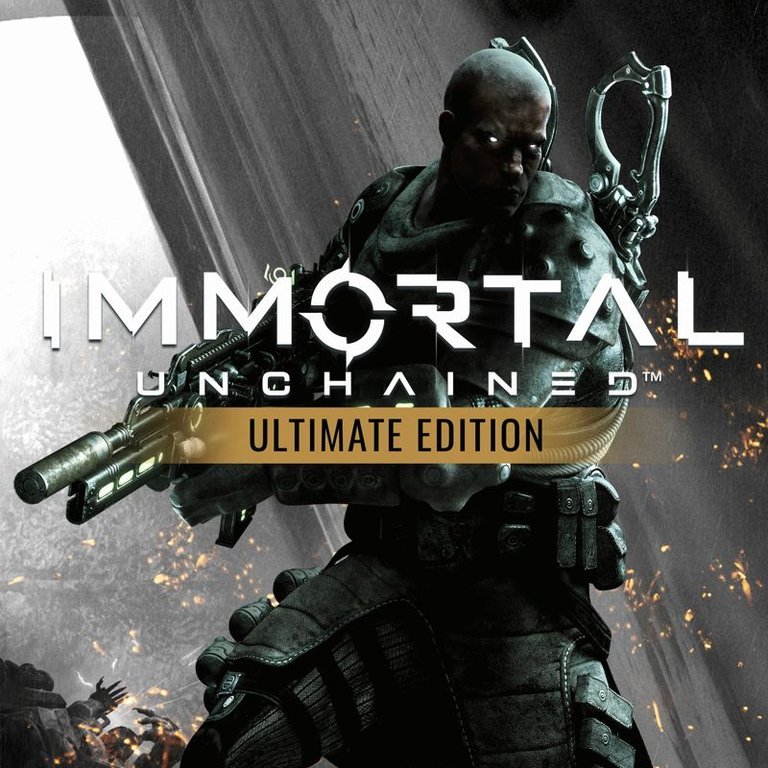
Immortal: Unchained – Ultimate Edition is a hardcore action RPG set in an alternate universe inspired by Norse mythology, where players assume the role of an amnesiac Prisoner tasked with repairing the cosmic Monolith to avert the prophesied End Times. Featuring gameplay reminiscent of Dark Souls but with a focus on futuristic firearms and critical hit targeting, the game challenges players to journey across realms like the snow planet Arden and the forest world Veridian, confronting a backstory involving ancient races, prophecy, and undead armies.
Immortal: Unchained – Ultimate Edition Reviews & Reception
trustedreviews.com : Dark Souls but with bad combat is a tough sell.
Immortal: Unchained – Ultimate Edition: Review
When Toadman Interactive first unveiled Immortal: Unchained in 2017, the concept was immediately captivating: a Dark Souls-inspired action RPG where guns replace swords, set within a sci-fi realm steeped in Norse mythology. For fans of the burgeoning “Souls-like” genre, the promise of a fresh, firearm-focused take seemed like a revelation. Yet, upon its release in September 2018, the game arrived not with a triumphant roar but with a muted whimper, plagued by technical woes and a combat system that failed to ignite. The subsequent Ultimate Edition, released in October 2019, bundled the base game with all DLC—the Storm Breaker expansion, Midas Touched, and Primes packs—offering a definitive package that still struggles to escape the shadow of its unfulfilled potential. This review will delve into every facet of Immortal: Unchained – Ultimate Edition, arguing that while its narrative ambition and world-building are commendable, the core experience is fatally undermined by repetitive mechanics, poor AI, and a host of technical imperfections that keep it from joining the pantheon of great Souls-likes.
Development History & Context
Studio Background
Immortal: Unchained was developed by Toadman Interactive, a Swedish independent studio founded in 2010. Prior to this project, Toadman had released Bloodsports.TV (2014-2015), a cooperative arena shooter that showcased the team’s proficiency with gunplay mechanics. However, Immortal marked a significant departure: a single-player, hardcore action RPG with a focus on challenging combat and deep lore. The studio operated with a small team—reported to be around 30 developers—typical of a low-budget indie operation. This size would both inform the game’s ambitious scope and contribute to its technical shortcomings.
Vision and Design Goals
The creative vision behind Immortal: Unchained was to fuse the deliberate, punishing combat of FromSoftware’s Dark Souls series with a firearms-centric arsenal, all wrapped in a narrative inspired by Norse mythology and the cataclysm of Ragnarök. The developers sought to create a “hardcore action RPG” that would feel both familiar and distinct. To achieve a rich story, they enlisted veteran writers Anne Toole (known for The Witcher) and Adrian Vershinin (Killzone: Shadow Fall, Battlefield 1). Their goal was a tale of prophecy, revenge, and cosmic decay, told through the environmental storytelling tradition of Souls games. The result is a universe where the Nine Realms of Norse myth are reimagined as sci-fi landscapes, governed by a mysterious Monolith at the center of creation.
Technological Constraints
Given its indie status, Toadman had to work within tight technical limits. The game engine (unspecified) appears to be a heavily modified or custom solution, but it shows signs of strain. Textures frequently pop in during cutscenes or when entering new areas, especially on console versions. Shadow rendering is often missing or simplified, leading to a flat visual presentation. Geometry clipping is common—players report getting stuck in the world or enemies materializing inside walls. These issues suggest a lack of optimization and testing resources. Additionally, the sheer scale of the interconnected worlds, each with multiple sub-areas, likely stretched the team’s ability to polish assets, resulting in the “cut-and-paste” criticism where similar props and room layouts are reused across different planets.
Gaming Landscape and Release
Immortal: Unchained launched on September 7, 2018 for Windows, PlayStation 4, and Xbox One. This placed it in a crowded market: the Souls-like genre was at its peak, with Dark Souls III having set a high bar and other successors like The Surge (2017) and Salt and Sanctuary (2016) having already explored variations. The “Dark Souls with guns” tagline, while catchy, also set unrealistic expectations; many critics and players expected a seamless integration of shooter mechanics into the Souls formula, which the game failed to deliver. The timing—mid-September—also meant competing with major releases, making it easy to overlook. Initial sales were likely modest, and critical reception was mixed to negative, especially on consoles (Metacritic scores of 49 on PS4 and 51 on Xbox One, versus 63 on PC). Over the following year, Toadman released patches to address bugs and balance issues, but the game’s reputation remained tarnished.
The Ultimate Edition
On October 28, 2019, Toadman and publisher Game Odyssey (later Sold Out) launched Immortal: Unchained – Ultimate Edition for PlayStation 4, with Windows and Xbox One versions likely following or already available as bundles. This compilation includes the base game plus all post-release content: the Storm Breaker expansion (which adds a new area and story elements), the Midas Touched pack, and the Primes pack. These DLCs introduce new weapons, armor, enemies, and likely additional lore collectibles. The Ultimate Edition represents the definitive version of the game, though it arrived after the initial hype cycle and did little to alter the critical consensus. It remains the most complete way to experience Toadman’s flawed but intriguing experiment.
Narrative & Thematic Deep Dive
Plot Synopsis
The story of Immortal: Unchained unfolds across nine interconnected realms, each a distinct biome, and the mysterious Stream that binds them. The player assumes the role of an unnamed Prisoner, thawed from millennia of cryosleep by Aras, the Keeper of the Monolith—a stone artifact at the universe’s core. Aras explains that the Nine Realms are collapsing under the onslaught of the “wind from Abyss”, which has raised an undead army led by Iska, the self-proclaimed Queen of the Dead. The Prisoner, whose memory is gone, is the only one who can repair the Monolith and avert the End Times.
The quest begins with the restoration of three Nexus Orbs, sources of the Monolith’s power, located on the lifeless ice planet Arden, the human forest world Veridian, and the abandoned Prime citadel Apexion. After retrieving these, the Prisoner and Aras use the Monolith to fend off an attack by Iska’s forces. However, the decay persists. Consulting the Monolith, Aras learns the instability originates within the Stream, an alternate dimension of pure creation. To access it, they must collect the hearts of three children of the Degonite warrior Cathal—Malog, Arlen, and Iska—whose prophecy foretold the downfall of the Prime race.
The Prisoner hunts each child in turn: Malog, a monstrous beast imprisoned in Arden’s Soul Furnace; Arlen, whose vengeful spirit now haunts Veridian’s forests; and Iska, who rules the Abyss from a necrotic stronghold. Along the way, the Prisoner encounters King Naro, the wise ruler of the Prime, and his son Orin, a mighty warrior destined to die at Malog’s and Arlen’s hands. With careful intervention, the player can even save Naro and Orin from their fates, demonstrating that the prophecy is not absolutely fixed. Another companion is Bren, a human warrior who escaped the Abyss but lost her memories; aiding her can yield key items.
After delivering the three hearts to Aras, the Keeper opens a rift into the Stream—and then reveals his true contempt. He gloats that he has manipulated the Prisoner, who is actually Cathal himself, into killing his own offspring as part of the prophecy’s fulfillment. Aras then transforms into the Climax Boss, but is defeated. The Prisoner enters the Stream and battles through fifteen surreal zones to reach the Tenth Realm, where the source of the decay is revealed: Naylon, Naro’s beloved younger son, who was killed by Cathal long ago. Captured and tortured by Iska for centuries, Naylon’s spirit has gone insane and now seeks to create a new paradise universe using the Stream’s power—a process that will annihilate the current reality. The Prisoner defeats Naylon.
At this juncture, Cathal’s consciousness reasserts control. He explains that the Monolith’s Oracles can only predict the actions of beings native to their universe; to subvert the prophecy, he allowed an extra-dimensional entity (the player) to possess his body, thereby bending events to his revenge. He also admits that the blade which slew Naylon was poisoned to drive the soul mad and distract everyone. With Naylon gone, a new universe will be formed and the old one destroyed, but without a guiding hand—a chaotic free-for-all. Cathal then turns directly to the player, stating he does not know what they are, but that they are no longer needed. He shuts off the player’s monitor, ending the game with a chilling fourth-wall break.
Characters and Their Roles
- The Prisoner/Cathal: The protagonist. Initially an amnesiac “living weapon”, later revealed to be Cathal, a Degonite warrior who instigated the war against the Azurians. His complex motives—love for his children, desire for revenge against the Prime, and ultimately a willingness to let an outside force manipulate fate—drive the entire plot. The player’s possession adds a layer of meta-commentary on agency.
- Aras: The Monolith Keeper, caretaker of both the artifact and the underground prison. He is pragmatic and secretive, concealing his hatred for Cathal until the climax. His betrayal is a key twist, though his motives (stemming from Cathal’s past crimes) are understandable.
- Cathal’s Children:
- Malog: The “Imprisoned Beast”. After Cathal’s conflict with the Prime, Malog was locked away in the depths of the Prime capital, growing into a colossal creature destined to slay King Naro.
- Arlen: Exiled to Veridian, he was hunted down and murdered by Orin. His spirit merged with the forest, corrupting it and later trapping Orin in a twist of poetic justice.
- Iska: The youngest child, who fled to the Abyss and became the Queen of the Dead. Using cybernetics, she raised an undead army—the “wind from Abyss”—to exact revenge on the Prime. She is the primary antagonist for most of the game.
- King Naro: Leader of the Prime race, chosen among three brothers. Known for his wisdom and trust in Cathal, which sowed discord with his sons Orin and Naylon. His fate can be altered by the player.
- Orin: Naro’s eldest son, the greatest warrior of the Prime. He killed Arlen to stop the prophecy but was subsequently trapped by the corrupted forest. He represents the cycle of violence.
- Naylon: Naro’s younger son, beloved by the Prime. Cathal slew him with a poisoned blade, an act that sparked the chain of events leading to the End Times. After death, he was captured and tortured by Iska for centuries, which drove his spirit insane and turned him into the final boss seeking to create a new universe.
- Bren: A human woman warrior who escaped the Abyss. The Prisoner can help her recover her memories, and she in turn assists in acquiring the Prison Depths Key. She adds a human perspective to the conflict.
- The Oracles: Three beings who interpreted the Monolith’s bas-relief and foretold the prophecy about Cathal’s children. Their role is largely background but crucial to the plot’s mythic structure.
Themes and Symbolism
Immortal: Unchained weaves several interconnected themes:
– Prophecy and Free Will: The central prophecy foretells that Cathal’s children will bring down the Prime. The game questions whether fate is immutable—the player can save Naro and Orin, suggesting some malleability. Yet Cathal ultimately reveals he manipulated events from outside the system, hinting that free will may be an illusion even when one seems to break a prophecy.
– Revenge and the Cycle of Violence: Cathal’s killing of Naylon sets off a chain reaction: Iska raises an undead army, the Nine Realms decay, and the End Times loom. Each character’s actions are driven by past wrongs, creating a self-perpetuating loop of suffering. The twist that Naylon’s insane attempt to create a new universe is itself a product of that cycle underscores the futility of vengeance.
– Corruption and Decay: The “wind from Abyss” physically corrupts the worlds, raising the dead as cyborg undead. The Stream’s instability threatens all creation, symbolizing entropy. The Monolith, source of life, becomes a focal point of destruction when misused.
– Identity and Agency: The protagonist’s revelation as an extra-dimensional entity possessing Cathal raises ontological questions: who is the true actor? The player’s role is reduced to an instrument of Cathal’s design, only to be discarded when no longer needed—a meta-commentary on player agency in narrative-driven games.
– Norse Myth Parallels: The Nine Realms, the impending Ragnarök, the Monolith as a Yggdrasil analogue, and the Oracles as Norns all draw from Norse cosmology. Cathal resembles Loki—a trickster whose actions precipitate the end of the gods. The game reinterprets these myths through a sci-fi lens, blending ancient archetypes with cybernetics and space travel.
Storytelling Methods
True to the Souls tradition, Immortal eschews linear cutscenes in favor of environmental narrative and item descriptions. The plot is pieced together by exploring, talking to sparse NPCs, and collecting lore items:
– Forlorn Idols (57 total): Small statues that, when examined, grant a short narrative vignette about a character or event. Examples include “The Imprisoned Beast”, “The Fallen Child”, “The Trickster”. These fill in backstory, such as Cathal’s heart-splitting or Iska’s descent into the Abyss.
– Mearstones (58 total): Geological samples scattered across the realms, each with a descriptive blurb that adds context about the world’s history, cultures, or natural phenomena. For instance, “Frozen Bone” tells of the cold fire of wyrms and the fall of the first realms.
– Cenotaphs (various): Objects like “King’s Lost Scepter” or “Spear Necklace” that provide additional lore snippets, often tied to specific characters or events.
– Environmental Storytelling: The worlds themselves convey narrative—fallen statues, ruined citadels, and the juxtaposition of advanced technology with overgrown nature hint at past wars and decline.
This fragmentary approach rewards attentive players but can be alienating; the story’s complexity and non-linear delivery make it difficult to grasp on a first playthrough. The involvement of seasoned writers is evident in the depth of the lore, even if the overall narrative feels overly convoluted. The ultimate fourth-wall break is a bold move that contextualizes the player’s role as an external force, tying the meta-narrative together.
Gameplay Mechanics & Systems
Core Gameplay Loop
The game operates on a loop reminiscent of Dark Souls: the player explores a series of interconnected areas, fights enemies, dies, respawns at the last activated Obelisk (the local bonfire equivalent), and must retrieve lost Bits (souls) from the death site if they die again before reaching it. Obelisks also serve as fast-travel points once activated, allowing movement between previously visited locations. The structure is hub-and-spoke: the central Core contains portals to the three main planets (Arden, Veridian, Apexion) and later to the Stream. Each planet is divided into multiple sub-areas (e.g., Arden has Scar of the Abyss, The Charnels, Soul Furnace, The Cauldrons, Archives of the Lost). Progress often involves activating an Obelisk, defeating a boss, or retrieving a key item to unlock new pathways. Shortcuts are abundant, encouraging backtracking and mastery of the map. Death is a learning tool; players are expected to die repeatedly while studying enemy patterns and level layouts.
Combat System
Combat is where Immortal: Unchained tries to distinguish itself, merging shooter mechanics with Souls-like pacing.
- Weapons: The arsenal includes a variety of firearms—assault rifles, shotguns, sniper rifles, submachine guns, pistols, and grenade launchers. Each weapon has a primary fire mode and a unique power shot (secondary fire) that consumes an Energy meter. Power shots differ per gun: some unleash a flamethrower burst, others fire a rapid, staggering volley. Melee options are dual-wielded swords, axes, or clubs, usable as last resorts or for stagger.
- Aiming: Two modes are available: lock-on and free aim. Lock-on automatically targets the nearest enemy but can be finicky, sometimes locking onto the wrong foe or making it hard to target weak points. Free aim offers precise control but suffers from a “floaty” feel, particularly on console controllers; the sensitivity often feels imprecise, leading to missed shots. Many players opt for lock-on despite its limitations.
- Stamina and Energy: Sprinting, dodging (the ubiquitous combat roll), and melee attacks consume Stamina, which regenerates when not in use. Power shots draw from a separate Energy pool that refills slowly or via certain items. Managing both meters adds a tactical layer—players cannot spam attacks without consequence.
- Enemy Weak Points: Almost all humanoid and robotic enemies have a glowing orange aperture on their back that receives massive damage when hit. Headshots also yield critical damage. Some enemies have additional vulnerable spots (e.g., a glowing node on the back). This design encourages players to lure enemies into exposing their backs, then fire a shotgun or rifle round into the weak spot. However, because enemies rarely turn their backs voluntarily at range, the optimal strategy devolves into up-close bait-and-dodge cycles, effectively negating the ranged advantage of guns.
- Dismemberment: Sustained fire to limbs can sever them. Shooting off an arm disarms the foe; shooting legs can stagger. This adds a visceral tactical option, though many players ignore it due to the efficiency of back-critical hits. Limbs may regenerate over time, reducing the long-term impact.
- Enemy Types: A bestiary of robotic undead: Grunts (basic melee), Rangers (ranged), Defenders (shielded), Warriors (heavily armed), Surge (electric), Troopers (armored), Duelists (agile), Corruptors (toxic), Swarmers (swarm enemies), etc. Many later enemies employ teleportation to appear behind the player, a mechanic that feels more like a cheap ambush than intelligent AI. Bosses include unique figures like the Soothsayer Commander (who floats and emits shockwaves) and a literal tree in Cinderwoods, as well as many that later reappear as regular foes (the “Degraded Boss” trope).
- AI Behavior: Enemy AI is widely criticized as rudimentary. Foes either charge directly or use teleport to get behind the player. Ranged enemies often advance without using their range, and shooters may fire in predictable patterns. The teleportation mechanic—especially common in the Stream and late-game areas—creates artificial difficulty by constantly flanking the player, but it lacks the positional sophistication of a well-designed Souls enemy. This, combined with the repetitive weak-point exploitation, makes combat feel like a grind rather than a cerebral dance.
Progression and Customization
- Bits and Stat Upgrades: Enemies drop Bits, the universal currency. Upon death, all carried Bits are dropped at the corpse site. If the player dies again before retrieving them, the Bits are lost forever. Bits are spent at Obelisks to improve six core stats:
- Finesse: Likely influences accuracy and critical hit chance.
- Toughness: Damage reduction.
- Perception: Possibly affects item discovery or enemy detection.
- Endurance: Health and stamina pool.
- Insight: Perhaps energy capacity or resistance to status effects.
- Another stat? Sources mention these five; possibly a sixth like “Willpower”? The Wikipedia article lists Finesse, Toughness, Perception, Endurance, Insight. We’ll stick to these.
Upgrading stats allows players to tailor their build—e.g., a high Finesse marksman or a Toughness tank.
- Disciplines: At character creation, players choose from six Disciplines (akin to classes). Each grants unique starting bonuses. For example:
- Raider: Bonus to critical hit damage.
- Marksman: Specializes in sniper rifles.
- Wanderer: Heals a small amount on kill.
The exact list isn’t provided in sources, but we can mention they exist. (From Fextralife wiki: “Choose from 6 different Disciplines to start.”)
- Weapon Modifications: Guns can be customized with attachments (scopes, silencers, extended magazines, etc.) at workbenches found in the world. Upgrades improve damage, accuracy, reload speed, or other attributes. This encourages experimentation and fine-tuning.
- Armor: While not as detailed, armor exists and can be upgraded at Armor Shrines. Different sets provide varying defensive bonuses and possibly weight affecting stamina recovery.
- Power Attacks: Each gun’s power shot is a special attack that consumes Energy. These can be game-changers in boss fights or against tough enemies.
Innovative Aspects and Their Flaws
Immortal: Unchained introduces several concepts that, on paper, could have revitalized the Souls-like gunplay:
– Shooter-Souls Fusion: The core idea—replacing melee with firearms—was novel. However, the execution falters because the Souls combat rhythm (slow, deliberate, positioning-focused) clashes with the fast-paced, aim-intensive nature of shooters. The game tries to compensate with lock-on, but free aim is essential for precision, and the controls feel imprecise. Moreover, most guns have artificially limited range (sniper rifles effective only ~25 meters), forcing close-quarters combat and negating the strategic advantage of distance. This undermines the shooter fantasy and makes the game feel like a melee title with guns as backup.
– Localized Damage: The ability to shoot off limbs (arms to disarm, legs to stagger) adds a tactical layer missing from many Souls-likes. In theory, players could aim for legs to immobilize a charging enemy or destroy a shield-bearer’s arm. In practice, the overwhelming effectiveness of back-critical hits renders limb targeting unnecessary—why aim for the leg when a single back-shot kills faster? The mechanic is underutilized due to the dominance of the weak-point meta.
– Dismemberment: Visceral and satisfying, dismemberment contributes to the game’s gritty atmosphere. However, it is mostly cosmetic; enemies quickly regenerate lost limbs, diminishing its strategic value.
– The Stream: An abstract dimension that connects the realms, the Stream consists of 15 areas filled with puzzles, platforming, and enemies. It’s an ambitious late-game zone that breaks from the sci-fi aesthetic into something more dreamlike. Unfortunately, the lack of a map and the repetitive visual design can make navigation tedious.
– Lore Integration: The abundance of collectible lore items (Forlorn Idols, Mearstones, Cenotaphs) creates a dense tapestry of backstory. This environmental storytelling is a hallmark of the genre and is executed well, with each item offering a morsel of the overarching mythos. However, the sheer volume (over 170 collectibles) can be overwhelming, and the notes are often cryptic, requiring external resources to piece together the full narrative.
Technical and Balance Issues
Despite its ambitions, the game is plagued by a host of problems that hinder enjoyment:
– Performance and Bugs: On all platforms, but especially PS4 and Xbox One, the game suffers from frame rate drops in busy areas, texture pop-ins, and missing shadows. Players report getting stuck in geometry, enemies teleporting into walls and shooting through them, and occasional save file corruption. These technical flaws break immersion and can cause unfair deaths.
– User Interface: The menus are described as “clumsy” and unintuitive. Navigating inventory, upgrading stats, or managing attachments requires excessive button presses and lacks the sleekness of modern RPGs. The absence of an in-game map forces players to rely on memory or external guides, which is particularly frustrating in labyrinthine areas.
– Environmental Repetition: While each planet has a distinct visual theme, individual areas often feel like recycled copies—same cave layouts, identical room structures, repeated props. This “cut-and-paste” design makes exploration feel stale and suggests a lack of artistic resources or time.
– Enemy and Boss Balance: Many enemies have bloated health pools, turning them into “damage sponges” unless the player exploits the back weak point. This promotes a single tactic across most encounters. Bosses vary in quality; some are inventive and challenging (e.g., the tree boss in Cinderwoods), while others rely on cheap moves, teleport spam, or unavoidable area-of-effect attacks that feel unfair rather than skill-testing.
– Weapon Balance: The artificial range limits cripple certain weapon classes. Sniper rifles, for instance, are nearly useless beyond 25 meters, making them inferior to assault rifles in most situations. This violates the class fantasy and discourages build diversity.
– Difficulty Curve: The game is undeniably hard, but often for the wrong reasons. The combination of poor AI, teleport ambushes, and environmental hazards (e.g., guaranteed death by falling into water) creates frustration rather than satisfaction. The feeling that deaths are cheap undermines the Souls-like principle of learning from failure.
World-Building, Art & Sound
The Nine Realms and The Stream
The game’s universe is a patchwork of distinct biomes, each representing one of the Norse-inspired Nine Realms, albeit with a sci-fi twist. They are accessed via portal network from the Core:
– The Core: The central hub containing the Monolith, a massive stone structure with a tree bas-relief. It houses the portal chamber with six gateways (to the three planets, the Stream, and perhaps others). The architecture is ancient yet high-tech, with glowing runes and a solemn atmosphere.
– Arden: A frozen, lifeless planet covered in ice and snow. Areas include:
– Scar of the Abyss: A frozen canyon with ice caves and waterfalls.
– The Charnels: A grim necropolis where the dead are processed.
– Soul Furnace: A fiery industrial complex burning with green flames, housing Malog’s prison.
– The Cauldrons: A series of bubbling vats and pipes, filled with undead production lines.
– Archives of the Lost: A library of lost knowledge.
The palette is dominated by blues, whites, and occasional orange from lava. The “Primordial realm of ice and death” feels desolate and oppressive.
– Veridian: A forest world once fertile, now corrupted by Arlen’s vengeful spirit. Sub-locations:
– Ashborne Caverns: Cave systems with bioluminescent fungi and underground rivers.
– Forbidden Forest: Dense, tangled woods with ancient ruins and overgrowth.
– Cinderwoods: A burnt forest, the aftermath of some cataclysmic fire.
– Molten Crag: A volcanic region with lava flows and rocky outcrops.
– Fiery Depths: Deep caverns filled with magma and mechanical forges.
The environments shift from lush greens to charred blacks and fiery reds, reflecting the land’s corruption.
– Apexion: The abandoned homeworld of the Prime race, a once-gleaming civilization now in ruins. Areas:
– Skypath: Floating skybridges and high-tech plazas overlooking clouds.
– Legislative Archives: Vaulted libraries and bureaucratic halls.
– Outlook Promenade: Open-air concourses with statues and gardens.
– Seat of the Senate: A grand, columned chamber where the Prime once governed.
The aesthetic is clean, white and metallic, contrasted with decay and overgrown vegetation—a reminder of fallen glory.
– The Stream: An alternate dimension emanating from the Monolith, serving as the connective tissue of reality. It consists of fifteen abstract zones—floating platforms, glowing orbs, shifting geometry—each more surreal than the last. The Stream is non-Euclidean, defying normal physics, and eventually leads to the Tenth Realm, a golden, ethereal plane where Naylon’s spirit resides. The Stream’s design is intentionally disorienting, befitting a metaphysical realm.
– The Abyss: Mentioned as the source of the undead, a dark, nightmarish dimension where Iska built her army. The player visits a portion via portal in Arden’s Cauldrons, but it is not fully explored.
Visual Design and Artistic Direction
Immortal: Unchained adopts a dark sci-fi aesthetic, blending ancient myth with futuristic technology. The art direction aims for a gritty, oppressive atmosphere:
- Character Design: The protagonist and many NPCs feature intricate facial tattoos and glowing eyes, giving an otherworldly vibe. The three children of Cathal have distinct looks: Malog is a hulking beast; Arlen’s presence is felt through environmental corruption; Iska appears as a regal yet terrifying queen in the Abyss. Enemy designs are varied but often blend organic and mechanical elements: Grunts are hulking brutes with exposed wiring; Rangers wear sleek armor; Defenders carry energy shields; Swarmers are insectoid drones.
- Environments: Each realm has a strong visual identity, but within each, assets are frequently reused. For example, the same damaged corridor segment appears in multiple locations on Apexion. This repetition detracts from the sense of exploration. However, the use of lighting and color helps differentiate areas—Arden’s cold blues, Veridian’s deep greens and fiery oranges, Apexion’s sterile whites and golds. The Stream’s psychedelic neon is a stark contrast.
- Effects: Gunplay produces muzzle flashes, projectile trails, and impactful explosions. Dismemberment results in chunks of metal and sparks. The energy-based attacks (power shots) glow with vibrant colors. These effects add visceral feedback to combat.
- Technical Limitations: The graphics are adequate for an indie title but fall short of AAA standards. Character models are less detailed than environments; textures are often blurry or low-resolution. The frame rate instability further mars the visual experience, especially during boss fights with many effects.
Sound Design and Music
The audio landscape contributes significantly to the game’s oppressive mood:
- Music: The soundtrack is atmospheric, mixing ambient electronic drones with orchestral swells. It builds tension during exploration and ramps up during boss encounters. Themes are not particularly memorable on their own, but they effectively underscore the game’s bleak tone. Some Steam users tag the game as having a “Great Soundtrack”, suggesting it resonates with a segment of players.
- Sound Effects: Gunfire is punchy and satisfying, with distinct sounds for each weapon type—assault rifles crackle, shotguns boom, sniper rifles crack. Melee impacts are weighty. Enemy noises range from mechanical whirring to guttural roars, enhancing the sense of danger. The environment hums with ambient sounds: wind howling on Arden, creature calls in Veridian, mechanical echoes in Apexion.
- Voice Acting: Voice lines are sparingly used. Aras speaks with a calm, measured tone that masks his contempt. Other NPCs like Bren and occasional survivors provide brief exposition. The voice acting is competent but not exceptional, fitting the game’s modest production values.
- Audio Bugs: Some users report audio glitches, such as missing sound effects or sudden cut-offs, though these are less prominent than visual bugs.
Reception & Legacy
Critical Reception at Launch
Immortal: Unchained received mixed to negative reviews across all platforms at launch. Metacritic scores reflect this: 63/100 on PC (based on 6 critics), 49/100 on PlayStation 4 (12 critics), and 51/100 on Xbox One (7 critics). OpenCritic aggregates it to a 56/100 and places it in the bottom 10% of games on the site.
Critics consistently praised the game’s ambition, atmosphere, and lore but panned its execution:
Common Praises:
– Atmosphere and world-building: Many note the game’s dark, immersive setting.
– Boss design: Some bosses are creative and challenging.
– Lore depth: The extensive collectibles provide a rich backstory.
– Ambitious concept: Attempting a shooter-Souls hybrid is noted as bold.
Common Criticisms:
– Gunplay: Described as “mediocre”, “floaty”, “unresponsive”. Lock-on aims but free aim is problematic. Weapon range is artificially capped.
– Combat Repetition: The universal back weak point makes many fights feel samey.
– Technical Issues: Bugs, glitches, performance problems. Push Square says “unacceptable technical flaws”. Trusted Reviews notes enemies shooting through walls, getting stuck.
– AI: Poor enemy intelligence, reliance on teleport ambushes.
– Level Design: Repetitive environments, lack of map, confusing layouts.
– UI: Clumsy menus.
– Lack of Identity: As a Souls-like, it doesn’t bring enough new mechanics to stand out; the shooter element feels tacked on.
Selected critic quotes illustrate the divide:
- Push Square (4/10): “Immortal: Unchained isn’t inherently an awful game, but it has very little going in its favour. Its level design is one shining beacon among a sea of bang average gameplay, unacceptable technical flaws, and a combat system that does little to distinguish itself from its inspirations.”
- Trusted Reviews (Ian Stokes): “Ultimately, Immortal: Unchained serves to highlight one thing above all else. Every frustrating aspect of the Dark Souls experience is tolerated and even praised by its fans because the underlying combat system is so fantastically well-realised. Strip that away and all you’re left with is a mediocre exercise in frustration.”
- Gameplanet (5/10): “The addition of guns to the ‘souls’ formula and a Sci-Fi setting make for an interesting concept on paper, but poor enemy AI, clunky menus, repetitive combat and very poorly designed levels result in an experience that’s more frustrating than fun.”
- God is a Geek (6.5/10): “An ambitious venture for a low-budget indie studio, but one that manages to stand out in the crowd despite its flaws.”
- ZTGD (7/10): “This has to be one of the more original Dark Souls-like games available… as long as they are willing to overlook a fair lack of polish.”
- Fextralife (7/10): “Immortal Unchained takes elements of From Software titles and successfully incorporates them into a sci-fi shooter. Unfortunately, the other aspects of the game are not as well thought out or executed, leaving one to wonder what could have been.”
User Reception and Community Response
User reception is similarly divided, though the overall Steam rating is “Mixed” with 64% of 710 reviews positive as of the data (circa 2020-2021). On Metacritic, user scores average around 6.1/10.
- Positive User Reviews: Many players praise the game as an underrated gem, arguing that its difficulties are part of the charm and that the deep lore rewards patience. A 2023 Steam review titled “Absolute gem!!!!!!!” declares it a 10/10 and one of the best Souls-likes, lamenting that it’s no longer available for purchase. Another user (ps3hero) claims it’s “VERY athmospheric” and that the negative reviews focus on technical flaws that can be overlooked. These fans often compare it favorably to other Souls-likes and appreciate its unique setting and challenging boss fights.
- Negative User Reviews: Critics among players echo the press: repetitive combat, bugs, and frustrating design. One user (Neessa) warns that “the more you advance in the game, the more you discover how many bugs it has and how unfair it can be”. Others mention being forced to use lock-on due to poor free aim. Some note that the game’s difficulty comes from cheap enemy placement rather than skill-based challenges.
- Community: The game has a dedicated subreddit and Discord community (as seen on the Fextralife wiki), where players share lore theories, collectible locations, and build guides. The existence of a “Lore Master” achievement for collecting all Forlorn Idols, Mearstones, and Points of Interest encourages completionism. However, the community is relatively small compared to mainstream Souls games.
Commercial Performance and DLC
Commercial figures are not publicly disclosed, but the mixed critical reception and technical issues likely limited sales. The game performed reasonably well on PC (higher Metacritic) but struggled on consoles. The Ultimate Edition released a year later, bundling the base game with all DLC. The included expansions add content:
– Storm Breaker: Likely introduces a new area (perhaps a storm-wracked realm) and associated enemies, bosses, weapons.
– Midas Touched: Possibly adds golden-themed gear or a new biome.
– Primes Pack: Probably expands on the Prime race, adding new weapons, armor, and maybe story snippets.
These DLCs increase the total number of weapons (base already had over 100 guns) and lore collectibles, but they do not fundamentally alter the core gameplay or fix the underlying issues. The Ultimate Edition is aimed at collectors and late adopters, offering a complete package at a discounted price (around $19.24 at launch, down from individual purchases). It did not, however, trigger a significant reappraisal from critics.
Long-Term Legacy
In the years since release, Immortal: Unchained has not gained a substantial reputation boost. It remains a niche title, often cited as an example of a promising concept gone awry. Its place in gaming history is that of a cautionary tale: innovation requires not just a fresh idea but also the polish and tight design to realize it. The game demonstrates that the Souls-like formula is not simply a set of mechanics to be transplanted; it demands careful tuning of combat, enemy behavior, and level layout. The shooter hybrid has yet to be perfected, and Immortal is a reminder of the pitfalls.
That said, it has its admirers. Among hardcore Souls fans willing to tolerate its flaws, it is cherished for its dark atmosphere, intricate lore, and moments of genuine challenge. The Ultimate Edition ensures that the complete experience is preserved, but it hasn’t elevated the game to cult classic status. As of 2025, the game appears to have been delisted from some online stores (a Steam review notes it’s no longer purchasable), further cementing its status as a forgotten footnote—though that same obscurity may fuel its appeal to collectors.
Conclusion
Immortal: Unchained – Ultimate Edition stands as a profoundly ambitious yet deeply flawed entry in the Souls-like canon. Its greatest strengths lie in its narrative ambition: a sprawling, myth-inspired saga told through environmental fragments and collectible lore, with a twist that reframes the entire journey as a meta-commentary on player agency. The fusion of firearms with deliberate combat, while conceptually exciting, fails in practice due to clunky aiming, limited weapon ranges, and a repetitive enemy design that forces the same tactic ad infinitum. Technical shortcomings—bugs, performance issues, UI clumsiness—further erode the experience, turning what could have been a challenging adventure into a frustrating slog. The world-building is impressive in scope but marred by asset reuse; the art direction captures a dark, sci-fi mood but cannot consistently deliver visual fidelity. The Ultimate Edition, while offering all DLC, does not remedy these core problems.
For the patient Souls aficionado who values lore and can overlook mechanical shortcomings, Immortal: Unchained may yet provide dozens of hours of grim exploration and tough boss fights, especially if acquired at a discount. For most players, however, its flaws are too numerous to ignore. Historically, it serves as a lesson: that innovation demands more than a clever premise—it requires meticulous execution. As a “Dark Souls with guns”, it promised revolution but delivered repetition. Yet, in its ambition and its beautiful ruin, it remains a fascinating artifact of a time when developers dared to tamper with a winning formula, and often paid the price.