
- Release Year: 2016
- Platforms: Macintosh, Windows
- Publisher: Vidiludi Software
- Developer: Vidiludi Software
- Genre: Simulation
- Perspective: Diagonal-down
- Game Mode: Single-player
- Gameplay: Open World, Sandbox
- Setting: Post-apocalyptic
- Average Score: 54/100
Description
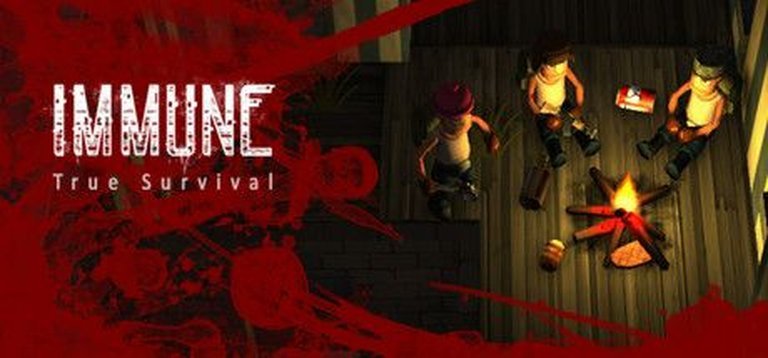
Immune: True Survival is a post-apocalyptic sandbox survival game set in a harsh, open-world environment. Players must scavenge, craft weapons and tools, build forts, and fend off threats like mutants, bandits, and other players. The game features multiplayer survival with XP progression, optional PVP and PVE combat, farming, fishing, and trading, all while managing health conditions and exploring a 2D scrolling world.
Gameplay Videos
Immune: True Survival Patches & Updates
Immune: True Survival Reviews & Reception
steambase.io (58/100): This score is calculated from 1,400 total reviews which give it a rating of Mixed.
steamscore.io (50/100): Immune – True Survival has 5/10 rating.
Immune: True Survival – A Post-Apocalyptic Survival Experiment
Introduction: The Forgotten Wasteland
Immune: True Survival (2016) is a curious artifact in the survival genre—a game that dared to blend the brutality of post-apocalyptic survival with a playful, almost satirical tone. Developed by the obscure German studio Vidiludi Software, it promised an open-world sandbox where players could craft, fight, and fortify against mutants, bandits, and each other. Yet, despite its ambitious premise, Immune remains a footnote in gaming history, a cautionary tale of unfulfilled potential. This review dissects its legacy, mechanics, and the reasons behind its quiet demise.
Development History & Context: A Studio’s Gamble
Vidiludi Software, a small independent studio, positioned Immune as a budget-friendly alternative to giants like DayZ or Rust. Released in December 2016 (with earlier iterations dating back to 2015), the game leveraged the Unity engine to create a 2D scrolling, diagonal-down survival experience—a rare perspective in the genre. The studio’s vision was clear: a multiplayer survival game with crafting, base-building, and PvP/PvE elements, all wrapped in a cartoonish aesthetic.
However, Immune arrived in a crowded market. The mid-2010s saw an explosion of survival games, and Vidiludi’s limited resources meant compromises in polish and depth. The game’s Steam launch was met with mixed reactions, and by 2021, it had been delisted, leaving behind a niche community of modders and private server enthusiasts.
Narrative & Thematic Deep Dive: Survival with a Wink
Immune’s world is a post-apocalyptic wasteland ravaged by a pandemic, where gasmask-clad survivors scavenge for resources. The narrative is minimal, relying on environmental storytelling and player-driven interactions. Themes of resilience and cooperation clash with the game’s tongue-in-cheek tone—described as “true survival with a wink.” This tonal whiplash is both charming and confusing, as the game oscillates between grim survivalism and lighthearted absurdity.
Characters are archetypal: mutants, bandits, and NPC merchants populate the world, but their lack of depth underscores the game’s focus on emergent gameplay over scripted storytelling. Dialogue is functional, often reduced to mission prompts or trading exchanges. The absence of a central plot leaves players to craft their own narratives, for better or worse.
Gameplay Mechanics & Systems: A Flawed Sandbox
Core Loop: Scavenge, Craft, Survive
Immune’s gameplay revolves around three pillars:
1. Resource Gathering: Players chop trees, mine ore, and hunt animals (or other players) for materials.
2. Crafting: Weapons, tools, and fortifications are crafted from scavenged resources, with recipes unlocking via experience points (XP).
3. Base-Building: Forts can be constructed to store loot and defend against raids, though the system is rudimentary compared to contemporaries like Rust.
Combat & Progression
Combat is simplistic, with melee and ranged weapons lacking weight or impact. The isometric perspective complicates precision, leading to frustrating encounters. Progression is tied to XP, earned through missions, crafting, and kills. However, the grind feels arbitrary, with little payoff beyond cosmetic upgrades.
Multiplayer & PvP
The game’s multiplayer mode was its selling point, but empty servers and clunky netcode doomed it. PvP is optional, but the lack of players renders it moot. PvE elements (mutants, animals) are repetitive, with AI that oscillates between passive and aggressively unfair.
UI & Technical Issues
The UI is functional but dated, with inventory management feeling cumbersome. Bugs—ranging from item duplication to server crashes—plagued the experience, and Vidiludi’s post-launch support was sporadic.
World-Building, Art & Sound: Aesthetic Dissonance
Visual Design
Immune’s art style is a jarring mix of cartoonish sprites and grimy post-apocalyptic textures. The 2D scrolling perspective gives it a retro feel, but the execution lacks cohesion. The world is vast but empty, with repetitive biomes and little environmental variety.
Sound & Atmosphere
The sound design is minimalist: ambient crickets, gunshots, and the occasional zombie groan. There’s no soundtrack, leaving the world eerily silent. This absence of audio immersion exacerbates the game’s isolation.
Reception & Legacy: The Rise and Fall
Critical & Commercial Reception
Immune’s Steam reviews are “Mixed” (58/100), with players praising its affordability and crafting mechanics but lambasting its bugs, empty servers, and lack of depth. Critics largely ignored it, and commercial success was negligible.
Post-Launch & Community
Vidiludi’s abandonment of the game led to a dedicated but small community of modders and private server hosts. Guides for local server setups and mods (e.g., Immune Einsteigerguide) emerged, but the game’s player base dwindled. By 2021, it was delisted from Steam, though fans still seek copies for offline play.
Influence & Industry Impact
Immune’s legacy is one of caution. It exemplifies the risks of indie survival games in an oversaturated market. Its failures—poor polish, lack of support, and tonal inconsistency—serve as lessons for future developers.
Conclusion: A Noble Experiment, a Forgotten Game
Immune: True Survival is a flawed but fascinating relic. Its blend of survival mechanics and playful tone was ambitious, but execution fell short. While it may not deserve a place among the greats, its existence highlights the creativity and risks of indie development. For historians, it’s a case study in what happens when vision outpaces resources.
Final Verdict: 5/10 – A cult curiosity, not a classic. Worth exploring for survival enthusiasts, but only in the context of its historical niche.
Immune’s story is one of survival—not just in its virtual world, but in the harsh reality of game development. It’s a reminder that even in failure, there’s value in daring to create.