
- Release Year: 2021
- Platforms: Windows
- Developer: Brandon Rabico
- Genre: Adventure
- Perspective: First-person
- Average Score: 70/100
Description
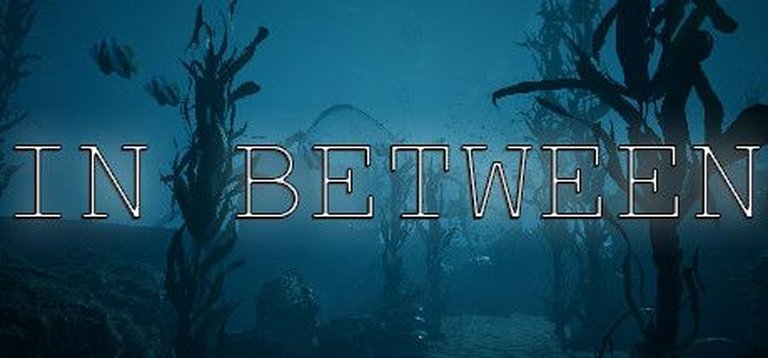
In Between is a 2D puzzle-platformer that tells the poignant story of a man facing terminal cancer, as he navigates through puzzles representing the five stages of grief while reflecting on his life through minimalist cutscenes. Set in a cartoon-like, atmospheric world, the game combines emotional storytelling with challenging gameplay to explore themes of mortality, family, and acceptance.
Where to Buy In Between
PC
In Between Reviews & Reception
keengamer.com : In Between aims to deliver an emotional narrative-driven gaming experience.
opencritic.com (70/100): In Between is a confused puzzle-platformer with some interesting ideas but ultimately, the story held my interest more than the game itself.
In Between: A Meditative Masterpiece of Mortality and Mechanics
In the landscape of video games, where spectacle often trumps substance and mechanics frequently serve as mere conduits for action, In Between (2015, re-released 2021) stands as a stark, defiant, and profoundly moving anomaly. Developed by the German studio gentlymad (later gentlymad studios) under the creative leadership of Brandon Rabico, this first-person puzzle-platformer is not about saving princesses or conquering worlds. It is an unflinching, intimate dialogue with death itself, framed by some of the most creatively oppressive and meaningful environmental puzzles ever conceived. It is a game that asks not “What do I do next?” but “What does it mean to be here, now, facing the end?” This review will argue that In Between is a landmark in narrative-driven game design, whose greatest strength—the inseparable marriage of theme and mechanic—is also the source of its most significant and divisive flaws. Its legacy is that of a beautifully flawed gem, a title that proves games can grapple with existential dread but also highlights the treacherous tightrope walk between artistic ambition and playable engagement.
1. Introduction: The Gravity of Existence
From its first, haunting line of dialogue—”Sooner or later, everybody dies. It’s ridiculous.”—In Between establishes its uncompromising thesis. It is a game set not in a fantastical realm, but in the collapsing interior of a dying man’s mind. The player is not an adventurer but a witness, navigating the fragmented, non-Euclidean architecture of a lifetime of memories as the protagonist succumbs to lung cancer. Developed initially as a student project and honed over years, In Between’s legacy is twofold: it is a poignant, award-winning piece of interactive storytelling that won the German Video Game Award and a RedDot Award, and it is a case study in the perils of letting thematic abstraction overwhelm tangible player feedback. This review will dissect how a game with such a simple core mechanic—gravity shifting—can evoke such profound emotion, and where its pursuit of artistic purity creates a rift between the story it tells and the experience it demands.
2. Development History & Context: From Student Project to Artistic Statement
In Between emerged from the German university scene, a product of gentlymad, a small studio founded by Brandon Rabico and core team members. The development spanned roughly two and a half years from prototype to its initial Steam release on August 21, 2015, after a public demo circulated in 2013. The team’s stated influences were not other platformers, but narrative-focused classics like Braid and the environmental storytelling of Valve’s Portal series. Their goal was explicitly non-commercial in spirit: to create an “immersive, atmospheric puzzle platformer” where gameplay mechanics themselves expressed the protagonist’s psychological state.
Technologically, the game was built in Unity, a choice that enabled its distinctive hand-painted aesthetic without requiring a AAA budget. The team employed skeletal animation blended with sprite sheet details (particularly for the torso) to achieve a sense of weight and “follow-through” in movement, a technique they discuss in-depth in developer interviews. The 2021 re-release (listed on MobyGames as March 26, 2021, for Windows) likely represents a port, update, or distributor change (moving from Headup to Assemble Entertainment), but the core experience remains the 2015 original.
Contextually, In Between arrived in the wake of the “indie puzzle-platformer boom” sparked by Braid (2008) and Limbo (2010). However, while those games used puzzles to reflect themes of time and perception, In Between directly tied its entire progression system to the Kübler-Ross model of the five stages of grief (Denial, Anger, Bargaining, Depression, Acceptance). This wasn’t just a narrative backdrop; it was the structural blueprint for level design and mechanic introduction. In an era where “games as art” was a hotly debated topic, In Between was a quiet, confident argument for it, made not through empty provocation but through meticulous, melancholic craft.
3. Narrative & Thematic Deep Dive: A Life Unspooling in Fragments
The story of In Between is one of the most emotionally raw narratives in gaming, delivered through a masterclass in environmental vignette and minimalist monologue.
The Protagonist & Plot: The player experiences the final moments of an unnamed, middle-aged man (voiced with exhausted pathos by Jay Tuck). Diagnosed with terminal lung cancer, his consciousness drifts through a surreal dreamscape that reconstructs key memories. The narrative is non-linear, jumping from his childhood, to a stifling office job, to a difficult relationship with his father, to moments of fleeting happiness. There is no traditional “plot” beyond the inevitable approach of death; the story is the process of dying, of reviewing a life marked by regret, obligation, and small joys.
Themes & Storytelling Technique: The central theme is, undeniably, mortality and the meaning of a life. However, the game explores it through several intersecting lenses:
* The Five Stages of Grief: Each major chapter introduces a new mechanic tied to a stage. The “Denial” chapter features shifting, unreliable gravity. “Anger” manifests as walls of encroaching darkness that must be faced. “Bargaining” introduces mirrored avatars that must be coordinated. This is not allegory; it is direct, physical translation of emotion into game state.
* The Banality of Suffering: The game powerfully contrasts profound existential dread with mundane pain (the ache of a repetitive job, the small neglect in a family). As the TechRaptor review notes, a scene of the protagonist’s father watching TV after a snowman-building day speaks volumes with minimal dialogue.
* Memory as Architecture: The levels themselves are memory-palaces. A hospital room, an office, a church graveyard—these are not visited but inhabited, their physics warped by emotional significance.
The “Two Plus Two” Mantra: As analyzed by KeenGamer, In Between perfectly embodies Pixar’s Andrew Stanton’s principle: it never tells you “four.” It gives you “two plus two.” The line, “One day, the TV set was at the repair shop. We built a snowman together. I never saw him so happy. Then, the TV returned.” This is poetry. The player infers the father’s neglect, the son’s brief joy, and the crushing return to normalcy. The narrative is a puzzle to be solved by the player’s empathy, not a exposition dump. This creates an intensely personal, intellectually engaging bond.
Structural Flaws – Pacing and Cohesion: The game’s greatest narrative weakness is its disjointed pacing, a point raised by multiple critics (KeenGamer, Gaming Nexus). Because memories and dialogue are so fragmentary—”two lines rarely address the same topics consecutively”—the emotional momentum often dissipates. There is no sustained catharsis; moments of poignancy are isolated, then immediately undercut by the next puzzle challenge or non-sequitur memory. The intended “metagame” of piecing things together can feel narratively unsatisfying. Furthermore, as the developers candidly admit, the voice-over and “mind fragment” visuals were added very late in production, after the puzzle levels were largely set. This resulted in a patchwork where gameplay and story sometimes feel like two separate games awkwardly married, rather than a seamless whole. The “story levels,” which introduce each new stage, are more traditional cutscenes, but even they retain player control, a choice that maintains immersion but can disrupt dramatic pacing.
4. Gameplay Mechanics & Systems: Gravity as Grief
If the story is the soul of In Between, its gameplay is the strained, beating heart. The core mechanic is gravity shifting along four cardinal directions (up, down, left, right). The player walks on walls and ceilings to navigate intricate, box-filled puzzles. This is not VVVVVV‘s instant flip; movement is weighty and deliberate.
Core Loop & Progression: The game is divided into chapters corresponding to the stages of grief. Each chapter introduces one new, “dramatically significant” mechanic:
1. Denial: The foundational gravity shift.
2. Anger: The “shadow” or “darkness” (as described by TechRaptor’s “Boo-style walls”) that pursues the player, forcing them to face it to survive—a literalization of confronting one’s fears.
3. Bargaining: A mirrored version of the player character that must be moved in opposition, requiring split-second coordination and representing the “what if?” self.
4. Depression: (Mechanic specifics vary slightly, but often involve slowed movement or heavier controls).
5. Acceptance: (Mechanics become more refined, culminating in a final, complex synthesis).
The tutorial is famously diegetic and subtle, using the protagonist’s own questioning voice-over (“Is down really what you are standing on?”) rather than UI prompts. This aligns with the Valve-inspired goal of immersion. It generally works, as praised by TechRaptor and KeenGamer (who gave it a 9/10), but the downside is significant trial-and-error. As KeenGamer’s review states, “If you are unaware of some clues delivered in the dialogue, you will have to figure out how some mechanics work the hard way.” A lack of visual environmental cues (like subtle highlights or particle effects) for interactions (e.g., moving walls, switch triggers) leads to frustrating “controller-toss” moments. The line between “challenging” and “obtuse” is frequently crossed.
The Great Divide: Symbolic vs. Systemic Mechanics: This is the game’s most critical design schism. Some mechanics are richly symbolic (the darkness of anger, the mirrored self of bargaining). Others are pure, abstract puzzle components (spikes, green force fields, movable boxes, buttons). The developers fully acknowledge this in their commentary: “Spikes, force fields, boxes, buttons are all part of our repertoire to make the levels challenging and fun to play… we took an effort to dress things up nicely, to make it not feel completely out of place but to the mindful player, it can be bothersome.” This inconsistency is jarring. When I’m solving a puzzle with spikes, am I dodging my fear of pain, or just avoiding a generic death-collider? The lack of dramatic tie-in for most standard platforming obstacles weakens the core artistic premise. The ultimate goal in every level is simply to “reach the exit,” which has no diegetic connection to the story. As KeenGamer astantly asks, “How does that help the main character in terms of the story?” This severs the thematic link that the game so painstakingly builds elsewhere, leaving the player feeling like they are playing two parallel games: a narrative experience and a pure puzzle game.
Difficulty & Flow: The difficulty curve is “smooth” but slow. The game is not about reflexes but about spatial reasoning and patience. However, the lack of checkpoints in later, longer levels can be punishing, dragging a player through 5 minutes of meticulous work only to fail at the last second due to one timing misstep with the mirrored avatar. This reinforces the game’s overall feeling of oppressive consequence, aligning with the theme of mortality, but it often feels unfair rather than meaningful.
5. World-Building, Art & Sound: Painting with Pain and Piano
In Between’s presentation is where its artistic vision coalesces most successfully.
Art Direction: The game uses a hand-drawn, 2D side-scrolling aesthetic with a muted, complementary color palette (deep blues, greys, ochres). Every asset is painted, giving environments a textured, dreamlike quality. Characters are simple but distinct. The minimalist design is powerful: a typewriter, a snowman, a single votive candle—these objects carry immense weight because the visual language is so restrained. The world feels like a memory half-remembered, where details are sharp but the context is hazy. However, as critics note, the side-view perspective robs us of facial expression. We never see the protagonist’s eyes, the primary conduit of emotion in animation (as per Disney’s The Illusion of Life). This is a calculated sacrifice for gameplay clarity, but it distances the player from the human at the game’s center.
Animation: The animation is superb in its subtlety. The protagonist’s scarf is not just an accessory; it’s a lesson in “follow-through” (per Richard Williams). As the character moves, the scarf lags and flows, selling a sense of weight and momentum crucial in a gravity-based game. The developers’ hybrid approach (skeletal base with sprite-sheet torso details) creates a surprisingly organic feel. The one noted absence is “smears” (action lines that show motion blur), a technique championed by Mariel Cartwright for clarity in fast movement. In a slow-paced game, this is a minor quibble, but it speaks to the team’s meticulous, if occasionally incomplete, attention to kinetic “game feel.”
Sound Design & Music: This is arguably the game’s most universally praised element. The soundtrack is a collaborative, ambient, piano-led collection that perfectly captures the melancholy. A recurring piano motif is described by TechRaptor as “melancholy” and immersive. The voice acting is phenomenal. Jay Tuck’s performance (and Mark L. Barrett for additional roles) delivers lines like “I loathed him” with a crushing weight of lived-in history. The sound design is diegetic and intentional: the churning of clockwork mechanisms (a metaphor for life force ticking away), the soft thud of landing, the oppressive silence broken only by ambient noise. The criticism is valid: footsteps can be too subtle, and the limited number of tracks can become repetitive during prolonged puzzle-solving. The developers conceded they “lacked the experience and time budget” for more dynamic, adaptive audio that responded to player state—a missed opportunity to deepen the immersion.
6. Reception & Legacy: A Cult Classic of Mixed Fortunes
Critical Reception: In Between received largely positive but divisive reviews. Aggregate scores hover around 7.5-8.5/10 (TechRaptor: 8/10, KeenGamer: 8/10, We Got This Covered: highly positive, but OpenCritic shows a 40th percentile ranking with scores ranging from 4.9/10 to 8.5/10). The divide correlates directly with tolerance for its mechanical-thematic dissonance.
- Praised For: Its uncompromising narrative bravery, exceptional voice acting and sound design, innovative use of gravity mechanics tied to emotion, and beautiful, hand-crafted art.
- Criticized For: The frustrating, often imprecise controls; the disjointed story pacing; the inconsistent symbolic depth of gameplay elements; and the repetitive soundtrack.
Commercial Performance & Legacy: Initially a modest success on Steam (later ported to PS4, Xbox One), it found its audience as a curated indie darling. Its legacy is complex:
1. A Benchmark for Narrative Integration: It remains a key case study in trying to make every game mechanic serve a narrative purpose. It shows the possibility, but also the pitfalls of half-realized integration.
2. Influence on “Art Games”: It sits proudly alongside The Witness and What Remains of Edith Finch as evidence that games can tackle profound, personal themes without traditional conflict. Its use of environmental abstraction influenced later indie titles focusing on memory and loss.
3. The “Flawed Masterpiece” Archetype: In Between is often cited as a game that reaches for greatness but stumbles on execution. It is remembered more for what it attempts—a complete fusion of gameplay and theme around the stages of grief—than for perfectly achieving it. The 2021 re-release suggests a lasting cult appeal, but it never broke into the mainstream, likely due to its demanding, somber nature.
4. Developer Growth: The experience of In Between clearly informed the team’s later work. The lessons learned about late-stage narrative integration and environmental storytelling are evident in their subsequent projects.
7. Conclusion: Imperfect, Essential, Unforgettable
In Between is not a perfect game. Its controls can be finicky, its pacing erratic, and its commitment to abstract symbolism sometimes leaves the player stranded in a beautiful but confusing void. The jarring disconnect between its pure puzzle-platformer elements (spikes, boxes) and its deeply personal narrative is its fundamental flaw, born from a late-stage narrative infusion that could never be fully retrofitted into the existing geometry.
And yet, it is essential. In an industry saturated with power fantasies and lootboxes, In Between is a quiet scream against the void. Its final moments—a simple, wordless sequence of acceptance—carry an emotional weight that most AAA “cinematic” experiences, with their hundreds of hours of cutscenes, would kill to achieve. It earns its pathos because the player has struggled through its puzzles, because the mechanics are the emotional journey. When you finally guide the mirrored avatars to safety in the “Bargaining” chapter, you feel the desperate, exhausting effort of trying to fix the past. When you must face the darkness in “Anger,” you feel the visceral terror of confronting rage.
Final Verdict: In Between is a 9/10 experience built on a 7/10 game engine. It is a flawed monument, a testament to the difficulty of its own ambition. It succeeds most when its themes and mechanics are perfectly aligned, and stumbles when they are not. For those willing to endure its frustrations, it offers a rare gift: a game that doesn’t just tell you a story about death, but makes you feel the disorientation, the regret, the fleeting joy, and the eventual, quiet release. It is a game that respects the player’s intelligence and emotional capacity, even when it fails to respect their time and patience. In the canon of narrative-driven games, In Between is not the polished masterpiece like The Last of Us, but it is the more daring, intimate, and philosophically resonant work. It is a game played not with a controller, but with one’s own sense of mortality. That alone secures its place in history.