
- Release Year: 2016
- Platforms: Linux, Macintosh, Windows
- Publisher: Arcen Games, LLC
- Developer: Arcen Games, LLC
- Genre: Action
- Perspective: Behind view
- Setting: Futuristic, Sci-fi
Description
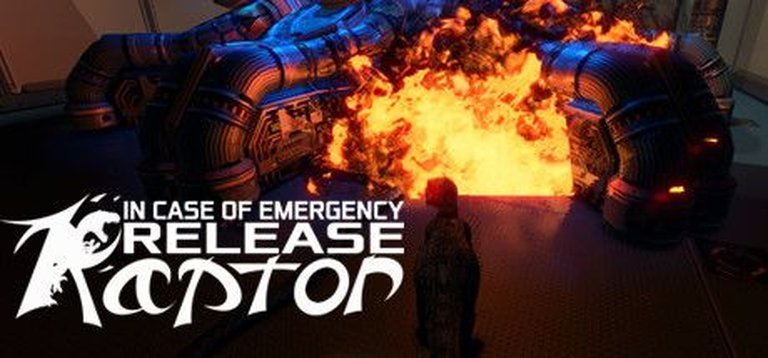
In Case of Emergency, Release Raptor is an action game developed by Arcen Games, where players assume the role of a velociraptor in a sci-fi futuristic setting. The core gameplay focuses on causing destructive chaos through procedurally generated 3D environments, battling robotic enemies with visceral combat like pouncing and tearing limbs, all designed to immerse players in the authentic experience of being a raptor.
Gameplay Videos
Where to Buy In Case of Emergency, Release Raptor
PC
In Case of Emergency, Release Raptor Cracks & Fixes
In Case of Emergency, Release Raptor Guides & Walkthroughs
In Case of Emergency, Release Raptor: Review – The Unfinished Symphony of a Velociraptor Power Fantasy
Introduction: The Echo of a Roar in an Empty Factory
In the vast museum of video game history, certain titles are enshrined as complete masterpieces, others as notorious failures, and a rare few exist in a purgatory of profound potential unrealized. In Case of Emergency, Release Raptor (hereafter Release Raptor) belongs decisively to this last, haunting category. It is not a forgotten relic but a deliberate ghost—a fully playable, freely distributed fragment of a grander vision that was consciously abandoned. As a critic and historian, my thesis is this: Release Raptor is a seminal case study in design integrity over commercial viability, a game that prioritized the tactile, visceral feeling of being a prehistoric predator over the scaffolding of a traditional game. It stands as a poignant artifact from the late-2010s indie surge, illustrating both the creative liberation and the brutal realities of a small studio like Arcen Games attempting its first foray into 3D. To play it is not to experience a finished product, but to commune with a design philosophy crystallized in a moment of time.
Development History & Context: Arcen’s Leap into the Third Dimension
The Studio and Its Pre-Raptor Legacy
Arcen Games, LLC, founded by Chris McElligott Park, had by 2016 carved a unique niche in the strategy and puzzle spaces with titles like the critically acclaimed AI War: Fleet Command and the inventive Shattered Haven. Their identity was built on deep, systemic, often procedurally generated experiences that favored player-driven narratives over scripted stories. The jump to a 3D action game was a monumental, risky pivot. As detailed in Arcen’s own April 2016 dev diary, this was their “first 3D game, the first of many,” a statement that now carries a layer of tragic irony.
Technological Constraints and Asset Store Pragmatism
The development was underpinned by the Unity engine, a common choice for small teams. Crucially, the team was transparent about their heavy use of the Unity Asset Store. In the same dev diary, Park defends this practice with remarkable candor, explaining they purchased models (like the initial 3dFoin velociraptor and Ximo Catala’s Sci-Fi Industrial Level Kit), textures, shaders, and code systems (for destruction, like DinoFracture by Fat Cat Games). Their approach was one of surgical integration and heavy modification—buying a base to learn from and then rewriting, optimizing, and blending it with original work. This was not “asset flipping” but a pragmatic response to the immense scope of creating a 3D game from scratch with a tiny team. The goal was to channel energy into the core “feeling”—the raptor’s animations, the destruction physics, the procedural layout—rather than reinventing every texture and lighting shader.
The Turbulent 2016 Landscape and a Troubled Release
Release Raptor was announced in April 2016 with a planned Early Access launch. However, it suffered multiple delays, as noted by TechRaptor in July 2016. It finally saw a very quiet release on August 30, 2016, for Windows, with Mac and Linux versions following. The Steam store page’s language from the start was uniquely honest: it was marketed not as a complete game but as a “free release of an aborted Early Access title,” a “passion project” released because “what is there was fun.” This framing was a direct result of its internal status. As Park later discussed in Steam forums, Release Raptor was pulled from active sale and made free shortly after its brief commercial stint, a decision made to stop taking money for an unfinished product and to let the community “tinker” with it. This context transforms the game from a commercial failure into a historical document—the “as-is” tech demo that a passionate developer chose to gift to the world.
Narrative & Thematic Deep Dive: A Lore of Abandonment and Last Hopes
The narrative of Release Raptor is almost entirely implicit, delivered through environment and a rich backstory provided by its creator in post-launch forum discussions. It is a story of cosmic and planetary failure, placing the game in the distant, muddy pre-history of Arcen’s interconnected “Arcenverse.”
The Fall of Humanity and the Raptor’s Origin
The timeline, as explained by Park, is grim:
1. Following the events of Bionic Dues (where corporate-owned, buggy mechs fought robots), the machines on Earth evolved into lethal, autonomous killing forces roughly 800 years before AI War.
2. After humanity’s exodus into space (and a subsequent civil war), Earth was abandoned. The poor underclass was left behind to perish.
3. One corporation, in a last-ditch effort, had created genetically engineered animals—specifically a velociraptor—as disposable soldiers that could not be “hacked” like the remote-piloted mechs. The player’s raptor was one such prototype.
4. The plan failed catastrophically before it began. The raptor was never deployed. It was merely stored.
5. The game begins when the last desperate dregs of humanity on Earth, trapped and facing extinction, stumble upon the containment facility. Seeing the sign “In Case of Emergency, Release Raptor,” they comply, unleashing the dinosaur not as a ordered weapon, but as a final, hopeless act of chaotic defiance.
Themes: Desperation, Primal Power, and Abandoned Technology
The core theme is one of abandonment on every level: humanity abandons its own, the corporation abandons its prototype, the player is given a world with no overarching mission, only destruction. The raptor is a tool of last resort, a “fuck-it” button for a doomed world. The environments are “scenic futuristic dystopias”—beautiful, empty industrial ruins and labs that speak of a vanished, advanced civilization now infested with murderous, maintenance robots. The thematic contrast is potent: the sleek, cold, repetitive geometry of robotic enemies versus the organic, brutal, and messy power of the raptor. The dismemberment system is not for gore but for tactile satisfaction—the sheer physicality of tearing apart the very symbols of the sterile, logical order that erased humanity.
Gameplay Mechanics & Systems: The “Feel” is Everything
Arcen’s central, stated design goal was: “Be a velociraptor. Feel like one.” Every system orbits this objective.
Core Loop: Pure Kinetic Expression
There is no health bar, no experience points, no upgrade tree. As the Steam store explicitly states, you don’t get “frickin’ lasers” or “health upgrades.” The loop is simple: enter a procedurally assembled facility, locate and destroy robots (both small, pounce-able drones and large, multi-limbed mechs), and cause as much environmental destruction as possible. The “progression” is purely skill-based and spatial.
Movement and Combat: An Exercise in Physics and Precision
- Movement: The raptor’s control scheme is designed to convey weight and predatory instinct. It features a pounce (a powerful, arcing leap), a sprint, and a default run. The physics-based animation blending (a major focus of the dev diaries) aims to make transitions between these states feel organic. The environment is a vertical playground; climbing pipes, scrambling up sloped surfaces, and launching from crate to crate is essential.
- Combat: Divided into two primary modes:
- Pouncing: Aerial takedowns on small to medium humanoid robots. A precise hitbox on the raptor’s feet/legs must connect.
- Dismemberment: For larger mechs, the raptor must bite, kick, and tail-swipe to literally blast off limbs. This uses a dynamic fracture system (heavily modified from the DinoFracture asset). Each destroyed limb is a separate physics object, and a mech is “dead” when its core is exposed and destroyed. This is the spectacular, chaotic payoff of the game.
- Brutal vs. Power Trip Modes: The game offers two fundamentally different challenge paradigms:
- Brutal Mode: A one-hit death simulation. A single rocket or laser shot ends the run. This demands careful, strategic, stealth-adjacent play—using the environment for cover, planning routes, and striking from ambush. It approximates the “real” fragility of a dinosaur versus modern weaponry.
- Power Trip Mode: The player is invincible. The challenge shifts entirely to efficiency and style. The game scores runs based on speed, avoidance (how many hits you didn’t take), and dismemberment quality. This mode is about pure, unadulterated power fantasy and speedrunning.
Procedural Assembly: “Procgen with Personality”
The team, using a heavily modified version of the DunGen dungeon generator, employed a “heavy mix of handcrafted content with procedural bits.” The goal, as stated on the store page, was to avoid “unimaginative ‘procgen blandness.'” The process involved creating a vast library of hand-modeled room “chunks” (lab interiors, industrial corridors, apartment blocks, Martian base accents) with consistent visual rules and lighting. The generator then assembles these chunks into a sprawling, non-linear facility. The result is a sense of exploration and novelty—you might recognize the “Airlock” or “Reactor Core” layout, but the path between them and the placement of enemy patrols is never identical. This system directly mirrors the design philosophy of Arcen’s strategy games, where hand-crafted assets combine into emergent, unique scenarios.
World-Building, Art & Sound: A Beautiful, Empty Dystopia
Visual Direction: Post-Processing Unity
The game’s aesthetic is defined not by original, AAA-grade modeling (much was sourced and altered) but by a sophisticated and meticulously tuned post-processing stack. Dev diaries detail the use of:
* Screen Space Reflections (SSR)
* Filmic color grading via LUTs (Look-Up Tables)
* Amplify Bloom
* Horizon-Based Ambient Occlusion (HBAO)
This suite creates a specific mood: a high-contrast, slightly desaturated, cinematic look with deep shadows and glowing industrial lights. The “scenic futuristic dystopia” is a place of stark beauty—massive, echoing chambers with catwalks, exposed conduits, and the cold gleam of robotic corpses amidst your own chaotic destruction. The color palette is largely cool blues, greys, and oranges, reinforcing the sci-fi decay.
Sound Design: The Symphony of Destruction
Sound was a major passion point for Park, who boasts of “huuuuge sound libraries.” The audio design is meant to be physically informative and viscerally satisfying. The raptor’s vocalizations (chittering, growls, roars) are based on real animal sounds. The true star, however, is the foley:
* The clatter and crunch of kicking over a metal crate.
* The grinding, shrieking, metallic tear of a mech limb being severed.
* The clanging of debris skittering across polished floors.
* The distinct, tinny screams of collapsing drone robots.
Every material interaction has a weight and presence. It’s an aural representation of the destruction physics—the sound is the feedback of the fracture system working.
Reception & Legacy: The Free Tech Demo That Became a Cult Artifact
Critical and Commercial Reception (or Lack Thereof)
Release Raptor did not chart, sell significantly, or receive mainstream critic coverage. Its MobyScore is listed as “n/a,” and it has only 18 collectors. Its commercial life was fleeting and explicitly withdrawn. The Steam user review tally sits at “Mostly Positive” (76% of 90 reviews at time of writing), a remarkable figure for an unfinished game. Review snippets like “This is so cool” and “Being a raptor and doing raptor stuff, always a good time” reveal the consensus: players evaluated it based on what it was—a free, chaotic dinosaur playground—not what it wasn’t.
Legacy: A Ghost in the Machine of the Arcenverse
Its true legacy is twofold:
1. Lore Expansion: It concretely filled a 800-year gap in the Arcenverse timeline between Bionic Dues and AI War. It explained why the robots in AI War are so formidable (they defeated humanity’s mechs and drove them from Earth) and introduced the tragic footnote of the genetically-engineered “last weapons” left to die with the planet’s underclass. This small, free game became a key historical text for fans of Arcen’s grand strategy sagas.
2. Design Philosophy Template: It represents a pure, unadulterated execution of a single “feel” goal. For game design students, it’s a masterclass in scope limitation—saying “no” to traditional progression to say “yes” to visceral moment-to-moment gameplay. Its procedural system, aiming for “recognizable areas,” influenced how Arcen would later approach map generation in AI War 2, with its emphasis on meaningful, hand-crafted tile placement within procedural galaxies.
3. The “Passion Project” Precedent: It set a precedent for Arcen’s later transparency about project failures (like Stars Beyond Reach). Park’s public post-mortems on Release Raptor’s cancellation and his reasoned explanations for its free release built a reservoir of goodwill that likely helped the studio survive subsequent setbacks. It proved that honesty about a project’s fate could be more valuable than a forced, subpar release.
Conclusion: The Perfect, Incomplete Fossil
To judge In Case of Emergency, Release Raptor by standard metrics of completion, narrative depth, or lasting gameplay is to miss its point entirely. It is not a fossil missing its bones; it is a perfect, untouched trace fossil—an impression of something magnificent that passed through, leaving a clear and captivating shape behind.
Its place in history is not as a classic played by millions, but as a cult artifact and a designer’s manifesto. It is the exhilarating sensation of a raptor’s pounce frozen in time. It is the proof that a small team, using pragmatic tools and ruthless focus, can create a moment of pure, unadulterated interactive joy—and have the courage to let that moment stand alone rather than dilute it with filler. For the historian, it’s a vital, textured link in the sprawling Arcenverse chronology. For the player, it remains a free, downloadable time capsule: a promise of a power fantasy so pure it needed no levels, no stats, no story, only the winding corridors of a dead world and the satisfying crunch of a robot spine giving way. In the end, Release Raptor did exactly what it set out to do. It made you feel like a velociraptor. In that, it was, and remains, a resounding, roaring success.