
- Release Year: 2016
- Platforms: Windows
- Publisher: 1C Company
- Developer: Black Wing Foundation
- Genre: Adventure
- Perspective: 1st-person
- Game Mode: Single-player
- Gameplay: Puzzle elements
- Setting: Detective, Horror, Mystery
Description
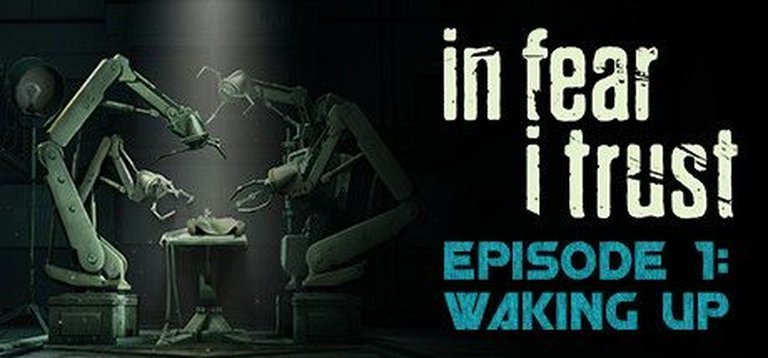
In Fear I Trust: Episode 1 – Waking Up is a first-person psychological thriller set in a decaying Soviet facility. Players take on the role of Nikolay, known as Patient #17, who wakes up in a dark cell with severe memory loss. The game combines puzzle-solving with a narrative of mystery and horror as Nikolay navigates through the facility, uncovering clues and documents that reveal the dark secrets of a classified experiment. Utilizing a unique Retrospective Mode, players can see hidden clues and solve puzzles to piece together Nikolay’s past and identity.
Gameplay Videos
In Fear I Trust: Episode 1 – Waking Up Guides & Walkthroughs
In Fear I Trust: Episode 1 – Waking Up: Review
Introduction
Like a faded document from a Cold War archive, In Fear I Trust: Episode 1 – Waking Up (2016) emerges as an obscure yet intriguing artifact in the landscape of indie horror. Developed by the shadowy Black Wing Foundation and published by 1C Company, this first-person psychological thriller plunges players into the decaying heart of a Soviet-era experiment gone horribly wrong. Though its ambitions loom large—melding Lynchian surrealism with PT-inspired environmental dread—this fragmented episodic debut stumbles in execution. While it lays groundwork for an atmospheric mystery, Episode 1 remains a compelling but flawed psychological excavation, its potential shackled to an unfinished narrative and sparse mechanics.
Development History & Context
Studio & Vision:
Black Wing Foundation, an elusive Ukrainian studio, conceived In Fear I Trust as a five-part episodic saga powered by Unreal Engine 3—a curious technical choice in an era dominated by UE4. Their vision leaned heavily on atmospheric tension over jump scares, aiming to blend Soviet-era dystopian themes with psychological horror. The studio’s obscurity (with no prior notable releases) and minimal marketing relegated the project to niche status.
Technological Constraints:
Released in September 2016, the game targeted modest hardware (DX9c support, 512MB VRAM minimum), prioritizing accessibility over graphical fidelity. UE3’s limitations manifested in stiff animations and simplistic textures, yet its lighting engine became a core asset for crafting oppressive, shadow-drenched environments.
Gaming Landscape:
The episodic horror genre was in flux in 2016. Telltale’s narrative-driven model dominated, while Layers of Fear (2016) proved indie horror could thrive without combat. Black Wing’s decision to fragment its narrative across episodes—released mere weeks apart—mirrored Telltale’s structure but lacked its polish or fanfare. The Cold War/Soviet aesthetic, while underexplored in horror, arrived amidst a glut of retro-themed indies competing for attention.
Narrative & Thematic Deep Dive
Plot & Protagonist:
Players assume the role of Nikolay, reborn as “Patient #17” after awakening in a putrid cell within a derelict Soviet facility. Suffering from dissociative amnesia, his fragmented memories hint at a Faustian bargain: a contract signed to secure his family’s future now binds him to horrific experiments. The episode’s arc revolves solely around escape, threading through a doctor’s office and laboratory while encountering spectral echoes of past victims.
Themes & Symbolism:
– Ethical Corruption: The facility—likely a nod to real-world Soviet programs like MKUltra—symbolizes unchecked scientific ambition. Notes and contracts littering desks condemn institutional exploitation of the vulnerable.
– Identity Fragmentation: Nikolay’s amnesia mirrors the player’s disorientation, with environments deliberately obfuscating past/present. Soviet propaganda posters (“Glory to Progress!”) corrode into ghostly scribbles, reflecting shattered ideology.
– Retrospective Trauma: The “Retrospective Mode” mechanic—allowing players to glimpse residual memories in walls—serves as both puzzle tool and narrative device, blurring reality and hallucination.
Dialogue & Characterization:
Nikolay’s sparse internal monologue (voiced in English/Russian) conveys desperation but lacks depth. Supporting “characters” exist only as phantoms, their deaths inferred through environmental cues: a hanged doctor, blood-smeared lab coats. Storytelling relies heavily on found documents—a risky choice given the genre’s reliance on audiovisual immersion.
Gameplay Mechanics & Systems
Core Loop:
The game unfolds as a linear walking simulator with light puzzle-solving. Players explore claustrophobic corridors, scavenging keys, codes, and documents while activating “Retrospective Mode” to reveal hidden clues (e.g., invisible door codes etched in memory-residue). Puzzles seldom escalate beyond seek-and-find tasks, though one standout sequence requires aligning Soviet-era electrical circuits.
Innovations & Flaws:
– Retrospective Mode: A novel twist on detective vision, but underutilized. Triggering it often reveals basic clues (arrows, numbers) rather than layered storytelling.
– No Combat/Pressure: Tension arises purely from exploration, yet the lack of threats (outside scripted hallucinations) blunts the horror.
– UI/UX: A minimalist interface preserves immersion, but unclear objectives can frustrate. One puzzle involving a medicine cabinet’s reflection borders on unintuitive.
Progression:
At just 43 minutes for the main path (per HowLongToBeat), the episode ends abruptly, offering no skill tree or persistent upgrades. Its sole purpose is to contextualize Nikolay’s imprisonment and tease future episodes—a structural weakness for a standalone purchase.
World-Building, Art & Sound
Setting & Atmosphere:
The Soviet facility breathes decay: rusted piping, flickering fluorescents, and groaning metal sell the illusion of a labyrinth frozen in 1983. Design evokes Stalker’s derelict brutality, with bureaucratic offices juxtaposed against sterile labs, each room whispering fragments of institutional rot.
Visual Direction:
UE3’s limitations manifest in flat textures, but clever art direction compensates. A grayscale palette dominates, punctuated by sickly greens and bloody reds. Ghosts materialize as distorted, monochrome projections—more unsettling than photorealistic.
Sound Design:
Ambient drones and distant machinery create unease, while sudden metallic crashes punctuate exploration. Voice acting (where present) ranges from competent (Nikolay’s weary Russian VA) to amateurish (overwrought ghostly wails). Retrospective Mode’s auditory cue—a distorted radio frequency—effectively signals shifts in reality.
Reception & Legacy
Launch Reception:
The episode garnered “Mixed” Steam reviews (44% positive). Praise centered on atmosphere and ambition, while criticism targeted repetitiveness, brevity, and technical hicbugs (animation glitches, save file corruptions). Notably, no critic reviews were logged on MobyGames—a testament to its obscurity.
Legacy & Influence:
While the series concluded with four episodes (of a planned five), it left no lasting imprint on horror. Later episodes improved marginally in pacing but failed to build a following. Black Wing Foundation vanished post-release, leaving the saga incomplete. Yet, Waking Up’s Soviet existential dread faintly echoes in titles like Atomic Heart (2023), proving its themes had untapped potential. Its episodic model also serves as a cautionary tale against fragmenting niche narratives without guaranteed audience investment.
Conclusion
In Fear I Trust: Episode 1 – Waking Up is a haunted relic—a game shackled by its own ambitions. Its oppressive atmosphere and novel setting evoke genuine unease, while Retrospective Mode hints at a deeper mechanical identity it never fully embraces. Yet, paper-thin characterizations, underdeveloped scares, and a criminally short runtime render it a fascinating but frustrating prologue to a story left untold. For historians, it exemplifies the risks of episodic indie horror in a saturated market; for players, it’s a fleeting, flawed descent into Soviet-era nightmares—best experienced in a bundle, if at all. Its greatest success? Proving that fear, like memory, persists longest in the echoes of what’s left unfinished.
Final Verdict:
A flawed yet atmospheric curio for horror completists; a footnote in the genre’s evolution. ★★½ (2.5/5)